- July 8, 2026

-
-
Loading
Loading
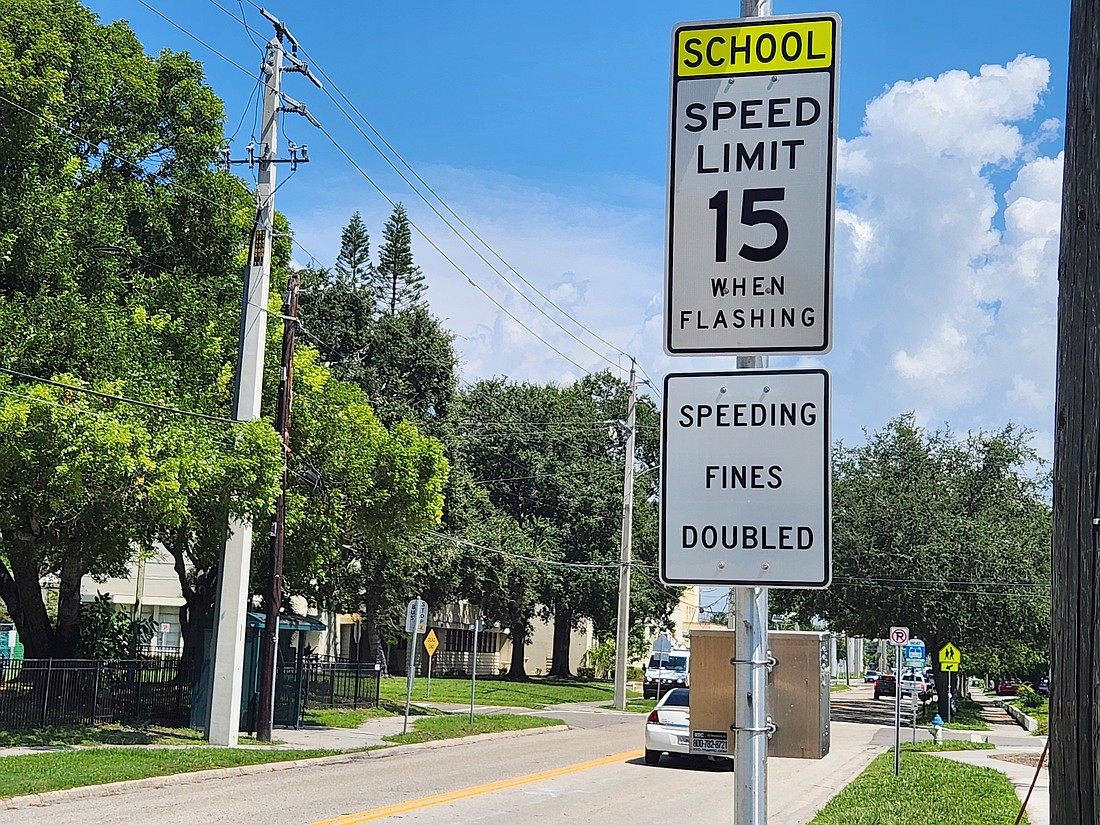
Local governments in Florida and across the country collect approximately $8 billion in law enforcement fines and forfeitures annually.
In most cases, these revenues account for a vanishingly small portion of government budgets — just 0.38% on average. However, some governments have come to rely on police and the court system to fund basic operations, creating perverse incentives that divert resources away from legitimate public safety priorities.

A new Reason Foundation report examines financial statements from over 10,000 cities and counties to provide the most comprehensive picture of “taxation by citation” to date.
The report measures fiscal reliance as the ratio of fines and forfeitures to general revenue. General revenue captures the
money a government raises to fund its core operations at its own discretion, mainly taxes and unrestricted transfers. It leaves out money tied to self-sustaining operations like water and sewer utilities, which pay for their own services and don’t underwrite general government. Measuring fines against total revenue would let a city hide heavy reliance on enforcement behind a large utility fund.

This may soon become a much more important issue in Florida, because in November voters will decide on a constitutional amendment that would raise the state’s homestead exemption to $250,000 and is projected to cut non-school local government revenue by $11.86 billion on a recurring basis.
Research cited in our report suggests that local governments often turn to fines and forfeitures revenue to offset losses elsewhere. If the amendment passes, some Florida cities may find ticket revenue an attractive backfill.
Already in Florida, we identified seven cities that collected 10 cents or more in fines for every $1 of general revenue in FY2023: Lawtey ($0.91), Port Richey ($0.30), Belle Isle ($0.13), Opa-Locka ($0.12), West Miami ($0.12), Orange Park ($0.12), and Green Cove Springs ($0.10).
In per-capita terms, Port Richey leads the pack at $616 per resident. Much of that revenue likely came from red light enforcement cameras.
A recent report from the Florida Department of Highway Safety and Motor Vehicles (FLHSMV) showed that red light cameras in Port Richey generated $1,196,914.42 in revenue from 11,737 citations between July 1, 2024, and June 30, 2025. Port Richey retained $525,923.42, while the remaining $633,046.00 went to the state Department of Revenue.
Notably, the FLHSMV report asked local governments about what factors are used to determine the success or failure of red light cameras within their jurisdictions. Port Richey answered the number of crashes, pedestrian safety and revenue. Credit for honesty?
Port Richey has been quite explicit about the role red light cameras have played in the city’s budgeting. Fines and forfeitures revenue in Port Richey surged from $646,416 to $1,183,927 between FY2015 and FY2016. The city’s FY2016 financial report noted that “[t]hrough initiatives such as water and sewer utility rate increases, the re-instatement of the electric utility tax…, and the ability to utilize red light cameras, the city has been able to considerably improve upon its financial position.”
That year, the city’s governmental funds increased 18.28%, which the city primarily attributed to $602,565 from red light camera enforcement.
State lawmakers have tried to prevent police from chasing ticket revenue by banning traffic citation quotas since 1992, but reform efforts to date have left major gaps. The state’s original quota ban only applied to state agencies. County sheriff’s offices and municipal police departments, where most of the traffic enforcement happens, were left out entirely.
That gap surfaced in dramatic fashion when Waldo, a small town in north-central Florida, was found to be generating nearly half its general revenue from traffic citations. When the story broke in 2014, five Waldo officers alleged their chief and city manager had imposed a quota of one ticket per hour per shift. The department was disbanded within weeks.
The Legislature responded to the scandal with the 2015 “Waldo Bill,” which extended the quota ban to sheriffs and municipal police. But the ban still has no mechanism for officers to report violations and no requirement that the state investigate them. Today, an officer who suspects a quota is being enforced has nowhere obvious to take that complaint.
Reforms adopted by Ohio in 2025 offer a better model. Ohio now requires the attorney general to maintain a public online form for officers to report quota violations, annonymously, and obligates the state to investigate every report within a year and order any offending agency to cease and desist.
Even a well-enforced quota ban, though, only reaches citations written by officers. A camera can’t be pressured to hit a quota, so a quota ban has no bearing on red light camera enforcement. As the example of Port Richey shows, that’s true even when a city, by its own admission, is counting on citation revenue to balance its budget. Closing that gap requires reforms aimed at the underlying fiscal incentives rather than officer behavior.
A smaller group of states has tried to do exactly that. Alabama, Maryland, Missouri, Texas, and Utah have placed explicit caps on the share of revenues local governments may collect from either speeding tickets or fines and forfeitures more broadly, diverting any revenue above the cap to purposes beyond the collecting government’s control.
Because a cap applies to the revenue regardless of its source, it would catch a city leaning on cameras just as readily as one leaning on officers. But the narrow scope of many existing caps has still enabled evasion. Alabama’s 10% cap, for instance, applies only to traffic citations, leaving cities free to generate unlimited revenue from other fines. A cap applying to all revenues flowing from police and courts would be better.
Florida has another law that looks similar on paper but is effectively toothless. Any jurisdiction collecting more than 33% of its law enforcement funding from traffic fines must file a report with the Legislative Auditing Committee.
However, Florida’s threshold triggers nothing but paperwork. The statute doesn’t require the committee to publish which jurisdictions filed, doesn’t authorize any investigation, and doesn’t specify consequences for a jurisdiction that simply doesn’t report.
A handful of Florida cities are deriving a meaningful share of their budgets from citations even though the state has laws on the books that are supposed to prevent this kind of behavior. And that’s before accounting for the property tax pressure that may be headed their way this fall. Adopting a stronger ban on quotas based on Ohio’s model and a cap on fine revenue now, before that pressure arrives, would be far better than reacting to it after the fact.
Adrian Moore is the vice president of Reason Foundation and lives in Sarasota. Vittorio Nastasi is director of criminal justice policy at Reason Foundation.