- July 9, 2026

-
-
Loading
Loading
There were 19 sports sanctioned by the Florida High School Athletic Association for the 2025-26 academic year.
In each of them, the season’s schedule was roughly the same. They began with preseason practices and ended at the state championships.
Football is the singular exception.
Its season only goes on hiatus when trophies are hoisted by the best teams. Following fall competition, that sport returns in the spring.
May 22 was the final date for high school football teams across Florida to practice or compete until the fall. Some of them participated in jamborees, where multiple teams scrimmage each other, while others were involved in exhibition games.
Not one snap counted toward the 2026 season. The only statistics were those recorded by coaches for reference, and will be thrown away soon, if not discarded already.
The spring is essentially meaningless. So in this state, why has it become so meaningful?
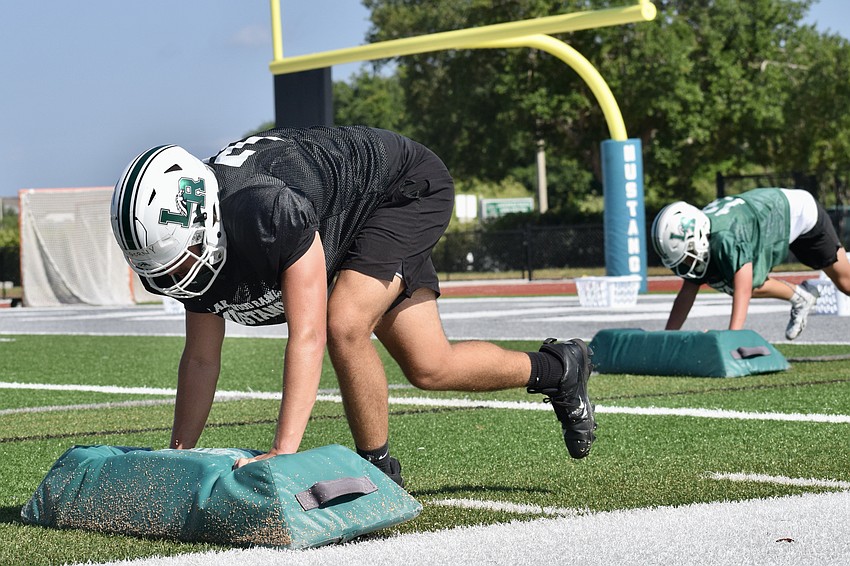
“It’s a weird event, in reality, because you do all this work for one game,” said Scott Paravicini, the Lakewood Ranch High football coach. “The game really doesn't count, but there’s so much weight put on the game because it springboards you into the summer, and you’ve either got a good taste in your mouth or a bad taste in your mouth.”
Spring football is not universal across the U.S. There are parts of the country where it isn’t as organized as it is in Florida, and parts where it doesn’t exist at all.
Favorable weather here, of course, facilitates a spring season. Much like California and Texas, this is a state where football truly reigns supreme among high school sports.
Decades have come and gone, and still, the spring remains a statewide staple.
“It could be a chicken and the egg scenario — which came first?” said Mark Cristiani, Riverview High's football coach. “Was it always a football state, so they allowed spring football? Or because we have a spring football season, is that why (we’ve) become a football state?”
Cristiani graduated from Venice High in 2003 and was a sophomore when the Indians won the 2000 FHSAA Class 5A state title. He knows what this time of year means to a player.
In the transition from his sophomore to junior season, he moved from playing mostly special teams to becoming a full-time starter on the defensive line. Making that switch in the spring as opposed to the fall made it so that he wasn’t thrown to the wolves.
During his playing days, teams had an allotted number of spring sessions, as outlined by the FHSAA. How many of those sessions each team held was at the discretion of their coaches.
“It was usually referred to as, ‘The Tough 20,’” Cristiani said. “You had 20 days, and it was usually a very physical time. (It was a) very intense time to give you a preview of what fall camp would look like as a player and as a coach.”
That remains the standard. The FHSAA gave schools a maximum of 20 sessions this spring, in which graduating seniors and incoming transfers were not eligible to participate, but returners and rising freshmen were. Only one session could be used for a jamboree or exhibition game.
Paravicini chose April 27 through May 15 and had Lakewood Ranch’s game against Bayshore on May 15. Cristiani, meanwhile, put his team to work from April 27 through May 20, capped with a jamboree vs. Lakewood and Largo on May 20. Neither of them held sessions on weekends.
Different programs choose different schedules because no two programs’ needs are the same. Some coaches cram the most they can into 20 days, while others are content with less.
Whatever the number of practices, whatever the format of competition, the objective is generally the same — player development.
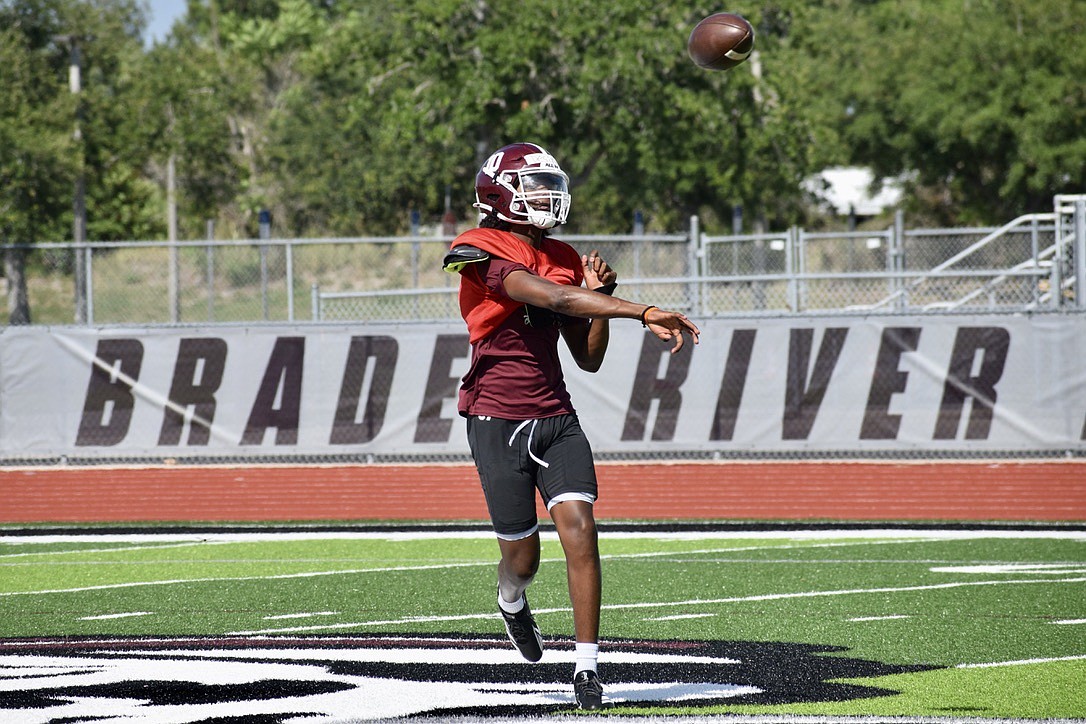
“Spring ball is a definite positive,” said Rick Farmer, the Braden River High football coach. “There’s such a long period of time between when you play and waiting all the way to the following August. It’s not a sport like basketball, where they can practice year-round.”
Development, though, is not the only benefit of spring football. It also puts talent on display for colleges to recruit and allows coaches to begin installing plays on both sides of the ball.
Giving rising freshmen a look at the varsity level is also crucial. Few of them will actually start in the fall, but their early introduction to the program should be valued nonetheless.
Further priorities vary program to program. Sarasota High football coach Anthony Campbell has prioritized the improvement of his star quarterback’s leadership ability.
“I expect more out of Hudson West now because he's going to be a rising junior, but he's still a sophomore,” Campbell said. “So his leadership skill — now — has to take another approach, because I'm expecting more out of him this upcoming season.”
Spring has remained an important part of the yearly schedule. All teams participate in one way or another to set up their respective programs for success when snaps start to matter.
No other sport sanctioned by the FHSAA has a second season during the academic year. That’s because no other sport is like football in this state.
A singular sport warrants a singular exception.