- July 16, 2026

-
-
Loading
Loading
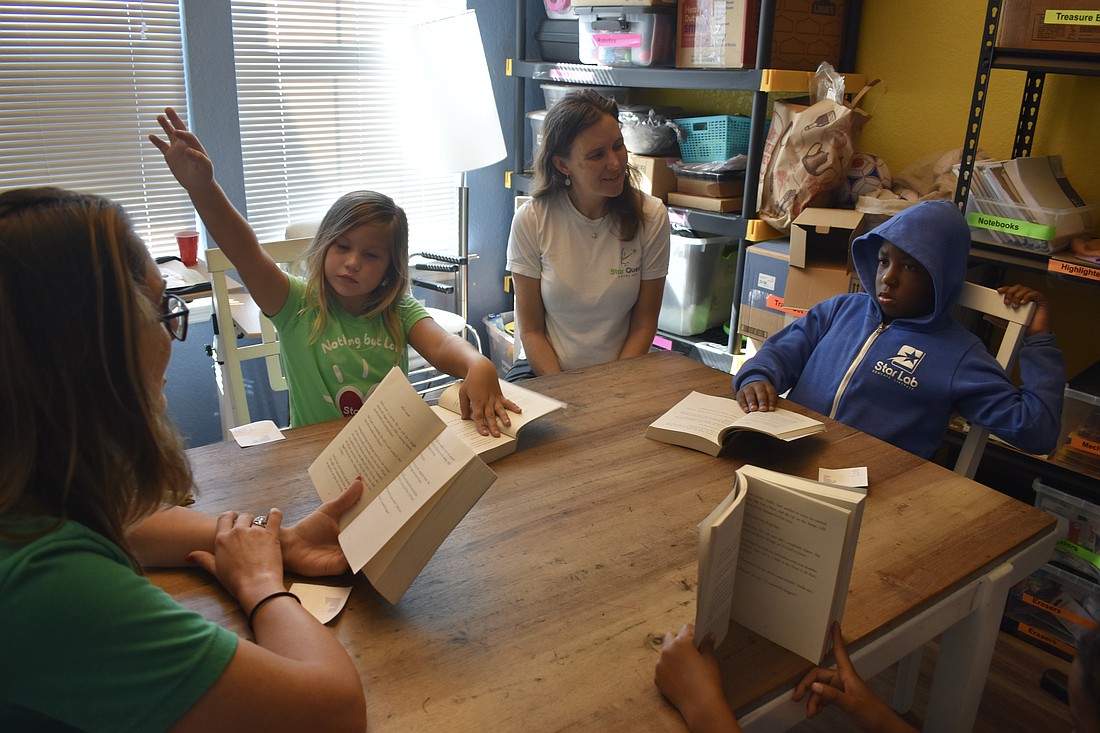
Exercise at the start of the day, mindfulness before lessons, and recess every hour are some of the features that mark the experience at Star Lab.
The private school, which emphasizes letting students learn at their own pace, opened its doors in Sarasota's Newtown community in 2024, and it represents a growing trend in the state of Florida.
As a microschool, a concept often described as a modern version of the one-room schoolhouse, it represents one of the departures from the traditional education system that have risen in popularity in recent years.
According to information from an April presentation by Sarasota Schools Superintendent Terry Connor, the number of registered microschools in Florida rose from one in 2020, to 250 in 2024.
According to the National Microschooling Center, there are more than 1 million students in microschools in all 50 states. Yet at the forefront of their growth, for years, has been Florida, according to Don Soifer, CEO of the center.
Soifer attributes the growth of microschools to the era of pandemic shutdowns, when he said families from across the income spectrum became more involved in their children's education.
He said while traditional schools were not unique in struggling during those circumstances, the “close-up view” parents received prompted them to reevaluate the education systems they were relying on, while the availability of school choice in Florida gave them the opportunity to explore other options.
Microschools operate alongside traditional public schools, which still remain the dominant option for families, although tuition costs are covered by the state's voucher program; the average rate of tuition, Soifer said, is between $5,000 and $10,000.
The growth of school choice programs including vouchers has not been met without pushback.
Questions have been raised by educators and policymakers when it comes to the accountability of privately run institutions and how student outcomes are measured, as well as funding for voucher programs that would have otherwise been utilized by the district.
Soifer said microschools have the opportunity to personalize education in a way that is more responsive to the families they serve.
“What we call growth in public education tends to still be tied to those tests and those masteries, and sort of clunkiness and the intrinsic biases and other things, that are sort of well documented as criticisms of those standardized testing regimes in the United States,” he said.
In addition to Star Lab, Sarasota includes organizations like The Village Community School of Sarasota, a K-9 homeschool enrichment program designed in the style of a microschool that opened in 2022. Roots Nature & Leadership Academy, an outdoor Montessori-inspired K-8, which opened in 2022, is another relatively small school, currently targeting a total of 75 to 80 students.
Star Lab founder Alison Rini had originally expected to remain within the public school system.
A teacher for 15 years and an administrator for seven, she said she found that the people she talked to most often were those whose children were not succeeding academically or behaviorally.
“I just thought, there has to be a better way, and I originally thought my path would be to work in the district and try to work my way up to a principal job in the district, but I realized that somebody needs to start this alternative, and maybe it just should be me,” Rini said.
A grant from The Drexel Fund helped her to establish the school, which is currently a K-3, and set to add a grade each year and become a K-5 for the 2027-2028 school year. The school's board president, Jimmy Glover, is a current District 1 school board candidate who has advocated on behalf of the needs of Newtown.
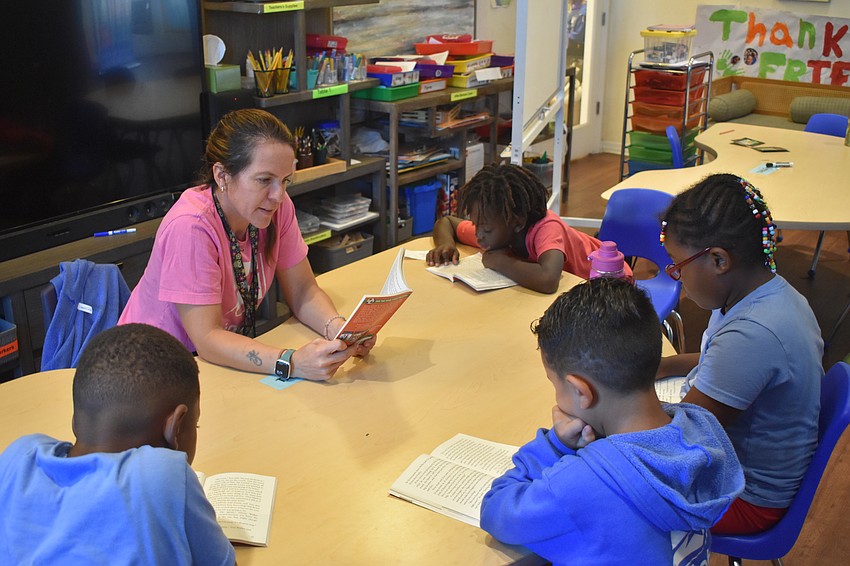
Located directly across the parking lot from the Janie's Garden complex, the school serves many of the students whose families live there, which Rini said gives parents the opportunity to visit.
She said parents choose the school for a variety of reasons, which include their students being sent home for behavioral reasons, and parents worrying their child will get in trouble at their current school, not trusting the content of public school curricula and that it aligns with their values or simply wanting the experience of a small school.
Many of the students have had behavioral challenges in past schools, but she said the small size of the school, with groups that contain just a few students, a teacher and an assistant, make it easier to address conflicts than it would be in a standard-size classroom.
She said teachers will work to return students to a "learning frame of mind" rather than disciplining them, and that students also receive support to help them regulate their emotions.
Rini also said the practice of holding a 15-minute recess every hour, an idea that comes from the model of Finland, which is known for its high test scores on international assessments, helps to reset the learning environment.
“It helps them then go back in to learn and be productive,” she said. “It also completely diffuses power struggles. If a kid is getting in trouble and teacher’s like, you need to sit over there, and they're in trouble, they have an opportunity to disengage, so when the teacher said, ‘OK, now you can go out and play,' the kid is no longer locked in that behavior conflict with the teacher.”
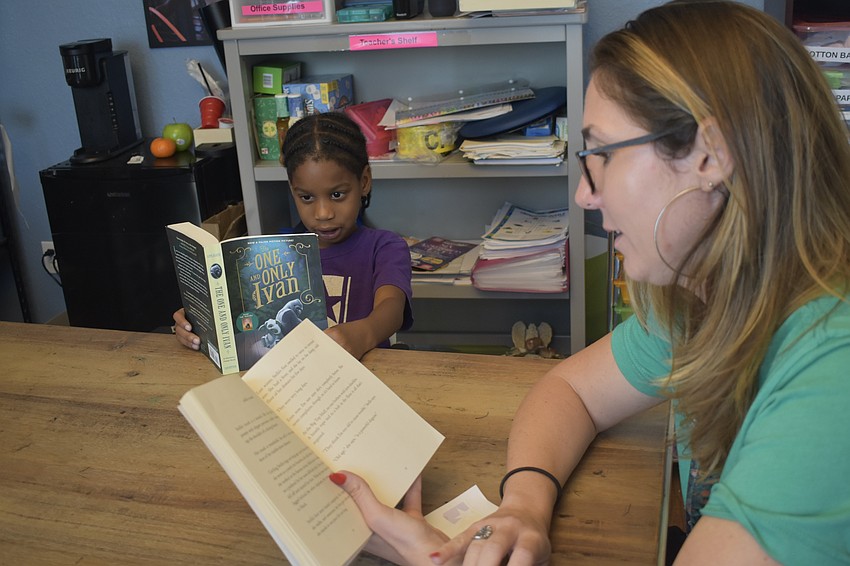
Content is broken down in to learning objectives. Rini said mastery of skills is the target, stating that any student can receive an "A" grade if they attempt a skill for long enough. She said the school has an emphasis on flexibility and allowing students to learn at their level.
Rini said the majority of second graders last year entered unable to read. She said although initially the school didn't see improvements in the data, it began performing interventions and small groups in the afternoons. She said all students are now either reading on grade level or experiencing "an 85th percentile level of growth."
“Star Lab, you learn at your own pace..." said student Landry Shorb, a second grader at the time who was spending her first year at Star Lab after moving from another private school.
She calls herself "more into math than anything else," although there is one item on the schedule she's less enthusiastic about: recess.
“I'm not really like a runny and play person,” she said. “I'm more like calm, and a kid that really wants to learn more stuff."
Shorb also said she "definitely" prefers Star Lab to her previous school, and that while some kids may say school is the worst, she said that school is "the best."
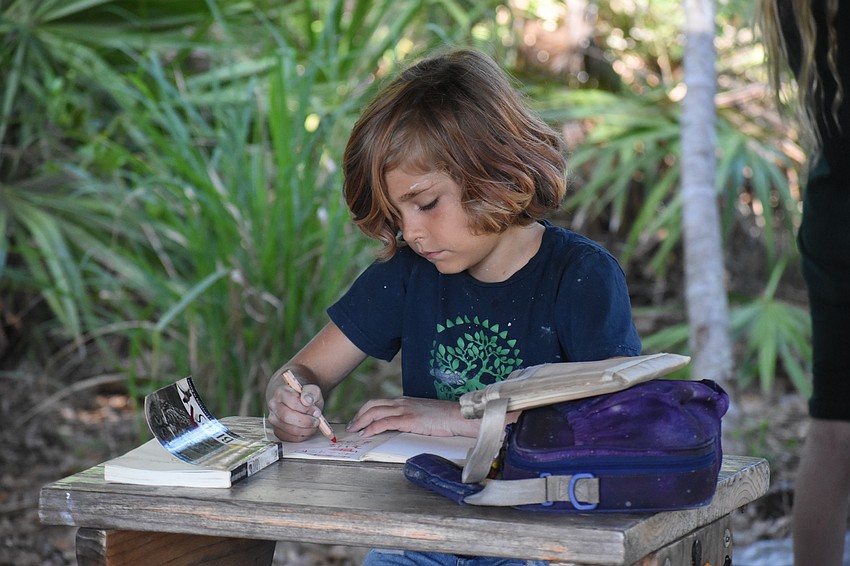
Another institution that shares qualities with microschools is Mangrove School of Sarasota, a Waldorf method-inspired K-8.
The school began as a play group in 2001 and later began adding grades. It eventually transitioned to a full-time outdoor setup before moving from an area near Siesta Key, to Church of the Trinity MCC in August.
Director Erin Melia describes the school, which operates mainly in nature through outdoor cabanas, as bringing kids “back to those ancestral roots of what humans always experience," and describes it as having qualities of microschools, although it is larger in size.
Melia said the school doesn’t want to be “super big” because of the personal education that it is offering, striving for a peak of 10 to 12 students per grade.
"(Microschools) are creating their niche area of how they feel is the best way to educate children, and I feel like that was definitely part of the impulse of what created this school," Melisa said.
Kevin Klein, a board member and parent, said he was drawn to the school for its setup.
“It's just a really fascinating thing to see kids happy to come to school and learn, and I think that's what we really look for," he said. "We were definitely trying to avoid the mainstream tablets in schools, bright lights, square boxes, where everybody's following the same path, and that's just not here at all. And it's such a beautiful thing.”
He also praised the community of the school, which he said allowed parents to become highly involved.
What’s next for the growing movement of microschools? Soifer said he thinks evolution is expected, although it is difficult to know what that will look like in 10-15 years.
Rini said maybe Star Lab could branch out to operate schools in classrooms within the system, giving public schools the chance to observe its model and see whether it works for them. She said her goal isn't to compete with the public school system, but to supplement it and even work with it.
“We don't want to take that right away from them," she said. "We want them to have a free publicly funded education, but we just want to do it differently."