- July 2, 2026

-
-
Loading
Loading
Like virtually everything today, the instruction of American history goes deeper than the days when a catchy verse told us all we needed to know about one of the world’s most momentous events.
“In fourteen hundred and ninety-two; Columbus sailed the ocean blue.
“He had three ships and left from Spain; He sailed through sunshine, wind and rain.’’
The remarkably packed-with-information ditty goes on to name Christopher Columbus’ three ships (Nina, Pinta, Santa Maria) and their time spent at sea (70 days), the fact that the Italian mariner found not a seaborne trade route to Asia as intended, but rather a New World inhabited by natives, and gold was somehow involved.
It concludes … “The first American? No, not quite. But Columbus was brave, and he was bright.’’
As high schoolers today might say, “the Vikings would like a word.’’ And possibly fans of St. Brendan The Navigator who might actually have discovered America 500 years earlier.
They might question the intentions of The Conquistadors who followed Columbus to South America, Central America and even Florida. But in 1919, our man from Genoa and an earworm jingle about the discovery of America would have to do.
Today, students still learn key dates and historical figures of the nation's first 250 years to be sure, but there is a greater emphasis on understanding more than just the “when” and the “who.” Getting to the “why” and the “what’s next” often involves studying primary-source documents, examining different viewpoints, asking questions and considering the answers. In many cases, the answers aren't binary. Sometimes, a range of approaches and analyses are valid, if they're backed up with facts, educators say.
“We want them to analyze and interpret and figure out these fundamental documents and where the perspectives are coming from,’’ said Stella Karas, a high school social studies curriculum specialist with Sarasota County Schools. “What was the impact? What is the consequence?”
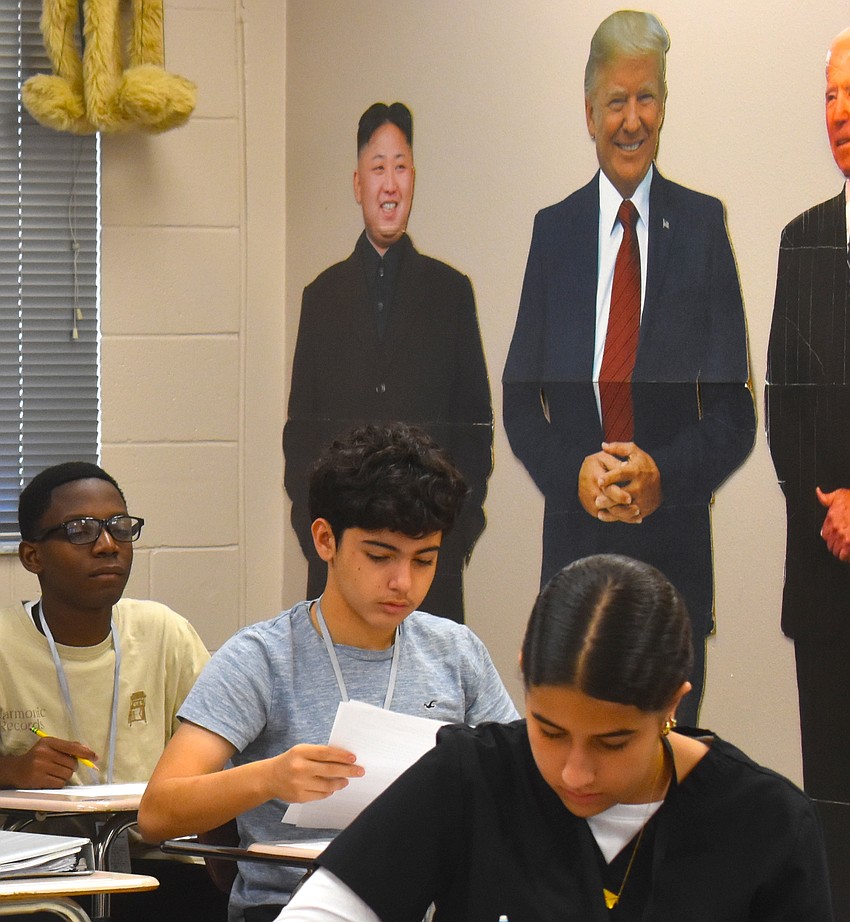
To graduate, students must take four history-related courses: a full year of world history typically in 10th grade; American history in 11th and semester-long classes on economics and government in 12th. Each comes with an end-of-course exam. C-Palms, Florida’s source for state-sanctioned course descriptions, lists 23 different classes for the teaching of American history including honors, Advanced Placement, Cambridge and International Baccalaureate offerings. Most of them are considered electives and not all are taught in every school or even district. Among them, a history of the Vietnam War.
Karas said all the courses are built around Florida’s educational standards, which form the backbone of every subject taught in the state, designed to ensure that students in Sarasota County learn the same material as students in Manatee County, urban Miami-Dade, bucolic Liberty County or any of Florida's remaining 63 counties.
“So, in the state of Florida, we have K-12 social studies standards, and actually, our most recent social studies standards for many of the courses were written by teachers in partnership with community stakeholders, including college and university partnerships, but primarily teachers served on those committees,’’ said Tiffany Spradling, director for secondary curriculum and instruction at the School District of Manatee County. "But the why and the how really comes from our students doing analyses and looking at primary sources, having good discussions, collaborating, considering different sides of arguments, all that happens more organically in the classroom.’’
With the guidance of curriculum specialists and experienced educators, classroom teachers are often assisted through a school year in a number of ways, such as pacing suggestions to ensure topics receive needed emphasis and classwork doesn't run out of time by the end of the year. They also might share ideas on how best to present material. Karas said primary sources of information like key documents are made available to teachers to present to students.
Local stakeholders also can take part, such as a veterans’ group invited to send a speaker to address a key segment of learning. In Sarasota County, for instance, Holocaust survivors have been invited to speak to classes. The idea is to keep students engaged while following the mapped-out curriculum, said Greg Liggett, an American history teacher in Manatee County.
“So a curriculum map is a guideline, and that's created by each individual county,’’ he said. “Here's what our county suggests that you teach those topics, the order that you teach them in. The teacher then has a lot of leeway to come up whatever they think are the most engaging activities and lesson plans to teach those topics, so there's quite a bit of teacher autonomy in choosing what to teach, but there's also state standards to provide them guidance on what to teach on the topics to teach.’’
Students can also take part in History Day, which works much like a science fair, but with such recent topics as Turning Points in History; Rights and Responsibilities in History and Revolution, Reform and Reaction in History.
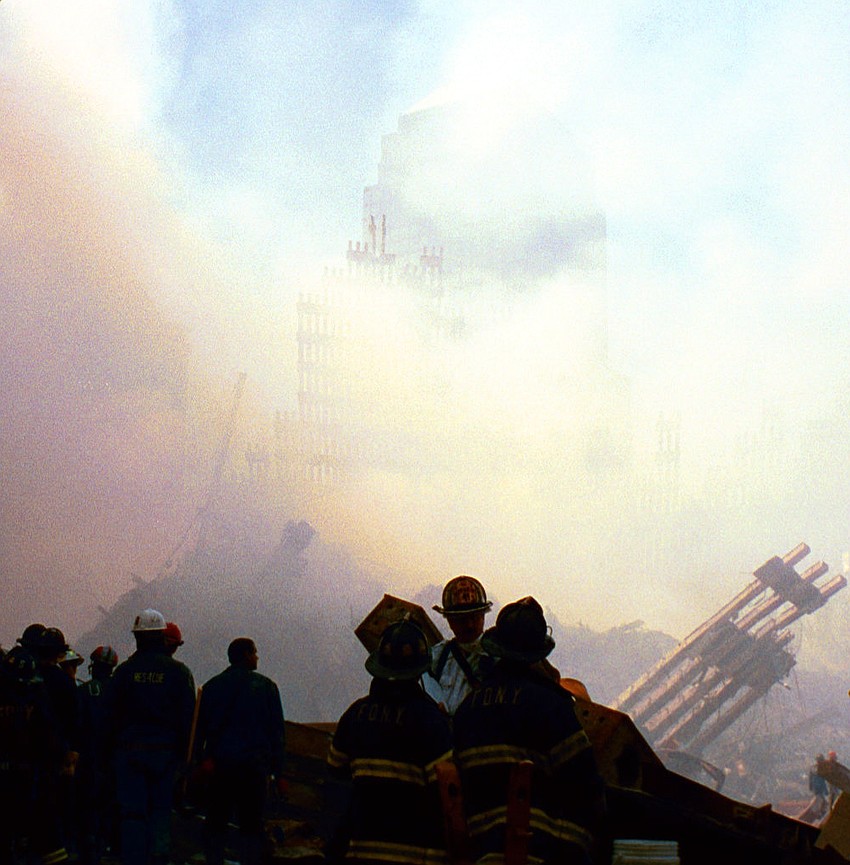
Among the Sarasota-created works that were recently received successfully: “The Morning America Saw More Than One Sun Rise: How the Bombing of Pearl Harbor was a Turning Point in History” and "The Selma Marches: A Turning Point in the Civil Rights Movement." A Sarasota Middle School student in May finished third in statewide judging.
While senior-to-be Tatiana Moskalenko attends the private Out-of-Door Academy, she said she’s experienced a lot that same kind of teacher leeway in learning what is becoming one of her favorite high school classes.
She said a teacher in her sophomore year made a game-show-inspired exercise out of lessons designed for student to study for final exams.
The effects were to inspire deeper dives into something as simple as a day, month and year.
“He taught in a way that was so engaging,’’ she said. “He overprepared us in every way possible. The last few weeks before our exams, he had these sticks and he would randomly draw our names and we would have to choose a date. And we’d go around and see how many dates we could get correct, and he would do this for every class, and there’d be this scoreboard.’’
Although the Sarasota County student said she’s likely to pursue dramatic arts in college when she graduates in 2027, the foundation built with such a classroom experience solidified her connection with something well outside of her primary area of interest.
“I'm very interested in the arts and also how our society has changed throughout the years, and something I would love to do in the future is incorporate those in my career,’’ she said.