- August 5, 2026

-
-
Loading
Loading
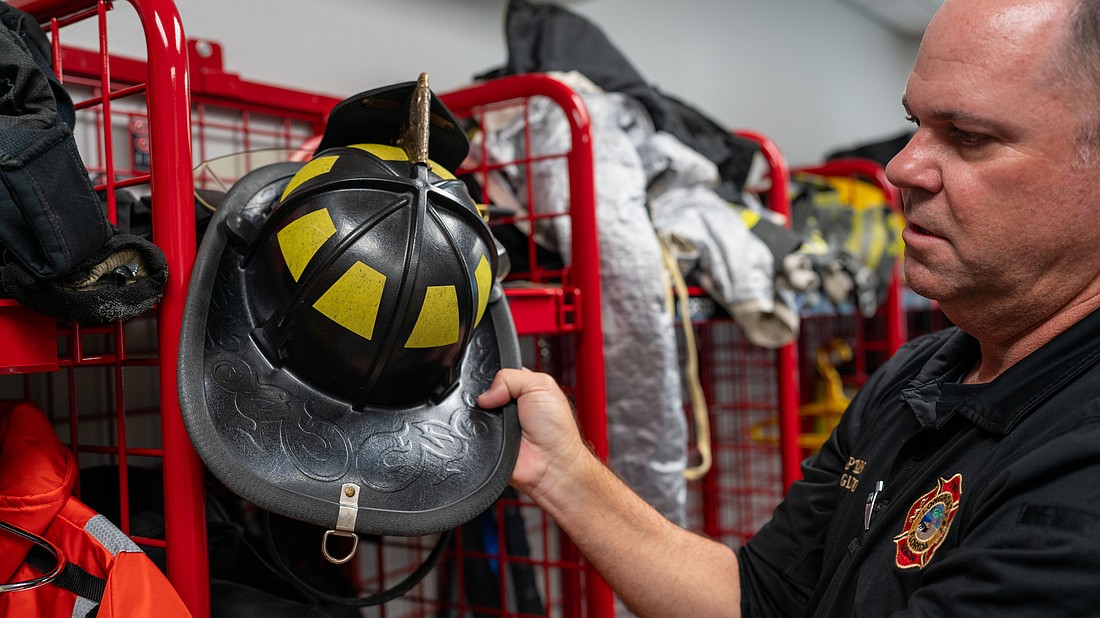
When a firefighter is battling a blaze, the flames can burn, falling timber can bruise and break, but health risks to first responders extend well beyond when the fire is extinguished.
“If you look at the average person getting cancer in this country, their age is 68. When you look at firefighters, it’s 48,” said Dr. Richard Brown, senior advisor of Oncology Services and former medical director for cancer care services at Sarasota Memorial Hospital.
Firefighters are subjected to various carcinogens in their line of work. PFAS, known as forever chemicals because of their resistance to decomposition, are found in fire extinguishing foams.
“They get into your bloodstream and by virtue of the fact that they’re filtered by the kidneys and then going into your bladder, that’s why you see these GU (genitourinary) tumors," Brown said.
A new state law signed by Gov. Ron DeSantis this June began a three-year clock last month that will prohibit the possession and use of firefighting foam containing “intentionally added” PFAS.
Longboat Key Fire Rescue Training Capt. David Eggleston said fire departments use foam in addition to water to fight fires in certain instances like a liquid fuel fire or to break the surface tension of water to seep into tighter spaces.
LKFR, though, is ahead of the curve. The department uses a product manufactured by National Foam called Universal Green, which is fluorine free and does not have added PFAS.
Despite that, the long-term risks to local firefighters persist, especially for cancer.
When a fire is blazing, it’s not just wood burning, and the smoke that pours from burning cars and structures is not safe to inhale or even get on your skin.
“All (older) buildings have asbestos in it. There’s the insulation. The old furniture has chemicals in them when they burn,” Fire Chief Paul Dezzi said. “If it’s incomplete combustion, meaning you have a lot of smoke, then you’re going to have more chances of getting that into you.”
That can be from inhalation, but the carcinogens from burning plastics and other harmful materials can also enter the bloodstream by absorption through the skin.
Firefighters have a 58% increased mortality rate from skin cancers and 40% higher death rate from kidney cancer, according to a study by the American Cancer Society. The study, published in 2025, tracked cancer-free individuals for 36 years, comparing cancer and mortality rates by occupation.
“Our findings support the growing body of research linking firefighter exposures to cancer risk,” wrote the lead author of the study and ACS senior scientific director of epidemiology research Dr. Lauren Teras. “Continued efforts to safeguard the health of firefighters by increasing access to cancer screening, early detection, and prevention are paramount.”
LKFR leadership follows that paramount suggestion. In 2023, the department entered into a partnership with Sarasota Memorial Hospital to provide annual cancer screening for all Fire Rescue employees.
“We get annual physicals every year and we wanted to do a better physical, and we went ahead and contacted them and they jumped right on the bandwagon with us on working with us on our annual physicals,” Dezzi said. “One of the things we were trying to do is look at the cancers that firefighters could get and find a way to get tested appropriately through Memorial.”
Blood is drawn about a month before the appointments. When firefighters come in for an examination, a nurse practitioner goes over the blood test results, and there is a pulmonary function test and an electrocardiogram. On their first check-in an X-ray is performed and repeated once every five years.
Brown said the annual check-ins are a different level of screening the hospital performs for those considered high-risk for cancers. What is offered with the program for firefighters has grown since the partnership began with Longboat Key in 2023.
“We do podcasts, we’ve done educational events and PR pieces to educate the firefighters. There’s the screening and the diagnostics, but we’re also working on wellness,” Brown said. “We’re looking at mental health issues with firefighters. A lot of them have sleeping issues and we know that leads to health problems. So we’re trying to reduce and mitigate all that. Also, in our new cancer pavilion we’ve put in a new teaching kitchen where we plan to do demonstrations on healthy cooking.”
SMH is expanding the firefighter physical program geographically as well, and what started as an annual contract with Longboat Key expanded to partnerships with Venice, East and South Manatee County Fire Rescues and Sarasota County Fire Rescue. The regional health care system is also in talks with Charlotte County.
LKFR budgets $20,000 a year for the healthcare partnership with SMH and pays for any additional tests recommended by doctors, Dezzi said.
Equipment also plays a part in cancer prevention.
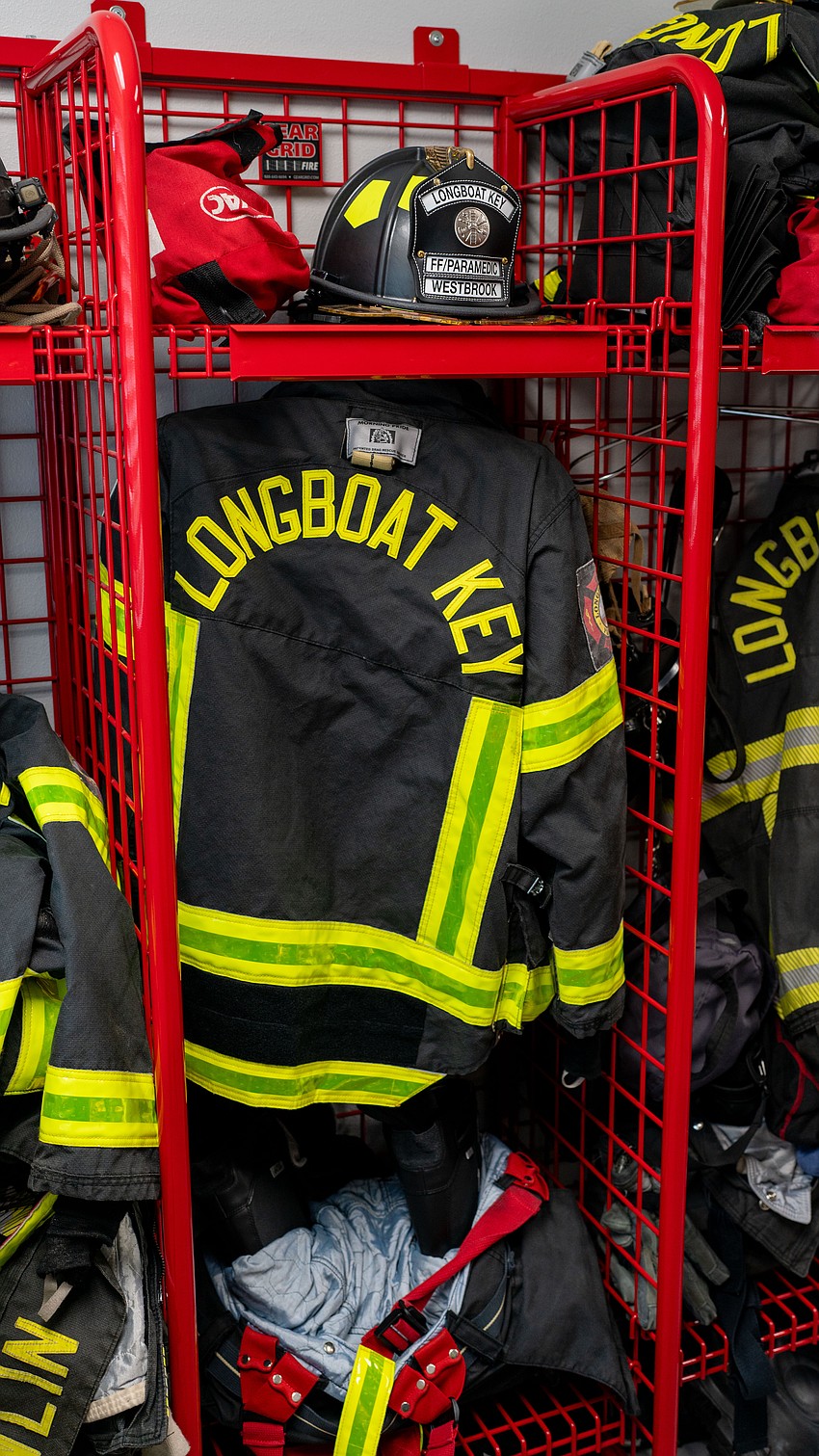
When a firefighter heads to a fire or chemical spill or other hazardous emergency, they head out in what is called full ensemble. The outfit includes a helmet, a hood, a jacket, gloves, bunker pants and boots. And before a firefighter approaches a fire, they don an oxygen tank and mask. The idea is for no part of their body to be exposed to the smoke that emits from the fire they are battling. Each ensemble costs about $5,000, Dezzi said.
If a firefighter is in full ensemble, their skin is not subjected to the harmful smoke, but the ensemble itself is. Because of that, laundry isn’t just separated by lights and darks at LKFR’s two stations. There’s a designated “extractor” washing machine used exclusively for firefighter ensembles.
The machine is housed in a small “decontamination room,” which joins the garage to the showers. Firefighters return to the fire station, park the truck, enter the decontamination room, undress, put the ensemble in the extractor and shower immediately.
Despite all these precautions, firefighting gear can poison, even when it’s brand new.
PFAS aren’t just in firefighting foams. They are a common additive to many products like non-stick pans, carpeting, cosmetics, rain jackets and firefighter ensembles.
Because firefighting apparel is built to repel water — which carries contaminants from the carcinogenic smoke — it is often manufactured using PFAS.
“You come into the service to help people and to save lives and protect lives and property,” Eggleston said. “You expect that your life is also going to be protected, and it’s kind of a letdown when companies are using products that can cause us harm.”
Some PFAS-free firefighting apparel has begun to show up on the market, and fire departments like LKFR are looking to make the switch.
“We still have fire gear that has PFAS in it, but it’s a budget issue, so we have to wait until we have the funding for it,” Dezzi said.
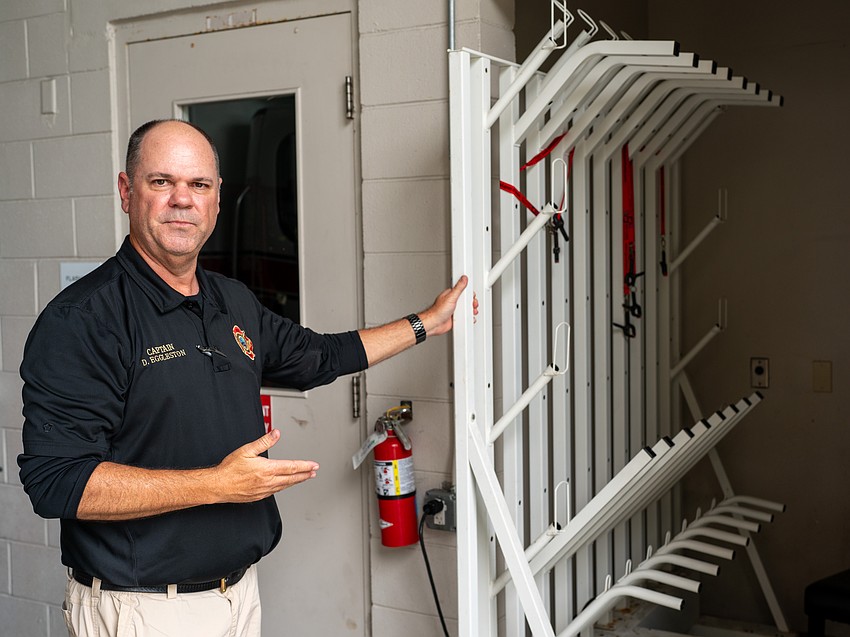
In the meantime, firefighters are trained to avoid unnecessary contact with PFAS-infused apparel. The room the ensembles are stored does not recirculate air to remove any airborne contaminations, the “shower-within-the-hour” rule is preached and an extra pair of ensembles are always available when the primary pair is drying or washing.
“Five years ago, I knew nothing of PFAS,” Eggleston said. “I wore my gear and I wore it whenever. If it was cold out, I’d put my turnout coat on and didn’t think twice about it. But now, today, that’s not something we do.”