- August 3, 2026

-
-
Loading
Loading
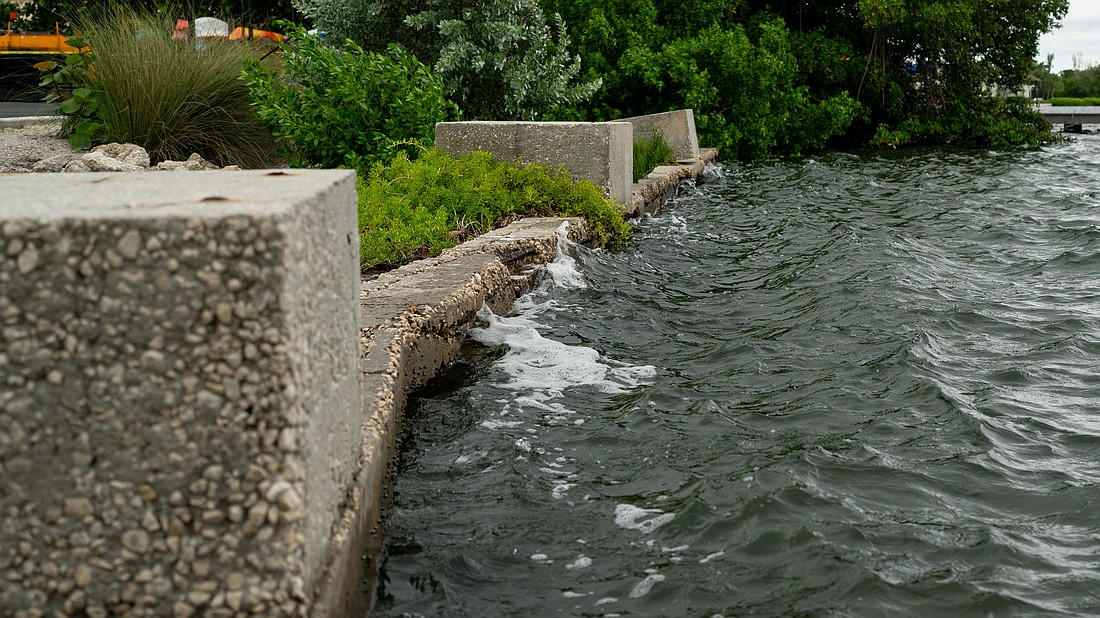
As repair work continues on the pickleball courts at Bayfront Park, the town of Longboat Key is looking to kill two birds with one stone with a seawall fortification project next door.
Just north of the living seawall, the no-frills concrete seawall that borders it has begun to crack. Some chunks even washed away to reveal the rebar inside, and one of the large concrete blocks fixed atop the seawall at regular intervals is leaning off-kilter.
Replacing the seawall would likely cost upwards of $200,000. With the town about to embark on an eight-digit wastewater pipeline project, followed by another eight-digit beach renourishment project the following year, the town instead opted on a unique, less expensive approach. Longboat Key has contracted with Groundworks Commercial to inject the seawall with polyurethane.
“What it basically does is it turns the soil into almost cement,” project manager David Kushnir said. “They put it in strategically and it prevents further erosion and almost creates a new seawall, so to speak, behind it.”
Groundworks, according to its website, injects behind seawalls and bulkheads to seal cracks, stabilize soils and fill voids behind walls.
“Injected through or behind the structure, polyurethane expands to lock soils in place, prevent water intrusion, and protect against future erosion,” Groundworks’ website states.
Instead of a six-digit price, the cost to the town is $28,978. It won’t change the fact the seawall will eventually need to be replaced, but the hope is to delay the need to do so.
“What this generally does is extend the life expectancy by 20 years,” Kushnir said. “My guess is we should get 10 to 15 years without an issue. That doesn’t mean we won’t replace the seawall if budgetary funds become available, but this is going to protect that investment in the pickleball courts.”
Injecting behind rather than replacing the seawall will also reduce impacts to mangroves that border a portion of the seawall, Kushnir said.
The seawall injection project is set to get underway Aug. 17 and wrap up two days later.