- July 28, 2026

-
-
Loading
Loading
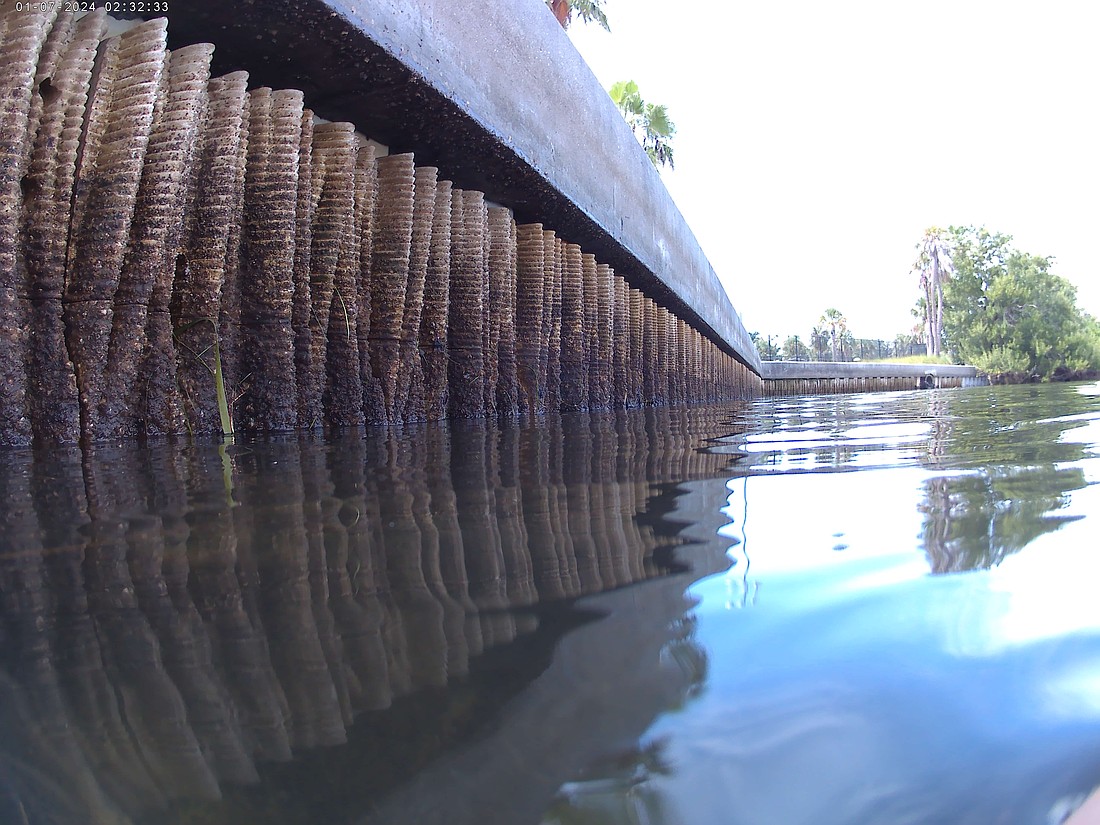
The living seawall is already working.
Barnacles have anchored, seaweed is growing on and small fish are sheltering under the concrete panels which were affixed to 300 feet of seawall at Bayfront Park.
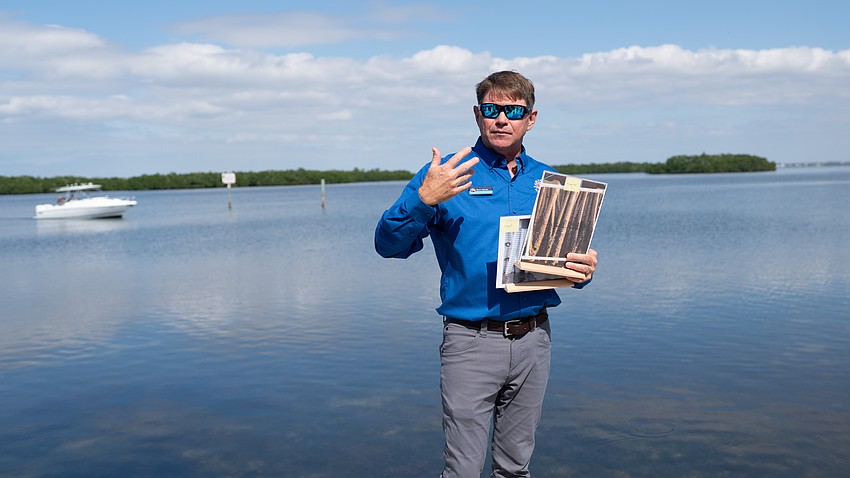
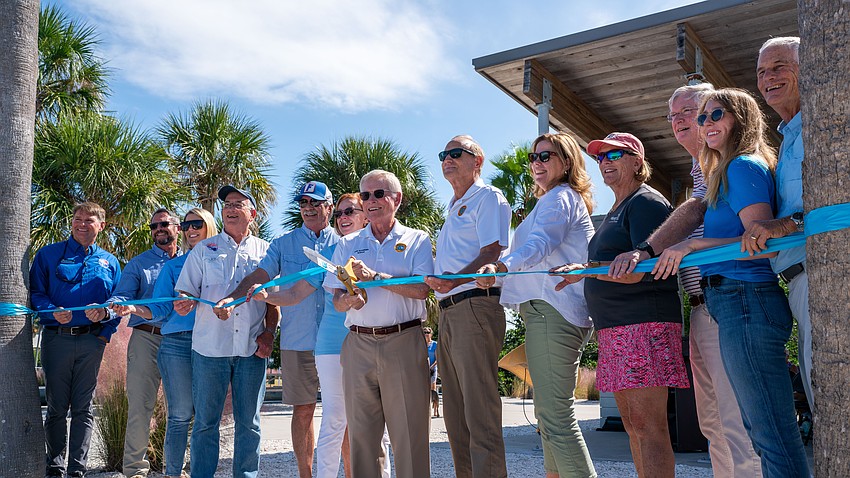
That’s just the beginning, said Sarasota Bay Estuary Program Director Dave Tomasko, as the town of Longboat Key officially cut the ribbon on its living seawall project Oct. 29 in Bayfront Park.
“It’s just going to get better from here,” he said. “We want to see oysters. Oysters spawn usually in the summer, so we’re going to have to wait to go through a summer spawning season.”
The ecological benefits of oysters are impressive. According to the National Oceanic and Atmospheric Administration, a single oyster can filter up to 50 gallons of water per day, removing contaminants as well as excess algae.
Oyster clusters also reduce wave strength and provide a nursery habitat for anchovies, blue crabs, flounder, herring, shrimp and a dozen other species.
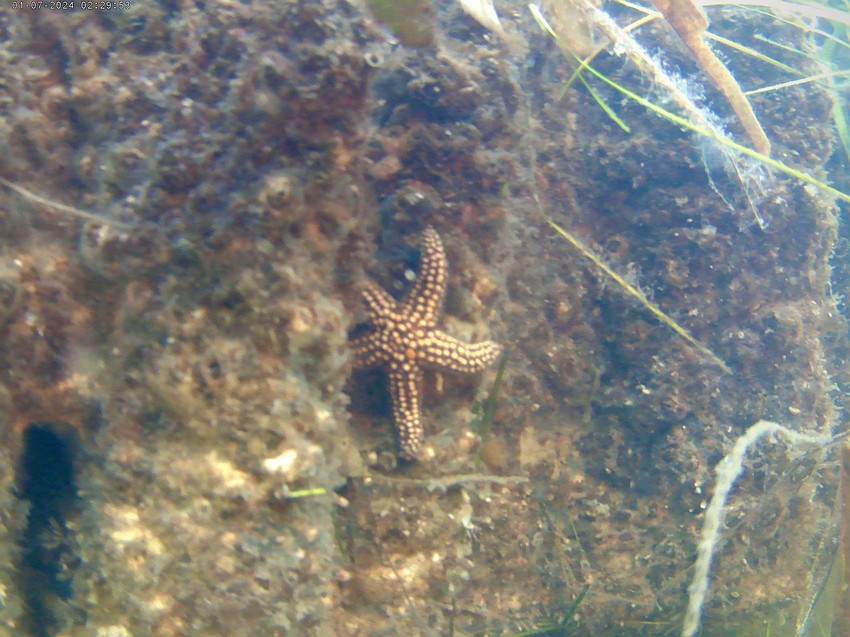
Their presence also helps seagrass populations thrive, something Estuary Program leaders are already doing victory laps for as the Sarasota Bay has seen impressive growth of the important plant in the past two and a half decades.
“Look how much cleaner this Bay is than 20 years ago. We put this Bay on a nutrient diet. Our water quality got a lot better, and we just had a seagrass increase of almost 2,000 acres, a 19% increase. And none of it was planted. The State of Florida’s guidance is seagrass is good, therefore plant it. We didn’t. It came on its own by natural growth as the water quality got better,” Tomasko said.
Oysters much prefer growing on concrete than plastic, evident from looking at the already-existing clusters anchored to the stormwater drainpipe near a still-plastic portion of the seawall which shows hardly any growth on it.
“If you go look at the plastic seawall, you don’t see anything but barnacles. That’s it,” Tomasko said. “You might see an odd oyster or two, but for the most part that’s our big concern. Eighty percent of our shoreline is artificial. It’s seawalls and rip-rap. If we turn 80% of our shoreline to plastic with that limited life, that’s going to be bad for the Bay.”
Plastic seawalls also pose potential risks to sea life through the release of microplastics, which carry pollutants and often ingested by marine animals.
“Any kind of plastic over time will start to break down,” said Sarasota Bay Estuary Program Science and Restoration Manager Ryan Gandy.
The installation of the $500,000 living seawall at the public park was a joint effort between many parties, said Longboat Key Public Works Director Charlie Mopps.
Funding of the project is from the Bipartisan Infrastructure Law, which allocated money to the National Estuary Program. The program then distributed funds to the Sarasota Bay Estuary Program.
From there, SBEP and the town worked with coastal and marine engineering firm Cummins Cederberg to develop an initial design of the concrete panels meant to mimic mangrove roots.
Then, KindDesigns began finalizing the design before crafting the concrete panels.
“Cummins Cederberg took that design and they actually tested it,” Mopps said. “They did wave lab testing with a portion of our seawall to see what anchors need to be put on this to keep it to the seawall and how does the impact of wave energy effect that. So there was a lot of collaboration there just in the testing process. Once that was done, they continued the engineering process and once they finalized the design, they went through the permitting. Enter the state.”
And the town had to permit it as well, gaining approval through planning and zoning.
The town’s green team then took the initiative to convince a team of Ringling College of Art and Design students to create a documentary about the project to raise awareness.
Finally, in July, a new partner in the project started its work when Kearns Construction Company workers donned scuba suits to actually install the concrete panels.
Tomasko said waterfront homeowners with a seawall can replicate Bayfront Park’s living seawall project if they want to play a part in increasing the water quality of the Bay they border.
“They can reach out to us and we can put them in contact with folks that can do something like this,” Tomasko said, adding that a permit is not needed if the panels don’t touch the ocean floor and that the design of the panels do not have to resemble mangrove roots. “You can spell out your favorite politician’s name in concrete if you wanted to.”
Jay Plager recently did the opposite of installing a living seawall, replacing his concrete seawall with a plastic one after storm damage. A brush-up against the previously installed concrete, barnacle-laden seawall scratched the hull of his boat. When he replaced the seawall, he said he chose the more forgiving plastic material.
“From the pure efficiency point of view, it made a lot of sense. I remember being so excited to get rid of that concrete seawall after scratching my boat,” Plager said.
But after attending the ribbon-cutting ceremony Wednesday and learning more about the benefits of a non-plastic seawall, he said he may consider adding some concrete panels — but maybe not right next to the dock.