- July 22, 2026

-
-
Loading
Loading
It’s technically not turtle season yet, but dozens of volunteers are waking up early to walk the beach in search of turtle tracks.
Longboat Key Turtle Watch President Jeff Driver said that although turtle season doesn’t begin until May, volunteers began patrolling April 15.
“What we’ve been seeing is earlier nest activity,” Driver said. “Typically it will be late April, early May.”
Since 1969, Longboat Key Turtle Watch has been caring for the turtles that trek onto the Manatee County shores of Longboat Key. That year, there were nine nests. Last year saw 1,473.
From coolers filled with eggs being held on volunteer lanais to GPS coordinate tracking of nest locations, the process has evolved over the last 57 years. The five tasks that Turtle Watch volunteers perform begin with the start of daily patrols.
The Gulf-facing Longboat Key shoreline is about 11 miles long and is split by the Manatee-Sarasota county line. Mote Marine volunteers patrol the southern end of the island. To the north of the county line, Longboat Key Turtle Watch volunteers walk the beach in groups.
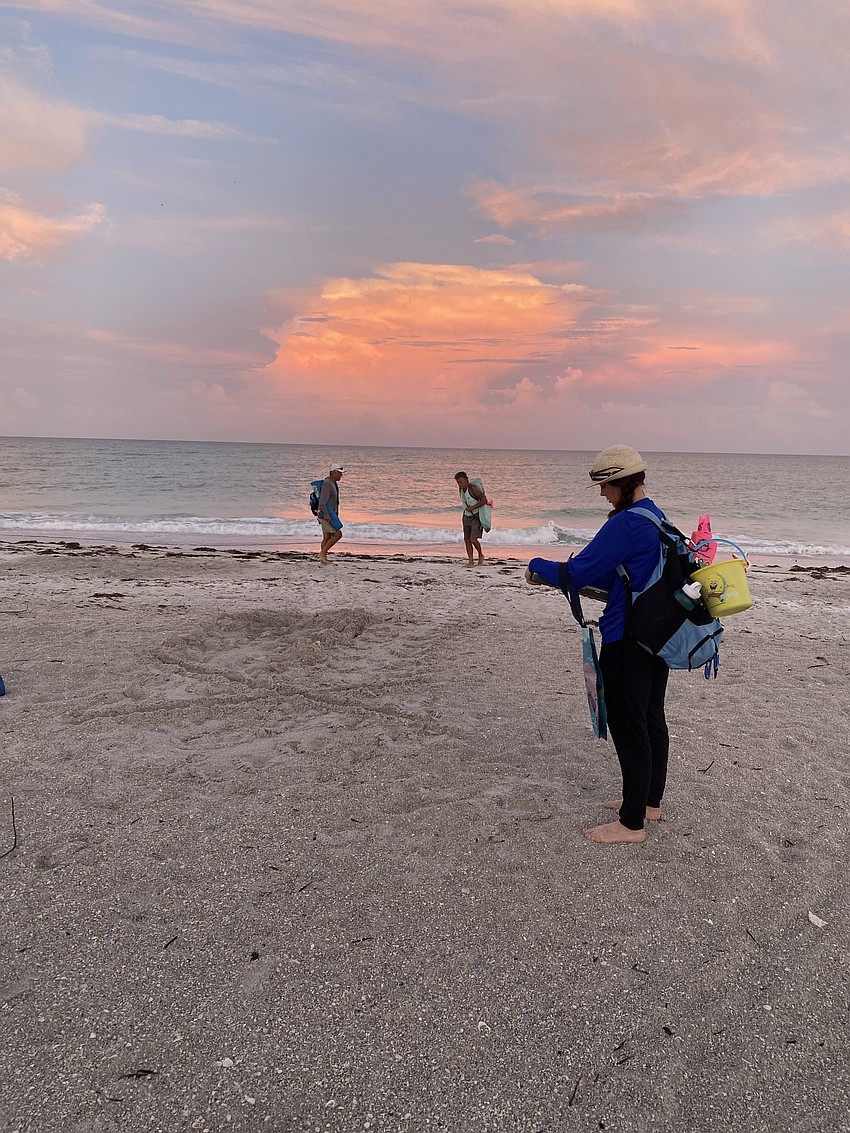
The Manatee County shore is split into four zones, and each group is responsible for taking early morning walks along their zones.
“The patrols are always at what we refer to as civil twilight. That’s right before the sun really emerges and you’re starting to see twilight because you need enough light to see things reasonably well, the tracks in the sand and other things we’re looking for,” Driver said. “So we go out at civil twilight, which varies each day. On the first day of patrol it was 6:40 a.m.”
Of the four to six Turtle Watch patrollers, two are required to be permitted biologists, Driver said. Their training comes in when turtle tracks are finally discovered.
“At the beginning of the season it's kind of fun, you're just strolling the beach,” Driver said. “But then the work starts happening. You’ll see a peak nesting density in the middle of the summer.”
When turtle tracks are seen by beach patrollers, the volunteers tap into their bags of supplies.
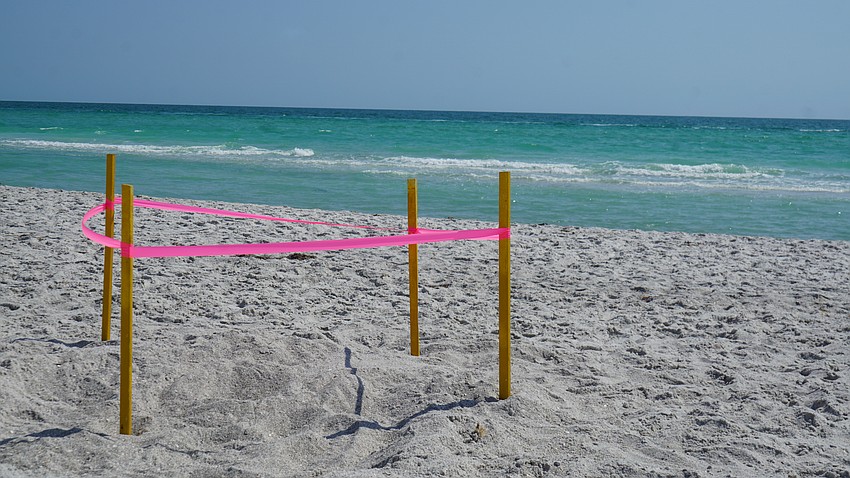
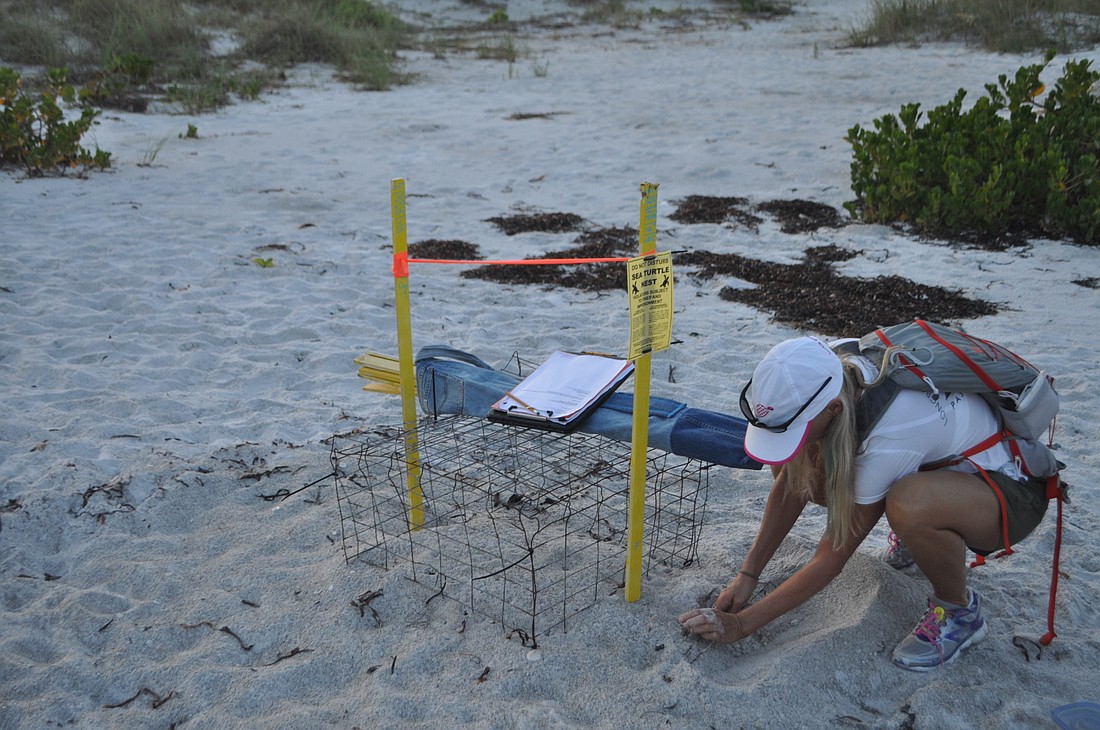
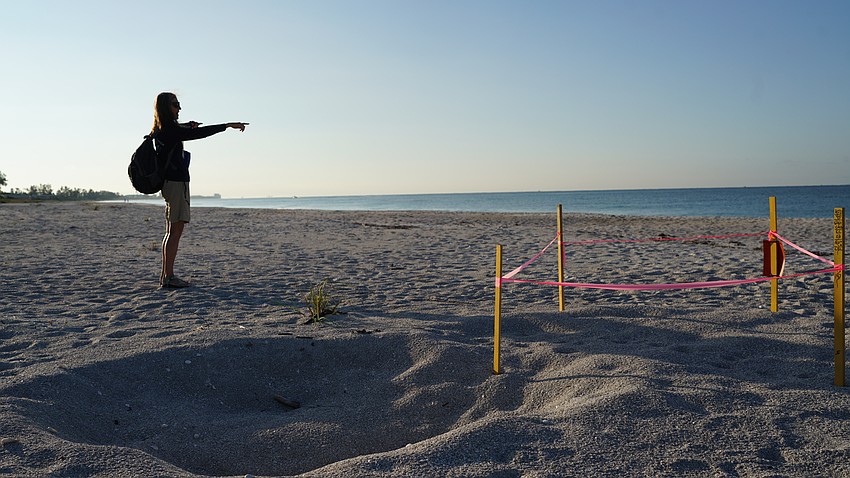
“As the season gets busier, you have to have more of your inventory available, so that’s why you need multiple people to carry all the material,” Driver said. “We have these bags we carry those yellow stakes in. You have tape you put around the stakes, you have signage to put up, you have the Garmin GPS device, you have a tape measure, you have a rubber mallet to pound the stakes in, pencils and markers.”
The stakes are used to mark the turtle nests. Some are marked with one and others are marked with two or four. The markers are meant to prevent beachgoers from disturbing the nests. They also tell a story.
“The stakes have various information that you put,” Driver said. “When you observe a nest you want to put an effective date that it was there. We have kind of a code for each day of the season, we write the zone you’re in, the address that we associate it with on GMD, the species of turtles, whether or not we took a GPS measurement is indicated.”
Longboat Key Turtle Watch volunteers diligently track all sea turtle-related activity they see on the beach, whether it's false crawls — in which a turtle goes onto the beach but does not lay eggs — or nests. When nests begin hatching, they are also monitoring that activity.
“As soon as we finish the patrol for a given zone, we call Mote Marine and give them a verbal report, and then we also go back to our computers and enter data for that day’s observations,” Driver said.
There’s reporting data, and there’s reporting code violations.
Volunteers are also thinking about the marine turtle protection ordinance on their morning strolls. Visible lighting from the beach is a major concern. With just two dedicated code enforcement officers on town staff, volunteers play a big role in alerting the town of violations.
“We rely, not entirely, but heavily on a lot of the volunteers that are out there. Longboat Key Turtle Watch as well as Mote,” Code Enforcement Officer Paul Goodwin said. “They have a direct line to us and they can send us pretty much daily reports.”
Goodwin said code enforcement hours are adjusted at times during the season “not only to make our own observations, but to address the issues that are brought up to us.”
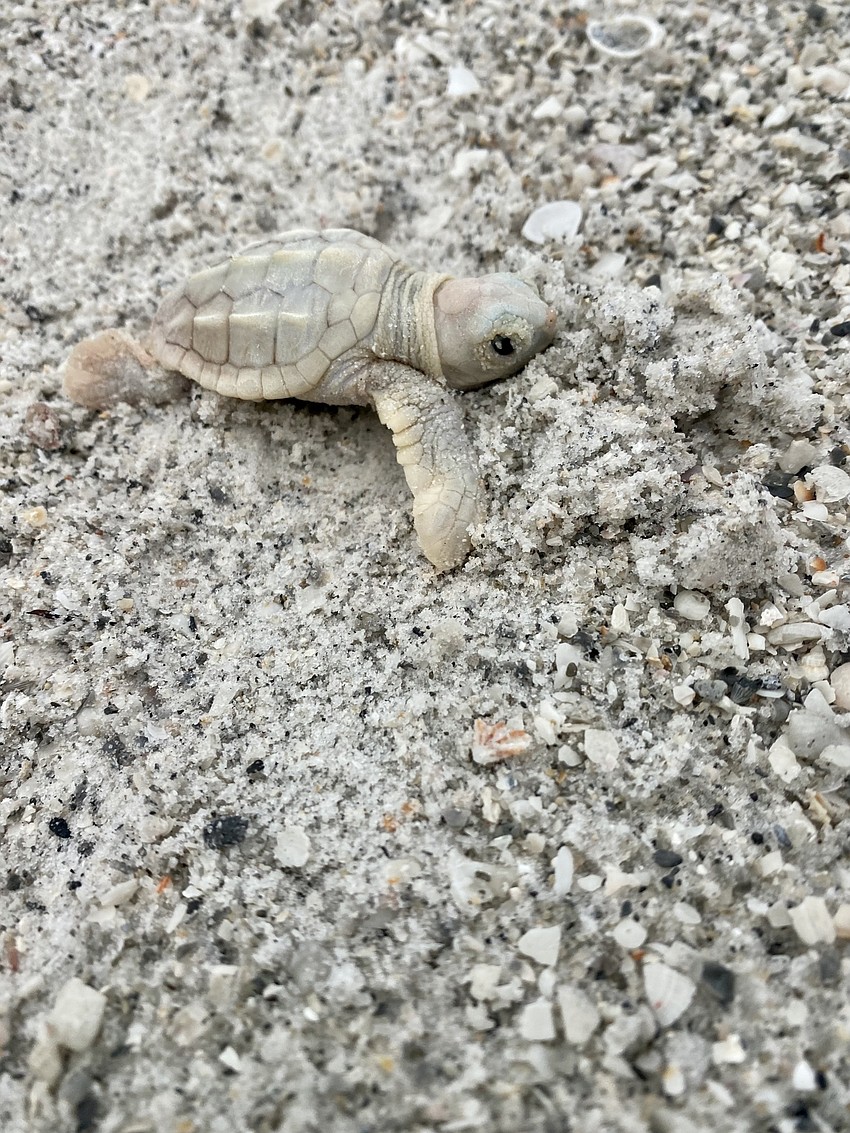
As sea turtle season continues, volunteers will start to see smaller flipper prints in the sand. And there are other signs even before a nest is hatched.
“As the embryos mature and they’re near ready to hatch, they start wiggling around in the egg and chirping like a bird making noise. They have a little part of their beak that we call an egg tooth that they use to cut through and break through the leathery eggshell,” Driver said. “As they start to move, the sand starts to settle a bit up top. You get this little dip, this little divot. We call it a drop. So sometimes we get evidence that a nest is probably going to hatch soon if there’s a drop in the sand.”

The next sign of activity are little flipper marks in the sand. For some of those hatched nests, more data is literally dug up.
“We want to record the date that it hatched, and then we’ll wait for several days after that. For some nests, we excavate the nests to determine the hatching outcomes,” Driver said. “The field biologist does that work. They carefully move the sand away and they try to find the top of the clutch. You dig carefully and then take a measurement from the top of the sand to where the clutch begins. Then you start to find eggshells that were hatched. You’re carefully pulling out each egg and separating them in each category by hatched versus unhatched eggs.”
Informing the public is the final and, to Driver, most important aspect of Longboat Key Turtle Watch’s work.
“Educational outreach is our key component,” Driver said. “We look for a lot of different opportunities.”
Volunteers attend community events throughout the region sharing tips on how to be good stewards of the beaches. That includes filling holes dug, knocking down sand castles and installing FWC-certified wildlife lighting near the shore.
In 2026, Longboat Key Turtle Watch hopes to expand its educational outreach. The group is continuing to work with Florida Eco Films to produce video content and has made an ask to Longboat Key Town Commission to jointly host an informative open house event to spread awareness of how to keep baby sea turtles swimming into the Gulf safely.