- July 21, 2026

-
-
Loading
Loading
Myakka City’s Elizabeth Efferson is reading Manatee County’s proposed update to its comprehensive plan, but she needs more time to work her way through the 484-page document that was released to the public April 19.
“It’s too high-level,” Efferson said. “I’m having to look up different terms just to understand one paragraph.”
Even the “Summary of Amendments” is 219 pages with 42 updated definitions of things like “inflowing watercourses,” which are “hydrologic connections defined as areas of state or federal jurisdiction.”
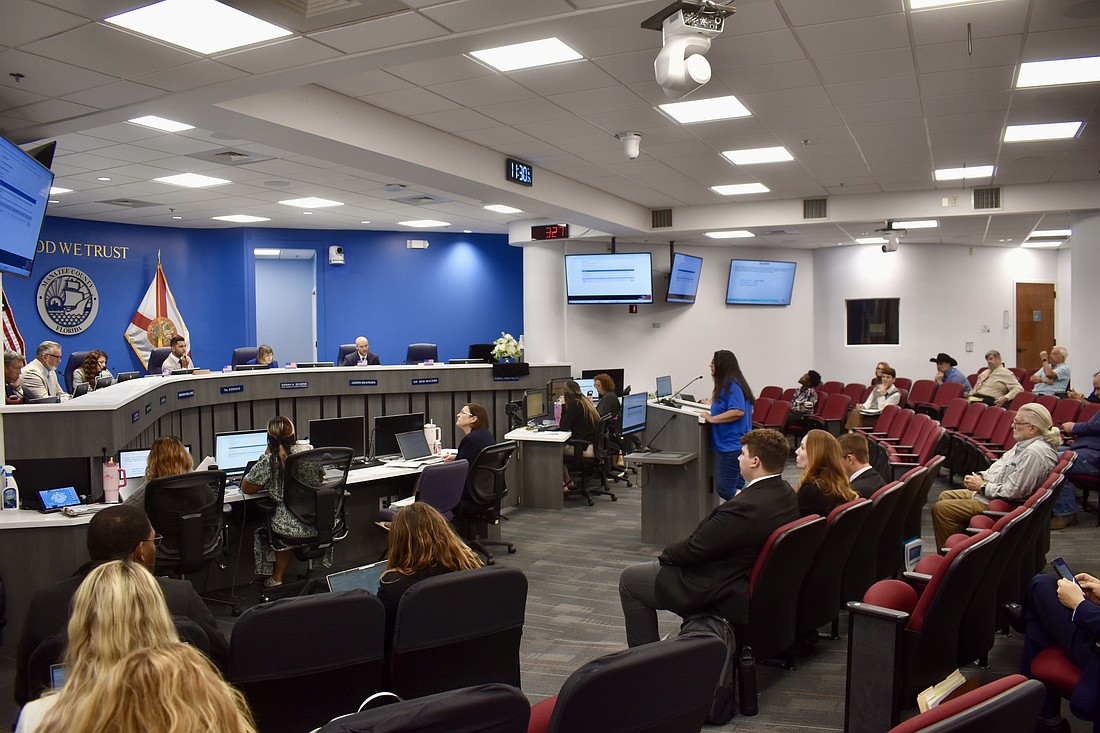
Efferson didn’t step up to the podium to address commissioners at the June 4 meeting, but about 20 other residents did and several more submitted written comments that echoed her concerns.
With jobs and families to tend to, residents said they weren’t given enough time and information to properly give feedback on the proposed changes.
The comprehensive plan is a vision for Manatee County’s future. It’s a living document that was first adopted in 1989 and looks at least 10 years ahead to shape policies and guide future decisions.
Consulting firm Kimley-Horn was hired by the county in 2023 to update the plan. The firm held a series of 15 public meetings between August 2023 and April 2026.
Resident Elaine Johnson told commissioners she attended one of the workshops, but “it wasn’t very informative.”
“We had trouble getting questions answered,” Johnson said. “It’s been brought up to have some town hall meetings with you, commissioners. I hope that’s something you’ll consider so we can dive down. It’s a time issue for a lot of people working, but this is a lot to comprehend, but it’s very, very important. Our county is dealing with a lot of problems due to overgrowth.”
Although commissioners didn’t commit to holding any town hall meetings, they voted 5-1 to give residents until Aug. 6 to review the proposed amendments.
Commission Chair Tal Siddique cast the dissenting vote, however, Commissioner George Kruse also voiced support for transmitting the amendments to the state.
But in the end, it didn’t matter how Kruse, Siddique or Mike Rahn voted because commissioners Jason Bearden, Bob McCann and Amanda Ballard had made it clear leading up to the vote that they were in favor of a delay.
With a six-member board, a tied vote is the equivalent of a denial.
During the lunch break, Kruse told the East County Observer that he, too, was concerned about time, but too much time versus not enough time.
Once the comprehensive plan is finalized, the county will start updating the land development code, which will take more than a year of rewrites and public hearings to complete.
Kruse said the things that residents actually care about are in the land development code, such as density, setback allowances and parking ratios.
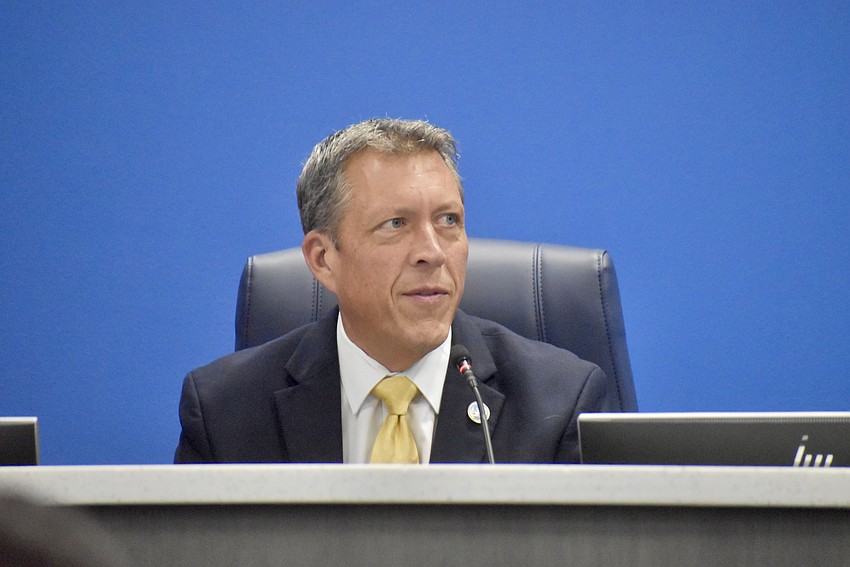
He offered an example of how the two documents work in unison: The comprehensive plan lays out the guideline that the county will actively avoid urban sprawl, and the land development code adds the mechanisms to adhere to that guideline, such as allowing additional density and height within urban corridors to promote infill development, thus avoiding urban sprawl.
McCann argued that it is more important to build public trust.
“Just like what happened with the wetlands, which actually got me elected, we were told it was just a transmittal. Well, it wasn’t,” he said. “There’s a difference between participation over three years and seeing the finished product.”
Even the “finished product” isn’t finished because Senate Bill 180 prevents the county from writing anything into the plan that could be deemed “more restrictive or burdensome,” language that was never defined by the state.
Due to the restriction, Director of Development Services Nicole Knapp said some changes, such as reinstating larger wetland buffers, won't be submitted to the state for review just yet.
“Some of the public comment, we couldn’t proceed with right now, so there’s a parking lot situation where we’re holding onto those,” Knapp said. “They’re prepared as part of Phase 2."
The plan is to wait out SB 180 until it expires in October 2027, then transmit a second updated comprehensive plan to the state.
Many residents expressed similar concerns as Johnson about “overgrowth,” so Trevor Poole, a planner with Kimley-Horn, shared “key updates” within the future land use element of the comprehensive plan.
Policy 2.1.1.4 ties into Kruse’s example of limiting urban sprawl. The policy states that Manatee County will “promote development in currently undeveloped or underdeveloped areas which have the greatest level of public facility and infrastructure availability.”
Siddique clarified that the added language of “underdeveloped areas” does not include “greenfield development.” The policy is targeting areas, such as Bradenton, Ellenton and Palmetto where infrastructure already exists, not areas beyond the Future Development Area Boundary, such as Myakka City.
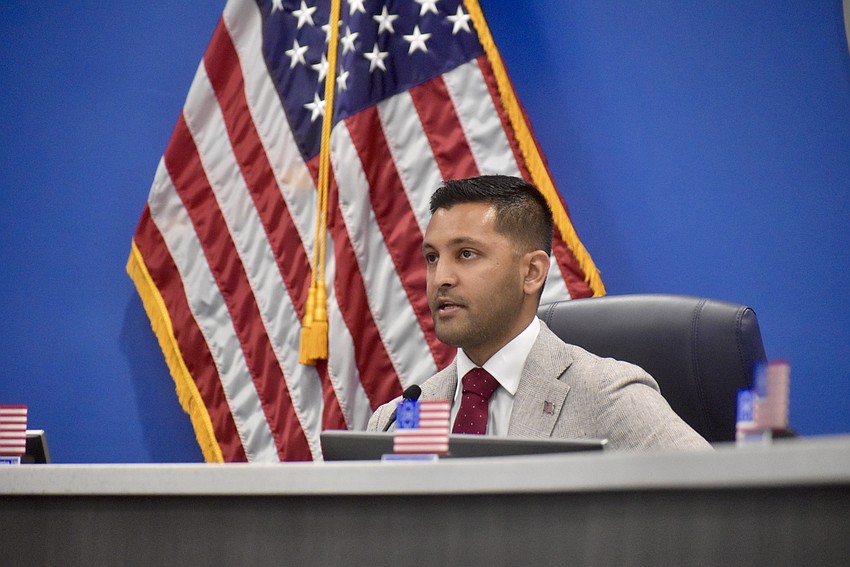
Policy 2.2.1.26.4 is an added policy that establishes a new land use category: Mixed use-community/community serving.
Poole said creating “true community serving mixed use” was something that came up during the public engagement sessions. He said the category is intended to accommodate medium- to high-density residential uses, along with a mixed-use component that directly serves people living in that dwelling area.
Kruse often makes the argument that providing services near residential areas lessens traffic congestion because people don’t have to drive as far to dine or shop.
The range of potential uses within the new category include such neighborhood commercial uses as a grocery store, schools, recreational uses and public or semi-public uses like a library.
Another new policy intends to protect and enhance agricultural centers. Poole called Policy 2.5.1.7 “a policy to research programs and do case studies to see what can be adopted.”
The language in the policy states the goal of preserving agricultural land could be accomplished through the land development code or other programs that would compensate farmland owners to transfer development rights and conservation easements to the county.
The policy also adds a protection that “when new non-agricultural development is introduced adjacent to existing agricultural use, the non-agricultural use shall provide sufficient onsite buffering or other mitigation techniques to allow the agricultural operation to continue.”
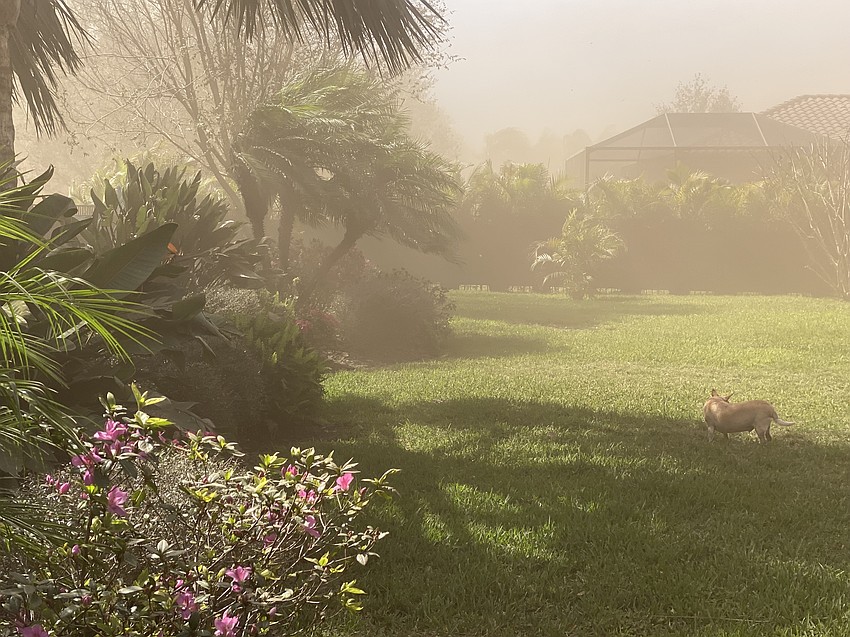
A key update that falls under the category of Conservation, but is development-related and has plagued East County residents for years, is the county’s handling of construction dust.
Policy 3.1.1.6 already required the “control of erosion, fugitive dust and air emissions” related to development. The added language, if adopted, would require county staff to incorporate performance standards into the land development code to assure that “exposed, destabilized or other altered soil is expeditiously covered with an acceptable erosion control material.”
The update would also require that “chronically non-compliant” developers use the “best available control technologies prior to re-issuance of their operating permits,” and staff will be required to follow up on complaints and notify state and federal agencies of the non-compliance.
“Nobody talked about anything being bad,” McCann said. “(Residents) haven’t had time to read it.”
To see the updated comprehensive plan in its entirety, visit MyManatee.org/envision.