- July 25, 2026

-
-
Loading
Loading
Over the past week, city of Sarasota senior staff members have huddled to plan for a budgetary “what if” … a scenario in which millions of property tax dollars the city allocates to fund multiple departments and functions are lost to statewide property tax reform.
Even as budgeting was well underway for fiscal year 2027, financial administration personnel, interim Deputy City Manager Jennifer Jorgensen and new City Manager Karie Friling — at the time with just a few days on the job — have shifted to grapple with the prospect that a statewide referendum to dramatically increase Florida’s homestead exemption for resident homeowners garners 60% of the vote needed for approval.
The constitutional amendment would increase the homestead exemption from $50,000 to $150,000 in 2027, and increase it to $250,000 in 2028. City staff estimates the increased exemptions would reduce city property tax revenues by approximately $5.5 million in fiscal year 2029, the exemption adjusted for inflation each year thereafter. That's about 9.5% of the funding property taxes contribute to the general fund.
That doesn’t include uncertainties resulting from other measures in the referendum that may impact the city’s budget.
Staff are currently working on the fiscal year 2027 budget. If the referendum is approved in November, the first-year impact of some $3 million will be felt in fiscal 2028.
Friling said the state Legislature's approval of placing the tax reform referendum on the November ballot prompted a shift from her initial priorities in her first week behind the city manager's desk.
"I have immediately pivoted, and my top priority right now is how we're going to deal with this," Friling said on Tuesday. "My focus has shifted away from long-term planning projects — whether its community development or economic development focused — to what are we going to do because we'll have a significant impact to our budget if this is approved in November.
"Now we're really going through what does this mean, reading the language, talking to our attorneys, talking to our lobbyists who are in the room at the time, and trying to get to what our playbook is going to be as we move forward."
For now it remains speculative, but Liz Alpert, the longest-tenured city commissioner and two-time mayor, said planning for the impact of referendum approval is paramount.
“I think what we're going to do is prepare as if it passes so that we're hopefully as ready for that as we possibly can be,” Alpert said. That includes the possibility that the general fund hit could put a full stop on capital projects as the city eyes the possibility, perhaps likelihood, that tens of millions spent on 2024 hurricane recovery are not reimbursed by FEMA.
Such projects include planned non-enterprise expenditures such as funding for The Bay park, a clubhouse at Bobby Jones Golf Club, Sarasota Performing Arts Center and more.
“It's going to be a real problem,” Alpert said. “We just may not be able to do some of the things. They may have to either wait or never get done.”
Most of the city’s operate budget, though, is tied up in personnel.
In the current fiscal year, personnel and all related costs such as benefits and pension are 71% of the total operating budget, with 52.6% dedicated to the Sarasota Police Department. And, Alpert said, the city is not overstaffed.
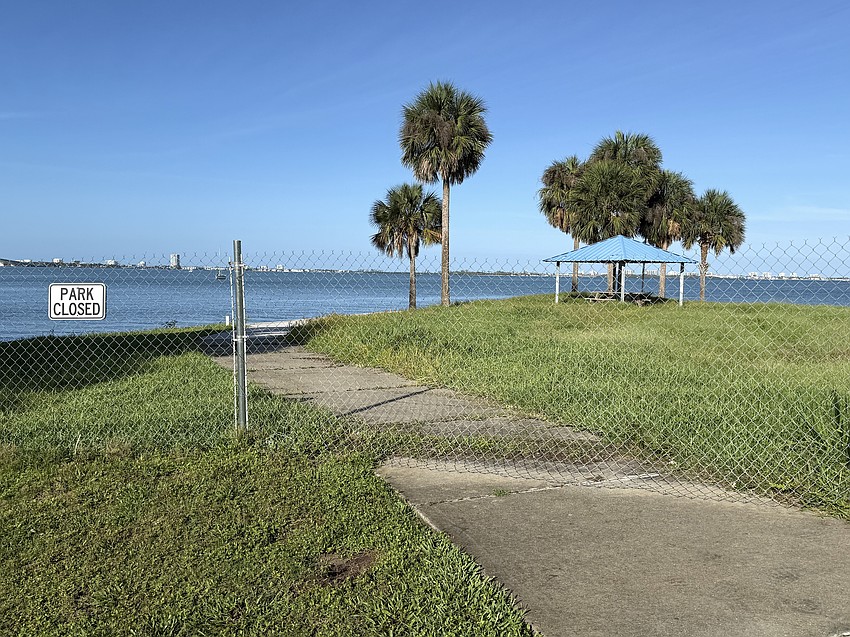
Not only does the referendum amendment increase the homestead exemption, it also limits where the property tax revenue may be spent. That list does not, for example, include parks and recreation.
“We're looking at getting an opinion from our city attorney about whether we can spend money on parks at all based on the limitations that they put in the bill,” Alpert said. “If it can't be spent on parks, that's going to be a huge issue. Everything is on the table for cutting.”
Friling, an environmental enthusiast who has spent the last five years overseeing the Forest Preserve District of DuPage County, Illinois, shares Alpert's concerns.
"When I look at the pending referendum language, nowhere do you see those two words — park and recreation," she said. "How is that possible?"
The general fund budget for the current fiscal year is $108.3 million. Of that, the property tax revenue is $57.3 million, or just less than 53%. At a potential $3.18 million revenue reduction resulting from the first-year $150,000 exemption, that’s 3% of the general fund.
And don’t look to non-residential properties to make up the difference. The amendment provides additional tax savings for non-residential property. Currently, the cap on annual assessment increase for a non-residential property is limited to 10%. The amendment limits the increases on commercial, apartment complexes and other non-homestead properties to 5% beginning Jan. 1, 2027.
That leaves the annual millage rate as the only source to make up lost revenue, which is short of politically expedient for those who wish to remain in office during the succeeding election cycle.