
- July 6, 2026

-
-
Loading
Loading
With the holiday weekend of Memorial Day ahead, it's a time many people are planning to head to the beach.
However, they're not the only ones who are hoping to make use of the space, and they may be sharing it with some feathered residents.
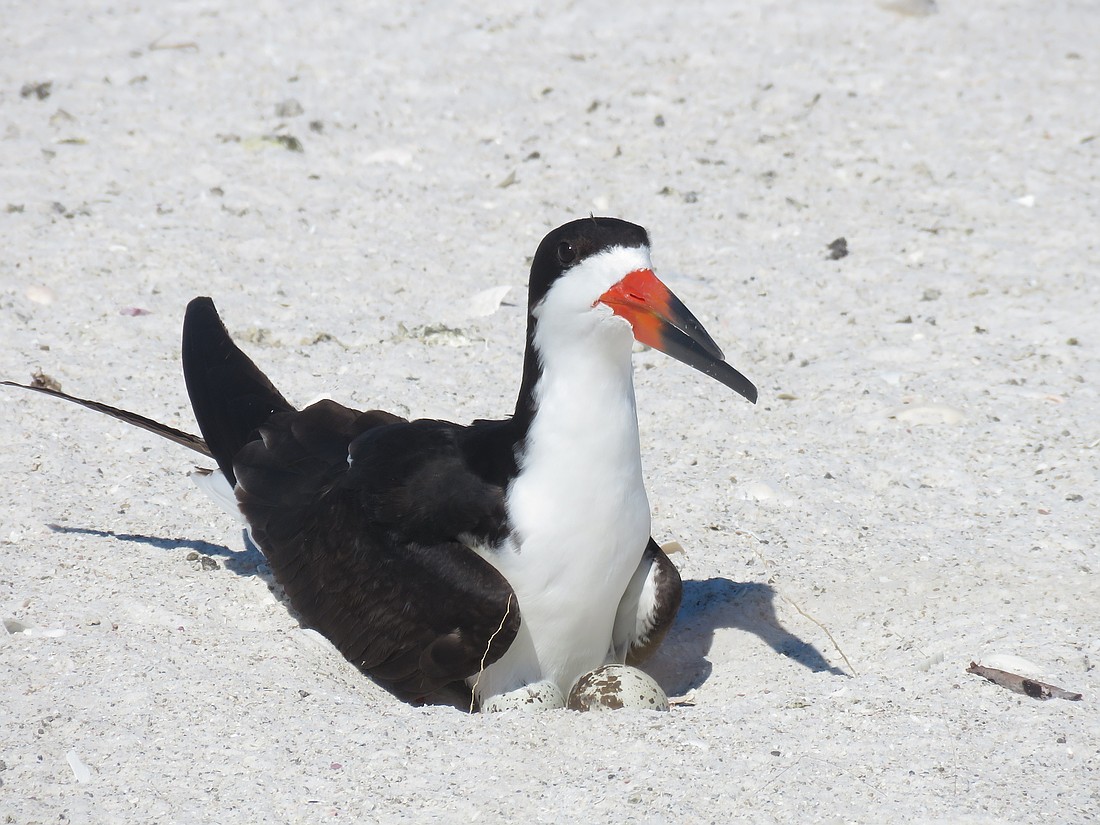
Currently, a section of North Lido Beach is the local gathering spot for black skimmers, a distinctive medium-sized seabird in the gull family, which are designated a threatened species in Florida.
Abby O'Donnell, Sarasota stewardship coordinator for Audubon Florida, expects their chicks to begin hatching this week.
She shared some tips for beachgoers on keeping the bird colony safe and healthy while enjoying the beach over Memorial Day weekend.
This season initially brought 500 black skimmers to North Lido Beach, with about 300 in Siesta Key and 300 in Longboat Key, O'Donnell said.
However, the birds began congregating on North Lido Beach, just north of the public access at John Ringling Boulevard and Benjamin Franklin Drive.
That count of nests is about standard for Lido Key, averaging about 1,000 adults in a colony that usually brings 700 to 1,300 birds and has been nesting on Lido since at least 2011.
Recently, the skimmers were located at South Lido Beach, closer to the public parking. While O'Donnell says their current spot will spare them from activity in the immediate area near the parking lot, people must still be aware of the colony.
Black skimmers are protected in the state of Florida, with one of their biggest threats being habitat loss.
"Their population is declining, so we try to do as much as we can, even if it's protecting one bird at a time, it makes a big difference," she said.
Beside the skimmers is also a small colony of least terns, a state-threatened small seabird, with 12 members.
O'Donnell said the skimmers have strong site fidelity and expects them to continue returning to Lido Key, for it is the location where they have seen the most success.
Some of their predators include gulls, fish crows and coyotes, with the latter having a notable presence on Longboat Key.
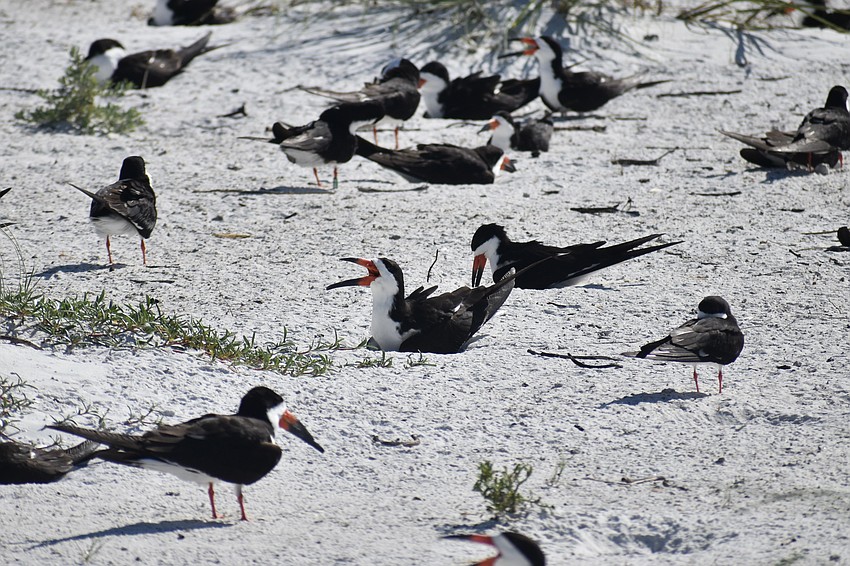
While the area of the birds, which is opposite the water, is roped off, the young will still be wandering out of the area after they hatch. While people can legally walk on the beach outside the ropes, they are prohibited from disturbing the bird colony.
Often, the birds will be found near the water line, but people should make sure they don't walk through the areas where they are found.
O'Donnell said disrupting the birds and making them move or fly away can waste energy that they need to conserve to incubate their eggs and raise their young.
"We really want people to give them space, give them room to rest and relax and be able to save that energy to provide for their young when they need to," she said.
Another important way people can help the colony is by cleaning up their trash, which can blow into the colony and disturb the birds as well as attract predators.
Additionally, dogs are not allowed on the beach, and the skimmers perceive dogs as being their primary predators, even if they are leashed and at a distance.
O'Donnell said that a network of volunteers and stewards on the beach Friday, Saturday and Sunday is helping to keep watch, helping to not only warn beachgoers but also educate them about the birds.
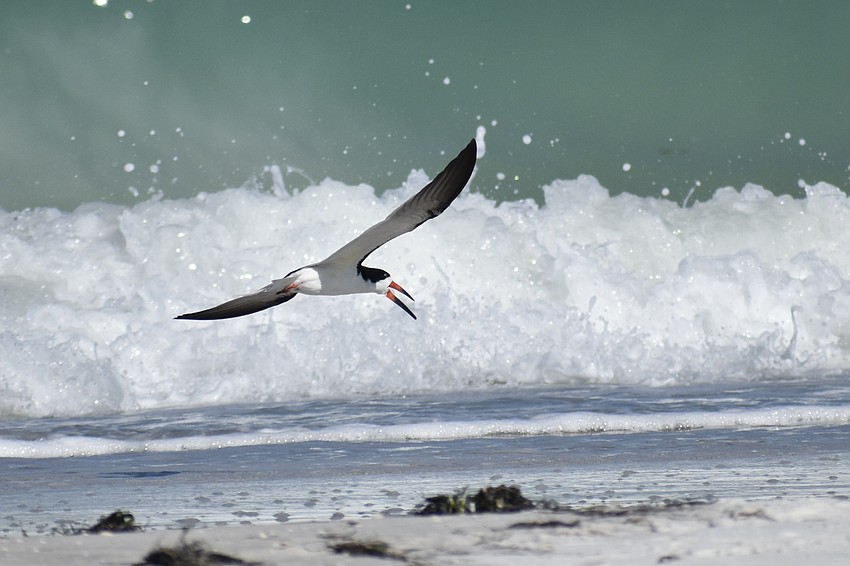
The species has a beak with a bottom part longer than the upper one, and their name comes from the fact that they can be seen using it to skim the water for their food.
Adult birds are recognizable by their distinctive black and white coloration, while their chicks blend in with the color of the sand, which helps them avoid predators.
O'Donnell hopes that people will maintain their admiration for the birds while keeping their distance.
"You can still admire them, still observe them, whether you go further into the water to walk around them, or if you have to come up into the sand a little bit more, just giving them space, and have that admiration for them, but from a distance," she said.