- July 10, 2026

-
-
Loading
Loading
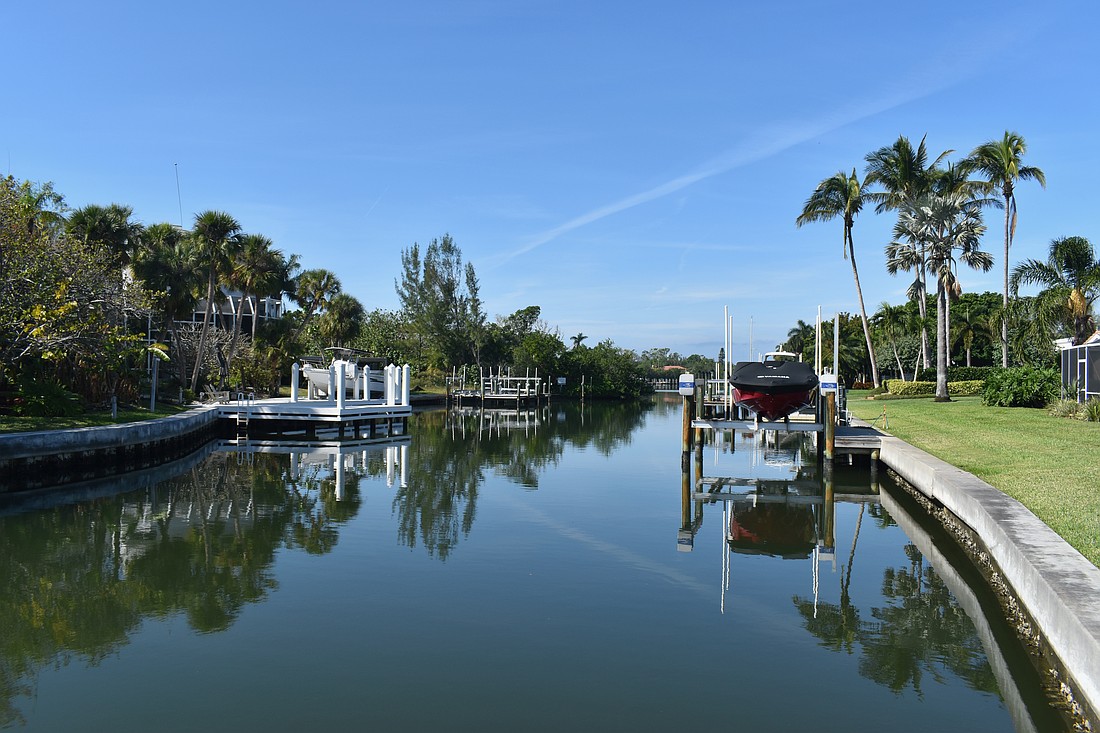
The vote that was years in the making was unanimous at Monday’s Longboat Key Town Commission meeting.
“This isn’t a conversation that started last week or last year or last decade. It’s actually been much longer than that,” Town Manager Howard Tipton said before a discussion on canal dredge funding began once again at Town Hall.
Canals were last dredged in 2003, and conversations about establishing a way to fund a continuous dredging program for the town’s canals began in the '90s before that limited dredging 23 years ago.
Tipton said canals impact the health of the entire island because of the benefits they have on stormwater management.
“This project obviously does help with navigation, but it’s also part of the resiliency,” Tipton said. “It’s eliminating and removing the sediment, which creates greater drainage opportunities when we have stormwater events, and that’s a big deal.”
At the Monday commission meeting, Jim Haft, who lives on the northern point of Longboat Key, argued that his property and neighboring properties should not be assessed the $620 annual fee because he does not live on a canal.
“We’re in open water. We are on natural deepwater channel between Jewfish Key and Longboat Key, which is a few hundred yards wide,” Haft said. “There’s no buildup of silt, sediment, debris. It’s never been dredged, never will need to be dredged. Our family, we’ve had a house here for 50 years, and I can tell you it’s never changed.”
Assistant Town Manager Isaac Brownman said the dredging is not being done only on canals, but on various waterways where boat navigation is relevant.
“There are over 80 identified canals, waterways, access channels and perimeter channels,” Brownman said. “Mentioning all of those names is not insignificant. It’s not just canals. It’s the waterways to get to the canals, the channels to get to the intracoastal. It’s all the pieces that connect to make the island a navigable amenity throughout.”
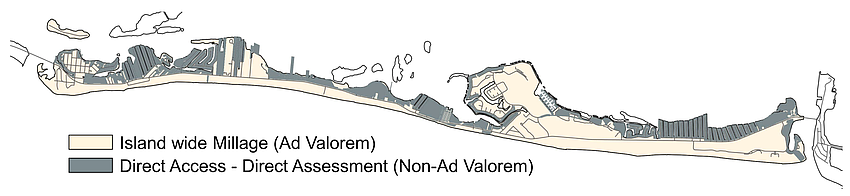
The canal dredging program is expected to cost about $9.66 million to pay for the initial dredging over the first five years. After that, the funding for continuous maintenance of canals will be reduced, with flat fees dropping by about half to $318 for canal-facing properties. The resolution states that the dredging will cost the town $1.46 million in the 2026-27 fiscal year.
Chris Roe — whom Town Attorney Maggie Mooney described as “essentially an assessment expert” and has helped the town through multiple bond initiatives — said if there were increases to the anticipated costs, the flat fee could be increased only if the resolution were passed with an amendment.
“The resolution is set up so that it specifies that the maximum amount for the upcoming fiscal year at $620 per (boat dock) and specifies that the maximum rate that can be used in fiscal years thereafter is set at that same $620,” Roe said.
Mayor Debra Williams asked how a potential gap in funding (or how the funding split could change) if prices for dredging rose higher than what was budgeted.
“If this is capped at $620, and we have made extensive public announcements, information sessions saying that this is essentially an 80-20 split, how do we maintain the integrity of that if that $620 is capped and we cannot go higher?” Williams said. “That means if we have some unexpected circumstances that raises the cost in year three, then we’re going to have to put more of that cost on the non-benefited properties that were paying the 20%.”
Roe said the flat fee could be changed year-to-year even if an amendment were not added to the resolution.
“If you keep the maximum rate at $620 for future fiscal years, then in order to increase above that rate in the future, during your annual rate-setting process, she would give notice to the entire population, but the assessment area, and tell them that were are going to, for instance, consider a rate increase from $620 to $700, you are invited to attend that meeting and participate,” Roe said. “So it’s really up to the preference of the commission. You can leave it at $620 or you can build in some flexibility to go up in the future without townwide notice.”
Consultant Tara Hollis, with Willdan engineering consulting firm, said inflationary factors were taken into the estimated $9.66 million that would be raised over the first five years for initial dredging. A report by Willdan and First Line Coastal shows a more than $2 million “inflationary adjustments” line item.
The commission voted on and approved the resolution without any amendments. The next commission meeting is June 1.