- August 12, 2026

-
-
Loading
Loading
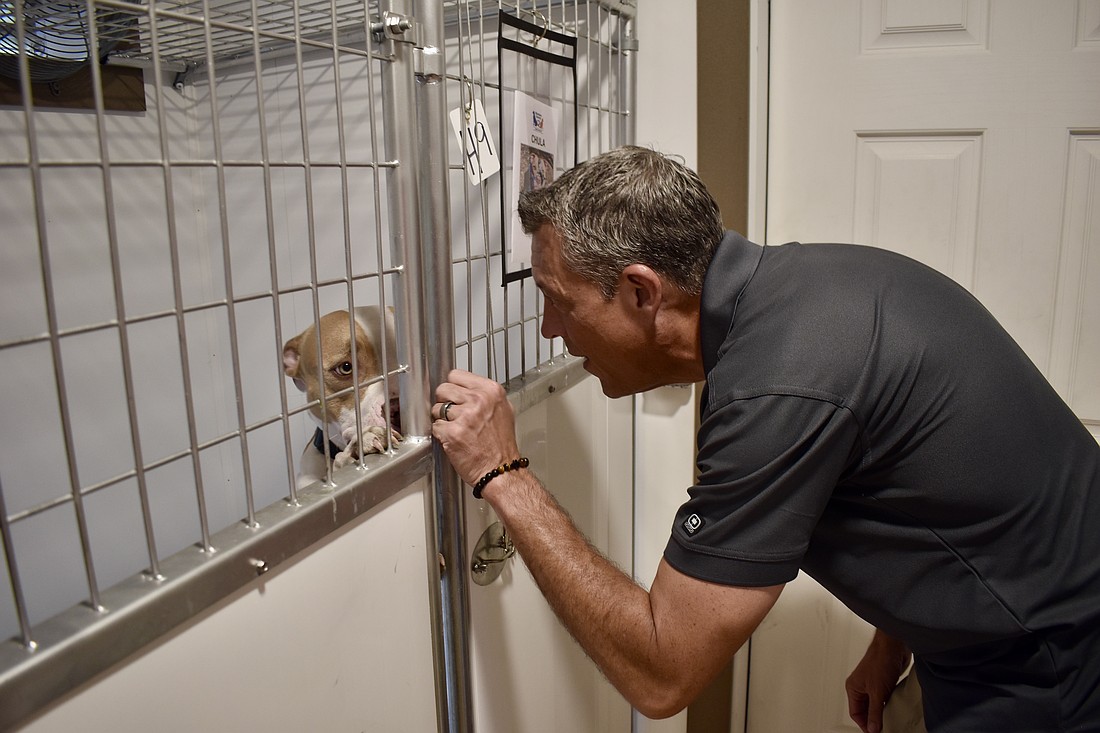
Commissioner George Kruse said the donation of the Bishop Animal Shelter to Manatee County in 2021 was both a blessing and a curse.
The donation, valued at $18 million, increased the county’s capacity to take animals off the streets and led to the closing of the outdated Palmetto Animal Shelter. But the expansion efforts created a public firestorm and took focus away from the original plan to build a brick and mortar shelter in East County.
Given repeated complaints by some animal advocates and a Change.org petition signed by over 2,000 residents about the donated shelter's expansion, which includes a new adoption center and eight 15-kennel cottages, Kruse would like to renew the East County effort.
“We have all these passionate people,” he said. “Let’s work together and come up with a $15 million budget (to build a new shelter in East County) for about three years from now, instead of ripping out what we already have to come up with a slightly nicer version of the exact same amount of kennels in west county.”
Given the decision by the current board to keep the county-owned property on Lena Road, the land for an East County shelter is secured.
The complaints from Manatee County animal advocates about Bishop have remained consistent — The expansion is not what was promised, it’s not a functional facility, and the kennel cottages should be torn down to build a concrete block facility to ensure "storm-ready, safe spaces for staff and animals."
Kruse noted that animals are fostered out ahead of storms, and the cottages are hurricane rated, although he couldn't say to which category of hurricane.
Some of the more detailed complaints have focused on the lack of shade in the outdoor areas of the facility, narrow aisles inside the cottages, the size of the kennels, and the need for more fencing, to which Kruse said the county is working on it.
What started as an $8 million budget has ballooned to $12 million, and the county is not finished making adjustments.
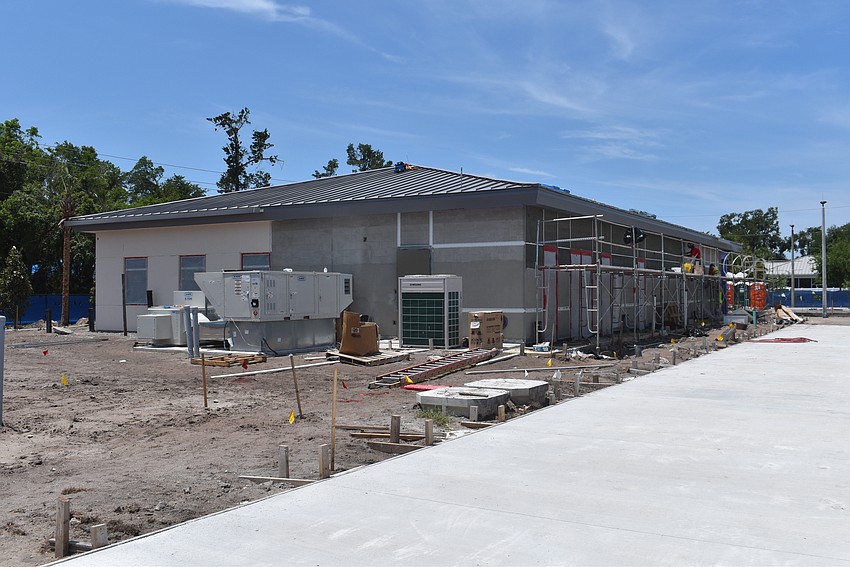
When an East County Observer reporter toured the facility May 9, workers were putting up additional fencing outside the cottages. There's also a perimeter fence.
The adoption center is still under construction with a grand opening anticipated for July.
As Kruse led the tour, he pointed out newly planted trees, new dog waste stations, easier to maneuver latches on the gates, permeable pavers outside the kennels, coyote bars on the top of the fences around the play yards, and additional reinforcements on the bottom of the fences so dogs can't push their way out of the yards.
Most of the adjustments and additions were made because volunteers recommended them.
“We’re listening to everything they say,” Kruse said.
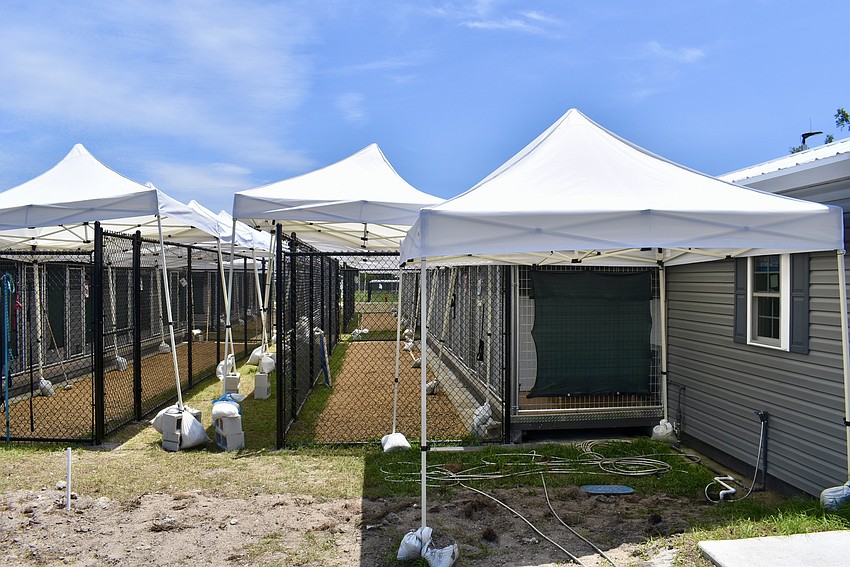
The most eye-catching adjustment to the campus is a series of white tents that line the cottages to provide shade for the dogs when occupying the outside area of their kennels. The legs of the tents are weighed down with sandbags and concrete blocks.
Social media commenters have compared the shelter’s appearance to that of a “FEMA camp,” but the tents are only a temporary fix. Permanent shade structures are on order.
Kruse said the staff is learning as it goes, but he emphasized that county commissioners and staff members are listening and responding to the feedback.
The expansion was modeled after Nate’s Honor Animal Rescue Center on Lorraine Road. The difference between the two campuses is the size of the cottages and the layout.
A cottage at Nate’s holds six kennels, versus 15 at Bishop, and the cottages surround a courtyard. The cottages at Bishop are in a row.
Recreating Nate’s exact model would have been more expensive. Kruse noted each additional structure would require more site work, sidewalks and utility expenses. If using "six-pack" cottages like Nate's, Manatee County would've had to install 20 cottages instead of eight to reach the same 120-dog capacity.
During the Jan. 27 commission meeting when residents brought up Nate’s, Kruse used cheese to put the matter in perspective.
“At no point in time should anyone eat their government issued cheese and say, ‘This reminds me of the brie I had while I was touring Paris,’” he said.
Nate’s is funded by private donations, and Bishop is funded by tax dollars. For that reason alone, Kruse does not see ripping out the current kennels as a solution because it would waste tax dollars.
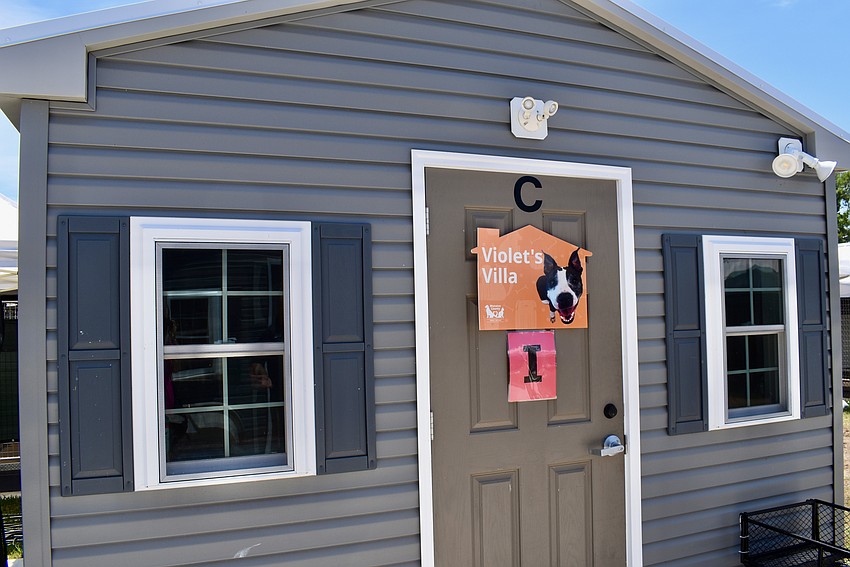
He also noted that the Bishop donation came with a 25,000-square-foot brick and mortar building that includes 53 dog kennels and a capacity to shelter up to 372 dogs, cats, rabbits, guinea pigs and birds.
"Everything that they want us to build is here and ready to go," Kruse said. "(The kennel cottages) are extra."
The main building includes storage and a state-of-the-art veterinary facility that the Palmetto Animal Shelter was lacking.
Dogs were moved from Palmetto to Bishop March 19.
At the May 5 commission meeting, shelter volunteer Cathy Bridwell said the conditions are "intensifying."
"We've noticed a significant increase in kennel stress since the move," she said. "Almost all the dogs are spending their entire time in the outside kennels, where there's no break from the heat and over stimulation of seeing the other dogs."
Bridwell added that the dogs are becoming cranky from the heat, which increases the risk of bites. She also said staff are "worn out."
Kruse agreed with Bridwell that the shelter is understaffed. If he could find extra money in the budget to hire more full-time employees, he said that would be the best use of any additional funding because the dogs could be walked more frequently.
On Jan. 27, Commissioner Bob McCann made a motion to have the University of Florida Shelter Medicine Program "analyze what needs to be done to improve the shelter with what is already available."
On Feb. 10, six staff members from Manatee County Animal Welfare met with two representatives from the University of Florida over Zoom to review their recommendations.
Animal advocates were upset that the meeting didn't happen in person, but Kruse said it was a matter of timing.
The University of Florida representatives couldn't meet in person until the end of the year, which has since been moved up to August. The Zoom meeting was a way to speed up the process.
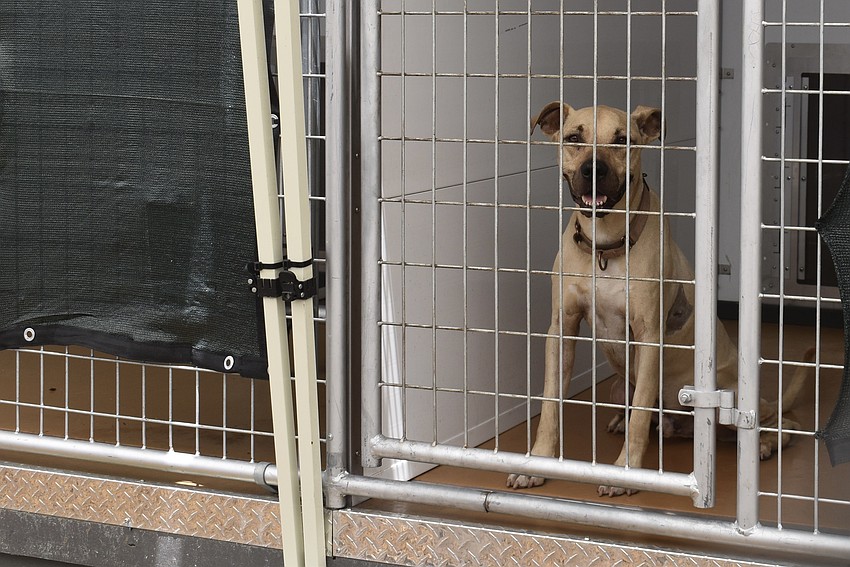
Many of the university's recommendations mirrored what advocates had been saying. For example, the university recommended the "installation of shading and secure fencing to improve animal safety and heat welfare standards."
Manatee County acted on both those recommendations among others.
The university also made recommendations that would prevent the spread of diseases, such as adjusting cleaning protocols and drains and adding more water spigots to prevent cross contamination from hoses dragging from one area to another.
When the site visit happens in August, a full report will be made available to the public.
In the meantime, the once defunct Animal Services Advisory Board has been reinstated and will hold its first meeting in June.
"We're making changes in real time," Kruse said. "On average, other than a handful of dogs, most of the dogs come here for less than eight weeks."