- June 29, 2026

-
-
Loading
Loading
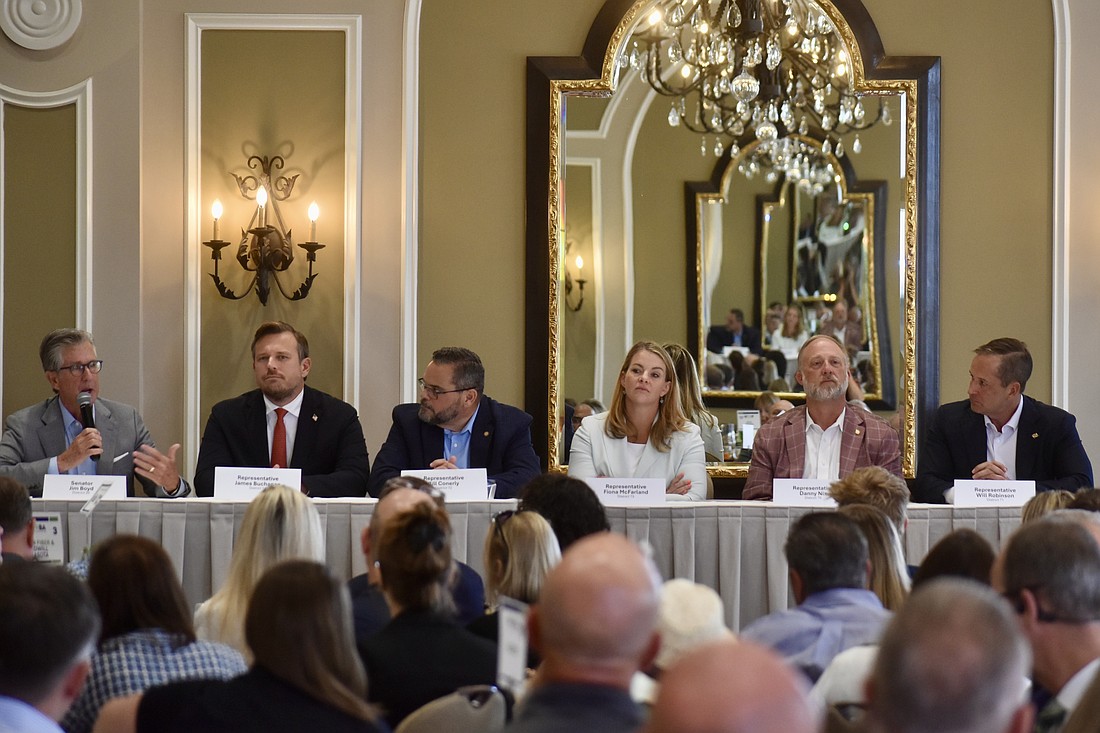
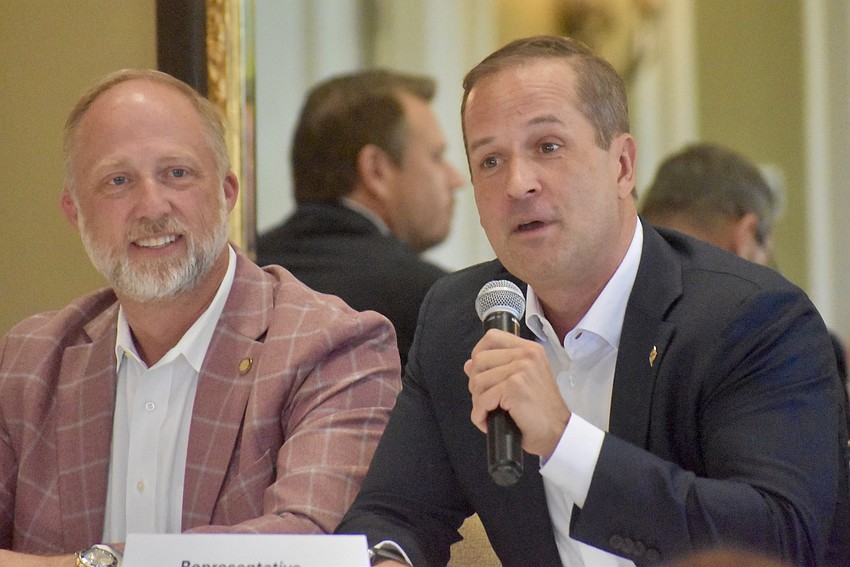
Rep. Will Robinson Jr. told members of the Lakewood Ranch Business Alliance, “This session was one for the books.”
Robinson, who represents District 71, was one of six members of the Florida legislature to speak at the Alliance’s June 24 luncheon: “State of the Region: Sarasota and Manatee Legislative Recap.”
Robinson was joined by District 20 Sen. Jim Boyd, District 72 Rep. Bill Conerly, District 73 Rep. Fiona McFarland, District 74 Rep. James Buchanan and District 75 Rep. Danny Nix.
The panel drew a crowd of about 180 to the ballroom at the Lakewood Ranch Country Club. Nick Feather, the incoming LWRBA board chair, led the discussion with topics and questions compiled from about 70 submissions from attendees.
As an engineer, Conerly places infrastructure at the top of his priority list. If he had it his way, 80% of the state’s budget would fund infrastructure.
Out of the almost $600 million of state appropriations awarded to Manatee County over the past two years, Conerly said about $280 million funded infrastructure projects.
This year, $50 million will fund resurfacing roads in Manatee County. The budget cycle begins July 1.
Conerly emphasized that infrastructure refers to more than just roadways. Water treatment facilities and electrical infrastructure could also "constrain cities and counties from continuing to prosper."
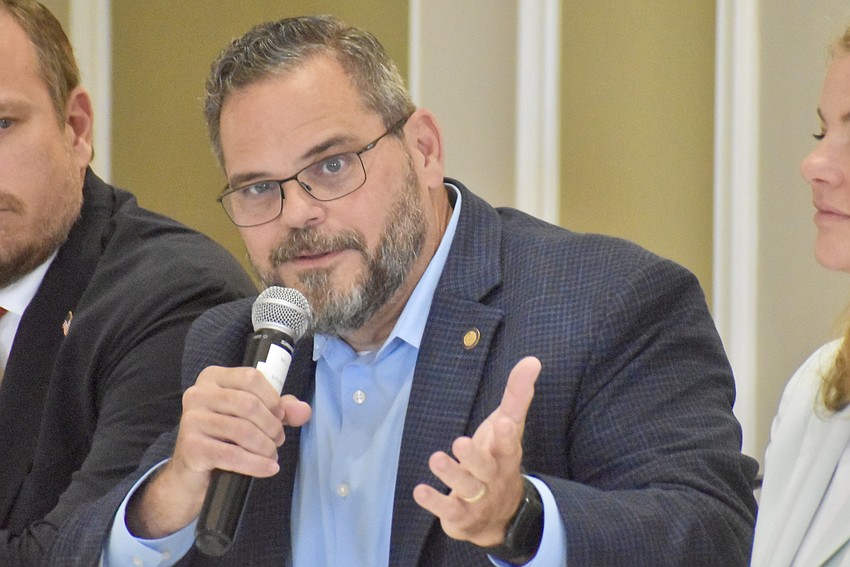
Conerly noted that Florida is currently using about 96% of its electrical grid capacity, so while there’s “talk” of bringing manufacturing and data centers to Florida, there’s not a lot of capacity.
“We need to make those investments if we want Florida to continue to be on the forefront of expanding technologies,” he said. “These are investments, that as a legislature, we are very, very aware of, and they are a focus for us.”
Boyd, who is the Senate president-elect, said his agenda isn't fully formed yet, but infrastructure will be critical, and Manatee County will be an area of focus.
Feather called the property tax referendum “the elephant in the room” and asked the panel what they thought their constituents should know about it.
The referendum will be on the November ballot and proposes increasing homestead exemptions up to $250,000 by 2028.
The general consensus was that some type of property tax reform needs to happen.
Regardless of what voters decide, Robinson was firm that the issue is not going away. If this version doesn’t pass, “another product” will be heard by the legislature.
“If we passed a $50,000 homestead increase, we would have the same opposition that would come out saying there’s a list of 20 projects that aren’t going to be able to be funded,” he said. “If this is not the right answer, I would encourage my local government friends to advise us on what you think works.”
Robinson ended his comments with a question to local officials: How are you all going to lower your budget?
“We’ve done that in Florida, and our voters expect you all to do the same thing,” he said.
Commissioner Mike Rahn was in the audience. He’s not sure the referendum is the right answer, but he is sure it will be “painful” for everyone if the measure passes because services will have to be reduced.
Rahn can’t say what specific cuts will be made, but he pointed to Manatee Moves, an on-demand ride service the county provides to veterans, as a vulnerable service because it’s not a “basic necessity.”
A day earlier, during the Government Efficiency Liaison Committee meeting, County Administrator Charlie Bishop spoke to members about the possible consequences of the referendum passing.
“I know how much it’s going to cost in full-time employees to get to $81 million,” he said. “It’s 700 FTEs out of the general fund. That’s a large portion of your maintenance technicians, librarians, lifeguards — those are the positions that are going to be hurt the most.”
Bishop added that the general fund also pays for maintenance services, such as mowing right-of-ways and cleaning canals.
Conerly said the referendum isn’t a perfect solution, and he isn’t even sure it’s a good solution, but he voted for it because the people get to make the decision.
As a resident of Manatee County, who bought his current home 21 years ago, Conerly is OK with the property taxes he pays, but he understands that his neighbor who bought five years ago is paying a lot more.
He called the rise in property taxes and insurance “symptoms of an issue.” The issue is the escalation of property values, to which supply and demand could offer relief.
“If we have people moving to the community, we need to make sure we have housing available so prices don’t escalate,” Conerly said. “That’s kind of counter to the concern related to development, but the reality is we can either have our families and kids stay here and contribute to the community or they can move out.”