- July 21, 2026

-
-
Loading
Loading
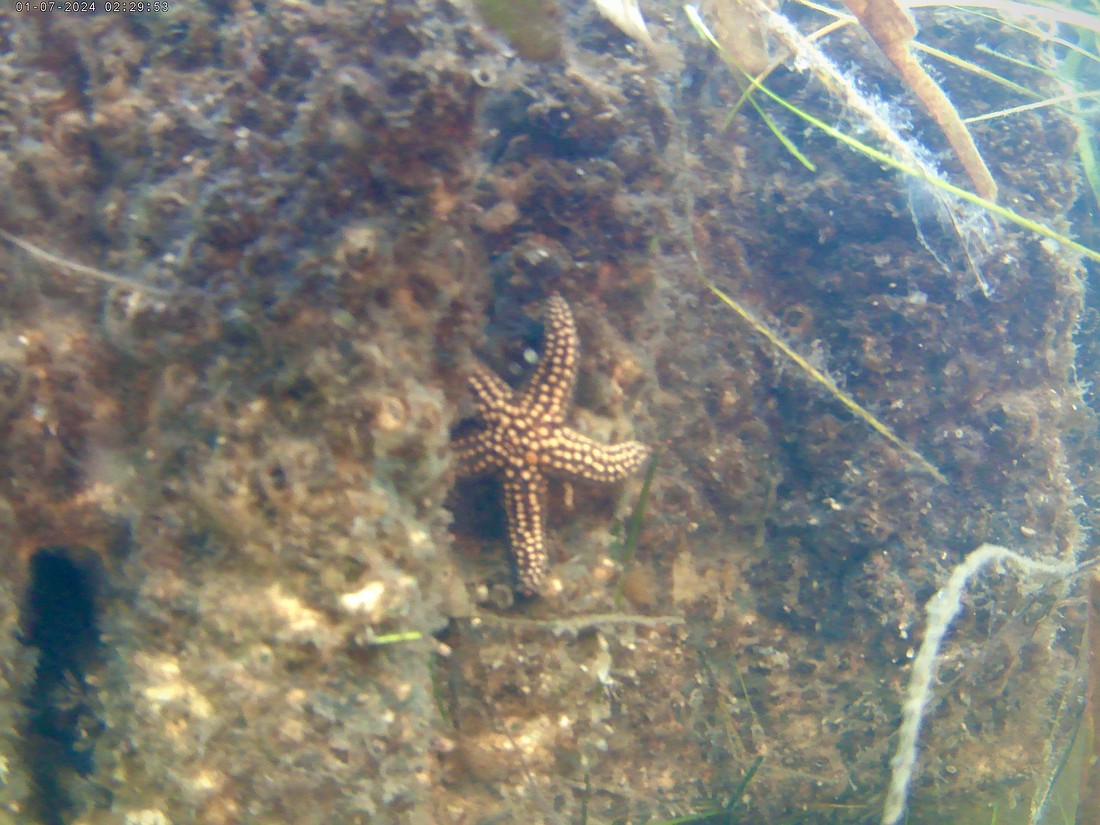
Longboat Key’s living seawall has been a hit for underwater Sarasota Bay dwellers since its installation.
Now, months after the concrete panels were fixed to the plastic seawall at Bayfront Park, the unique project has an accolade to its name. The Florida League of Cities recognized the town of Longboat Key with an Environmental Stewardship award “for its creative approach to coastal infrastructure,” according to a news release by FLC.
The $500,000 project was funded through the Bipartisan Infrastructure Law, which allocated funds to the National Estuary Program. The Sarasota Bay Estuary Program worked with the town to permit the project, which consisted of applying concrete panels textured with a mangrove-root inspired design to the plastic seawall.
Ryan Gandy, executive director of the Sarasota Bay Estuary Program, said growth on the wall has happened a little bit slower than anticipated because of a cold winter followed by a dry spring. The Gulf Coast is still technically in an extreme drought, even after recent rains.
Without rain, the water in the bay is starved of nutrients like nitrogen and phosphorus.
“Once you start getting rain, you’ll start getting algal blooms. Not all algal blooms are bad,” Gandy said. “Once those nutrients start coming in during the rainy season, that creates the base of the food chain.”
Algae is a meal for sea snails and crabs, which have also been seen on the living seawall panels at low tide, Gandy said.
“Other organisms start feeding on the algae,” Gandy said. “This seawall provides an attachment point for those filter feeders.”
The seawall is attracting underwater attention though. During high tide, underwater cameras deployed by volunteers have picked up tunicates, also known as sea squirts. Gandy said the diversity of the wildlife seen on the habitat is an example of its benefits to the coastal ecosystem, and the makeup of species will not be static.
“We did think we would have a diversity of species and we think the coverage of species will change over time,” Gandy said. “They colonize it and then they compete among themselves for the space. Then you’ll eventually have a mosaic of species anchored to that wall as well as many visitors who come and go.”