- July 4, 2026

-
-
Loading
Loading
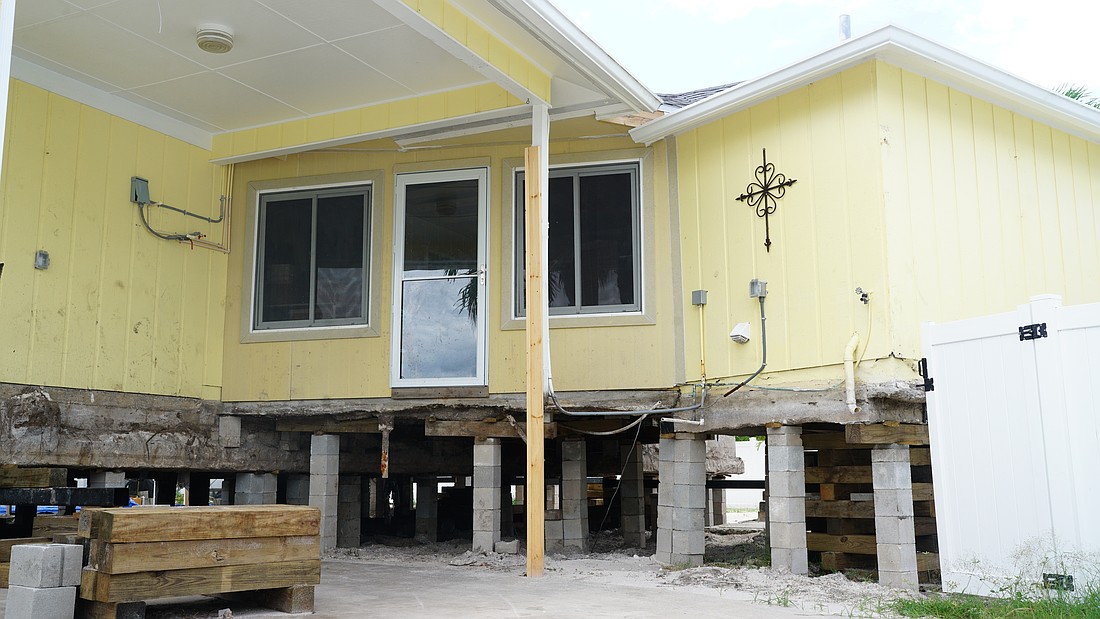
As Longboat Key residents continue to raise their homes while rebuilding from the 2024 hurricanes, the town has begun to look at ways to make the process more straightforward.
“We know that water levels are continuing to be a concern, and we want to see more folks elevating,” Town Manager Howard Tipton said. “But we have certain properties, especially the smaller ones, that create some challenges when it comes to elevation.”
Elevating homes makes the island more resilient to storms, and the town outlines in its Comprehensive Plan (HOU Policy 1.3.2) that it encourages “the retrofitting of existing residential structures for storm resistance.” Houses that have been built in the last 20 years under FEMA Flood Elevation guidelines fared much better than older homes in the 2024 hurricane season, Planning, Zoning and Building Director Allen Parsons said.
At a Town Commission workshop on June 22, Parsons shared there have been 30 applications to put existing houses on stilts.
Doing so, however, comes with its permitting challenges. The main roadblocks residents have faced involve complying with setback requirements, lot/building coverage, daylight plane, pool grading and utility elevation.
“Inadvertently, what we want to try to avoid is disincentivizing or making things difficult for those that are electing to elevate their homes,” Parsons said. “It’s an expensive proposition to do that.”
Elevating home costs start in the six figures typically. The process includes disconnecting the house from electric, water, sewer and gas lines. The house is then supported by steel beams placed under the foundation and raised slowly before permanent supports, or pilings, are built. Then, stairs or a ramp must be built to access the house.
That step has caused some hiccups for those on smaller lot sizes or on lots that have structures that are grandfathered in.
“As structures get elevated, stairs that would be providing access to what was on the ground before, those are on the setback. Our zoning code calls anything that’s constructed on a property above 6 inches in height a structure. So, a deck can become a structure,” Parsons said. “When you add a deck on the front or back of a house, that would be considered a part of the structure. That starts to add to this lot coverage maximum which in some cases may already be exceeded (if the house is grandfathered in).”
Parsons said it would be easier on town staff and for residents if there was “either an exemption for or authority for some relief” to allow for those decks that provide access to raised entry points.
The town also has “daylight plane” requirements, which ensure sunlight has a path to reach neighboring properties. A raised property could cast a shadow on a neighboring, unraised home, which could make the newly-raised home not meet the daylight plane requirement.
“In the case that someone is just lifting the existing structure to be above the FEMA flood elevation requirement, what likely would make more sense is just to exempt that kind of structure that’s just being lifted up, not being added onto," Parsons said.
Air conditioners and utility meters also must be elevated when a house is raised. Parsons said exempting the structures that equipment is placed on could help those elevating stay within lot coverage and setback requirements.
Right now, the procedure for a homeowner to raise their house while not meeting setback, lot coverage or other zoning regulations is to go through a zoning board of adjustment variance. The ZBA must make its decision based on hardship or unique circumstances. Parsons said it may be worth looking into whether authority can be given to staff to provide exceptions rather than going through the ZBA process.
Parsons recommended the topic be raised at a Planning and Zoning Board meeting, and the Town Commission agreed.