- July 2, 2026

-
-
Loading
Loading
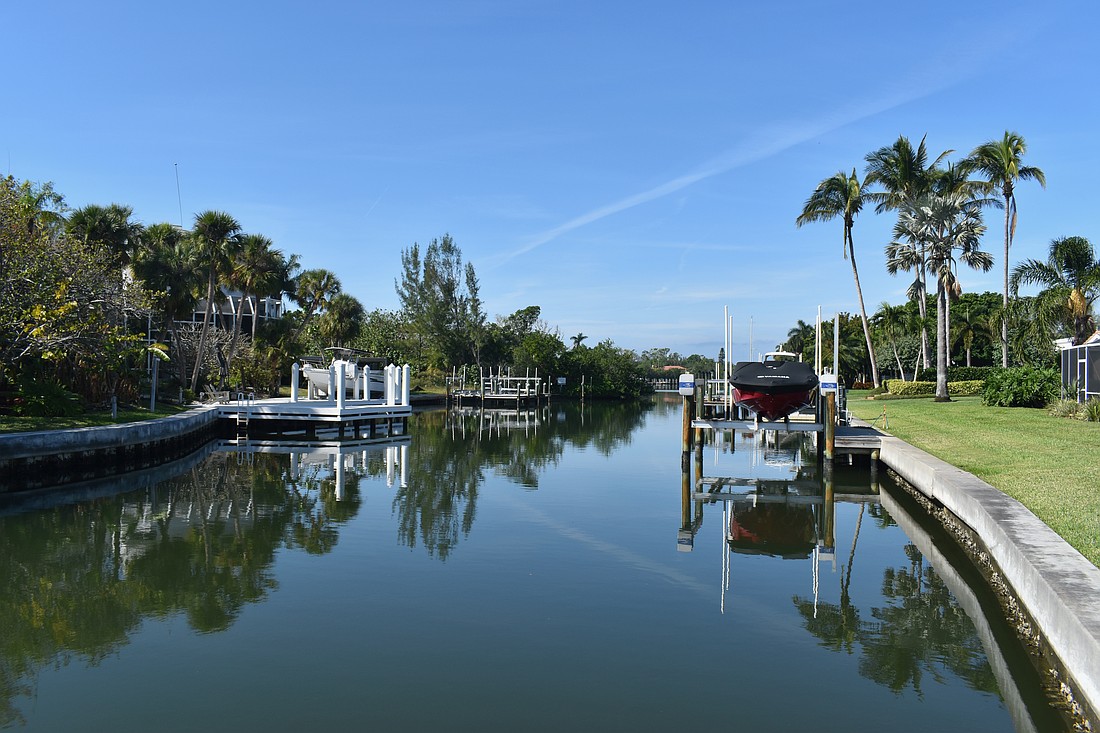
After years of discussion, the town of Longboat Key now has a way to pay for canal dredging.
The Longboat Key Town Commission unanimously approved a resolution June 22 that establishes a funding method that essentially breaks up the cost of dredging into an 80/20 split between canal-facing homeowners and all other property owners.
That means resident property tax bills will have another line when mailed this November. A flat 0.0623 property tax millage will be issued on all properties, and a $620 flat fee will be issued for each “equivalent benefit unit,” or EBU. An EBU is defined in a report by consultants First Line Coastal as a unit of measurement to quantify the level of benefit a property has by its connection to the town’s waterway system.
Simply put, a single-family home with one boat slip (or potential for one) has 1 EBU, and a condo complex with 50 units and 10 boat slips would mean each unit has 0.2 EBUs.
That flat fee would raise about 70% of the cost of the canal dredging program, and the property tax millage would pay for the other 30% that would be charged to both canal-facing and non-canal-facing homes.
Some concerned residents and business owners spoke at the June 22 meeting to push against the assessment.
Fred Bez, community association manager at Gulf Shore of Longboat Key, addressed the commission following a written request from another property owner in the mobile home community to exempt the Gulf Shore and Twin Shores communities from being charged for canal maintenance.
The list of assessed properties was not changed. Residents can check what their canal assessment can go to Longboat Key's canal navigation website.
Tom Leonard, owner of Shore Longboat Key, a waterfront restaurant with a pier that diners can dock from, said he would be charged more than $12,000 if the assessment was approved.
“You’re asking us to pay for part of the property of our waterfront that we don’t even own. Every single year we’re paying rent for that,” Leonard said. “So I think that really there needs to be more thought, more research before this is just slapped on everybody.”
Assistant Town Manager Isaac Brownman, who started with the town as public works director in 2017, said the latest round of talks about how to pay for canal dredging on the island started a decade ago.
“It’s been many years in the making. The Town Commission literally started talking about a canal maintenance program in the 1990s. The last time a large group of canals were dredged in the town was 2003. This particular effort began in 2016 to discuss another round of dredging or to set up a program or what exactly to do,” Brownman said. “It took a lot to get to this point.”
Public Works Director Charlie Mopps said $9 million is expected to be raised in the first five years of the program and that “from year three to year five is when the action happens.” In year six, the program will shift to a maintenance phase, and the assessments and millage rates are expected to be cut in half.
Flat fee for first five years
What it might cost, annually | ||||
| $500,000 appraised canal facing house | $1,000,000 appraised canal facing house | $500,000 appraised non-canal-facing house | $1,000,000 appraised non-canal-facing house | |
| Flat fee for first five years | $620 | $620 | $0 | $0 |
| Flat fee after first five years | $318.04 | $318.04 | $0 | $0 |
| Ad-valorem for first five years | $31.15 | $62.30 | $31.15 | $62.30 |
| Ad-valorem after first five years | $31.15 | $62.30 | $31.15 | $62.30 |