- July 15, 2026

-
-
Loading
Loading
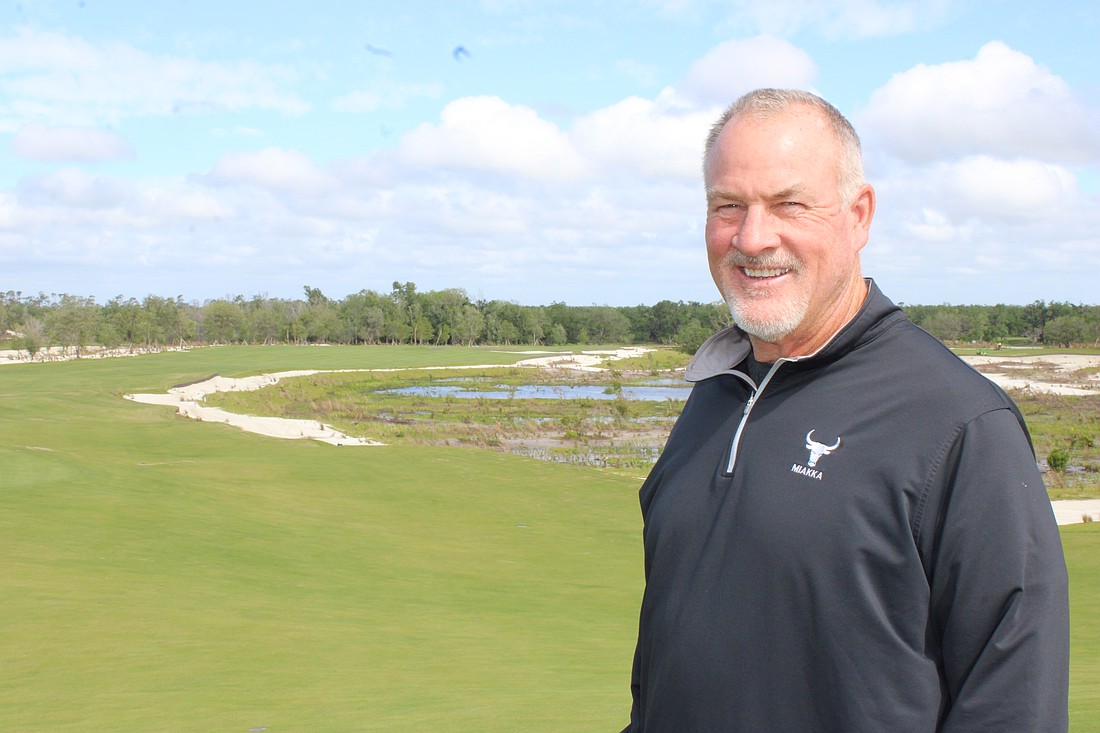
In 2021, when Steve Herrig tested the soil on the 1,500 acres he purchased in Myakka City during the due diligence period, he found something nobody ever wants to find.
Arsenic.
Yikes.
But when you buy property that was either a tomato farm, pasture land, or even a golf course in Florida, there's a chance arsenic-based pesticides had been used on the property, as was common from the late 1800s to 2013 when the Environmental Protection Agency phased out most of those products in Florida and nationwide.
Herrig was about to launch his 1,100-acre Miakka Golf Club with a groundbreaking in 2024, so he hired workers to begin the clean-up process.
On April 9, Herrig drove an ATV through his mostly finished golf course, which is headed toward a planned November opening. To say it is a magnificent sight would not do it justice.
Herrig has spared no expense in building the course to environmentally friendly standards. He has gone above what is required by Manatee County or the state.
For example, Manatee County requires a minimum of tree replanting and buffer revegetation, but Herrig went way past that requirement in revegetation of the entire site. Thousands of trees were brought in and planted, and 1,500 existing trees were moved and replanted. Hundreds of thousands of native grasses, shrubs and wetland plants were either transplanted or brought to the site.
Another example is that Herrig paid to add Profile inorganic ceramic particle into the root-zone of all turf-grass. Profile helps to resist compaction, manages moisture, and facilitates healthy root systems that leave turf less prone to disease and other maintenance problems.
Jason Straka of Fry/Straka Global Golf Course Design noted that the new course's stormwater management system makes extensive use of dry retention treatment basins that allow a portion of the run-off to be captured and infiltrated back into the natural groundwater.
Straka said the system implements extensive stormwater harvesting as an irrigation source, with the combined benefit of reducing the reliance on groundwater for irrigation. More than 90% of the site’s surface water is captured and directed into a network of engineered dry and wet filtration basins designed to remove sediment, nutrients, and other materials before water re-enters the ground. Instead of flowing untreated into the river system, water is retained, filtered, and reused on site.
Herrig pointed out that the project reduces both the rate and total volume of water leaving the property compared to pre-development conditions. "Before development, rainfall moved across this land with little to no filtration before entering the river system," he said. "Today, that same water is slowed, cleaned, and managed through a controlled process."
Through his excitement as he drove through the course April 9, he pointed out with pride the lengths his crews have gone to meet environmental standards. But he is nonetheless troubled.
He has been portrayed as a villain on some social media posts, accusing his golf course of being a major threat to the quality of the Myakka River. Frustrated by some of the claims, he fired back, "I am the best thing that ever happened to this area."
While he didn't want to start a firestorm with the comment, he is working hard to prove it to be true.
"I have vastly improved what it could have been," he said, noting that he only was able to buy the land after a developer's deal to put more than 300 houses on the property fell through.
"I understand why those people are concerned (with the course's location along the Myakka River), because golf courses have been known for the pesticides they use, the fertilizer, the run-off. I get it. But I can present the engineering facts."
He said the assumptions that golf courses have been polluters in the past are obvious, but that they just aren't going to be true at Miakka Golf Club. He has started a website to inform the public about environmental protections utilized by the course. Go to TheMyakkaInitiative.com/public-information-website.
"We have an appreciation for keeping the river clean and pure," he said. "We have gone way above and beyond.
"I wanted this course to be like going back in time. We use all indigenous plants. We have made wetland areas. We are going to have cracker cattle."
Herrig said arsenic was just one of the chemicals that needed to be cleaned up on the golf course property, and on the 1,600 acres he purchased on the other side of MJ Road to open Miakka Turf, which specializes in the Stadium and Lazer zoysia turfgrass varieties that are used at Miakka Golf Club.
Like the golf course property, there was plenty of clean-up to do on the Miakka Turf property.
"I'm filtering all that (expletive) out from when it was a tomato farm," he said.
When it came to hiring an architecture team, Herrig didn't just pick a team that could design a great course, he chose a team that could design a course that would protect the surrounding environment. He picked the Fry/Straka Global Golf Course Design team.
Straka has a Bachelor of Science in landscape architecture from Cornell University along with a master's degree in professional studies in agriculture, agronomy and environmental golf course design.
Dana Fry grew his reputation while working with famed course designer Tom Fazio. In 2001, Golfweek named Fry one of the magazine's 40 under 40 who was "Likely to shape the golf business for years to come."
Fry said the course would be designed so it looked like it had been there for "an eternity."
Major winner Paul Azinger also was added to the team. Azinger, a Sarasota native, is an avid fisherman and sportsman who has high regard for the local environment.
Herrig turned them all loose. Straka said Herrig told him he was demanding "a layout that would leave the land in better shape than when he came."
Straka said the demands were a "huge win environmentally."
Herrig ordered the use of zoysiagrass, which is known in the industry to use less water, fertilizer and pesticides. It also is more expensive than other popular grasses used for golf courses.
Straka called the entire project an "extraordinarily environmentally sensitive" design with 2 miles of frontage along the Myakka River.
To go along with his efforts on the golf course, Herrig has designated 497 acres he owns along the Myakka River for environmental conservation, wildlife protection and low-impact outdoor use. The land, which is divided into two separate areas, will be maintained in its natural state.
My take on all of this is that the project is somewhat like the building of Lakewood Ranch itself. We can say that the land would have been better off if it remained ranch land, but we all knew what was coming. People were moving to the area, and with a political climate that embraced growth, thousands of homes were built.
If it was going to happen, don't you want a developer — whether that means homes or golf courses — who respects the environment and takes extraordinary steps to keep the natural beauty of the land?