- July 6, 2026

-
-
Loading
Loading
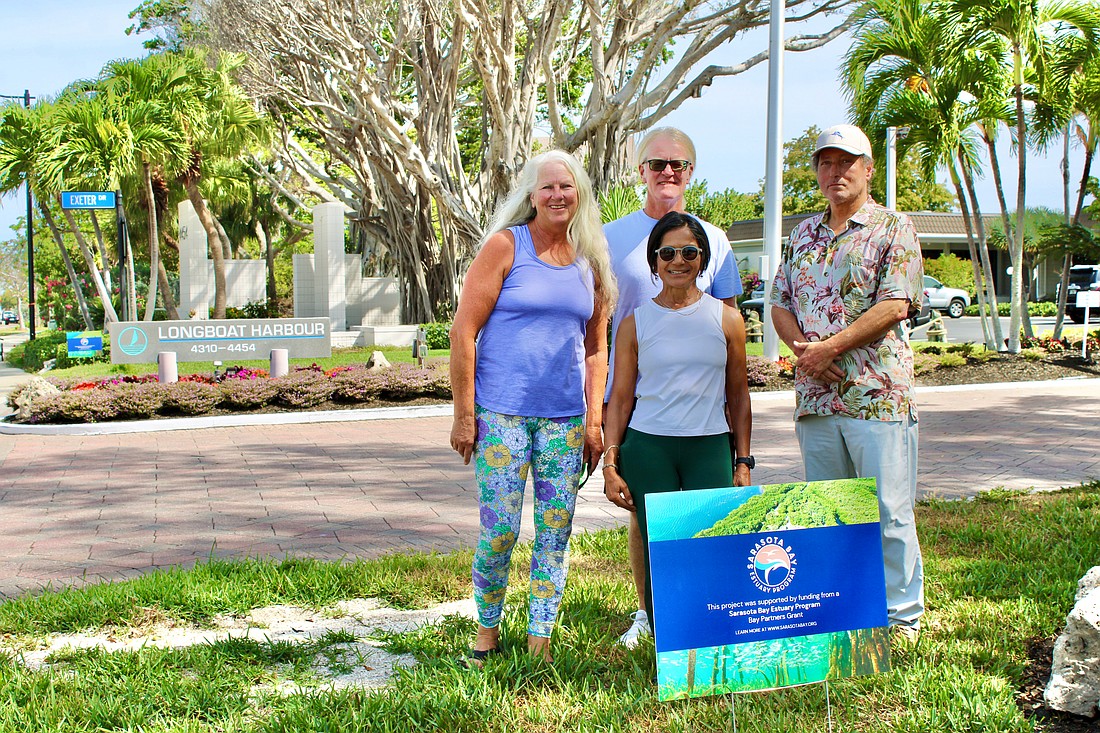
Cardboard plants, carrotwood, Mexican petunias, asparagus ferns and Brazilian ferns are just some of the plants involved in a new project to replace invasive plants with Florida-friendly flora in the middle of Longboat Key.
Teamwork goes a long way when it comes to environmental restoration projects in the community, and residents are finding new avenues to contribute to that work through this latest project at Longboat Harbour Condominiums.
Mary Dice, one of the lead team members pushing the restoration forward, said the complex has been working in earnest on its recently approved $10,000 grant project.
Megan Barry, public outreach manager with the Sarasota Bay Estuary Program, said the organization was pleased to support a project with such robust citizen momentum.
"This is a project that scored really well," she explained about the community grant application process.
"Stewardship at the community level is key," she said. "Especially following that intense hurricane season, we want to encourage people to build back better with their landscapes — with more resilient plants that are better for the ecosystem, especially for stormwater filtration purposes."
Shoreline plants native to Florida tend to have robust root systems, and besides having a better chance of surviving storms, they help prevent erosion into nearby waterways.
Dice said she and her husband, Rob, along with other planners like Ginger Driscoll, drew inspiration for the project from a post-hurricane workshop on replacing destroyed vegetation.
"We had a lot of plants that died because of the hurricanes," she said.
At Longboat Harbour, volunteers from all 14 buildings in the complex have lent a hand to support the landscaping team.
The morning of May 6 was an exciting moment for the team as volunteers put up new signage from the estuary program. Dice said they applied for the funding in March 2025.
"We were awarded the grant in the summer, and we had to start working on it in the fall," she said.
Within the next few months, they will report back to the estuary program on their progress.
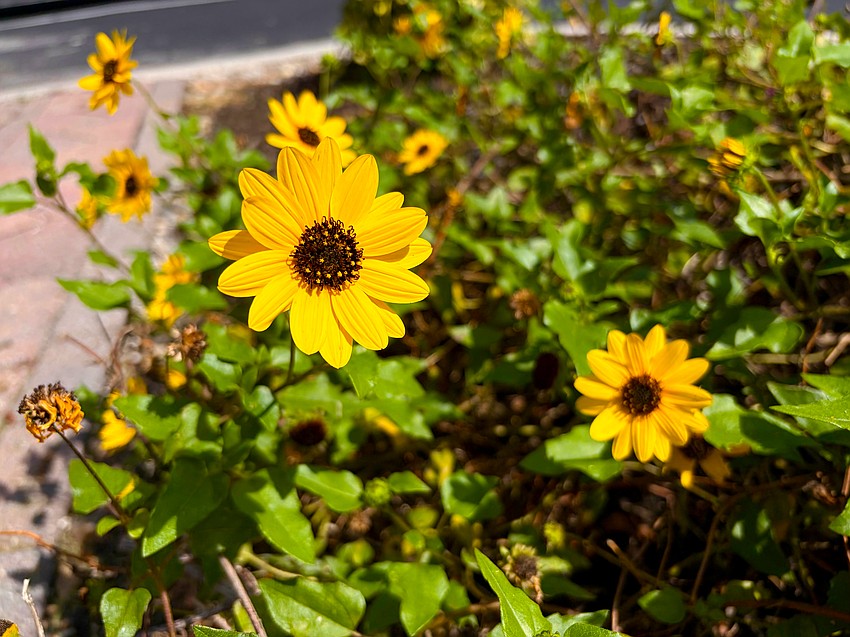
The on-site greenhouse, packed with lush hibiscus plants and their own propagated beach sunflowers, has helped jump-start the project.
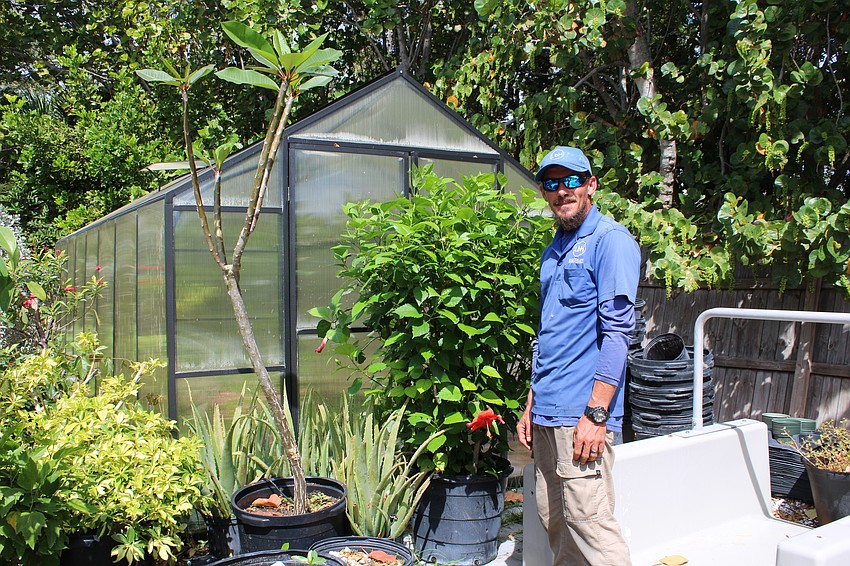
Dice said the project wouldn't have been possible at this scale without all the volunteers who helped water the new plants. Through their efforts, they could hand-water the new additions while still complying with drought-driven watering restrictions.
"We still have plants going in along Gulf of Mexico Drive that just arrived today," she noted.
Resident and volunteer Kakali Banerjee said it had been especially important to remove quick-spreading invasive plants. Even if there are only a few on a residential property, birds often eat the eye-catchingly bright berries and spread the seeds, turning it into a problem for the whole community.
Nonnative ornamental plants also don't always offer a great food source to native Florida pollinators, Barry added.
Considering how much of Longboat Key's shoreline is residential, Barry said it is even more valuable when homeowners and associations take an active role in supporting the bay's ecological health.
"This is why the estuary program has had a community grant program in place for over 20 years," she said. "We have given out over $700,000 to the community since it started."
What may start as a single community investment can also domino into a passion for positive change among other Longboaters, Barry said. When residents are supported in these original projects, they maintain a stronger sense of pride and ownership in keeping those shoreline areas healthy.
"You're more likely to protect something that you care about, that you're invested in through this elbow-grease, on-the-ground effort," Barry said.
Dice said she appreciated how kind and helpful experts from the estuary program have been every step of the way, especially in recommending plant nurseries.
"They were super supportive, and I think it's really generous that they are willing to invest in making Longboat Key as beautiful as it can be," she said.
Anyone interested in learning more about future restoration goals, grant opportunities and more can visit SarasotaBay.org/Programs/Habitat-Restoration, she noted.