- August 7, 2026

-
-
Loading
Loading
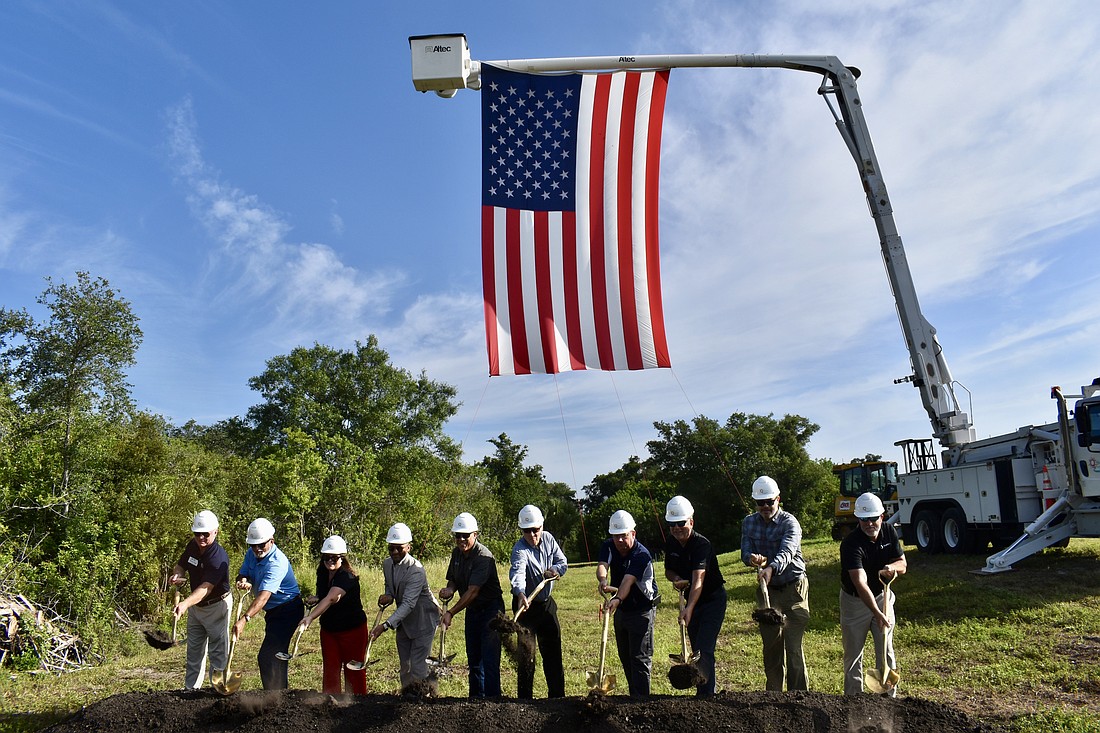
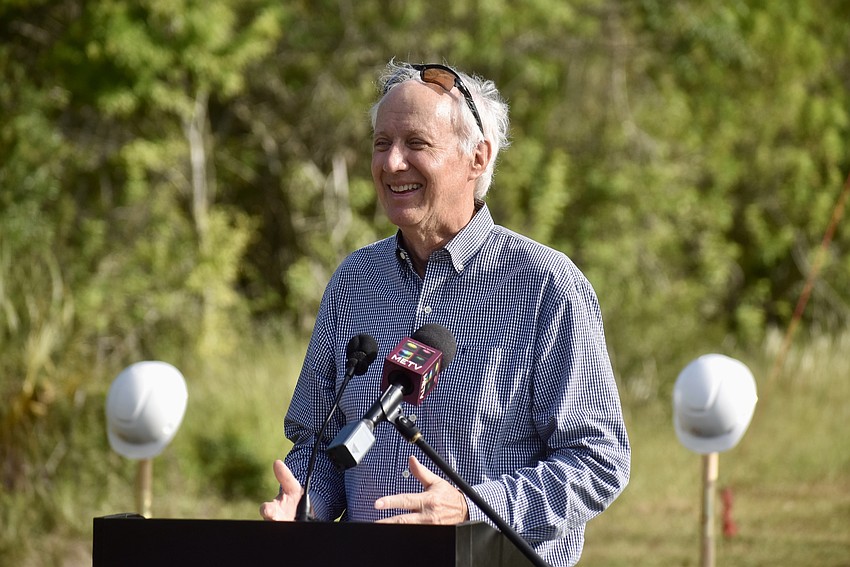
Commissioner George Kruse’s first priority after being elected in November 2020 was building a trail system in Manatee County.
At the time, Director of Natural Resources Charlie Hunsicker showed Kruse a newspaper article about a proposed trail system for Manatee County. The article was dated 1999.
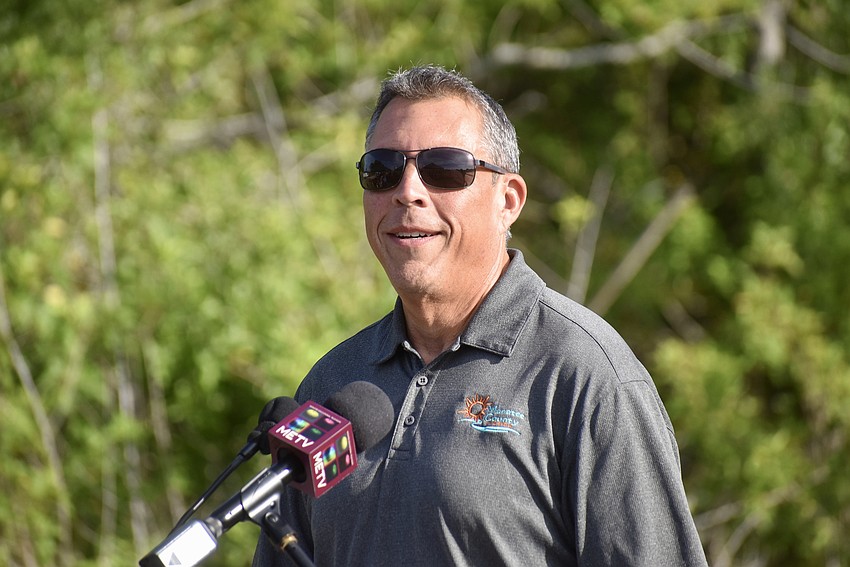
“Now, a short quarter of a century later, we’re here for Stage 1 of our trail system,” Kruse said June 18 at the groundbreaking. “Fortunately, people still ride bikes.”
Commission Chair Tal Siddique joked that Kruse had been threatening to dig the trail himself.
The groundbreaking was held next to the Lake Manatee Water Treatment Plant off Dam Road. The trail will extend about a half-mile to Rye Preserve.
While possible property cuts are looming over the county because of a state-led ballot initiative to increase homestead exemptions, Kruse said the estimated $1,015,000 to build the half-mile trail segment is fully funded.
In 2024, Manatee County received a $1 million appropriation from the federal government for the segment. In total, the trail system has received federal appropriations of $7,750,000 since 2022.
Kruse pushed building trails over roads during the 2025 budget cycle due to cost, a message he reiterated at the groundbreaking.
“People need to understand this importance because roads are expensive,” Kruse said. “Trail systems are much more affordable and allow people a safe way of both recreational and commuter transportation, and we don’t have to guess on this. Look at what Legacy Trail has done in Sarasota. They built a small segment in Palmer Ranch to see if it works, and now it’s everywhere.”
The Friends of the Legacy Trail's website keeps track of the trail’s usage. Users have logged over 600,000 trips every year since 2022. The trail system cost $102 million.
The estimated cost to build out the entire 140-mile trail network throughout Manatee County is $130 million.
To Kruse’s point, it would cost over a billion dollars to build 140 miles worth of two-lane roads.
When finished, the overall trail network will link to Sarasota’s Legacy Trail and Florida’s Shared Use Non-motorized Trail, familiarly known as the SUN Trail.
Kruse called the segment of trail between Rye Preserve and the water treatment plant “critically important from Day 1.”
“This segment is going to connect to the one preserve — the one outdoor space — our fastest growing part of Manatee County has: Rye Preserve,” Kruse said.
He rattled off names of preserves on the west side of the county — Robinson Preserve, Perico Preserve, Neal Preserve and Emerson Preserve — and then noted Rye Preserve as the only county-owned preserve in East County.
Kruse also noted that most trails in Manatee County are loops within parks and preserves that don’t go anywhere.
When finished, Lakewood Ranch residents will be able to take Bourneside Boulevard, which turns into Dam Road on the north side of State Road 64, hop on the trail and arrive at Rye Preserve.
Headed south, Kruse said residents will be able to park at Rye Preserve and ride their bikes all the way down to Waterside Place for breakfast because of what Schroeder-Manatee Ranch built — bike lanes and sidewalks along the entirety of Bourneside Boulevard, which stretches from State Road 64 to University Parkway.
Bourneside Boulevard ends at University Parkway, but there is a network of sidewalks and bike lanes that lead to Waterside Place.
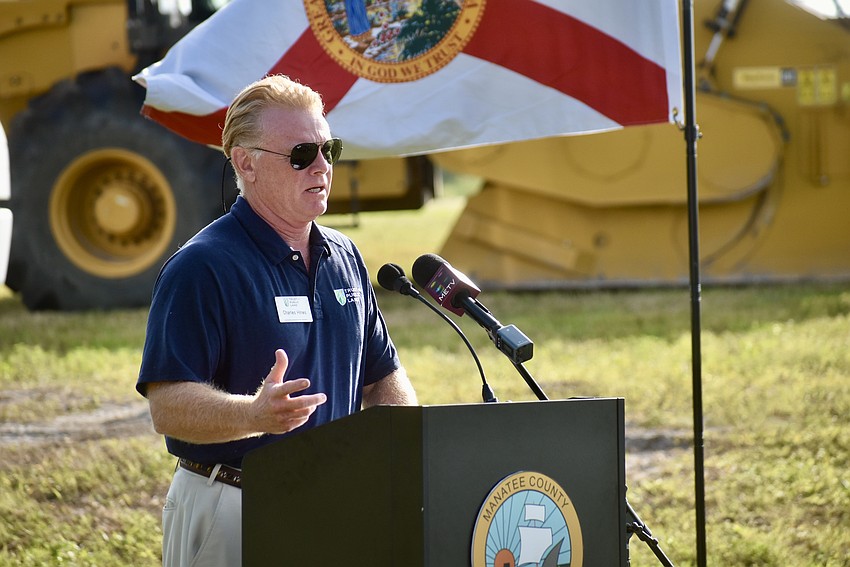
“At some point, you just have to get started,” said Charles Hines, the program director for the Florida Gulf Coast Trail. “You got started. That’s the key because it builds momentum, and you’re part of a much larger trail system.”
Spearheaded by the Trust for Public Land, “the Florida Gulf Coast Trail is an ambitious plan to create a 420-mile regional trail in southwest Florida” that spans seven coastal counties: Hillsborough, Pinellas, Manatee, Sarasota, Charlotte, Lee and Collier.
Kruse noted that the first segment can be “the proof of concept” for Manatee County.
“You need something in the ground for people to enjoy,” he said. “That starts building the friends of nonprofits and the opportunities for future funding elsewhere.”
Now that construction has started, the half-mile segment is anticipated to be completed in eight months.