- August 6, 2026

-
-
Loading
Loading
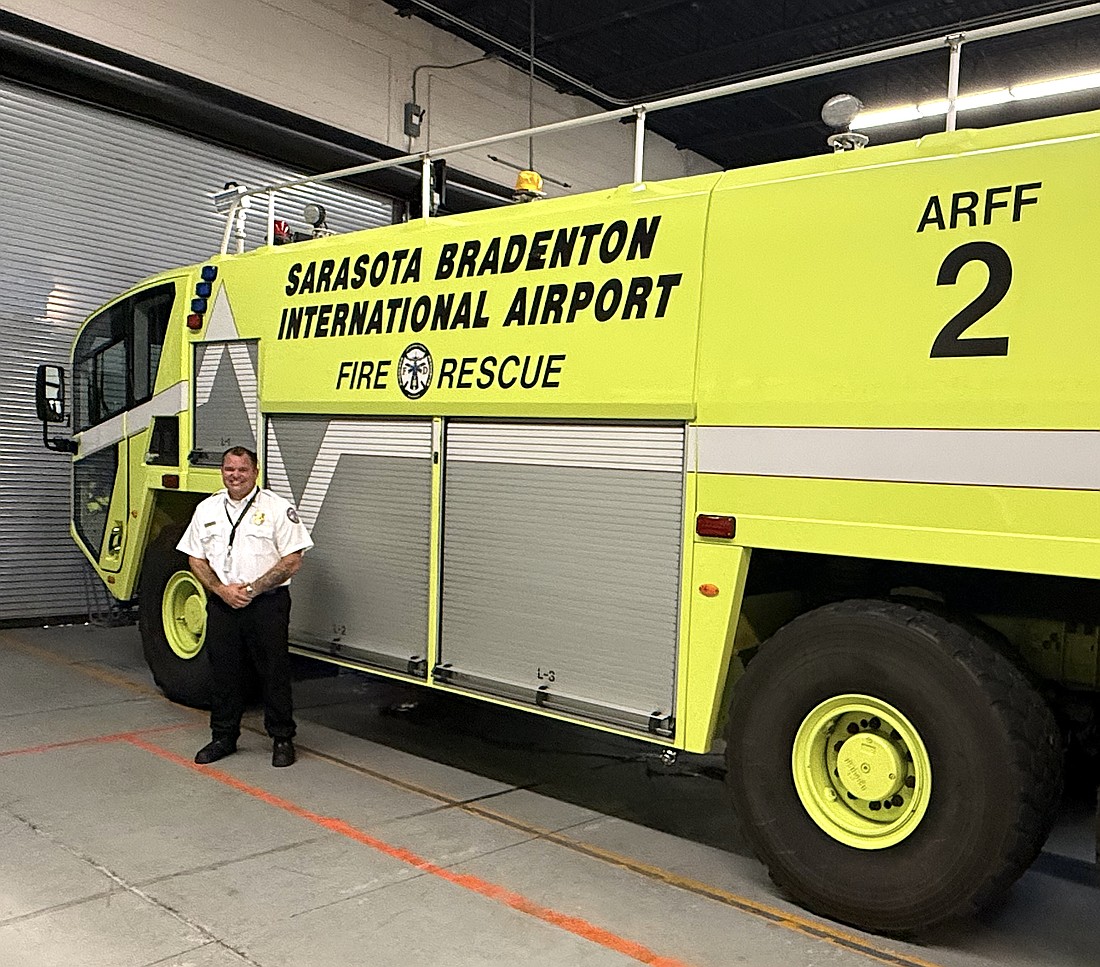
On July 1, a new Florida law went into effect requiring local fire departments and airport firefighting companies to transition from PFAS-laden fire suppression foam to fluorine-free foams by July 2029.
That means stockpiles in storage facilities and aboard firetrucks must be depleted or removed by that date. All equipment that came in contact with Aqueous Film-Forming Foam (AFFF) must undergo specialized cleaning or be replaced. That can be a challenging and costly process, especially for airports as the discharge of the material is as rare as plane crashes and jet fuel fires.
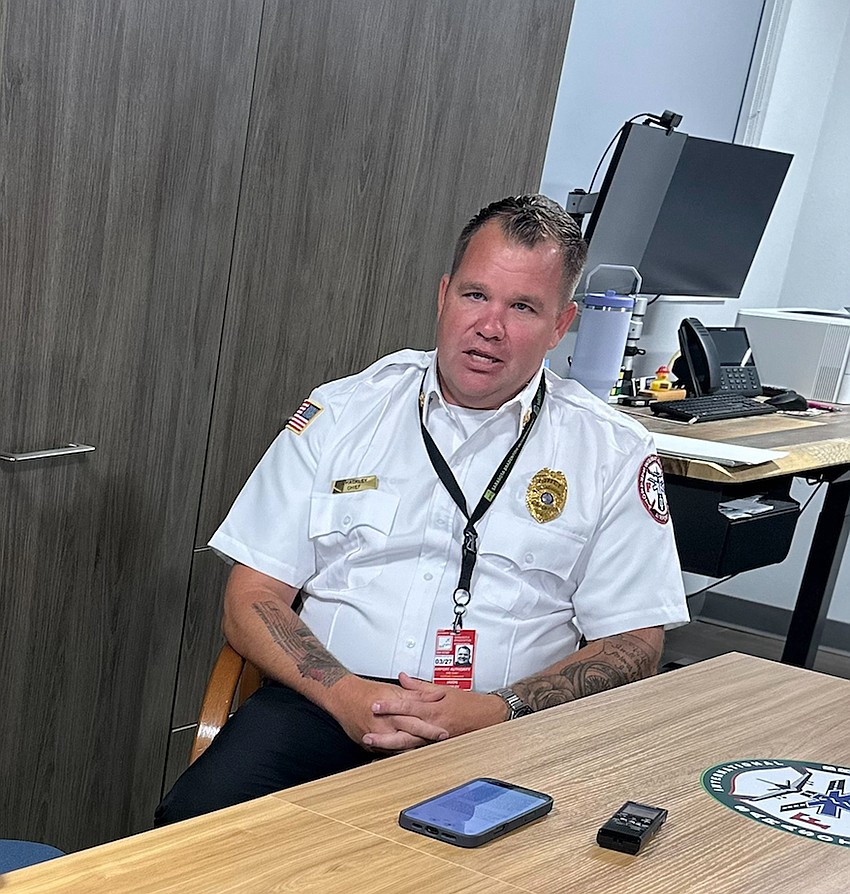
Sarasota-Bradenton International Airport Fire Department Chief Jason Hackley said the transition at the agency, though, will be completed by the end of this year, if not sooner, putting it some 30 months ahead of schedule.
PFAS chemicals are chemicals which, according to the U.S. Department of Environmental Protection, resist natural degradation and build up in ecosystems. They do not break down in the sun, water or soil and spread rapidly through groundwater and the air. Scientific studies show some of these chemicals in the environment may have health effects for humans and animals.
The last time the department had to deploy the material, Hackley said, was about five years ago to put out a fire from a small aircraft crash near the runway. The foam also hasn’t been used in training for several years, which means there is plenty on site.
The AFFF, which is stored in 330-gallon containers called totes in a corner of the fire station, also has a long shelf life.
“We've had some of the old legacy foam for 20 years,” Hackley said.
And the cost per filled tote?
“That's probably between $8,000 and $10,000 including the foam, the shipping and the container," he said.
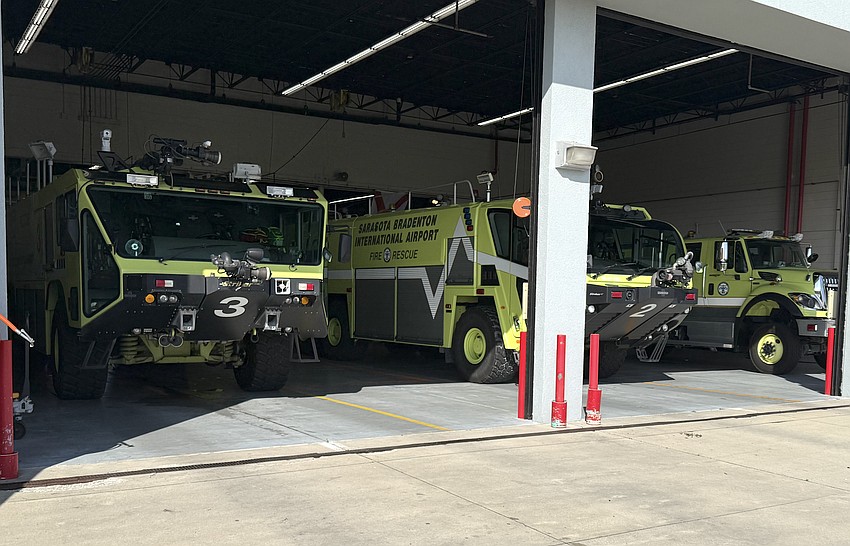
That doesn’t include the 400-gallon capacity tanks aboard each of the department’s three trucks, which more resemble military vehicles than a traditional fire truck with oversized tires that allow for off-road maneuvering because airfield aviation accidents aren’t limited to paved surfaces.
Although two of the department’s three trucks have already been converted and their tanks filled with fluorine-free foam (FFF) — with work on the third, older truck scheduled — the process is not as simple as draining the legacy material and replacing it with the new.
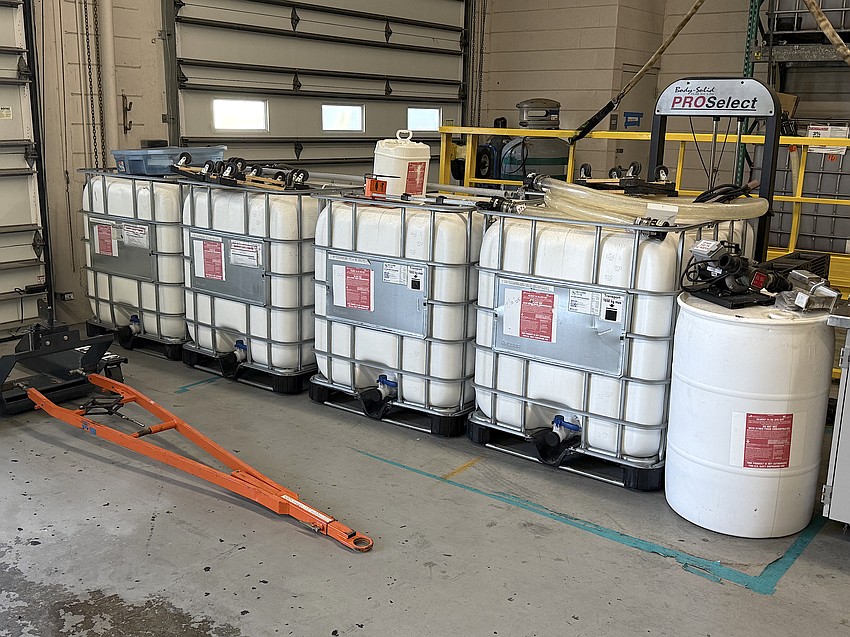
“You have to drain the tank, clean it, dry it out and do multiple flushes,” Hackley said. “We have to change all the valves, the gaskets, all of the nozzles, most of the hosing. It all has to be changed out because PFAS can stay in those.”
Following the truck overhaul, the conversion contractor sends components for testing to ensure the level of parts of PFAS per trillion falls within prescribed ranges, “because you're never going to eliminate it completely,” Hackley said. If they fail, those parts must be replaced.
Of the upwards of 3,000 gallons of firefighting foam now on site, Hackley said about one-third is legacy foam.
Once the last remaining truck is converted to dispense fluorine-free foam, what becomes of the 1,000 gallons stored in totes at the fire station?
There are vendors who can take the material off the department’s hands, Hackley said, and dispose of it via deep well injection or incineration, or sell it to the military, which still uses the material.
As for the new material, in exchange for environmental and human protection, there are minor performance differences. That meant airport firefighters had to travel to Dallas-Fort Worth International Airport to undergo training.
“The old the legacy foam, when you applied it, creates basically a moisture barrier above the fuel,” Hackley said. “The newer foam is same concept. You’ve just got to apply it more frequently to get that same result. It wasn't really that big of a difference.”