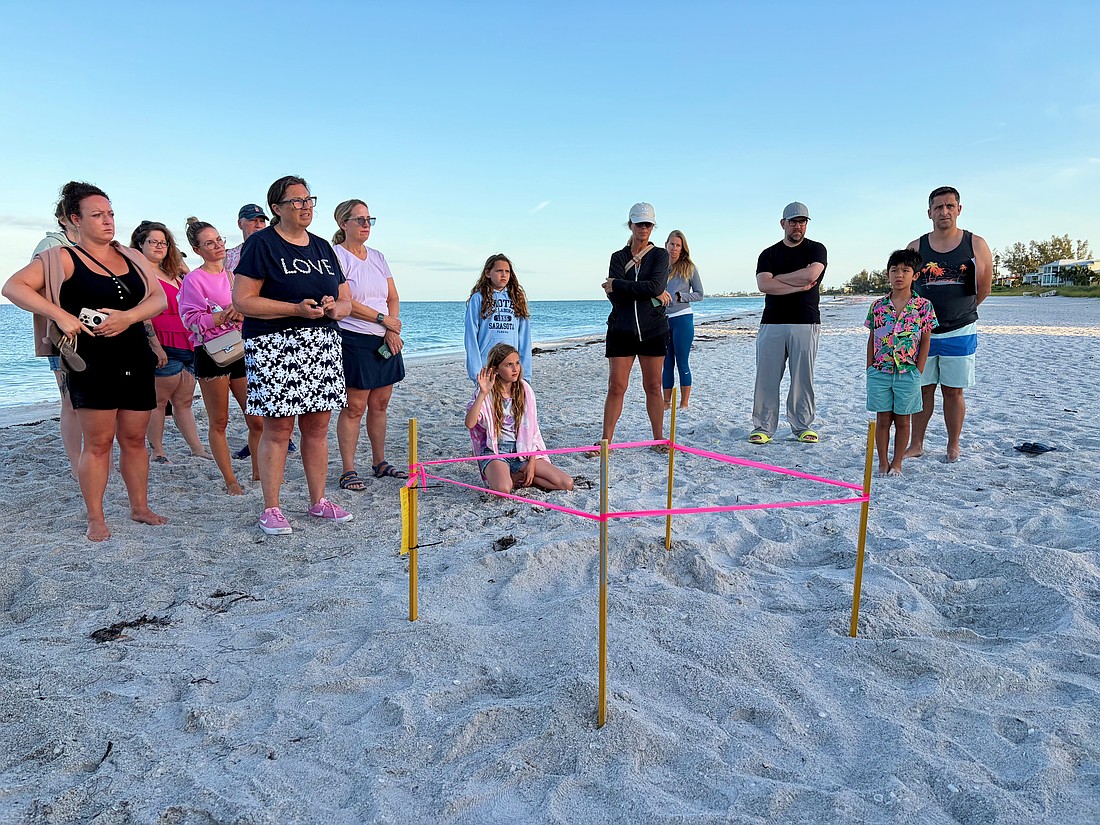
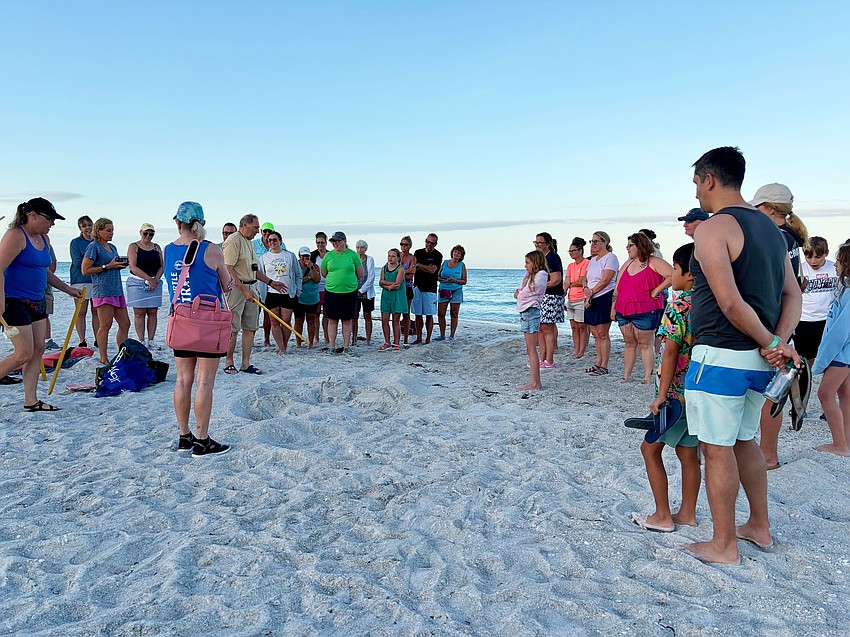
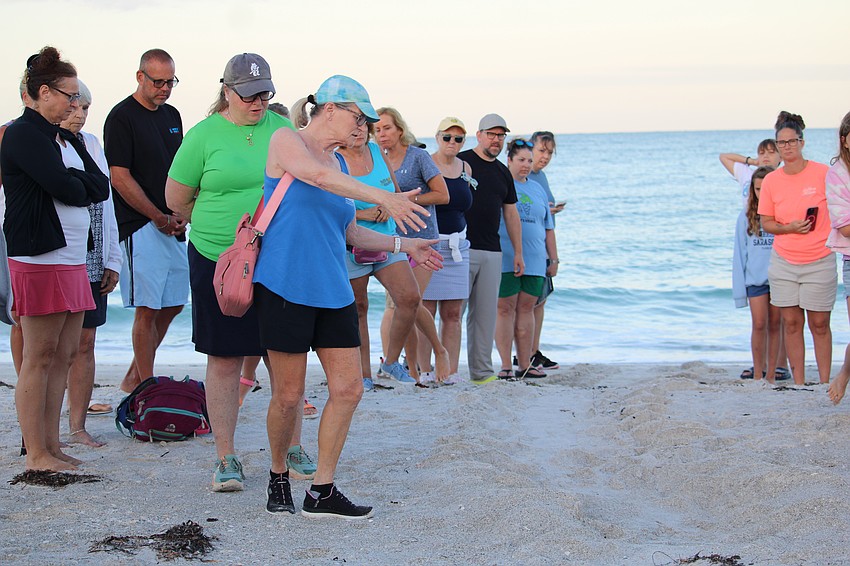
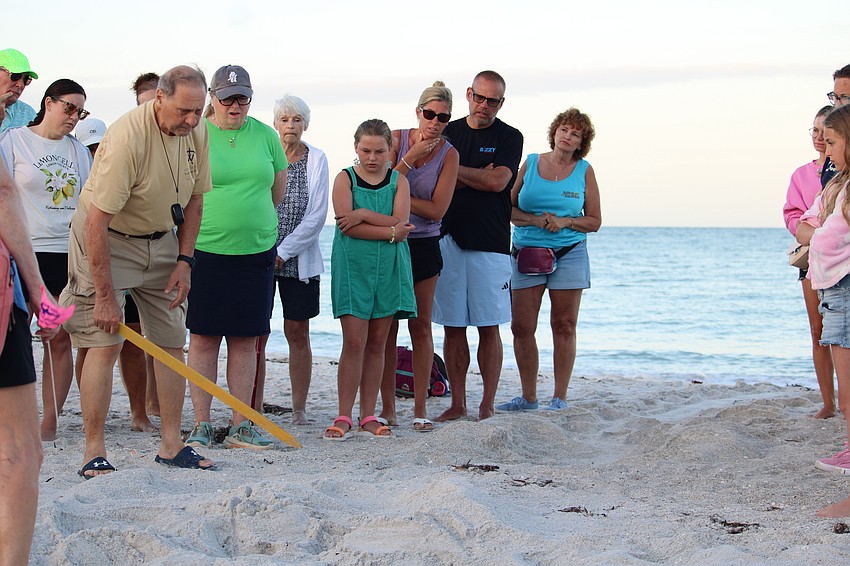
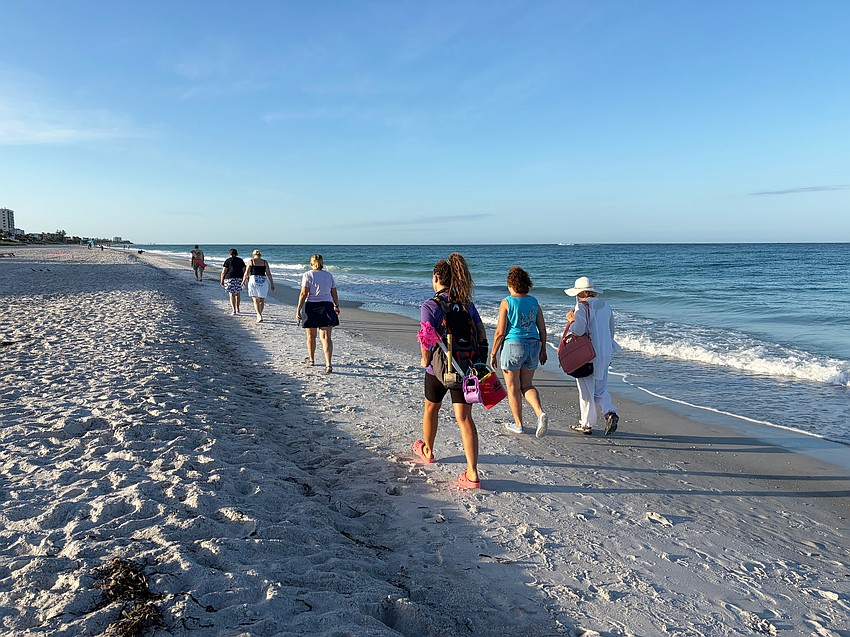
Members of the public curious to learn more about Longboat Key's sea turtle population ask questions of the experts at the first Turtle Walk of the nesting season on June 6 beside the newly staked nest.
Photo by Dana Kampa
Longboat Key
Neighbors
Share
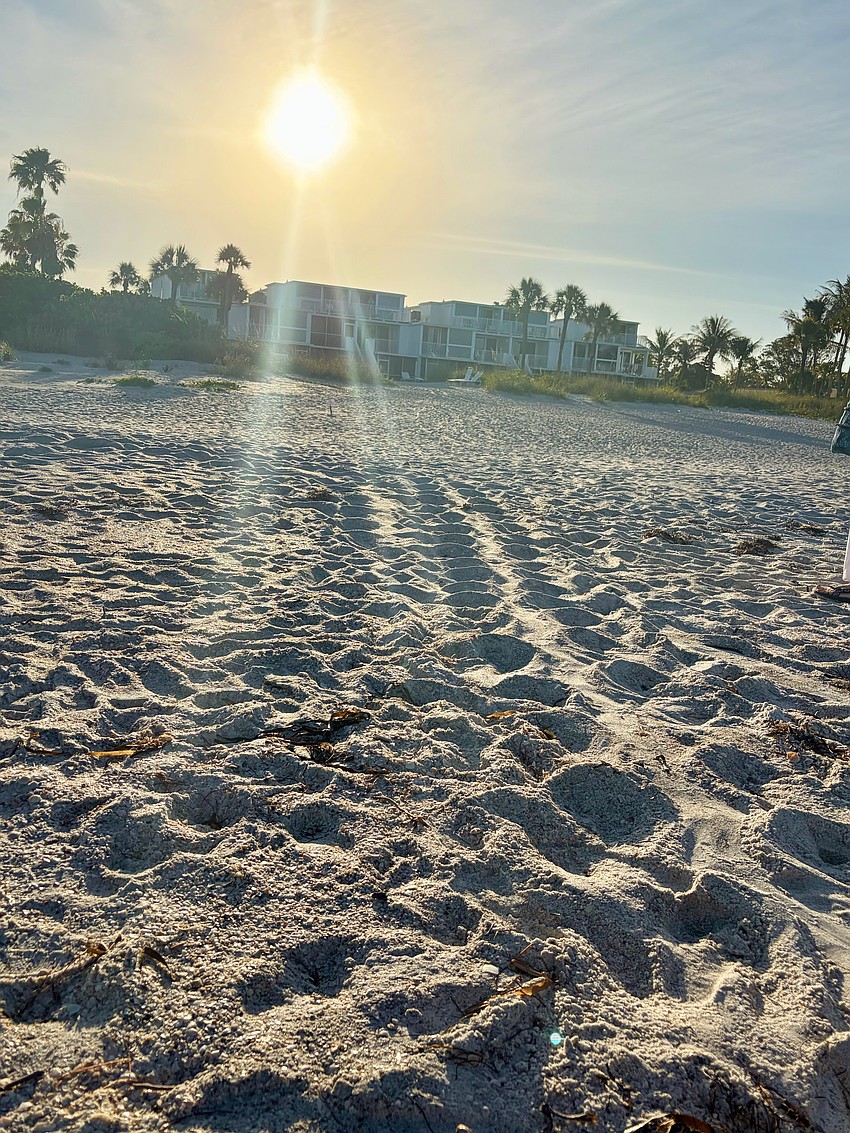
As the sun rose above the treetops of Longboat Key on June 6, a trail of flipper prints divoted into the sand right in front of the beach access at 4795 Gulf of Mexico Drive was thrown into sharp relief, the shadows revealing the path of a mother sea turtle who had laid her eggs the night prior.
A group of nearly 50 residents and educators was there to document and stake out the nest for the first official Turtle Walk of the season.
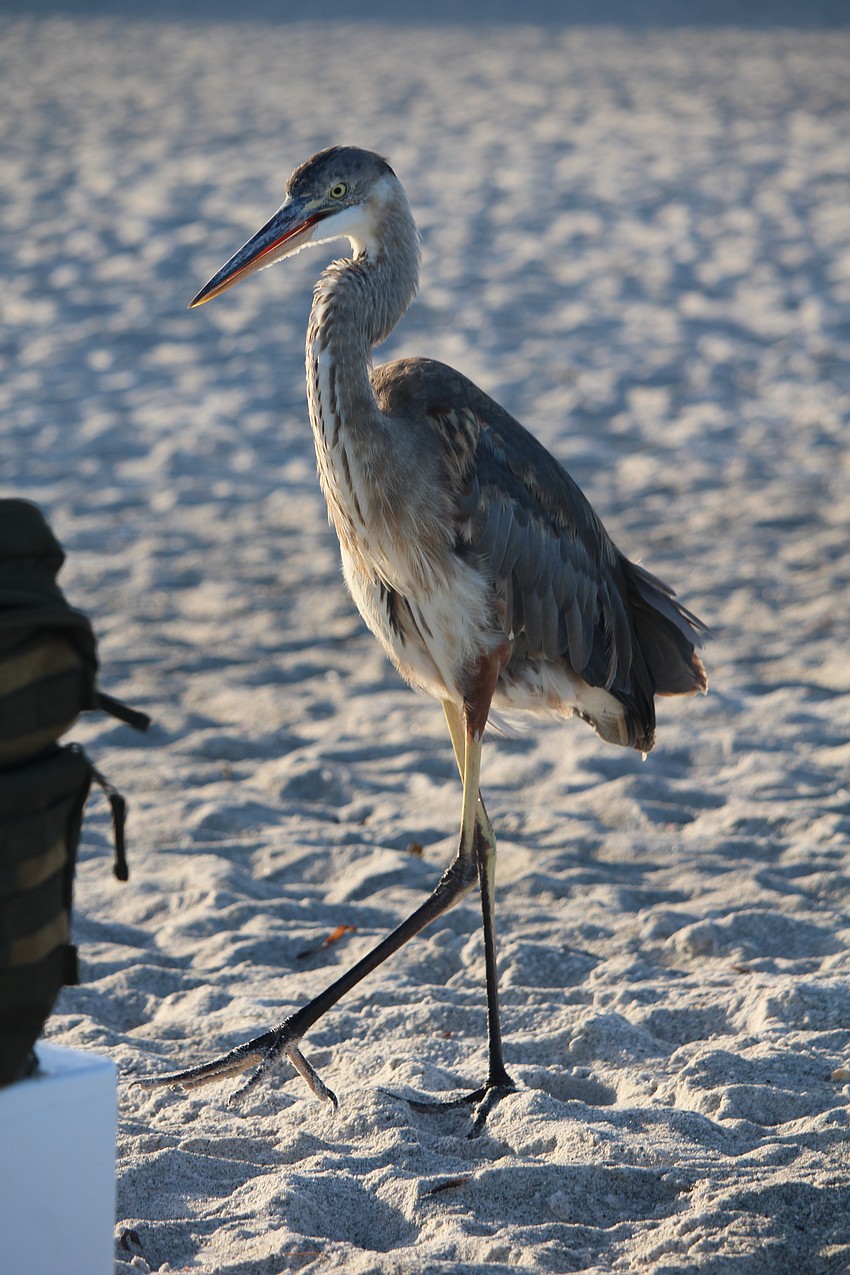
Turtle eggs and hatchlings face predation from birds, coyotes and even small ghost crabs. But the lucky ones will safely make it out to sargassum patches in the ocean, where they will have the chance to grow and one day hopefully return to lay eggs of their own on Longboat Key.
Photo by Dana Kampa
Every nesting season, experts trained with Mote Marine Laboratory lead these free public walks on Saturdays in June and July to help educate curious visitors.
Participants that morning included a mix of people joining for the first time and nature lovers who were excited to see the first demonstration of 2026.
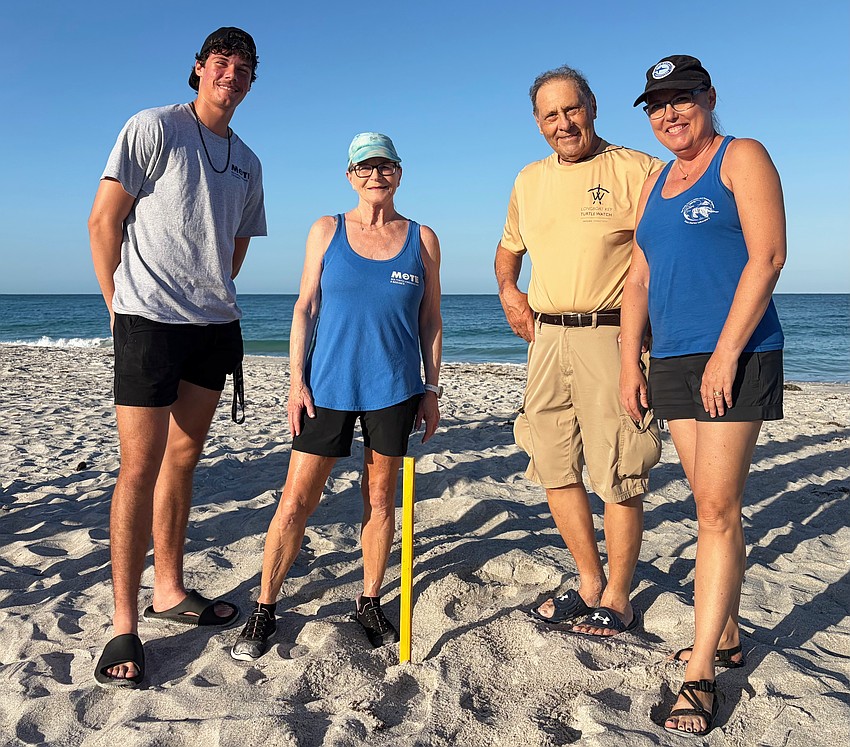
Following an introductory talk about turtle tracking technology and ways residents can help facilitate a successful season for sea turtles, the group made its way to the nearby nest. The team of Brenda and Ben Jameson, Connie Schindewolf and Enrico “Sam” DiGiammarino Jr. showed how they stake the nest so passersby know not to disturb it.
Schindewolf explained each step of marking the nest and documenting its location in case the stakes get displaced. She also dissected the turtle tracks, describing where the turtle must have paused on her journey, how the "angel wing" marks at the apex show where her front flippers dug into the sand, and where much smaller tracks indicated a crab may have dug into the nest and snagged a meal.
She said she was pleased to see such a high turnout of interested community members for the first walk of the season. Under Florida Fish and Wildlife Conservation Commission Marine Turtle Permit 27, educators will lead these walks every week. Registration is not required.
For those who couldn't attend, Schindewolf offers a reminder to use turtle-safe lighting, make sure any beach furniture is cleared from the area before the end of the day, and to fill in any holes in the sand that may trap hatchlings or even adult turtles.
"So far this year, I think we have seen fewer holes on the beach," she said. "We don't always have the time to stop and fill in every one, so we appreciate the help. I'm hoping the word gets out about it."
The group gathers at 6:45 a.m. Saturdays at the beach access point. Sun protection is highly recommended, and groups may want to carpool to ensure parking availability. For further details, visit LBKTurtleWatch.com.
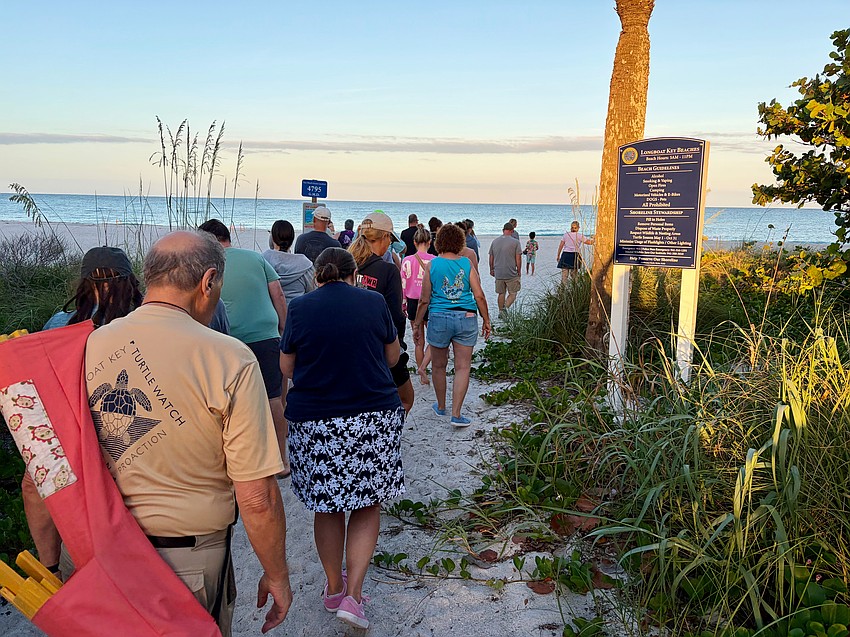
Longboaters make their way out to the beach to learn about sea turtles at the first Turtle Walk of the season on June 6.
Photo by Dana Kampa
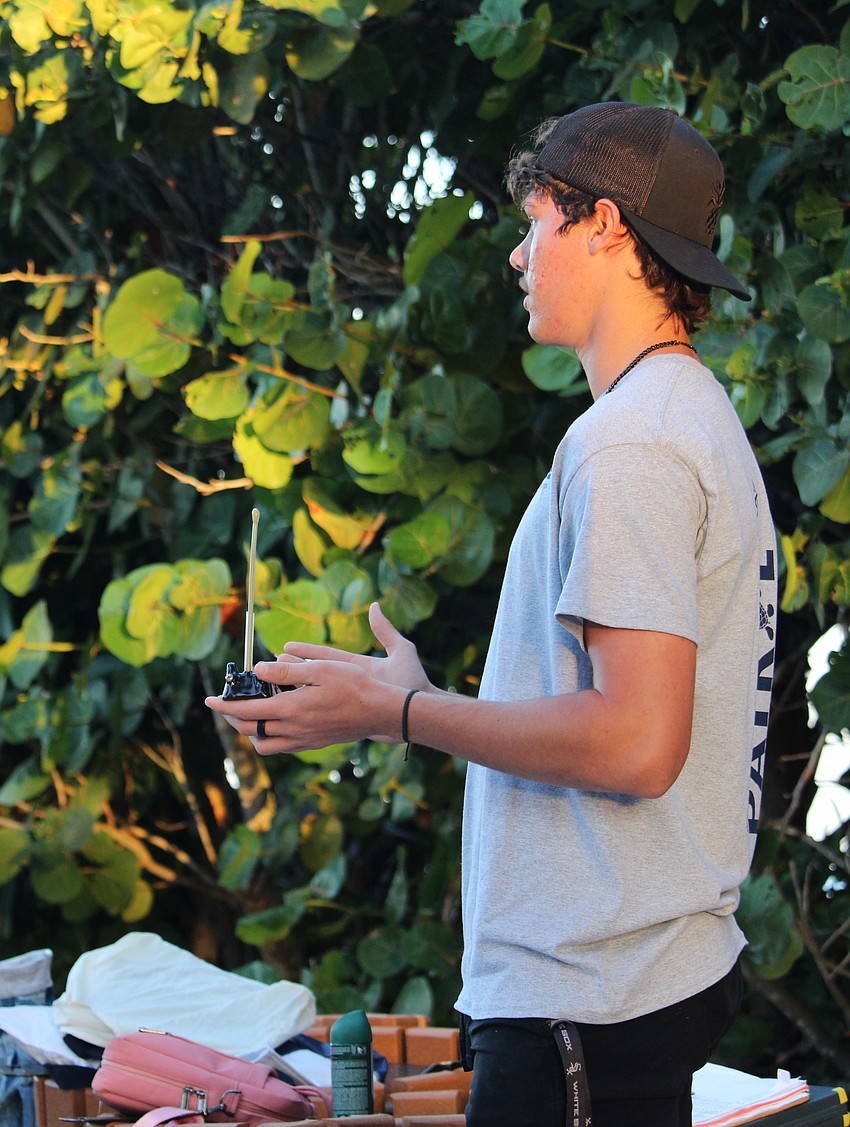
Volunteer Ben Jameson showcases the different types of tracking devices researchers may use to monitor sea turtle activity off Longboat Key.
Photo by Dana Kampa
Turtle Walk attendees gather around a test while Connie Schindewolf points out features of the mother turtle's tracks leading up to the site.
Photo by Dana Kampa
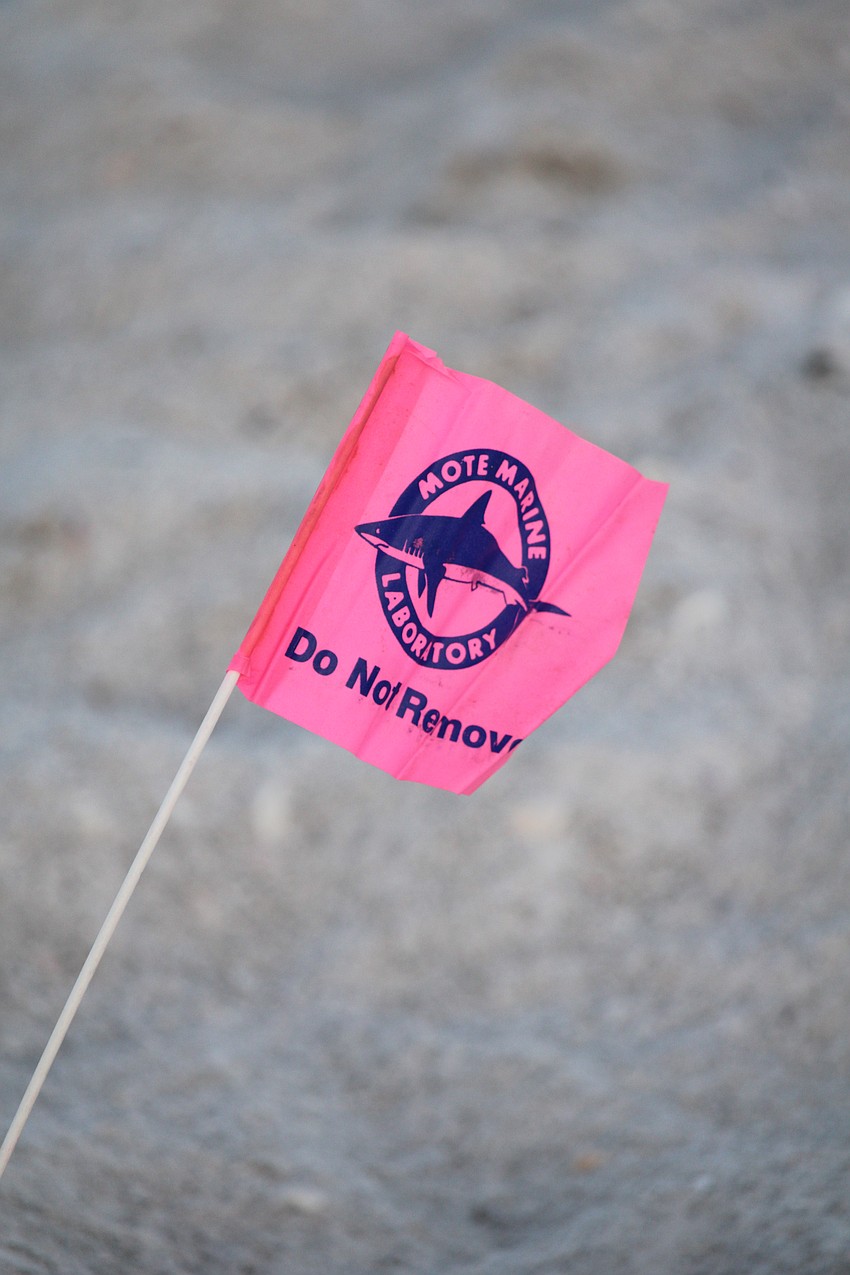
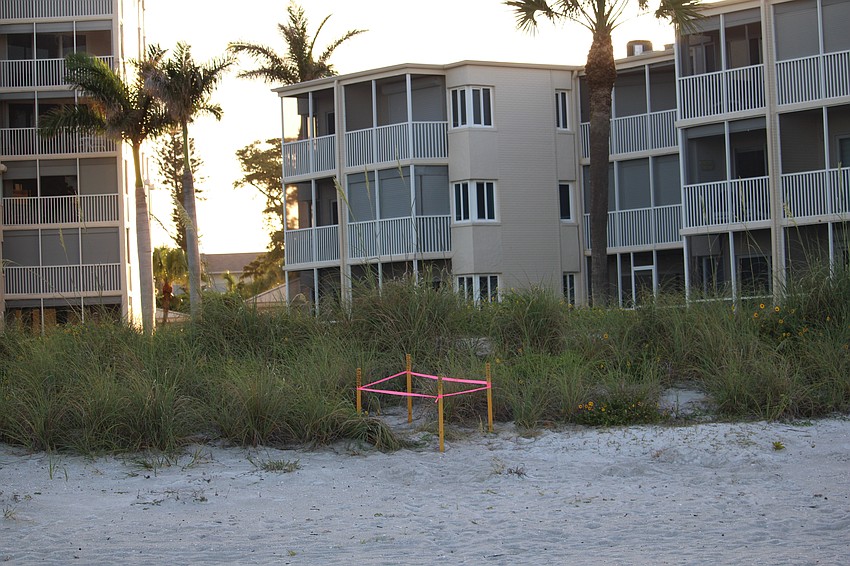
A temporary marker planted by one of Longboat Key's early risers with the Longboat Key Turtle Watch helps beachgoers steer clear of the sea turtle nest until researchers can document it.
Photo by Dana Kampa
Connie Schindewolf explains to Turtle Walk participants how the positioning of eggs in the nest, specifically related to their temperature, affects whether hatchlings will be male or female.
Photo by Dana Kampa
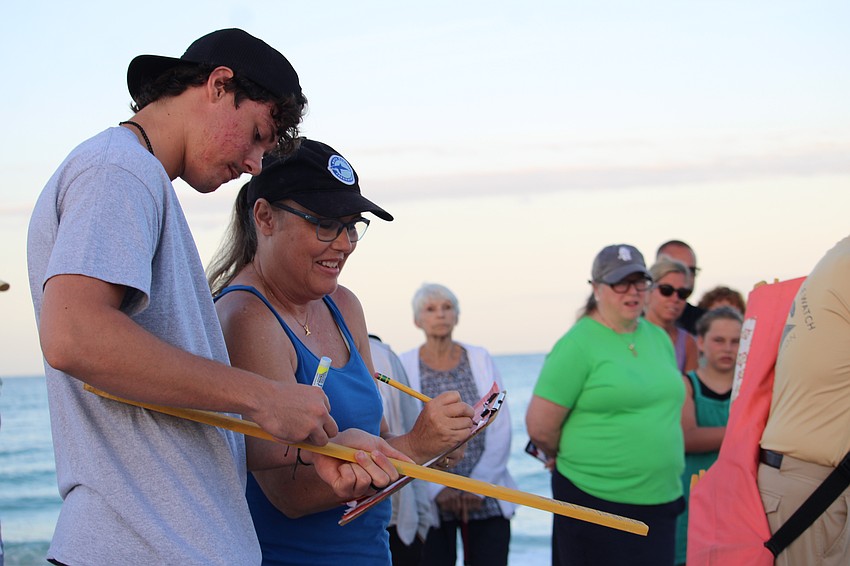
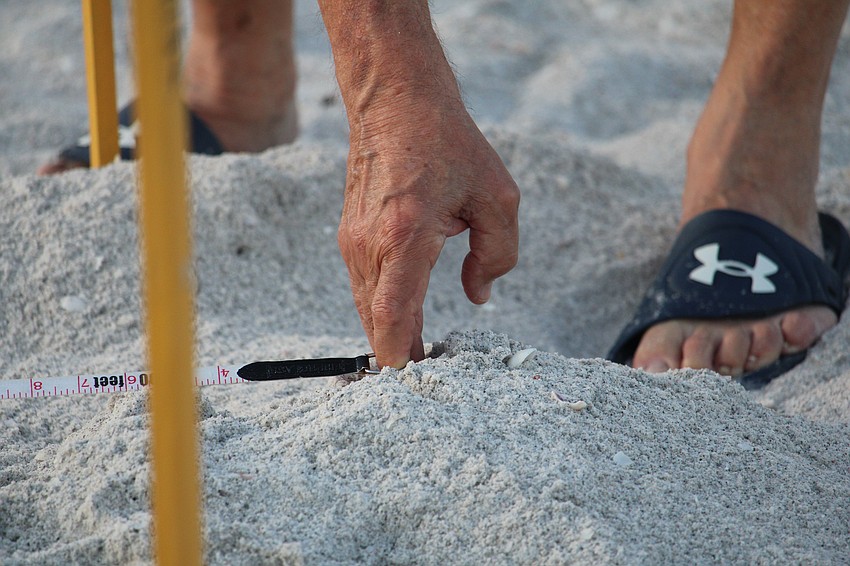
Brenda and Ben Jameson work side by side to jot down data collected about the turtle nest's position relative to the shoreline and the brush. Working to protect the turtles has become a project for the whole family, and while the pair was leading a Turtle Walk on Longboat Key, Brenda's other son, Caleb, was working further south to relocate nests ahead of planned beach renourishment work.
Photo by Dana Kampa
Volunteer Enrico “Sam” DiGiammarino, Jr. traded in his Nordic walking sticks for a turtle nest stake while assisting with an educational Turtle Walk on June 6 on Longboat Key.
Photo by Dana Kampa
While some sea turtles lay their nests quite near the waterline, others will travel much further inland. Mote Marine volunteers reiterated how vital it is for Longboat Key residents to minimize light visible from the beach to avoid disorienting turtles trying to follow the moonlight.
Photo by Dana Kampa
Half of the group participating in the first Turtle Walk of the season continued half a mile down the beach to watch as trained volunteers marked off a second sea turtle nest.
Photo by Dana Kampa
Evidence of one turtle's trek up the beach the night prior remained in the sand the morning of June 6.
Photo by Dana Kampa
Enrico “Sam” DiGiammarino, Jr. helps measure the location of the nest relative to the shoreline.
Photo by Dana Kampa
Certified volunteers Ben and Brenda Jameson, Enrico “Sam” DiGiammarino, Jr. and Connie Schindewolf conclude the first Turtle Walk of the season. Walks continue every Saturday morning through the end of July.
Dana Kampa is the Longboat Key neighbors reporter for the Observer. She first ventured into journalism in her home state of Wisconsin, going on to report community stories everywhere from the snowy mountains of Washington State to the sunny shores of the Caribbean. She has been a writer and photographer for more than a decade, covering what matters most to readers.