- July 23, 2026

-
-
Loading
Loading
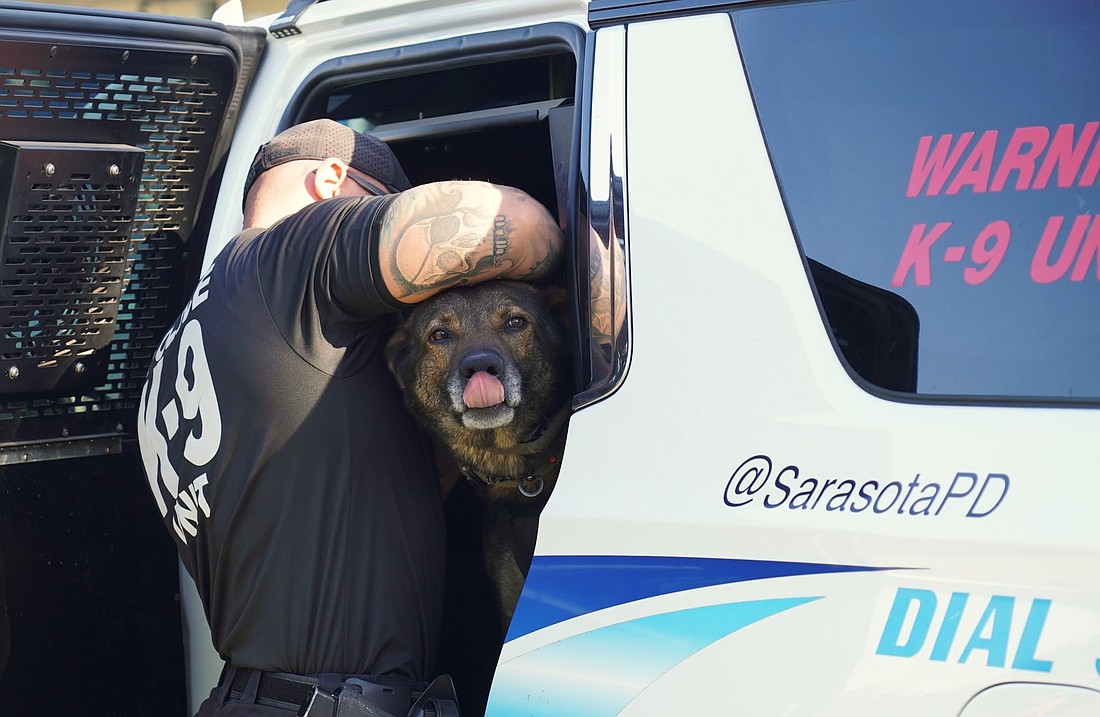
A car smeared with blood prompted a 911 call to the Sarasota Police Department, but it was Halloween, so perhaps it was blood, or just intended to look that way.
While en route, Officer Jacob Nelson was skeptical of the find, but at the scene his K-9 partner, Brody, confirmed its authenticity, then went to work.
“We ended up tracking the blood trail and finding this guy underneath a car,” said Nelson, who joined the Sarasota Police Department in 2011, the K-9 Unit in 2014 and, for six years, has led the four-team unit. The man, apparently having not taken a necessary medication, had cut himself.
In a similar situation, a call to dispatch sent Officer Ryan Block and K-9 Kodak to the scene where a caller reported a pool of blood on the ground. Kodak tracked the scent to a nearby house, which officers then surrounded. With no answer at the door, a view through a bedroom window revealed a man bleeding out on a bed.
“They were able to make contact with him and get EMS to the scene,” Nelson said. Of both scenarios, “I don't know if either one of them would have survived if it wasn't for the dogs.”
Those two examples of the work of the SPD K-9 Unit demonstrate the partnership of man and beast forged through hundreds of hours of training, near inseparableness and an innate eagerness to perform and to please — in exchange for a handful of kibble and positive reinforcement from the handler.
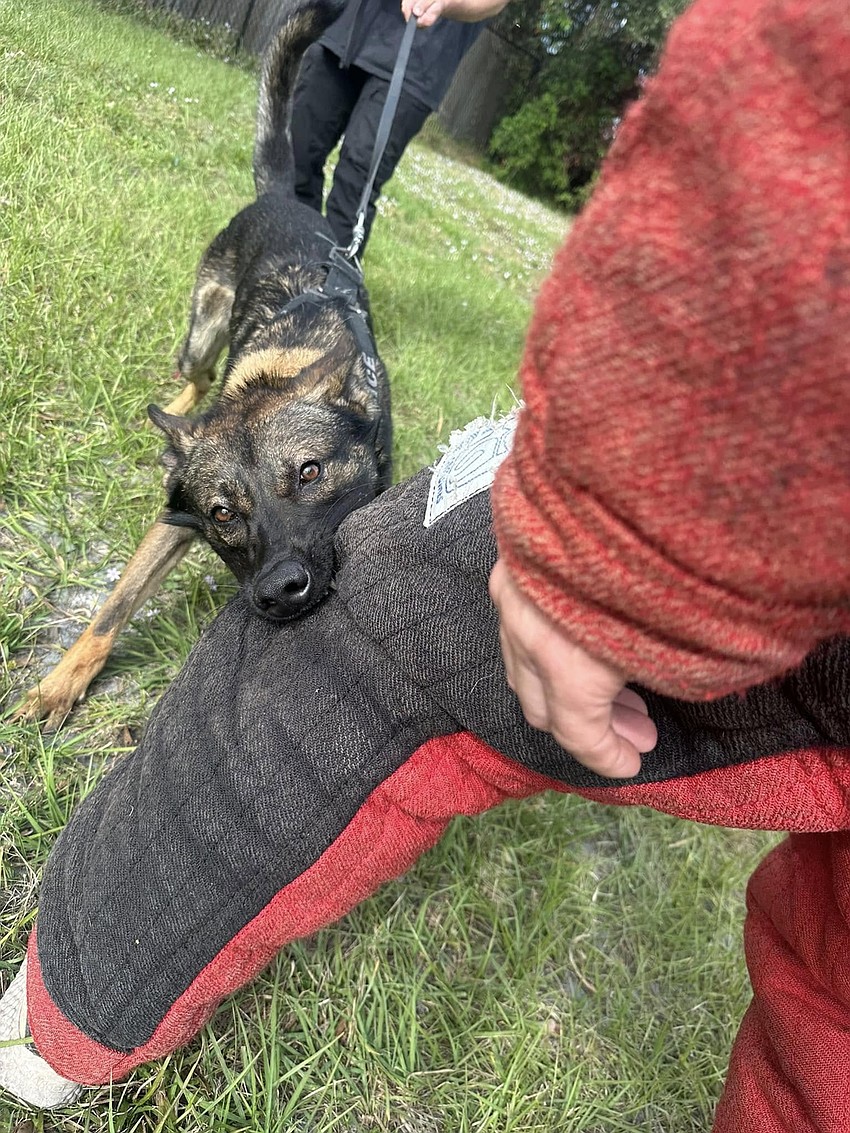
When on duty, the human-dog teams cruise the city in a backup capacity, on alert to be called into action when their specialty becomes necessary. Often, Nelson said, the mere presence of a barking K-9 is enough to de-escalate a situation as they have no fear, cannot be negotiated with and will not hesitate to spring into action on command.
"I'm proud of our K-9 Unit and what they bring to our agency," Chief Rex Troche said. "Their dedication, training and partnership with their dogs make them an essential part of how we serve and protect the city. People may only see our K-9s at community events, but what people may not always see is the work they do behind the scenes."
Not all officers are cut out for K-9 work, and not all K-9 candidates are ideally suited for police assignment. The Belgian Malinois breed is favored for its tactical, high-intensity performance. Shepherds are similar in build and drive to the Malinois, known for their stamina, focus and utility in both patrol and bite work.
Bloodhounds and even beagles serve specialty roles, but a bloodhound is more likely to lick a tracked criminal into submission and beagles don't strike an intimidating posture.
“I would take a goldendoodle if the goldendoodle did everything we want it to do,” Nelson said.
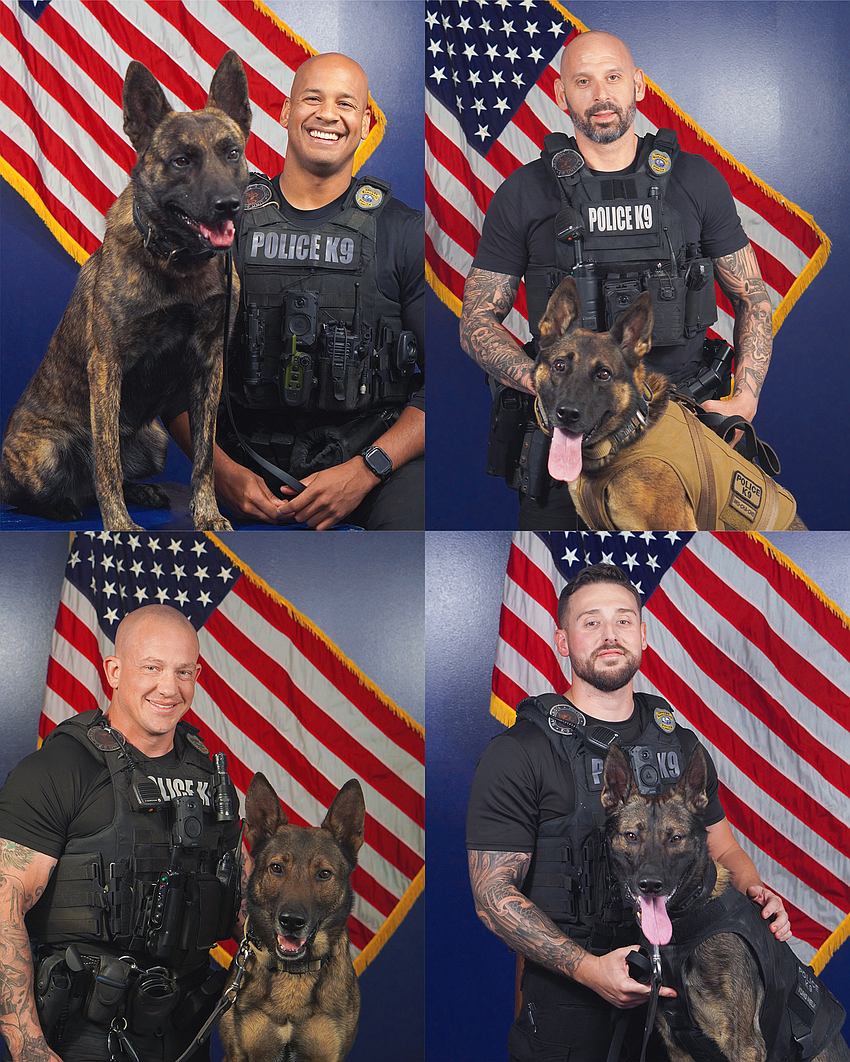
Instead, SPD's four K-9s are multipurpose working dogs, a balance of detection, tracking and, when when the situation dictates, suppression. They are:
When establishing a K-9 partnership, Nelson said the process begins with selecting a handler.
“We spend a lot of time focusing on who's going to be the next handler,” Nelson said. “Picking the right person is huge. Then we'll start thinking about the dog. The selection of handler, selection of dog, the way we train the dogs, all really comes into full effect when you pick that right team."
Of the few police dog breeders in Florida, SPD favors Southern Coast K-9 in New Smyrna Beach. The dogs don’t come trained. In fact, Nelson said, they know nothing at all of police work. Rather, when evaluating a K-9 for law enforcement, handlers evaluate exhibited traits and demeanor.
“We pick dogs that show the drives that we want, show the demeanor, have the athleticism and the nose work,” Nelson said. “We spend a couple days there testing dog after dog after dog, putting them through basic drills to pull out whatever drive we're looking for.”
Among them is the drive to hunt. A candidate K-9 needs more than a good nose: It must also show commitment to the task.
“We want a dog that won't give up when it comes to hunting, to tracking people or odor work,” Nelson said. “My dog will hunt until he drops."
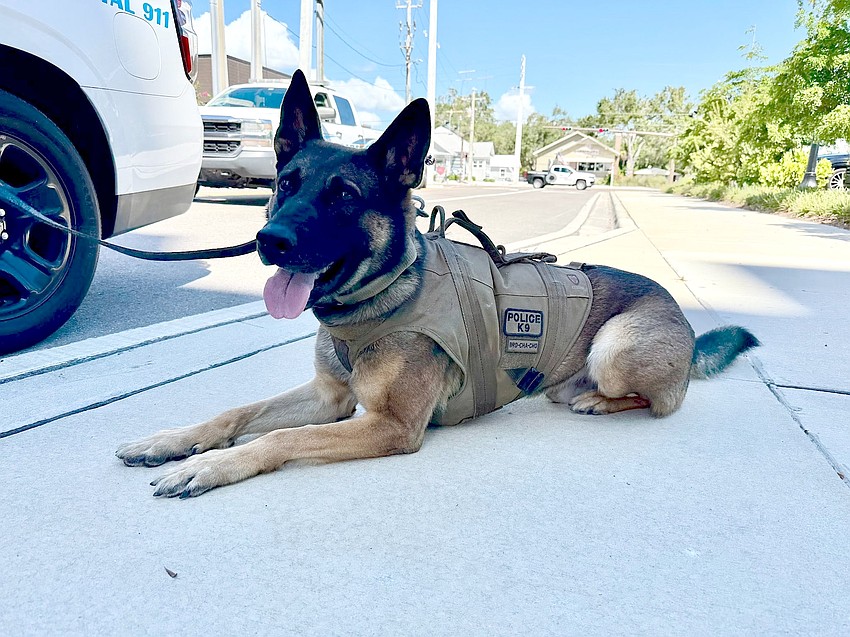
Once selected, K-9 officers have a full year to evaluate and train with a dog. That begins with a veterinarian assessment of hips, joints and blood work to determine potential future issues that may afflict a working dog. From there it’s on to training, 600 hours of it before field deployment.
“We call it showing the dog a picture so when that picture happens in the real life, they've already seen it 1,000 times or some version of it," Nelson said. “As a unit we train every week together so if one of my handlers has an issue, not only are we going to run him through that scenario and better that dog, we're going to throw the other dogs that same situation so if they ever come across that same thing they don't fail.”
Unlike the family dog, K-9s don’t ride around in police cruisers with heads poking out of open windows and tongues wagging in the breeze. When on duty, they are placed in spacious kennels in the back of clearly marked SUVs.
When not on duty they aren’t kept in kennels at SPD headquarters. Rather, they go home with their handlers, but not as pets. That kind of relationship, Nelson said, “muddies the waters” of the chain of command.
Instead, handlers receive a stipend to fund care and boarding in outdoor kennels — more like an outdoor fortress as described by Nelson — where they live with limited, if any, interaction with other family members or pets.
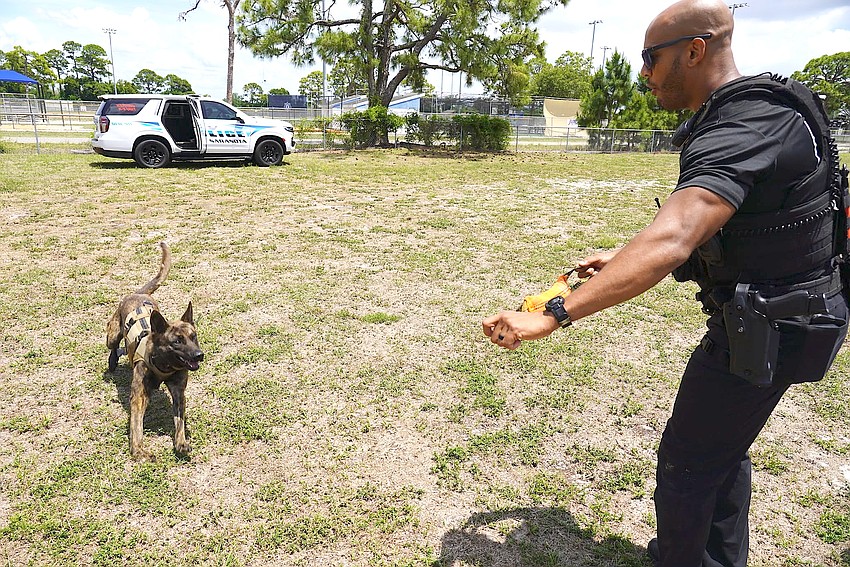
“We leave him alone. We don't introduce him to the household. He doesn't get to come inside and have free range of the house,” Nelson said of Brody. “If bringing him inside made him a better police dog, then I would do that. But it doesn’t. I think he would prefer to be outside because bringing them inside adds confusion. It also allows other people to give him orders, telling him what to do, so the chain of command gets muddied.”
Thus is the dog's life until retirement, typically between 8 and 10 years of age. Nelson’s prior partner, Bronson, retired in November 2021 after 450 deployments. The German shepherd lived with the Nelson family as a pet until he died in July 2024.
“At the end of their career, once they’ve figured it all out, like Bronson I was able to bring him inside and have my family integrate with him," Nelson said. "It wasn't a problem because he was a senior dog, he knew what was up and knew his job.
"He had proven himself on the street.”