- July 22, 2026

-
-
Loading
Loading
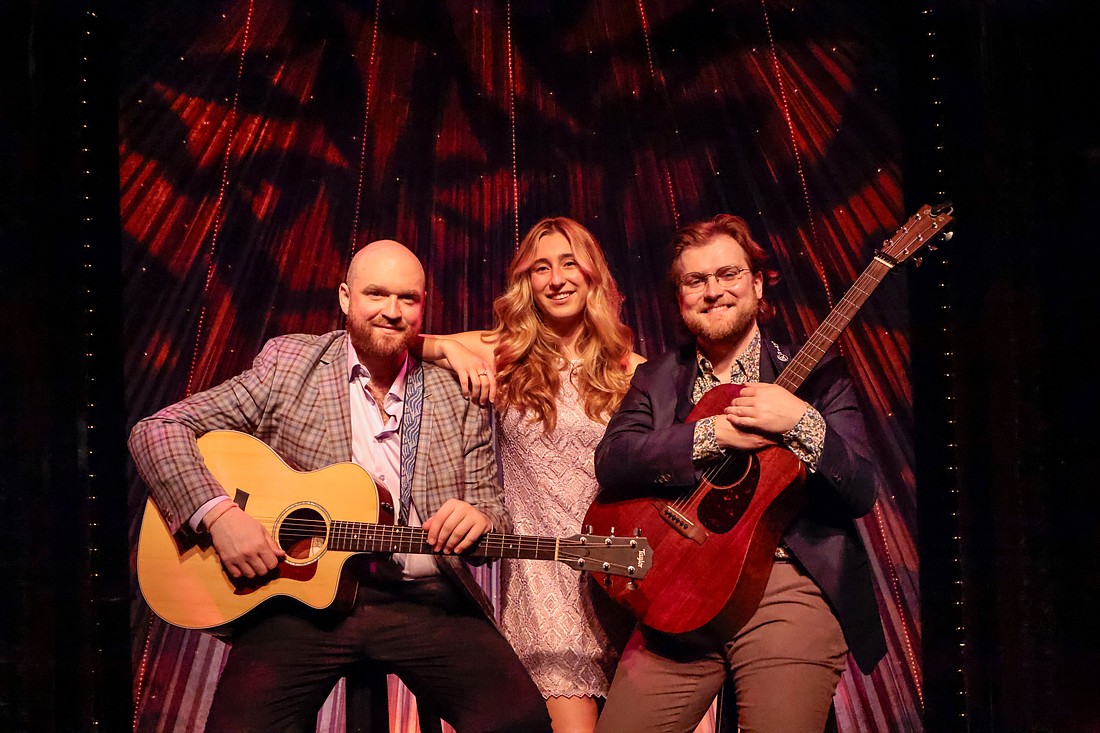
Florida Studio Theatre offers cabaret shows all year, but there’s nothing like slipping into one of them when temperatures are in the 90s. When you step inside one of FST’s two dimly lit cabarets, you enter a cool musical cave, one with cold drinks, reasonably priced food and friendly faces.
The cares of the outside world are left behind as you groove to the upbeat, idealistic soundtrack of baby boomers’ youth.
Maybe the reason FST cabaret resonates so strongly in the summer is that even those who are retired remember the freedom of the months without school. There was more time to daydream, wander and listen to music. Before the era of personal digital devices, music mainly came from the radio — either in a car or the transistor model you took with you everywhere during your summer travels.
As Van Morrison asks in “Brown-Eyed Girl,”
Whatever happened/To Tuesday and so slow/Going down the old mine/with a transistor radio
Sure, there was vinyl, but the record player was at home. And who wanted to be stuck at home during the summer?
Yes, it’s true that Brian Wilson spent years in his room and even wrote a song about it. But he was a troubled genius. The rest of the Beach Boys raced cars, chased girls and tried to catch the next wave.
When FST launched its summer cabaret series in 2014, it tuned the nostalgia dial to the doo-wop days of the 1950s immortalized in Broadway’s “Jersey Boys” and to the Beach Boys-inspired groups of the 1960s surfer movement.
But the surfer craze has receded at FST Summer Cabaret. Time has moved on to folk music era of the 1960s and early 1970s. With its small stage and intimate setting, FST's Goldstein Cabaret isn’t much different from the Greenwich Village clubs in the 2024 Bob Dylan biopic, “A Complete Unknown,” except there are no candles and cigarettes.
Another perennial draw for FST’s boomer patrons are the songs of Motown, Berry Gordy’s Detroit hit factory. Its artists spanned the decades. After learning their craft in Motown groups, singers such as Diana Ross, Smokey Robinson and Michael Jackson went solo and became superstars.
Before folk princess Linda Ronstadt topped the charts with soulful ballads like “Blue Bayou” and had-enough anthems like “You’re No Good,” she was a member of the Stone Poneys. The Poneys’ big hit (“Different Drum”) was written by The Monkees’ Mike Nesmith. As FST Summer Cabaret performer Brian Ott rightly notes during a show, “There was a lot of cross-hybridization.”
Singers who were starting to become popular would record a ditty by an unknown songwriter pal so they could gain recognition and hopefully earn royalties.
The quintessential female folk singer, Joni Mitchell, is sui generis. She’s one of a kind. The only thing she shares with some other folk stars is that she’s Canadian, like Gordon Lightfoot and Neil Young. Her provenance cost her a spot on The New York Times’ recent list of the 30 Greatest Living American Songwriters, but to her fans, Joni’s the GOAT.
You’ll find acoustic folk music, Motown and pioneering female troubadours of the 1970s showcased in this year’s crop of FST Summer Cabaret shows. The series is programmed by FST Associate Producer Catherine Randazzo, who joined the theater the same year it launched its summer cabaret.
This year’s three shows are “Leaving On a Jet Plane” (through July 12), “Songbirds of the Seventies” (July 7-Sept. 6) and “Legacy: Motown & More!” (Aug. 4-Oct. 4). Subscriptions are $59, which brings the cost of each show to about half of the single ticket price of $42.
After more than a decade, Randazzo understands the taste of her older audiences, the majority of whom are repeat subscribers. She knows what they like. “It’s like comfort food. People grew up with it,” is how Randazzo described the mix.
Unlike the cabaret shows created by FST CEO and Producing Artistic Director Richard Hopkins and Managing Director Rebecca Hopkins during season, the summer cabarets aren’t produced by FST. That means it’s up to Randazzo to fill the stage.
To do that, she relies on her relationships with producers and artists. She also scouts for talent at conventions where producers offer cabaret fare to regional theaters like FST and cruise lines. It’s not unusual for her to work with artists to cultivate followup shows to programs that have performed well for FST.
For instance, “Leaving on a Jet Plane” grew out of last summer’s “A Band Called Honalee.”
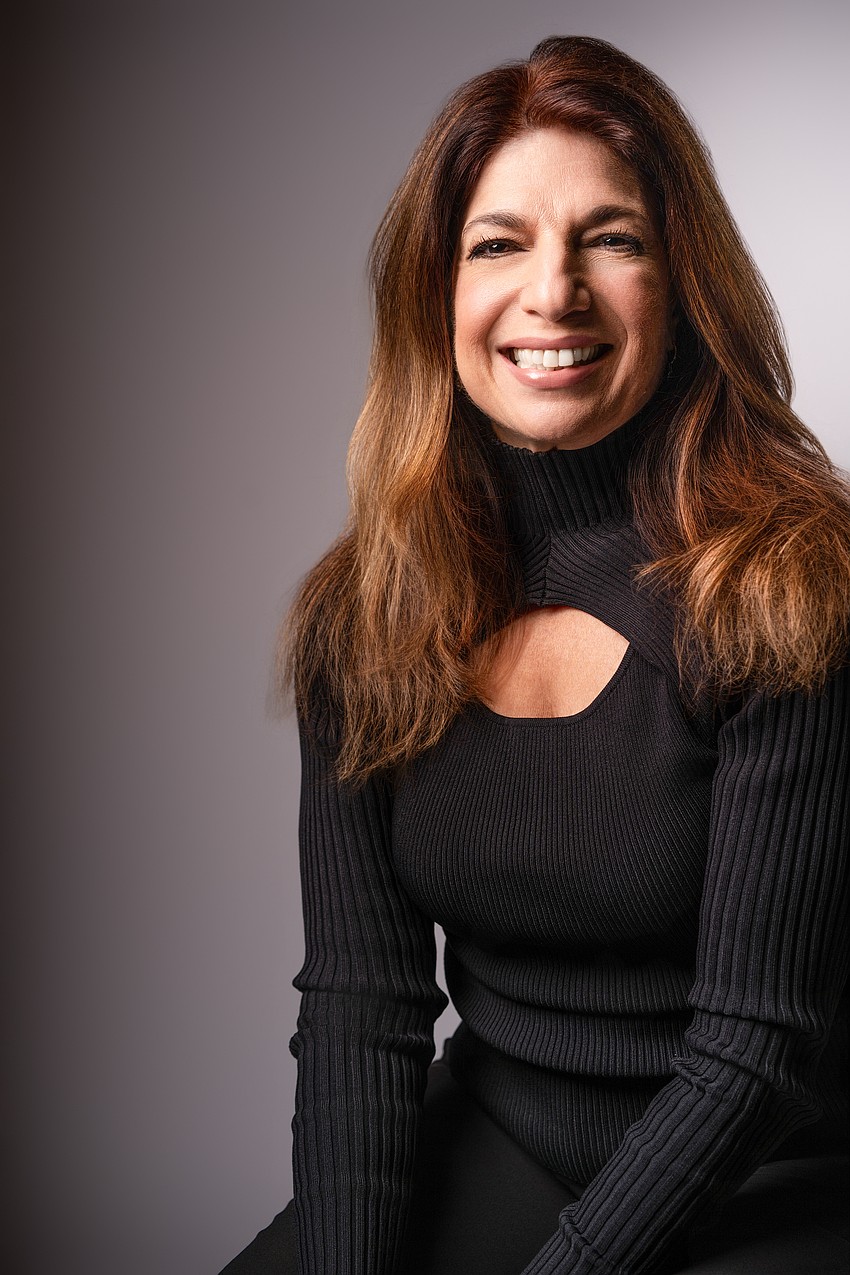
Honalee is a real band that performs songs by Peter, Paul and Mary and other folk singers. Its roster of vocalists have solo careers and also appear with the band all around the country. One “Honalee” member, Katie Blackwell, is in the trio of vocalists in “Jet Plane.” The others are Collin Purcell and Brian Ott, who both play guitar. They are backed up by Geoff Neuman and other rotating bass players.
FST audiences will remember Ott, a native of Minnesota, from his recent appearances in “A Band Called Honalee” and “59th Street Bridge,” a show inspired by the songs of Simon and Garfunkel and other folk singers. On stage, Ott’s the thread that runs through FST’s folk-driven cabaret, but the idea for “Leaving on a Jet Plane” came from Aaron Gandy, Randazzo says.
The creator of a Band Called Honalee, Gandy is represented Epic Arts Management, a firm that Randazzo calls a “creative partner” of FST. “I discovered Epic Arts Management and its producing director, Ron DeStefano, from looking at websites. During the pandemic, Ron reached out with a show called ‘Shades of Bublé,’ that we picked up. His pitch was that he can bring a new generation in.”
Even though it takes its title from a Peter, Paul and Mary song, “Leaving on a Jet Plane” is not a tribute show. Its subtitle is “A Folk Journey,” and it makes good on its word. These are the songs that propelled the struggle for civil rights, women’s liberation, better conditions for workers, ending war and protecting the environment from pollution.
Many of these issues are back in the news again. Hearing Blackwell sing “They paved paradise and put up a parking lot” during “Big Yellow Taxi” seemed quite apt for 2026 Sarasota.
But the throughline of “Jet Plane” is the loneliness of life on the road. It’s a theme that the artists lean into by revealing their hometowns. Each spoke of ambivalent feelings — being grateful to be performing in Florida, but missing loved ones back home. If they were faking their homesickness, they did a good job.
The playlist mines homesickness with the titular song, and with Blackwell’s moving cover of Joni Mitchell’s “California” and the trio’s excerpt of CSNY’s “Love the One Your With,” a solution to loneliness that rings differently today than in the free-love era. Perhaps it was my imagination, but the applause seemed restrained after that number.
“Leaving on a Jet Plane” covers a lot of territory with medleys, including tributes to CSNY and the Loving Spoonful. The audience was encouraged to join in on The Turtles’ “Happy Together” and John Denver’s “Grandma’s Feather Bed,” but they sang even when not invited.
There were a few surprises, including “Early Morning Rain,” a somewhat obscure Gordon Lightfoot song about being stuck at the airport. For a troubadour, the only thing worse than having to catch an early plane is watching one take off without you because you don’t have a gig lined up to pay for your ticket.