- July 22, 2026

-
-
Loading
Loading
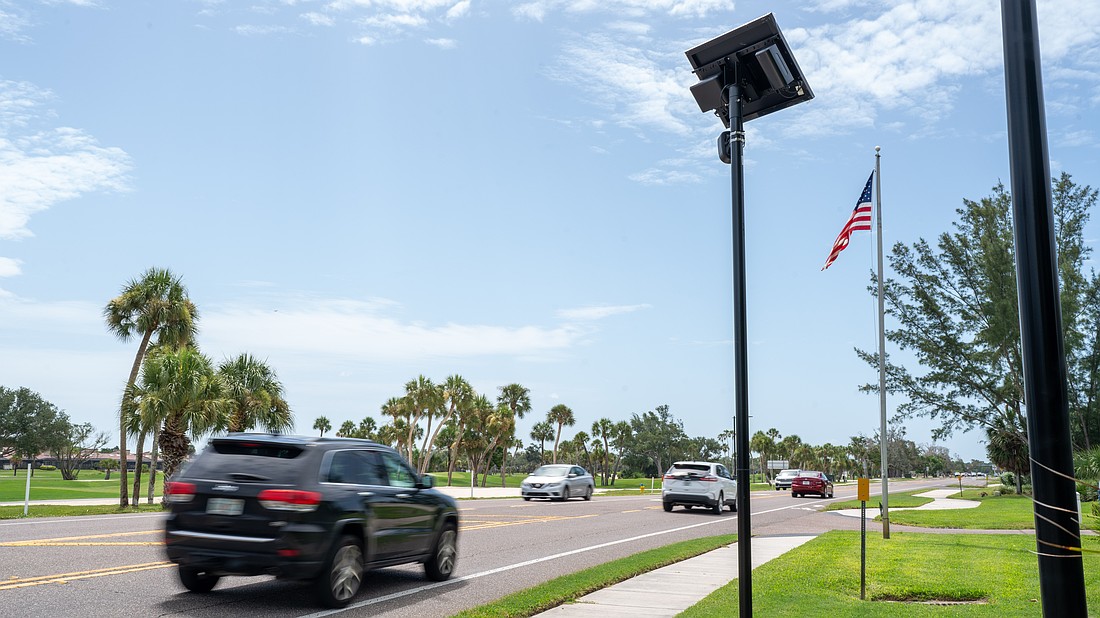
More than 18,000 vehicles on average cross the New Pass bridge onto Longboat Key each day. Seconds after each driver crosses into town limits, a picture of their license plate and car has already been snapped by a motion activated, AI-equipped license plate reader: a Flock camera.
Concern surrounding Flock cameras has grown nationwide and led to vandalism, cities canceling contracts with Flock and gubernatorial candidates calling for a pause or abolishment of the automatic license plate readers.
The Longboat Key Police Department entered into a five-year contract with Flock earlier this year, and the system went online in March. Images of cars and license plates are uploaded to cloud storage and kept by the police department for 90 days.
“We’re leveraging technology to keep residents safe at the end of the day,” Police Chief Russ Mager said. “We’re not using it for any other reason than as a tool to help eliminate criminal activity or to help assist us in criminal investigations.”
Pushback against automatic license plate readers like Flock has grown in recent months.
Social media pages like Deflock America, which has more than 380,000 followers on Facebook, include posts deriding the technology as an invasion of privacy and celebrating Flock contract cancellations and destruction of the cameras.
“Each camera is equal to a pallet of tea in the harbor,” one commenter stated.
The website deflock.org shares updates on Flock camera installations and publishes a map of every Flock camera reported by users in the nation. More than 116,000 automatic license plate readers are cataloged on the open-source website.
The American Civil Liberties Union has launched the “Get the Flock Out” campaign to “fight creepy ALPR cameras.”
“Automatic license plate reader (ALPR) companies like Flock Safety are quietly trying to build a nationwide mass surveillance system,” ACLU’s website states. “If there are Flock cameras in your city, they are tracking, logging, and sharing your movements without a warrant. But we’re not powerless. More and more communities are rejecting these creepy cameras — and yours can be one of them!”
It’s not just privacy concerns either. Police misuse of the system, including officers tracking ex-girlfriends, and cases of mistaken identity that led to traffic stops and house visits of people not associated with a crime, have garnered headlines nationwide.
As election season approaches, some politicians have called for the technology to be banned, citing the Fourth Amendment, which protects privacy by prohibiting searches without a warrant.
“The fourth amendment was written for a reason,” said Republican Gubernatorial candidate James Fishback. “You and I have a right to never be a subject of an unreasonable search and seizure. We will block Flock across the state of Florida.”
Fishback isn’t alone. The leading Republican candidate for governor, Byron Donalds, recently suggested a “full pause” of Flock cameras.
The opposition has extended beyond words, too. Flock cameras are being cut down, covered with trash bags or disassembled nationwide. Last week, a Flock camera was damaged in Sarasota County.
“The Sarasota County Sheriff’s Office has had a couple of the Flock cameras damaged maliciously,” Sarasota County Sheriff’s Office spokesperson Douglas Johnson wrote in an email. “In one instance, the camera was removed from the mounting bracket, the wires were cut from the pole, and the camera was thrown into a wooded area nearby.”
Lawsuits have also been filed. In Virginia and West Virginia, residents, backed by civil liberties organizations, alleged their fourth amendment rights were being infringed by local police departments that contract with Flock.
The complaint in the Norfolk, Virginia, suit claims automatic license plate readers violate the Fourth Amendment by collecting data through a “drag-net” strategy.
A judge ultimately ruled in February the cameras did not violate the Fourth Amendment, but that the technology could in the future.
The annual contract with Flock costs Longboat Key $27,500, but, to the police department, the benefits are well worth it.
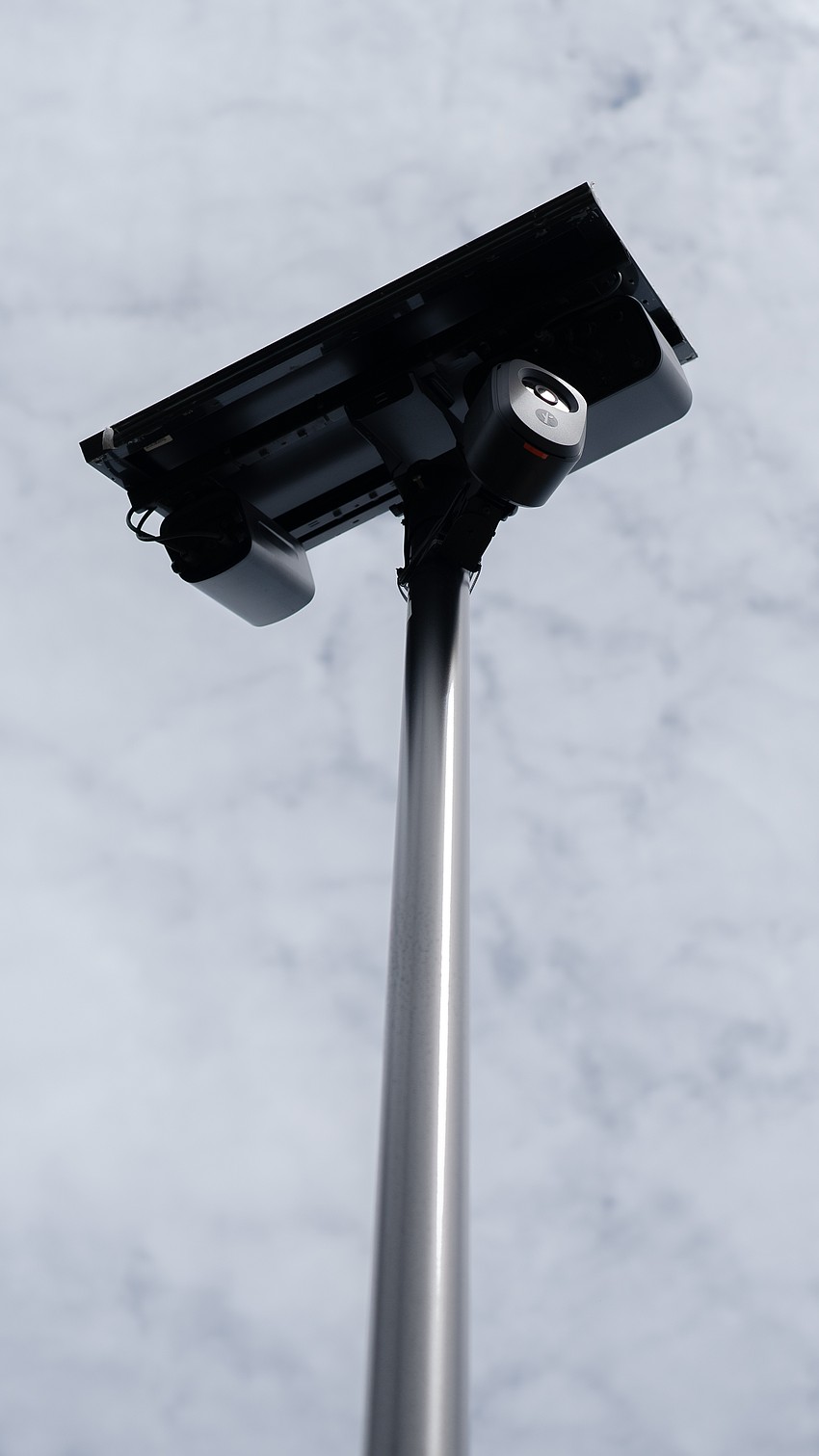
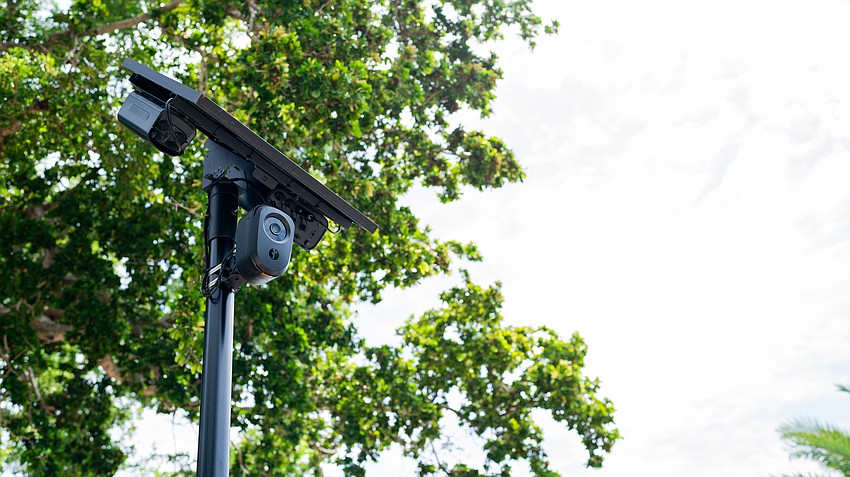
Because of potential vandalism, such as what happened in the county’s jurisdiction, LKPD refused to share how many Flock cameras are on the island. However, they are easy to spot and can be seen on either end of the barrier island.
Although the Flock license plate reader system went live on Longboat Key in March, the technology on the island is not new, said Longboat Key Police Department Capt. Robert Bourque.
“Not necessarily Flock, that’s a name brand, but these cameras have been in use for well over a decade,” Bourque said.
In that time, the technology helped detectives build a case in “a very long list” of crimes, Bourque said. A recent example was the burglaries of GPS units out of boats from Cannon’s Marina.
“We knew the guy came from Miami, he came up I-75, he came here, stole GPS units and left. That was supported by LPR cameras. It wasn’t how he was definitively identified, but it supports his movements so now we know where to look for him,” Bourque said. “We called Miami-Dade Sheriff’s Office and talked to a unit that works this type of crime and we tell them what we’ve got, who we suspect. They do surveillance on the guy, and they catch him breaking in and stealing GPS units in Miami.”
In April, a murder suspect was arrested on Longboat Key when officers searched their Flock cameras for the vehicle associated with the suspect following a “be on the lookout” alert issued by a neighboring jurisdiction.
“If we didn’t have these camera systems for the past 12, 13 years we’ve had them, we wouldn’t be near as successful as we’ve been arresting people that have committed what we consider major crimes,” Bourque said.
Though Flock owns the equipment, the agencies that contract with the Atlanta-based company own the data.
“Every search requires a documented reason and creates a permanent audit trail,” said Flock Public Relations Manager Paris Lewbel. “Public safety and privacy are not competing goals, and Flock is committed to transparency, accountability, and local oversight in every community we serve.”
When a picture of a license plate is taken, the number and state of the plate is searched alongside a database that includes plates associated with drivers with suspended licenses, expired tags or warrants for arrest. When a license plate or car description matches one of those criteria, it is saved as a “hot file.”
“If that car has no wants on it, all we see is a car with a tag. It doesn’t tell us who owns that car, it doesn’t tell us who the tag is registered to. It doesn’t tell us anything about that car,” Bourque said. “The only cars that we get notified (for) are ones that get entered into the databases as having some type of want or hit.”
LKPD and Flock both reiterate the cameras do not take photographs of the people driving the vehicles, and the cameras do not have facial recognition.
Bourque said a benefit of Flock over other companies is the details noted by the AI in the pictures taken. If a kayak is stolen on the island, for example, police can search through Flock for “kayak,” and the system will narrow down the hundreds of thousands of photos of vehicles passing to those with a kayak.
On Longboat Key, pictures of license plates and cars are uploaded to a cloud storage system. The data is kept for 90 days before it is permanently deleted unless they are kept for use in a criminal trial.
“They are not uploaded to a national database,” Bourque wrote in an email. “The pictures are shared with Law Enforcement agencies who we have MOUs with.”
The Longboat Key Police Department has memorandums of understanding with “hundreds” of agencies, Bourque wrote.
That sharing of data across different departments is a cause of concern by organizations like Deflock, but LKPD says the data is secure. Bourque said the department does audits every month to make sure every tag that is entered into the “hot files” is legitimate and that every click on the computer when searching through the database is documented.
Mager and Bourque both say the technology on Longboat is not an invasion of privacy, and its benefits are immense.
“If you’re associated with a suspended license or warrants, no insurance or stolen cars, then it’s going to alert us,” Mager said. “I can’t see how a law-abiding citizen would have any objection to us being able to arrest people that are coming onto the island that could potentially be committing crimes. It’s just a tool that is very useful.”