- July 17, 2026

-
-
Loading
Loading
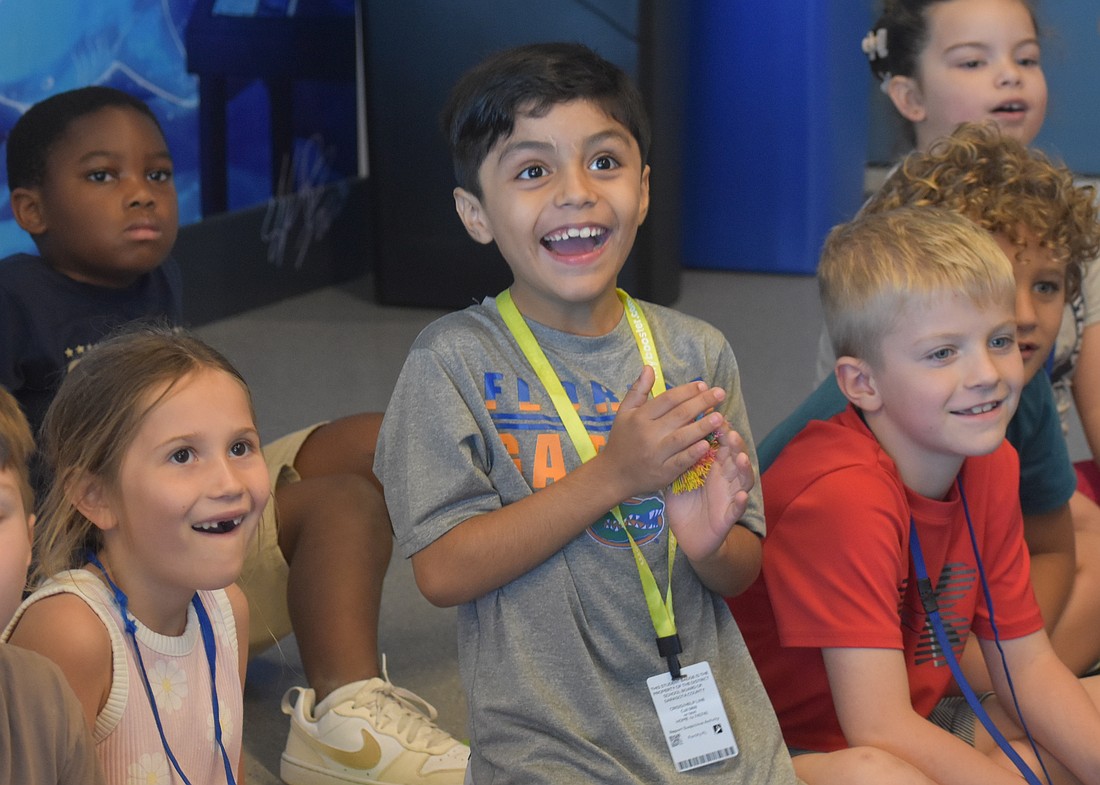
Sharon Itts, a science teacher at Braden River High School, began her career not as an educator but as a scientist.
She teaches marine biology and does as many hands-on activities with her students as she can in her classroom.
“We're here in Florida, so this passion is real easy to harness and my hope is for the students to feel some of that enthusiasm,” Itts said. “I hope they will learn how to embrace the environmental resources while still having fun doing the activities that they've grown up doing. I want them to be more mindful of little nuances or differences that they can (experience). For example, go fishing, but only keep what you're going to eat.”
Itts now can take her students on field trips to the Mote Science Education Aquarium, which opened in October adjacent to Nathan Benderson Park. Since Mote SEA opened its doors, students in Manatee and Sarasota County have taken advantage of the new resource.
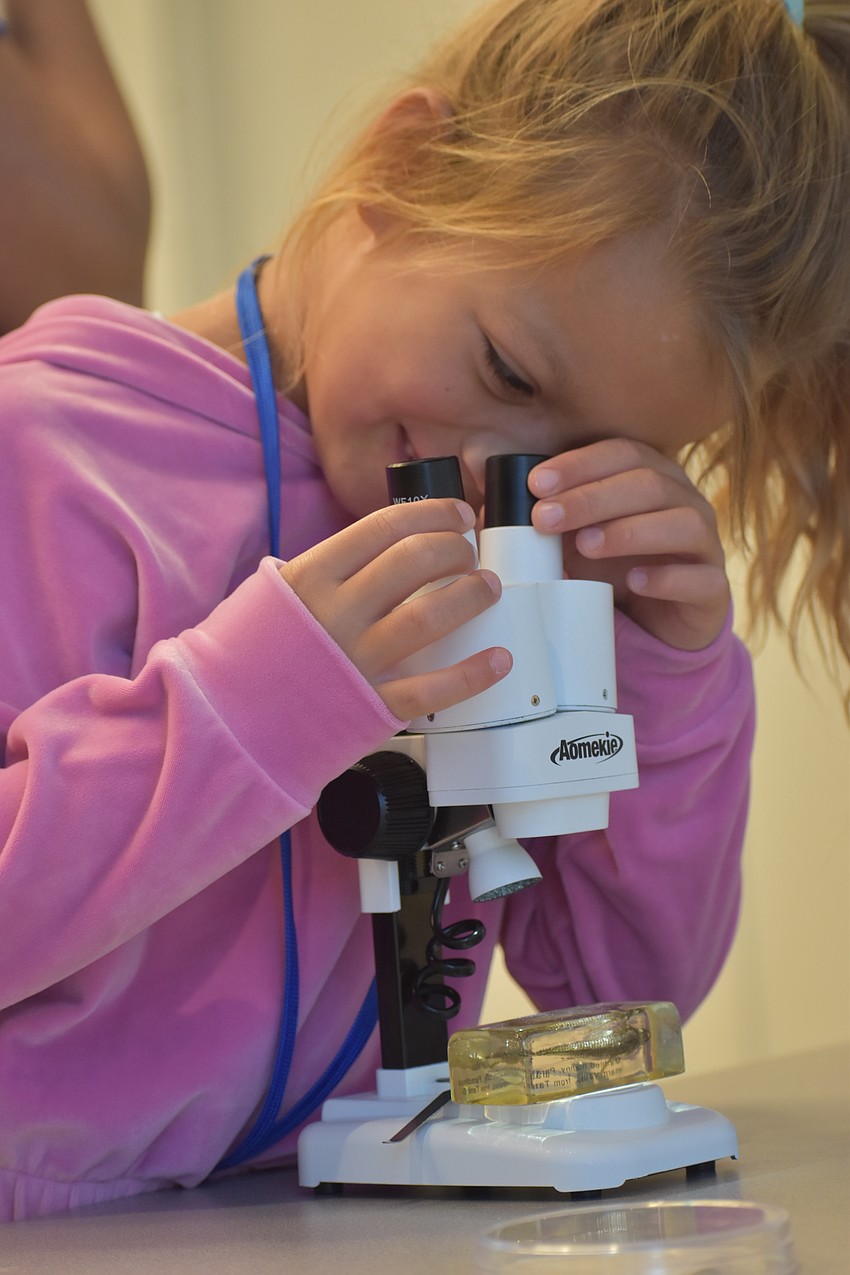
Brad Tanner, manager of school programs at Mote SEA, said in the first 10 months the aquarium has hosted approximately 300 field trips and worked with more than 16,500 students. He said each day during the school year, between one and five schools have taken advantage of the facility, working in the labs and exploring the aquarium.
“I love to see a little spark in their eyes when they learn something new,” Tanner said. “I've seen the students will actually share with their parents something they learned. That's always a fun moment.”
Patti Folino, the principal at Tuttle Elementary School, said 13 of her school's students attended Mote SEA during the Sarasota County STEM Fair Feb. 13. She said she enjoyed hearing the stories from students and their families about seeing the sharks and stingrays. She called the aquarium the “main hub of everything.”
Although there hasn’t been an official field trip to Mote SEA for Tuttle students just yet, Folino is excited for the future.
As a Title 1 school, Folino said she wants her students to have the experience without having to pay for it. Mote SEA has provided 8,280 passes to Sarasota County students and 15,300 to Manatee County students in Title 1 schools that are good for up to six guests per student.
“It's so crazy,” Folino said. “The ocean is our backyard, but (the students) don't ever get to go there and they don't always get to experience what lives in our gulf.”
Folino said learning about biology and the life cycle is one thing, but being able to see that cycle through a sea-life lens is impactful and makes it that much more real to the students.
Tiffany Spradling, director of secondary curriculum for the School District of Manatee County, said 6,211 students and teachers from Manatee County have participated in teaching lab lessons since October 2025.
The three learning labs focus on marine ecology, biomedical and immunology, and ocean technology. Amber Platowski, the secondary science coordinator for the School District of Manatee County, said ecology – the scientific study of how living organisms interact with one another and with their physical environment – repeats from kindergarten all the way through the senior year.
“They're learning about food chains, food webs and human impact on the environment,” Platowski said. “That's a relevant one, especially because we're here in Manatee County. They’re identifying not only the problems, but they’re letting kids work through solutions. That is the forward-thinking, problem-solving skill set that we want to develop in our learners.”
Once time and date is confirmed for a field trip, each teacher is given the opportunity to let Tanner and the Mote staff know if there is a focal point so the students can directly relate to their current lessons in class.
“Although we provide time for that in our curriculum, being able to reinforce that in an engaging setting helps solidify that learning,” Platowski said.
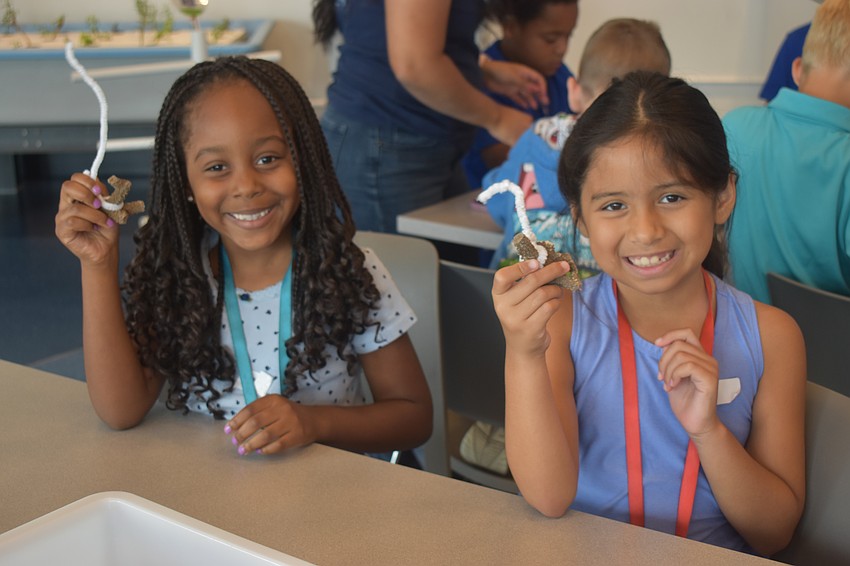
First grade students at Lake Manatee K-8 were learning about land turtles and sea turtles prior to their May 11 field trip. Rebecca Garcia, a first grade teacher at Lake Manatee, said she appreciated that Mote offered different classes based on the level of the students.
Garcia said her students were thrilled by the hands-on, touch tanks. She said the students couldn’t get over the cold temperature of the water and how smooth some animals and coral felt.
Jaime Pirillo, the mother of Lake Manatee student Jaxon Pirillo, attended the field trip as a chaperone. She said it was a beautifully designed aquarium that makes for a great family day. For Jaxon, his favorite part was seeing the otters swim, which reminded him of his school as the otter is the mascot.
“My hope is that children continue to want to learn about sea life and the importance of our ecosystem,” Garcia said.
Sylwia Konopko, a first grade teacher at Lakeview Elementary in Sarasota County, said the first grade field trip to Mote further expanded on topics the students were learning — marine ecosystems, animal adaptations, conservation and environmental stewardship.
She is passionate about connecting classroom learning with real-world experiences, which is why she finds field trips such as the one she attended on May 7 so valuable.
“Experiences like this help students develop a deeper understanding of the topics they study while encouraging them to ask questions and think critically,” Konopko said. “I hope they leave with a greater appreciation for marine life and the importance of protecting our environment.”
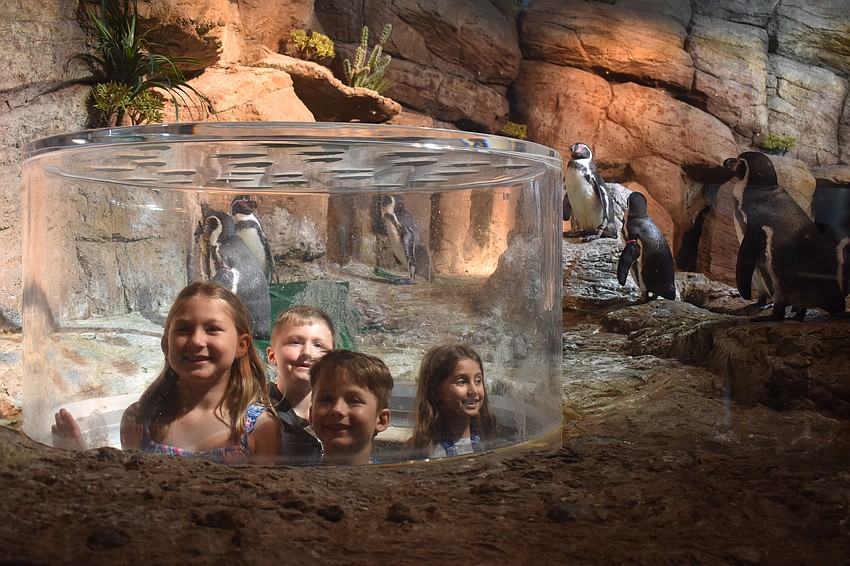
Jennifer Shelly, also a first grade teacher at Lakeview Elementary, said seeing the eyes of her students light up as they learned was rewarding. She said the students asked thoughtful questions and were genuinely curious about the animals and their habitats.
She enjoyed hearing students talk about wanting to protect the ocean and marine animals. For her, it shined a light on how powerful real world experiences can be.
“As a child, I would have been fascinated by the opportunity to see marine life up close, interact with exhibits, and learn directly from experts,” Shelly said. “I believe experiences like Mote SEA help students develop curiosity, ask questions and see themselves as part of the learning process.”
Fayth Jenkins, the head of school at Innovation Academy SRQ, said students at Innovation have yet to attend the new Mote SEA for a field trip. However, her own children Elijah, 14, and Kingston, 8, attended as students of the Out-of-Door Academy. They came back excited about the hands-on exhibits, touch tanks and the opportunity to learn about marine life up close.
She hopes the students at Innovation will experience the same in the future.
“I want them to develop curiosity, make real world connections, and see science come to life beyond the classroom,” Jenkins said. “My hope is that students leave Mote with a greater appreciation for our oceans, a better understanding of conservation, and a sense of wonder that inspires them to keep learning long after their visit.”
Kaylynn Magee, a 2026 graduate of Braden River High School, attended Mote SEA as part of her marine science class with Itts. She especially enjoyed seeing the turtles, jellyfish and octopus up close.
“One thing I like about the aquarium is you're not looking in a book, you're not reading,” Magee said. “You're physically seeing the animal swim around, maybe harmed, or probably just living in the aquarium, compared to it being endangered out in the open ocean or lakes.”
Although she loved her experience, Magee said the aquarium experience is probably better for younger kids, as they would want to learn more or volunteer in the future. She felt as though teenagers might not be quite as involved or interested, but instead might want to post.
She hopes that as elementary students grow, they will be able to connect with visits to the aquarium. She said the volunteers and staff at Mote SEA are passionate and outgoing when presenting information.
Spradling said Willis Elementary School has become Mote’s first partner school. This means Willis will integrate Mote research and citizen science into its classrooms, specifically its science classes.
Platowski said citizen science is when everyday people are able to contribute to scientific research. She gave an example of International Coastal Cleanup Day, where there's an app for people anywhere in the world to enter what they found. It all goes into a global database.
“Experiences like these can inspire the next generation of scientists, researchers, and environmental advocates,” Konopko said. “Mote plays an important role in connecting young people with the natural world and I hope many more students will have the chance to benefit.”