- July 2, 2026

-
-
Loading
Loading
It's likely in the past month, you've been walking around the Sarasota or Manatee counties area and have heard someone say, "We live in paradise."
In 1776, though, Florida historians say nobody was calling the region paradise.
"There were lots of mosquitoes, gators and snakes," said Uzi Baram, professor emeritus of New College of Florida. "This area was seen as a frontier. It was a very small population."
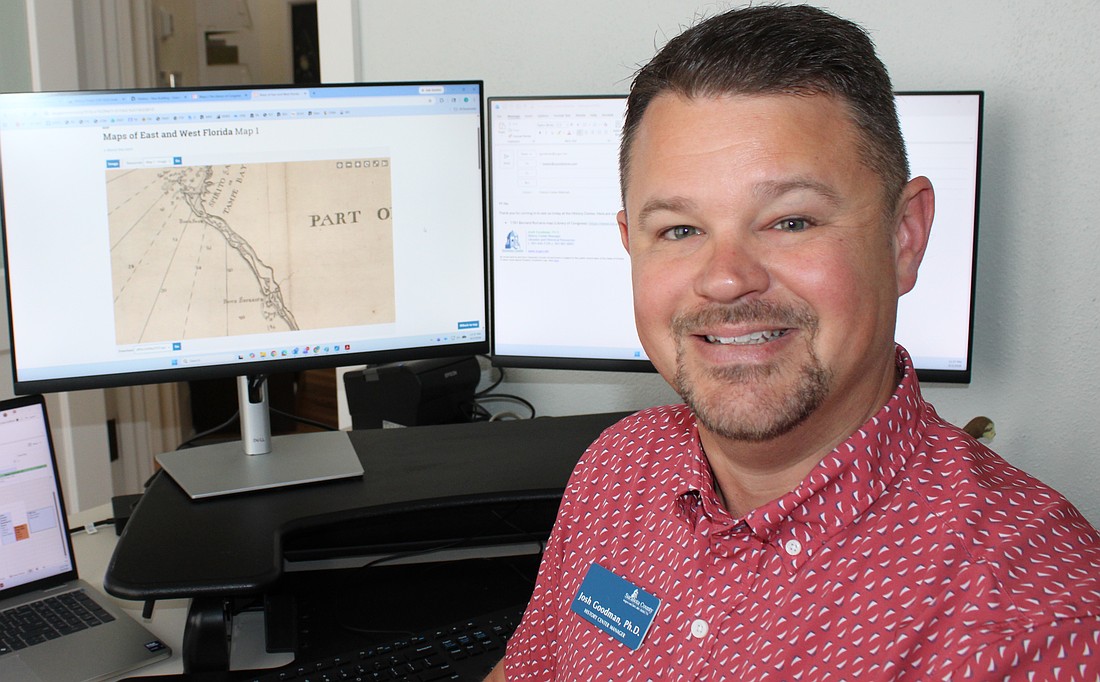
"It's not that there was nothing here," said Josh Goodman, the manager of the Sarasota County History Center, which is part of the county's Libraries and Historical Resources Department. "But what was going on was not organized. There were no municipalities ... no settlements."
Although the area was made up mostly of Cuban fishermen in 1776, the region was a British colony. It was just that the British had little interest in trying to govern or control the area. The British had their hands full with their other colonies in the New World.
If you were waking up in the Sarasota area of 1776, and you weren't a Seminole or an escaped slave, you weren't speaking English even if the British did own the land.
Spain swapped Florida to Great Britain in 1763 as a result of the Seven Years War and received Cuba in return. Cuban fishermen continued to fish the coast of this area because there was a big market for fish in Havana, and no Brits.
Jack Davis, a professor of history for the University of Florida and a Pulitzer Prize winning author of "The Gulf: The Making of an American Sea," said the Cuban fishermen were mostly seasonal residents whose catch was being shipped to Havana for slave holders.
Davis agreed there were very few if any British living in the area at the time. He said the Cuban fishermen and the Maroons were among the few residents of the region other than a few indigenous people.
"The Maroons were the escaped slaves," Davis said. "And the fishermen were hiring Seminoles to work with them."
In 1776, fishing was king in the area now known as Sarasota. But you didn't have to eat it every day.
"I am assuming (the fishermen) also traded with (the Seminoles), and hunted to supplement their diets.," Davis said. "I don't think the cracker cattle (were down this far in southwestern Florida)."
Davis also noted that most of the native population in the area, such as the Calusa people, had been "significantly thinned out" by disease (much of which was brought to the area by the Europeans) and enslavement.
He said while it was a hard existence, it was mainly peaceful.
"The Maroons and the Seminoles were basically the same (in terms of being oppressed). And the Cubans weren't seen as a threat," he said.
"They traded with each other," Baram said in agreement. "The Seminoles hunted deer and mammals, and the Cubans had fish. They respected each other. The people who were living here were the ones who could do it."
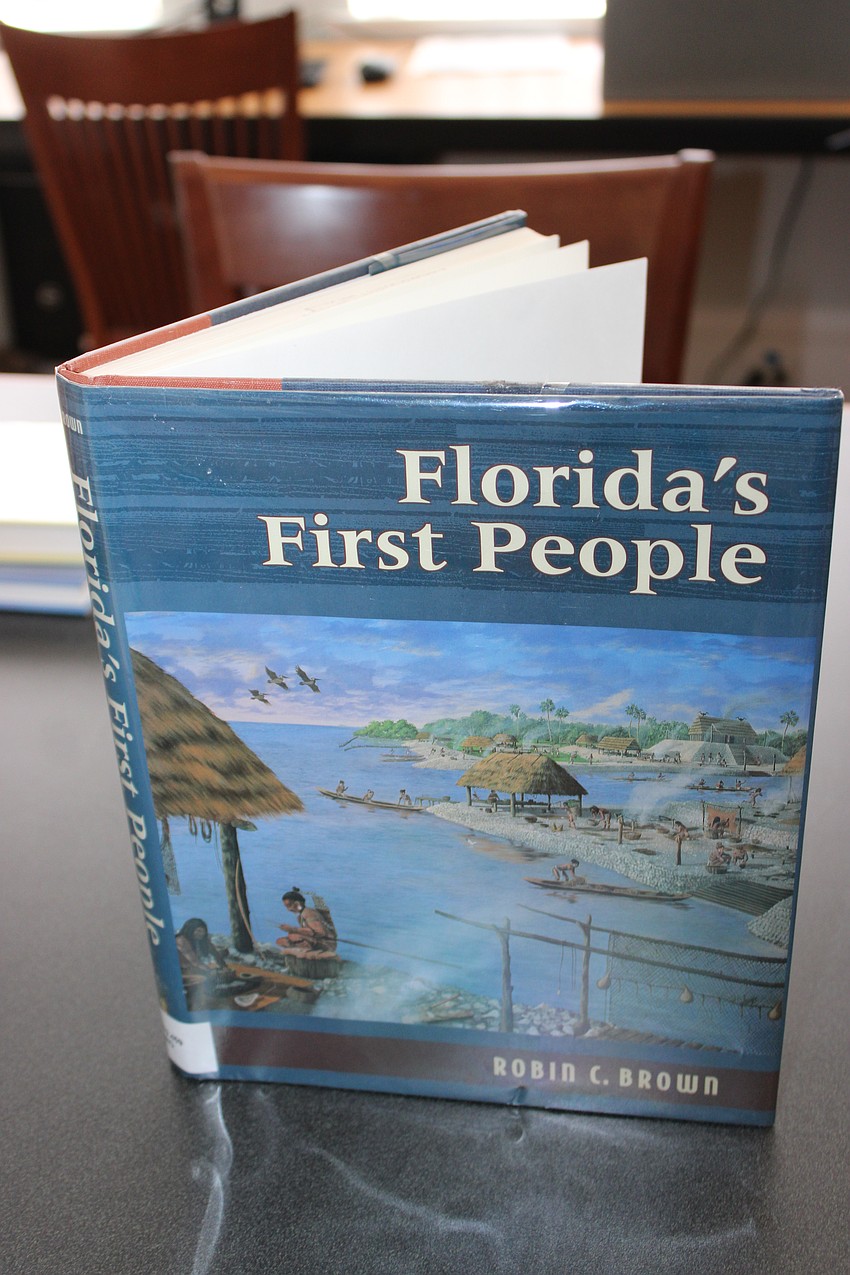
The fishermen were catching mullet, sea trout, redfish, pompano and shark (the livers were used for oil). They would use skiffs for the daily fishing trips and they had larger ships to transport the catch to Havana. The makeshift villages were more a place to build drying racks, salting racks and their boats than for people living together. Those areas were called ranchos.
None of the inhabitants were living in high-rise, luxury condos.
"They built simple huts out of thatch," Baram said of the Cuban fishermen. "And they left before hurricane season. There were no real structures here. It definitely was rugged. Nothing was easy with the mosquitoes, the heat, and the constant danger.
"They built their hamlets right on the water," Baram said. "The rancho would be there or the tides would take it all away."
But the Cuban fishermen stayed, at least part of the year, because the Gulf was rich with fish, and the market was hot in Cuba.
"Havana had an important role in administering the new world," Goodman said. "They needed a lot of food and supplies to feed all those Spanish soldiers. One of the most lucrative trades was commercial fishing. They were here, catching fish, drying, salting and smoking them, and then the fish went back to Havana for distribution."
Historians agree that the few residents of the Sarasota area in 1776 had their hands full with day-to-day life, but the historians differ a bit when they talk about whether the residents of the time knew what was going on in Philadelphia.
"Communication back then just wasn’t what it is now," Davis said. "My guess is that anybody living in that part of Florida wasn’t aware of what was going on (in terms of the Declaration of Independence). They maybe heard about a war between the British and the patriots, but this was a very small population and the British (Florida residents) were mostly concentrated in St. Augustine and Pensacola. They hadn’t come down to this part of Florida, which was really wild. Even up here in Gainesville, there were not a lot of settlements in the interior. What you had (in the Sarasota area) were people who wanted to escape from conventional society."
Baram, however, said research indicates that those living in the area were aware of what was transpiring with the American revolution. He said because of circumstances, the call for freedom would have resonated with those in the area.
"It is surprising how much (the residents of the Sarasota area) knew was going on," Baram said. "People were sharing the news, and they had heard about the Declaration. They were happy the colonies were declaring independence."
It is unlikely we will ever know how Sarasota got its name.
"Historians look at archives," Goodman said. "But the material for this area mostly starts in the 1770s."
Baram noted that Bernard Romans (a pioneering cartographer), mapped Florida in 1774 and labeled the area of current Sarasota and Bradenton as "Boca Sarazota." Baram said an interesting sidebar to that story is that Romans' map was engraved by Paul Revere.
Romans published "A Concise Natural History of East and West Florida" in 1775.
"We know that Sarasota (or some form of it) was showing up on maps as early as the 1760s," Goodman said. "Spanish maps were the first to show the name. There are similar place names in other Spanish areas of the world. Or it could be a Spanish corruption of a Native American name."
Forms such as Sarasote, Zarazote and Saraxote were showing up on maps.
"When we go back 250 years ago, a lot of map making is conjectural," Goodman said. "A lot gets lost and twisted in translation. Map makers are copying each other. European countries were jockeying for position on the North American continent. The French were coming up with their own map, as were the English and the Dutch. They all were translating these names back and forth."
John Barth Jr. wrote a paper on the subject that is part of the Sarasota County Historical Resources archives. Barth wrote "Residents of Sarasota have long speculated about the origin of the name. A plausible sounding daughter, Sara, was invented for explorer Hernando de Soto, who landed in the Manatee River in 1538, complete with a tragic love story to dramatize a 1916 “Sara de Soto” pageant. The pageant became an annual weeklong celebration climaxed by a circus parade, and declined when the Barnum and Bailey winter camp was moved to Venice in 1960. But Sara is not a Spanish given name, and there is no known historical basis for the story. It is probably just a pleasant myth."
There are several other stories as well.
"The origin of Sarasota is a hot debate that never has been explained to any satisfactory degree," Baram said. "I want proof, and no one has given me any proof. Everything I heard sounds like nonsense to me."