- July 2, 2026

-
-
Loading
Loading
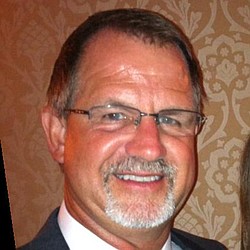
Growing up in Sarasota, William “Tripp” Schwenk enjoyed playing many sports. When he was introduced to the pool in the form of competitive swimming at age 9, though, he knew then he wanted to be an Olympian.
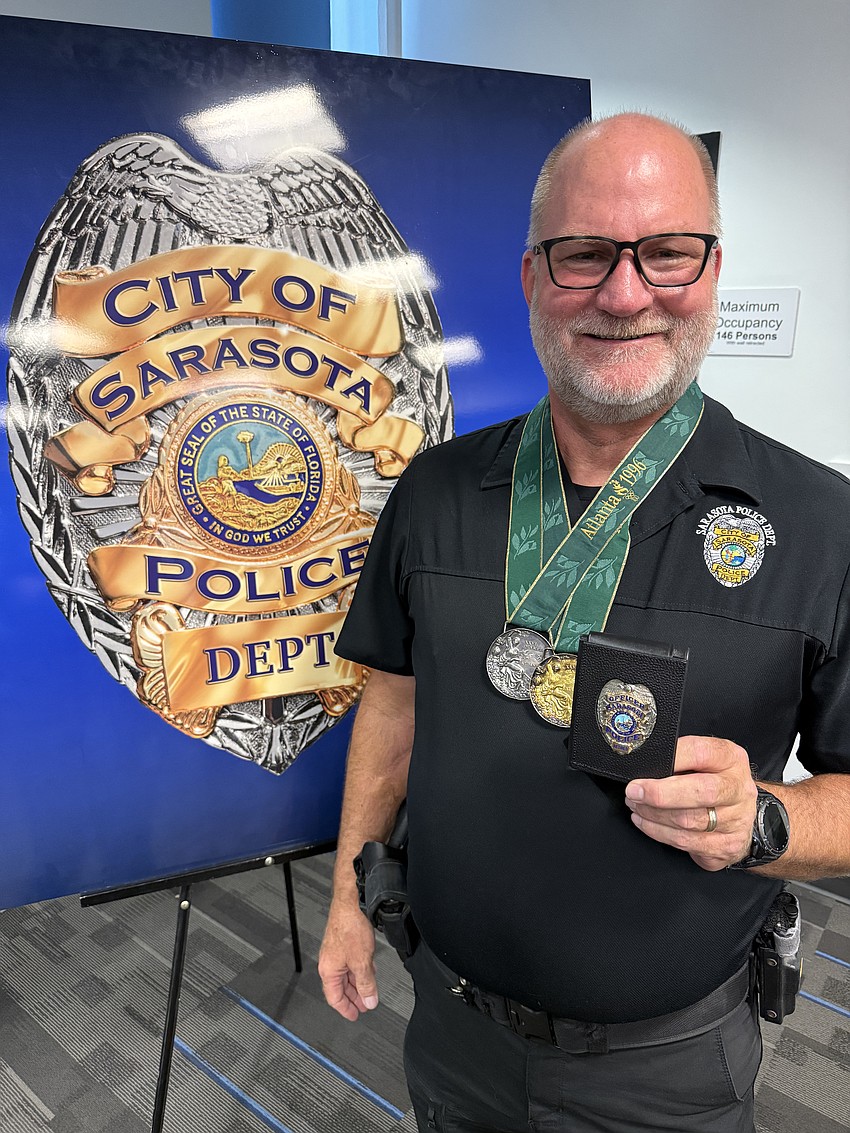
Returning to Sarasota after a successful swimming career that included one gold and one silver medal in the 1996 Olympics in Atlanta, he knew his next career would be in law enforcement.
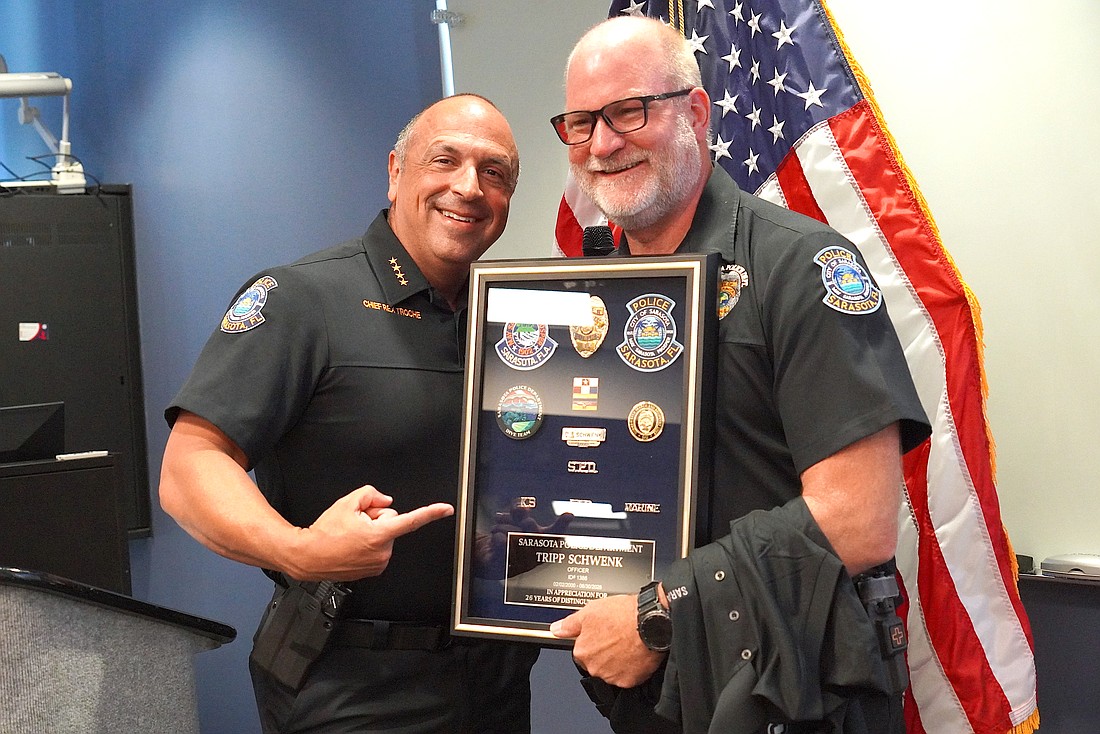
On June 26, the 55-year-old Schwenk concluded his 26-year career with the Sarasota Police Department, the private ceremony at SPD headquarters held before a room filled with family members and now-former colleagues.
"Officer Schwenk dedicated 26 years to serving the city of Sarasota with integrity, professionalism and commitment to our community,” said SPD Chief Rex Troche. "We're grateful for his service. He's left a lasting impact on our agency and city.”
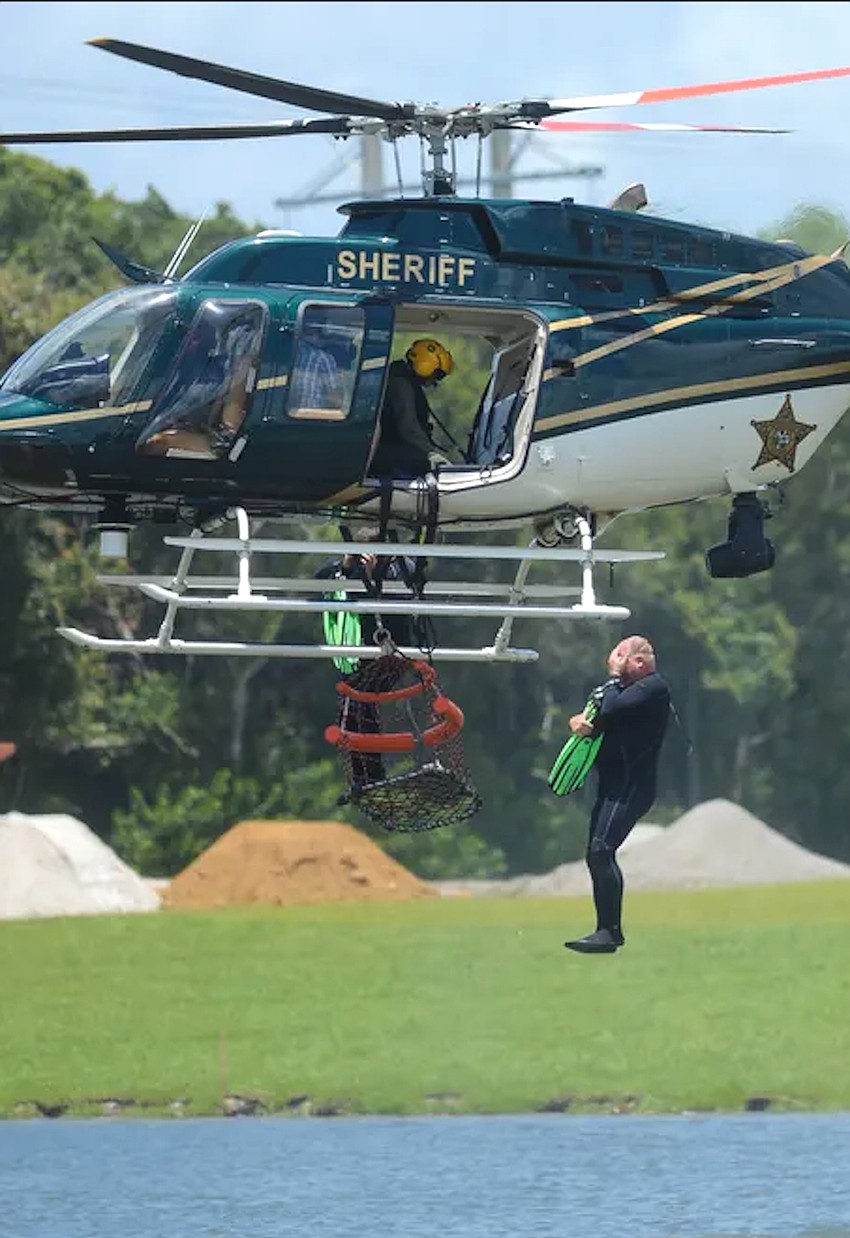
Schwenk began his career in 2000. One of his posts was with the K-9 unit, partnering with Kuda, a German Shepherd who served the department from 2006 to 2014. Taking advantage of his aquatic acumen, he later worked with the marine unit and served 21 of his 26 years on SPD’s dive team.
As a child, he gravitated toward swimming with the Sarasota Sharks program, he said, because, well, Florida is hot.
“I got in a pool and it was a place to play, but it was also a place to cool off, and I just kind of took to it,” he said. “Swimming was the one thing that I just took to it. I was like a fish in the pool. I was not a great swimmer to start off, though. I would say very mediocre as a young kid, but I absolutely loved it. I loved that it was a team sport, but also an individual performance-based sport.”
His Olympian proclamation, Schwenk said, was met with skepticism by his parents.
“They told me I was crazy,” he recalls.
He found a higher level of family support when he decided to return to Sarasota after his swimming career ended and become a police officer.
“I had friends who were cops here. I have two uncles who were both at the time active feds, and had some conversations with them when I was finished swimming,” he said. “They both told me that if I’m interested in this, go local and see if I like it. We’ll talk a couple of years down the road about going fed.
“Well, I got here. I obviously loved it. Heck, my second year here we chased an America's Most Wanted guy (Richard Evonitz), a serial killer, and caught him.”
Schwenk's time as an olympian was marked by a major tragedy. It was July 27, 1996, after the final night of the swimming competition at the 1996 Olympic Games. Team USA was celebrating its haul of 26 medals in downtown Atlanta, miles away from Olympic Park when, at 1:20 a.m., a bomb exploded behind the stage during a late-night concert.
That’s when pagers issued to all athletes by Team USA started buzzing, reading “exit plan alpha” with instructions on where to go to shelter.
“None of us had any clue what was going on,” Schwenk said. “Then we started seeing images pop up on TVs around the place, so we secured the women’s team and got them into a limo. I tried to get a cop to stop and he almost ran over me, obviously going toward Olympic Park.”
From there, members of the men’s team traveled to their assigned evacuation hotel until they were given the all-clear about four hours later.
The bombing and its impact, Schwenk said, put a “huge damper” on his second and final Olympics, and personally set him back financially in appearance compensation.
“My sponsors at the time were ready to hear about my swims, but instead the next day all anybody cared about was the bombing, and rightfully so,” he said. “It cost me a significant amount of money, but money is nothing compared to human life, and it cost some other people a lot more.”
The blast killed a 44-year-old woman and injured more than 100 others.
In the four years between the 1996 Olympics and his rookie year with the Sarasota Police Department, Schwenk spent his time coaching swimming and teaching clinics, working for swimwear brand Speedo, and swimming for one more year before walking away from competition.
“It was a little bit because of aging, but more than anything else my body was just …” he said, his voice trailing off. “My kidneys were shot and we really didn’t know the extent of what was going on.”
Facing dialysis, he said he got the “blessing of all blessings.”
“I ended up getting a kidney transplant here after four years on the job.”
He didn’t have to look far for a donor. His wife’s sister, Lisa Chapple, was a match.
The procedure took place at UF Health in Gainesville. When he arrived to his hospital room, his coach from University of Tennessee had already decked it out in the motif of University of Tennessee orange.
“He was there with Tennessee swimming stuff all over my room,” Schwenk said. “I said ‘Coach, thank you. I love you for being here, but they're gonna kill me.”
The rivalry between the two Southeastern Conference schools did not extend to the surgical suite though.
“The University of Florida saved my life,” he said.
It was a life he spent serving the community in which he grew up, where he attended Riverview High School and where he swam with the Sarasota Sharks swimming program.
“My dad grew up moving all over the country. His dad was an engineer and they moved from job to job all over the place and I didn't want that,” Schwenk said. “I wanted to put down roots and have a family. I came home to my hometown, tried to try to do the ‘hometown kid comes back and does good.’ I got to do some really cool stuff, and I got to do it daily protecting the people in the city. I walk away from this knowing that I did my best to make this a better place.”
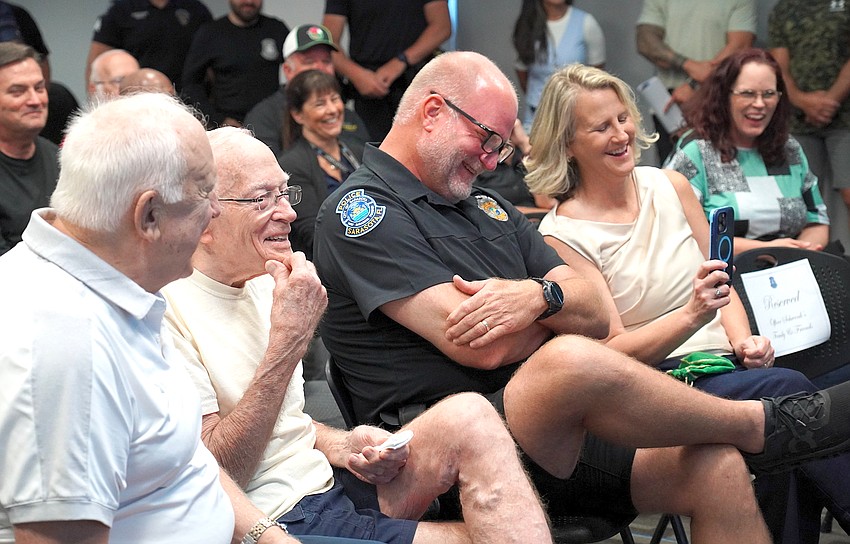
Jay Riley, a family friend and director of business outreach and community engagement in the Office of External Affairs at the USF Sarasota-Manatee, said Schwenk achieved that objective.
“Tripp's legacy extends far beyond his extraordinary accomplishments as a police officer and Olympic champion,” Riley told the Observer. “He has always been the first to step forward whenever someone needed help. Whether mentoring young people, encouraging college students to pursue their dreams, supporting first responders or quietly standing beside children and families battling cancer, Tripp has consistently used his platform to serve others.
"Sarasota is a safer community because of his service, but it's also a better community because of his compassion, generosity and unwavering commitment to helping others succeed."
Schwenk said he won’t stay retired for long and is entertaining potential opportunities. His wife, Heather, is a physician’s assistant specializing in cancer treatment.
"I hope to God nobody ever has to go see her,” he said.
The couple’s children are following in Tripp’s wake. His son, Toby, is a rising junior at the Virginia Military Institute where he is a member of the swim team. Just last week, his daughter, Taylor, arrived on campus at North Carolina State University where she, too, will swim as a member of the Wolfpack squad.
It was an eventful week for the family.
“I just turned 55 last week. I became an empty nester, and four days later I'm retired from this place,” he said.
Schwenk leaves SPD satisfied that he went the distance. And although that accomplishment didn’t come with another medal, it did with another piece of hardware — a frame containing his badge, patches and other mementoes of his law enforcement career.
“One thing I will say about this job is the day that you can't learn anything is the day you need to stop working,” he said. “We’re always learning and processing how to be a better citizen, how to be better dad, how to be a better cop, how to be a better husband.
“It doesn't matter what it is. I think it's our role on this planet to make things better, and not just as a cop. I think it's our role as human beings.”