
- August 12, 2026

-
-
Loading
Loading
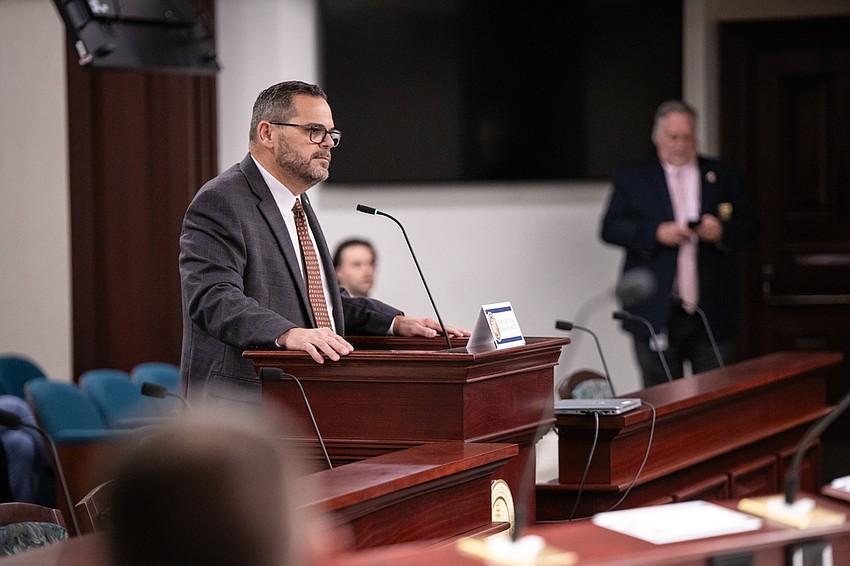
Florida Rep. Bill Conerly said he’s not an “alarmist,” but there are chemicals that sometimes keep him up at night — perfluoroalkyl and polyfluoroalkyl substances, more commonly known as PFAS or forever chemicals.
Conerly, who represents Lakewood Ranch as part of House District 72, said PFAS’s carbon fluorine bond is the strongest bond in nature, except it rarely occurs in nature.
It was accidentally discovered by a chemist working for DuPont in 1938. It was later used to create Teflon.
Conerly likened the strength of the chemical’s bond to welding something together. The bond can’t be broken, so it’s constantly being recycled.
PFAS has been linked to cancer and can be found nearly everywhere because there are at least 15,000 varieties of the substances, and they don’t degrade.
According to Graham Peaslee, a Notre Dame professor that Conerly has discussed the subject with, there might be “tremendously more than 15,000.”
PFAS can be found in non-stick pans, clothing, makeup, dental floss, pizza boxes and Arctic animals. The compounds have been identified in penguin eggs and polar bears.
Conerly noted that babies are born with PFAS exposure because the chemicals can pass through the womb.
The issue affects everyone, but firefighters to a greater degree because PFAS materials have long been used in the foam stocked by fire departments to extinguish fires.
“We still have guys that go into fires (and die); it’s the nature of our job,” said Jason Berzowski, president of the local Suncoast 2546 chapter of the International Association of Fire Fighters. “But four times as many are dying from cancer.”
Among every chapter in IAFF, 80% of the line-of-duty deaths in 2025 were caused by occupational cancer. The Suncoast chapter has lost two members in the past seven months to occupational cancer, and 12 others are currently receiving treatment.
Conerly sponsored House Bill 1019, which took effect July 1. The bill prohibits the use, sale, purchase and distribution of aqueous film-forming foam used to fight fires.
Long-known to cause cancer, the foam's use was discontinued by East Manatee Fire Rescue in 2021 in favor of Universal Green, a safer, more environmentally friendly firefighting foam.
Firefighters are on the front lines, but AFFF sinks into the ground after use and becomes part of the environment. And firefighting foam is far from the only source of PFAS contamination.
“There’s a section in the bill that doesn’t seem to have a correlation with the other stuff,” Conerly said. “It was related to the testing of treated effluent…In our area, (treated effluent) ends up being reclaimed water that you use for irrigation. So you’re putting it on everything, which means that it could eventually run into stormwater ponds or infiltrate into the aquifer.”
Effluent is any liquid or gas that's released from a factory or a treatment plant.
The bill requires any public entity that disposes of 25,000 or more gallons a day of “domestic wastewater biosolids and treated effluent” to conduct sampling for PFAS.
A bad sample won’t lead to enforcement action because Conerly knew he wouldn’t get the bill passed by “jumping ahead of the Environmental Protection Agency,” but those samples will now be collected and compiled by the state.
“So many municipalities are testing (for PFAS) right now, but they’re not reporting,” Conerly said. “There’s so much fragmented information that we can’t make proper decisions.”
Conerly included effluent testing in the bill in an effort to begin building a database.
Moving forward, he sees a database tracking firefighters over the length of their careers as a viable way to gain additional insight into how PFAS exposure impacts health.
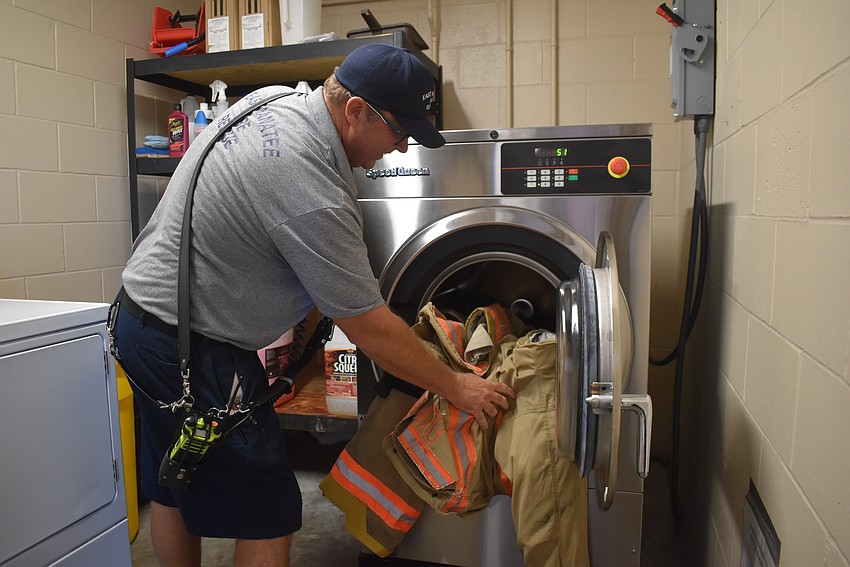
Although firefighters won’t have to work with AFFF anymore, PFAS is still in their bunker gear because it so efficiently repels water, oil and heat.
Suncoast Waterkeeper is building its own database of drinking water samples through its Forever Free program, a community initiative aimed at better understanding the safety of drinking water on the Suncoast.
Abbey Tyrna, the executive director of Suncoast Waterkeeper, noted that Conerly’s bill is a great start to addressing the issue.
“We’ve had several conversations with him about what can be regulated,” Tyrna said. “He wants to go after sources. If the state doesn’t have an appetite to actually regulate what’s in our drinking water, turning off the supply would be great.”
Conerly noted that HB 1019 is just the start of his battle against PFAS, not the end.
The EPA is working toward drinking water regulations for PFOA and PFOS, what Conerly called the poster children for perfluoroalkyl and polyfluoroalkyl substances.
But as Tyrna pointed out, what about the others?
Every sample Suncoast Waterkeeper has collected to date shows the presence of seven PFAS chemicals. In addition to cancer, those chemicals have been linked to adverse health impacts on cardiovascular, endocrine, urinary, hematologic, hepatic, immune and reproductive health, as well.
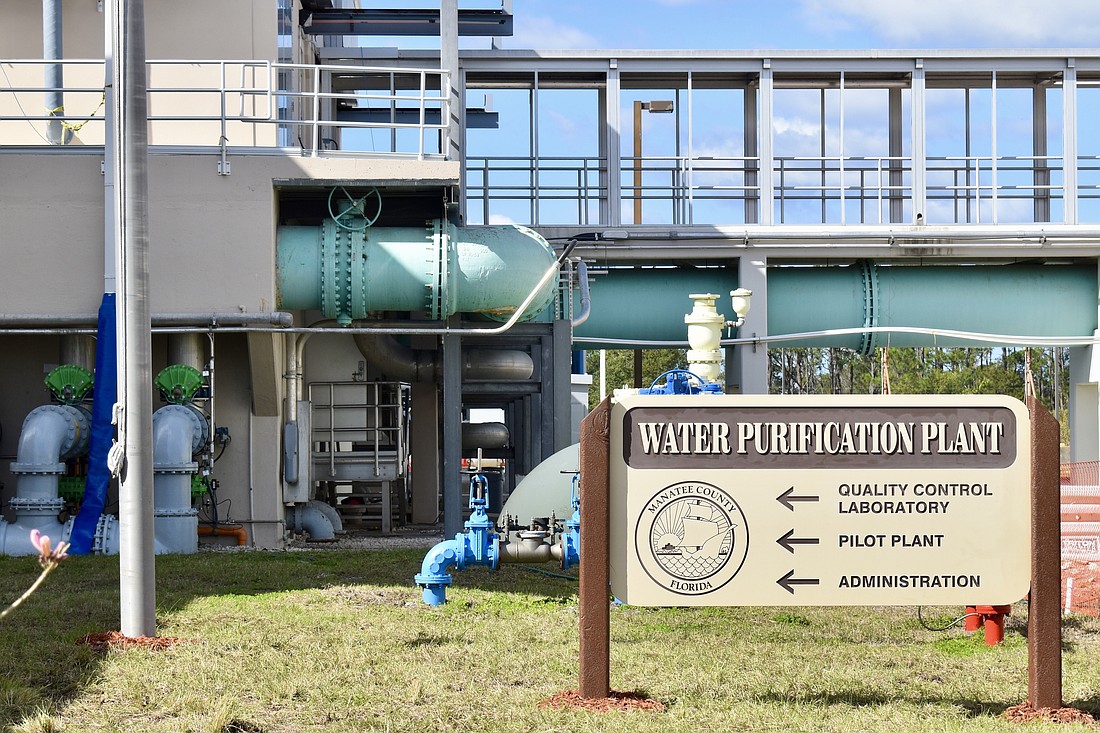
Manatee County provided the East County Observer with its latest samples from the Lake Manatee Water Treatment Plant, dated April 1 and July 15. Levels of PFOA and PFOS were about half the EPA’s recommendation of no more than 4 parts per trillion.
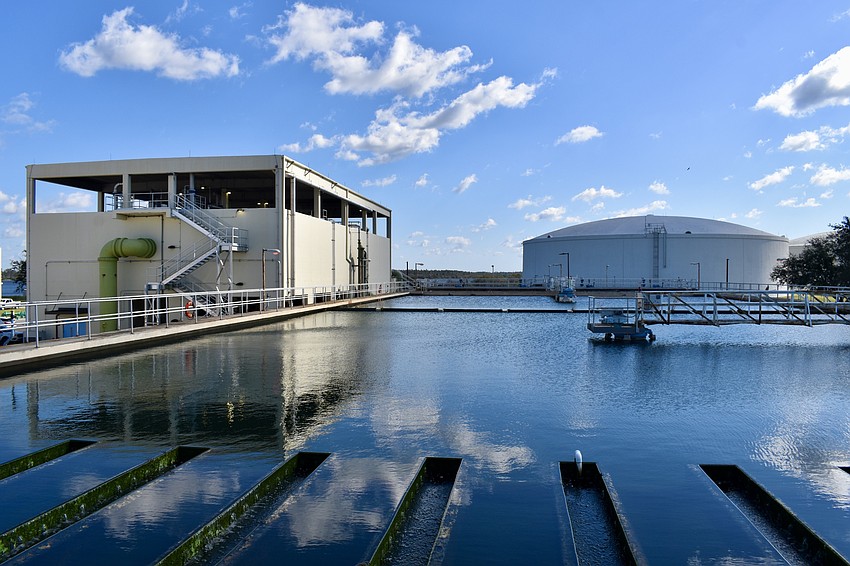
The county also monitors PFNA, PFHxS and PFBS, but Suncoast Waterkeeper samples identified the presence of PFBA, PFPeA, PFHxA and PFHpA, as well.
“Just saying that we’re below 4 ppt in two PFAS doesn’t mean that we’re safe,” Tyrna said. “That’s the regulatory story, but it’s irresponsible because there’s a mixture. We need an understanding of what that mixture is and what the seasonality of that mixture is.”
Tyrna used farming as an example of an input being seasonal. Biosolids that are used as fertilizer are a source of PFAS.
Director of Utilities Patrick Shea said Manatee County is in the early stages of rehabilitation, upgrade and expansion of the Lake Manatee Water Treatment Plant. Advanced treatment technologies capable of addressing contaminants, including PFAS, are being evaluated as part of the planning and design process.
The county also has plans to build a reverse osmosis plant in Palmetto. The project was deferred in March to make way for a pipeline resiliency project.
While the county's plans for the plant were made to address the projected demand for additional water in 2030, Conerly said reverse osmosis can remove everything from water, including PFAS, microplastics and pharmaceuticals, but "it's not inexpensive."
He heard an estimate of over $40 billion to get Florida to meet the proposed EPA regulations of under 4ppt of PFOA and PFOS.
Based on monitoring data, Manatee County doesn't anticipate the need for additional treatment or operational changes because its system is already below the EPA's proposed maximum contaminant levels.
Shea also noted that protecting drinking water starts long before the treatment process begins.
“The county's most effective and cost-efficient defense against contaminants, including emerging compounds such as PFAS, is protecting the source water itself,” Shea said. “For many years, Manatee County has invested in preserving environmentally sensitive lands within the Lake Manatee watershed, including the Duette Preserve, to help reduce the risk of contaminants entering the drinking water supply. Source water protection remains our first and best line of defense.”