
- August 9, 2026

-
-
Loading
Loading
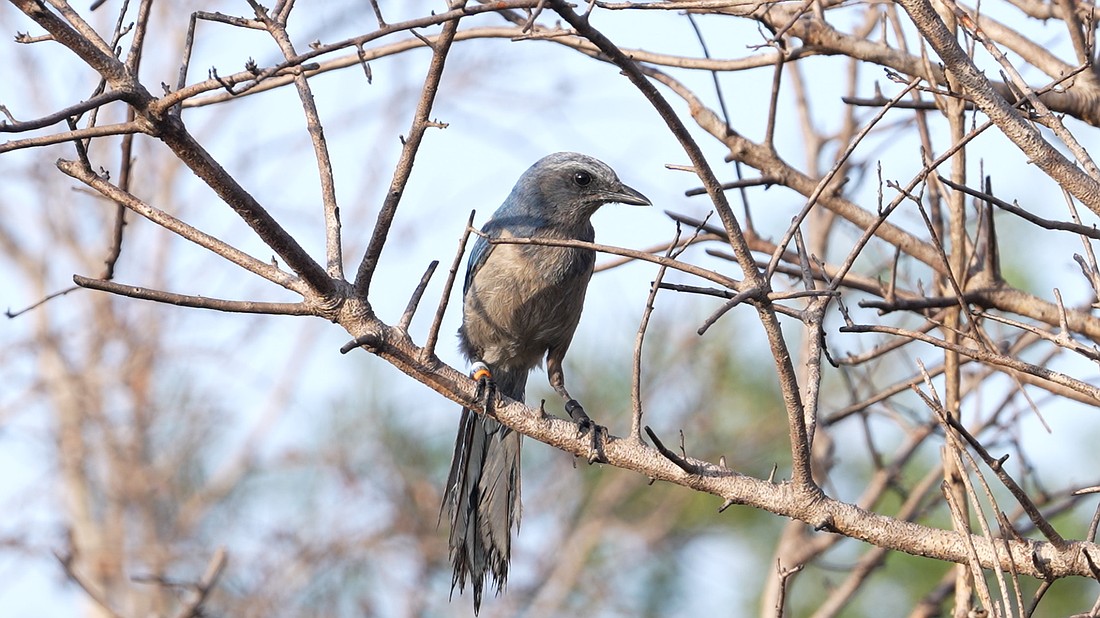
Florida scrub jays are not the typical fair-weather avian friends that fly north in the spring.
The blue and gray birds are endemic to Florida. As their name suggests, scrub jays live in Florida’s sandy, scrub habitats.
The Florida Fish and Wildlife Conservation Commission reported the scrub jay population has declined 90% in the past century due to habitat loss and fragmentation because of development and agriculture.
The Florida Department of Environmental protection estimates the current scrub jay population at between 7,000 and 9,300 birds. The species federal status is "threatened."
In January, Wingate Creek State Park in Myakka City welcomed 48 scrub jays from three separate locations around Florida: 16 from Central Florida's Archbold Biological Station, 16 from the East Coast's Cape Canaveral Space Force Station and 16 from Manatee County's Duette Preserve.
The project is a public-private partnership between the U.S. Fish and Wildlife Service, the University of Central Florida, the Archbold Biological Station, The Mosaic Company and Verdantas.
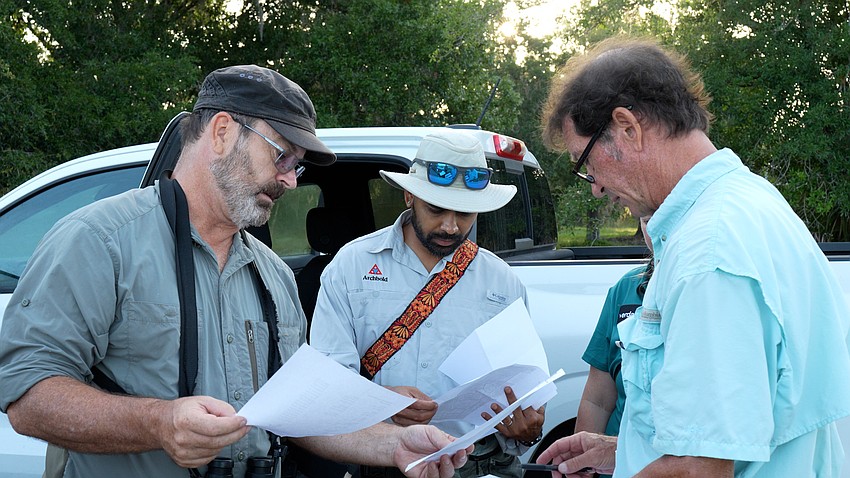
The aim of the project is to enhance genetic diversity and improve the species’ long-term viability in the region.
Raoul Boughton, Ph.D., senior manager of ecology & wildlife for The Mosaic Company, noted that researchers thought scrub jays would disappear entirely from Manatee County because the birds were too closely related.
“They didn’t want to pair up with each other; they didn’t want to breed,” Boughton said. “We are probably going to be the first area that actually meets recovery. (Recovery) is a U.S. Fish and Wildlife Service term, where they’ve set a goal for the population to meet.”
The goal is for the species to be viable for the next 100 years.
Only young birds entering their first breeding season were relocated to give the birds the greatest opportunity to establish territories, choose mates and successfully integrate into the new population.
Just six months after the relocation, the team documented 10 likely breeding pairs, six new nests and four nests with eggs.
The relocated birds have established territories throughout the park and formed 11 family groups.
Researchers estimate the project could add up to 12 new breeding pairs to the park over the next three years.