- August 11, 2026

-
-
Loading
Loading
If Manatee County’s fiscal year 2027 budget is approved in September as proposed, the county’s reserve will reach $1.1 billion.
Last year, when the reserves neared $1 billion, Commissioner Jason Bearden pushed to have some of the funds released, but didn’t receive the necessary support from the board to do so.
This year, commissioners George Kruse and Tal Siddique are questioning the reserve balance.
The county’s general fund balance is already dwindling, and Manatee County could face another major shortfall if Amendment 3 passes in November.
Although the state is now reporting lower government impacts if residents vote to increase homestead exemptions, Manatee County is still facing a loss of $62.9 million worth of property taxes in 2027 and $113.1 million in 2028.
The state’s original estimates were $81 million in 2027 and $149 million in 2028.
County policy sets the reserves at 20% of operating expenses. At the July 30 budget meeting, interim CFO Claudia Campos said 20% is mandated by best practices, not by state statute.
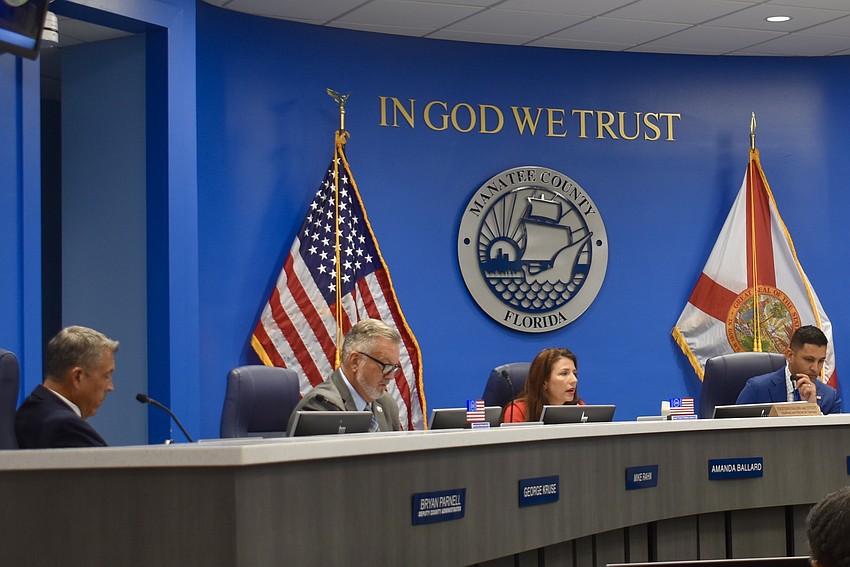
Siddique questioned the impact of reserving 15% instead.
Campos replied that the county’s credit rating could drop “slightly,” and that 20% allows the county to secure good bond ratings.
“We don’t even have the (credit impact) analysis to show that, so I don’t see why we need these reserve accounts,” Siddique said.
Siddique singled out utilities, wastewater and debt service as the only necessary reserves.
Kruse honed in on $4.8 million reserved for parks and $25.6 million reserved for transportation.
He bolstered Siddique’s point by saying park reserves don’t fit the purpose of reserves, which is to cover two months of operating expenses in the case of an emergency. Rather, park reserves are held until all the required funding to build a park is available.
Kruse noted that there’s never an emergency need to build a park, and contingency plans are worked into construction contracts. Because projects often take a few years to complete, additional funds are set aside to buffer rising costs.
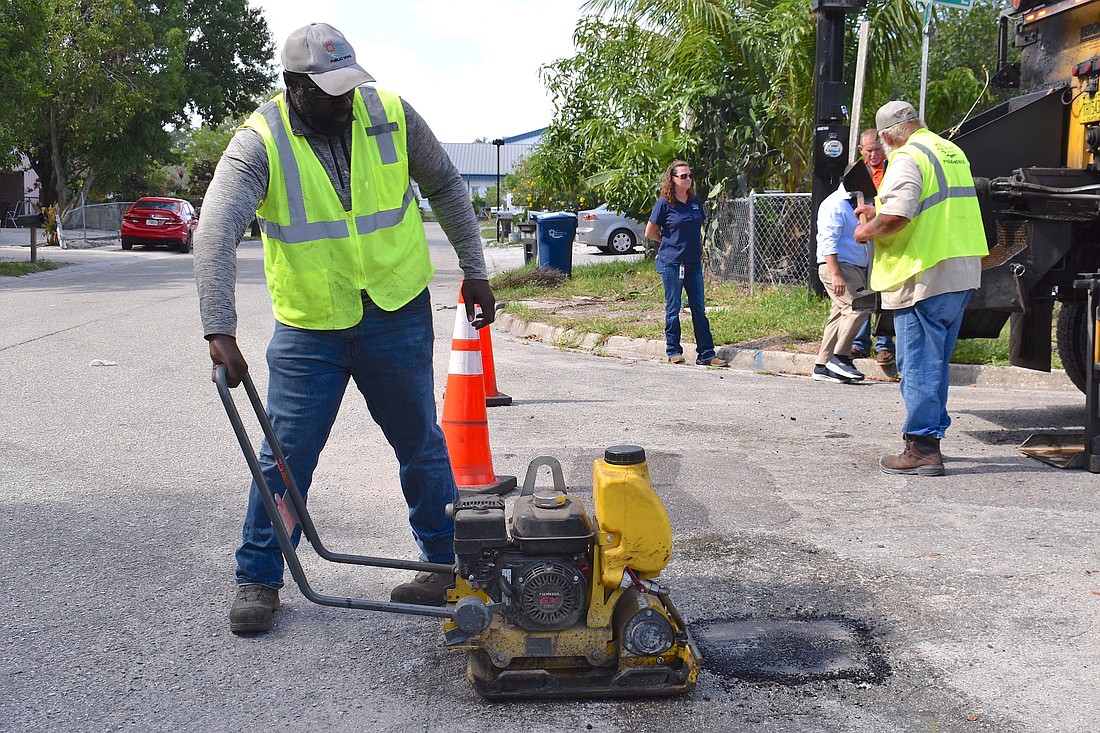
On the other hand, Kruse noted that transportation funds are needed right now. He referenced a board vote in April to expedite the resurfacing of roads in The River Club.
“(Resurfacing roads) is one of the core functions of government,” he said. “The minute there’s a pothole, it’s an emergency because someone’s going to hit that and get into an accident.”
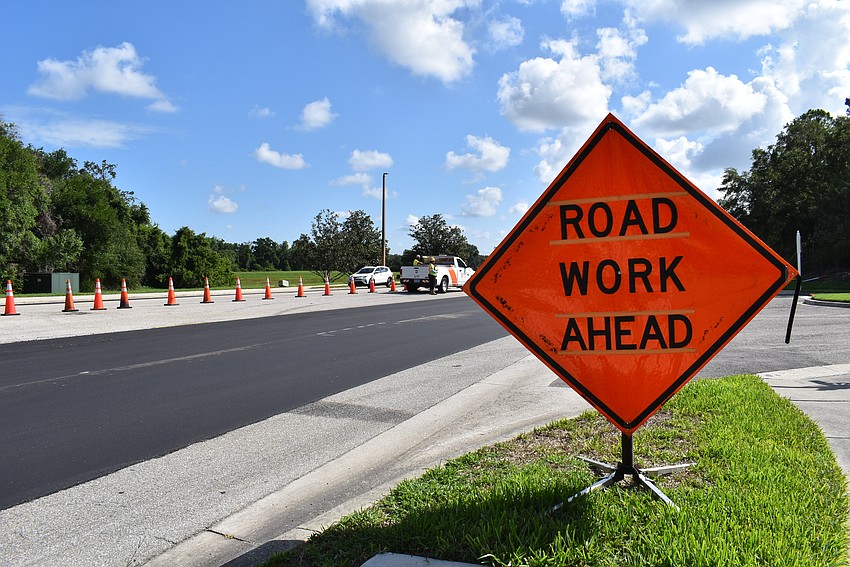
Kruse argued that the money shouldn’t be dormant “based upon an antiquated policy” (that was passed in 2010). It should be activated to maintain the roads and bridges the county has today, instead of holding it for the possible needs of tomorrow.
Bearden had been advocating to release funds to combat traffic by building and widening roads.
Campos said the funds could be released for maintenance projects, such as resurfacing.
She was directed by the board to return with a presentation on which funds are discretionary to determine how much can be used and how much could be transferred to the general fund.
Campos' estimate of how much the general fund stands to lose if Amendment 3 passes is $44.5 million in the first year and $79.9 million in the second year.
After hearing those numbers, Kruse quickly added that the total amount is greater than the current reserve.
In light of the unknown, commissioners voted to keep the tentative millage steady at the existing rate of 6.0326. Setting a tentative millage prevents commissioners from increasing the millage before the budget is finalized. They can still vote to decrease the millage.
However, Siddique made it clear that the board went in a different direction by cutting $35 million out of the existing budget, which will carry over into the 2027 budget.
"Pretty large spending cut," he said. "Granted, we're not changing the tax rate itself, but you have to start with spending and programming. The millage cut is a sledgehammer, whereas I think our approach is more the scalpel, and I think it has led to a better outcome."
The final budget and millage rate will be approved at the commission meeting scheduled for Sept. 24 at 5:30 p.m.