- August 5, 2026

-
-
Loading
Loading
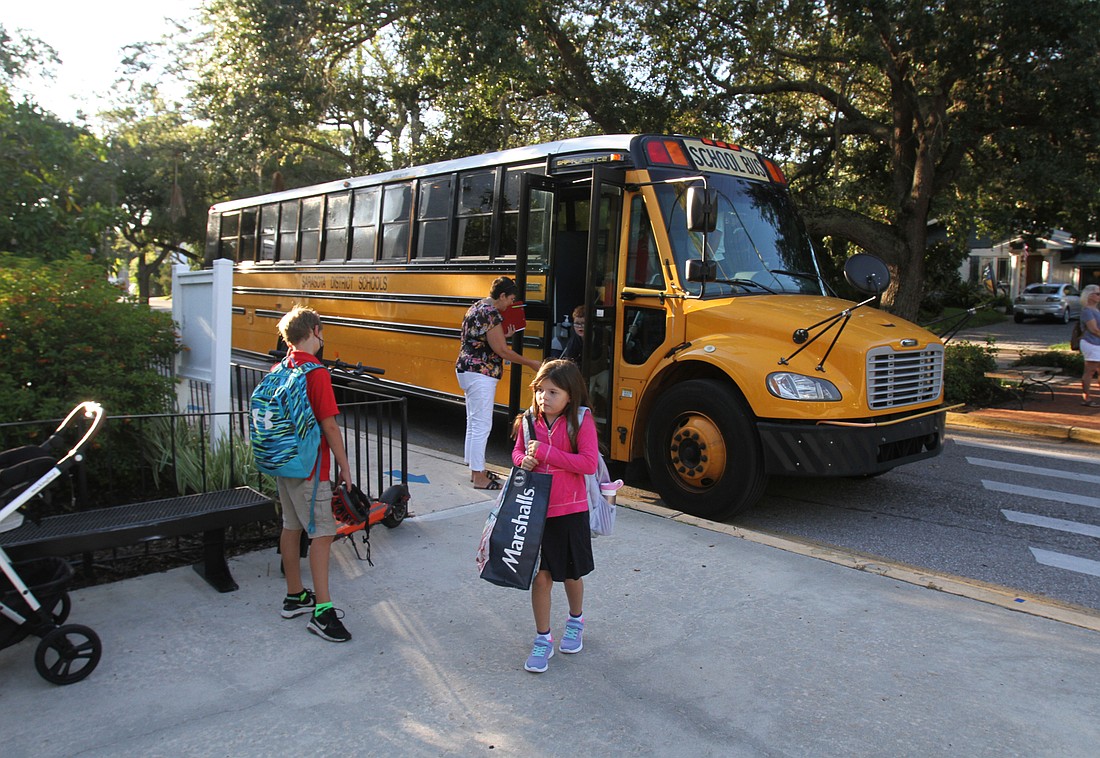
Monday is the start of school for kids — which means that, when it comes to local road safety, it's also time for drivers' habits to change.
The majority of drivers are so caught in their routines, they forget to observe the school zones in certain areas as school begins, said Officer Jason Frank of the Sarasota Police Department’s Traffic Unit.
“They drive by (a school zone) every day, to and from work, five times a week during the summer, and then all of a sudden, school's in session, they forget,” he said.
What can drivers do to ensure that they’re looking out for kids’ safety? And what about those kids who are using the roads and biking to school?
Frank offered his input, as did Florida Bicycle Association Vice President and Sarasota Manatee Bicycle Club Board Member Eugene Rider.
Frank said drivers need to be aware of their surroundings and the changing speed limits in school zones during drop-off and pickup time. He also noted there will be construction on roadways, and people must be cognizant drivers.
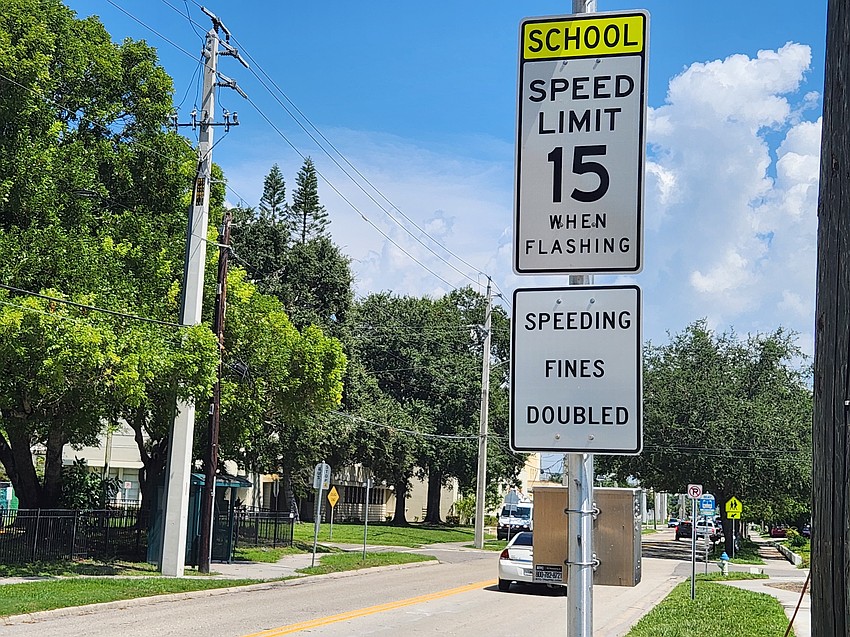
Some city school zones are 15 miles per hour and some are 20, Frank noted, while urging people to follow speed limits throughout the city.
He also urged drivers to obey all speed limits. On Fruitville Road, the speed limit outside of school zones ranges from 35 to 45.
"We don't need to be coming into the city thinking it's 45, and we're running a little late, so we're gonna we're going to go 55, and then maintain that speed all the way into downtown," he said. "Now we're talking that we're going 20 miles over the posted speed limit."
He also said that, even when people drive 10, 15, 20 or 30 miles over the speed limit, they don't realize that they are only gaining a few seconds.
“A few seconds worth of your time is not worth risking someone else's life, so the big thing is just be cognizant of your surroundings,” he said.
He said people should also look at alternate practices, including different routes that involve making “a few extra turns" and taking side roads, as well as setting the alarm clock and leaving the house a few minutes earlier.
“People become routine," he said. "They're humans. We're a creature of habit, and we only know one way to and from work, and one way to and from home. … But what if there's a sinkhole? What if there's a traffic crash? What if a helicopter had to land in the middle of the road?”
Drivers should be aware of not only school zones but also buses. Drivers are required by law to stop for school buses when their red lights are flashing and the stop arm is extended, unless they are on a divided highway, according to Sarasota County Schools.
It is also illegal in Florida to use a phone while driving in school zones.
However, some kids will also be making the trip to school on their own. Rider said back to school riding starts before the first trip to school.
He said parents can help kids choose the lowest-stress route and ride it with their kids, making sure their bike is ready, their helmet is fitted properly and clear rules are set up.
He noted families should follow the ABC’s (standing for air, brakes and chains), ensuring the tires have air, the brakes are working properly, and the chains and cranks are working.
“The way to stay safest on the bikes is to ride with the traffic, remembering that your bicycle is a vehicle and that we have to follow the same rules that all cars and trucks follow on the road,” he said.
He said if cyclists can ride predictably, along with traffic, drivers will have a better understanding of what they are doing.
Kids should also be aware of common mistakes. One mistake, he said, can happen when riding on a sidewalk that is only on one side of the street.
“If you're going against the traffic, remember that the drivers may not see you when they're turning out of their driveway or out of their street because you're coming from the other side,” he said.
Another mistake, he said, is not using crosswalks (which involves making eye contact with the driver and ensuring it’s safe to cross), as well as not wearing a helmet, which is required for kids ages 15 or younger.
Rider said most kids under age 12 are “not really aware of speed” and have not gained the ability to judge whether or not a vehicle is slowing down.
Rider said wearing bright clothes like a neon jacket, shirt or blouse that allows drivers to see a child helps. Wearing shoes and not sandals is important too, as is having a bell kids can use to let people know they are on the sidewalk or the edges of the streets, or even a rearview mirror on the left handlebar.
Rider said for those with electric bikes, parents should make sure their kids’ bike is a Class 1 or Class 2 bike, not a high-powered bike, and that it is allowed at their school.
“It's important for kids to have their independence, and they gain it step by step, but our ultimate goal is that we want all those students, every student, to arrive safely,” Rider said.