- August 5, 2026

-
-
Loading
Loading
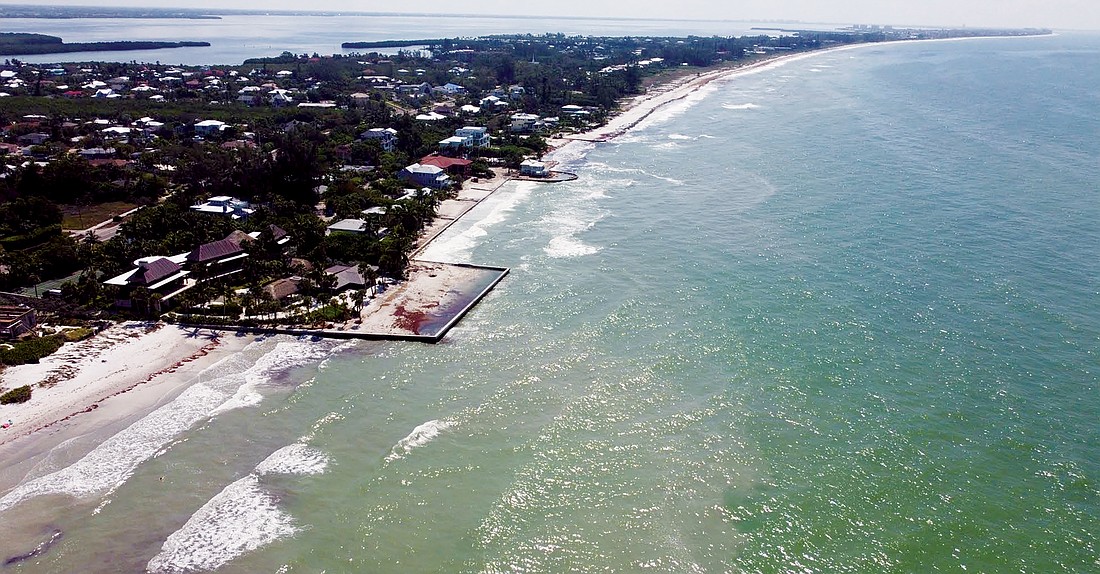
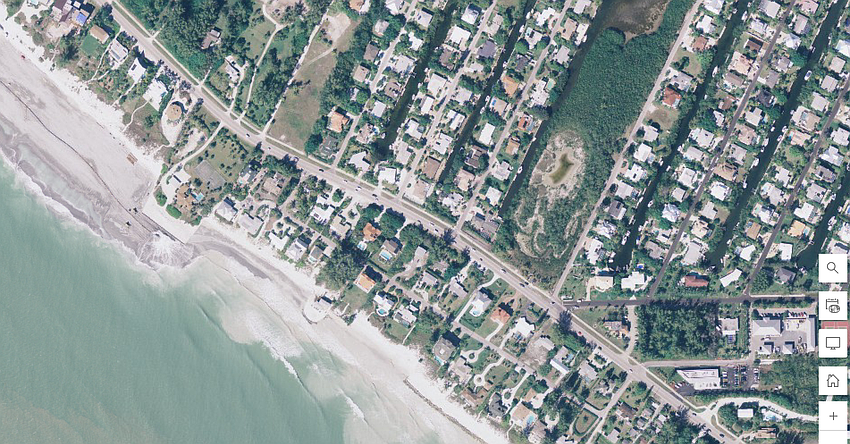
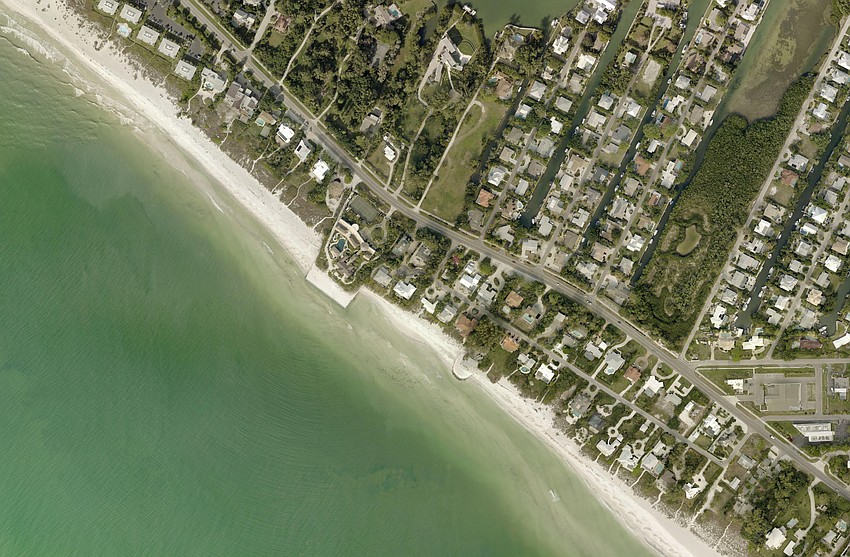
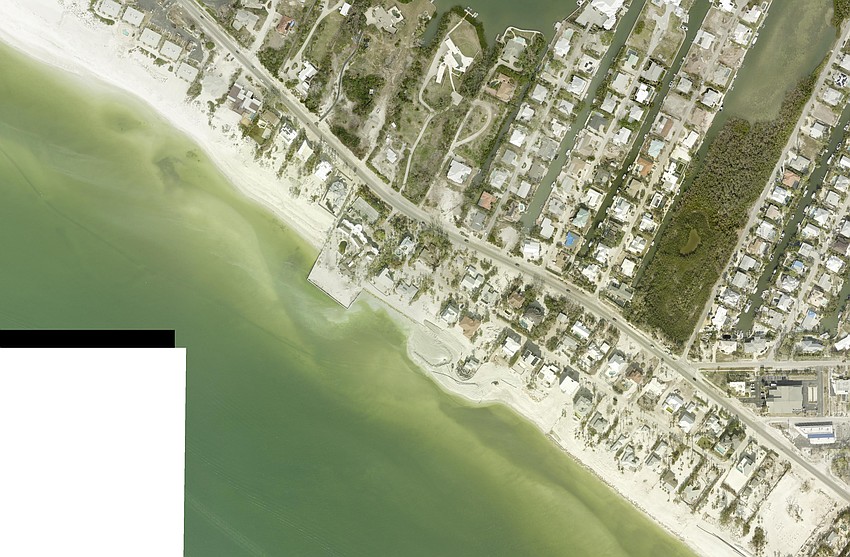
From a bird’s eye view of Longboat Key’s shoreline, the Ohana seawall is a jarring sight.
The concrete structure that protrudes into the Gulf more than 100 feet has been a dominating presence on the north end of the Longboat Key shoreline for decades, garnering headlines about public vs. private beach access and downstream erosional impacts of the structure.
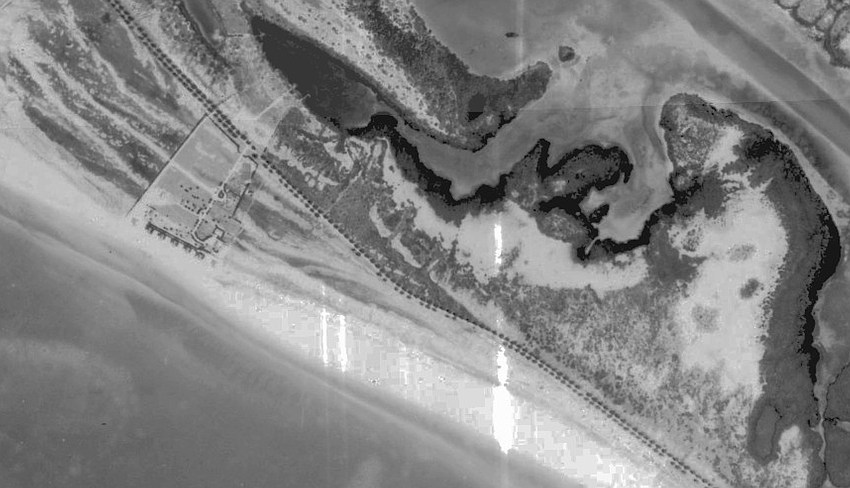
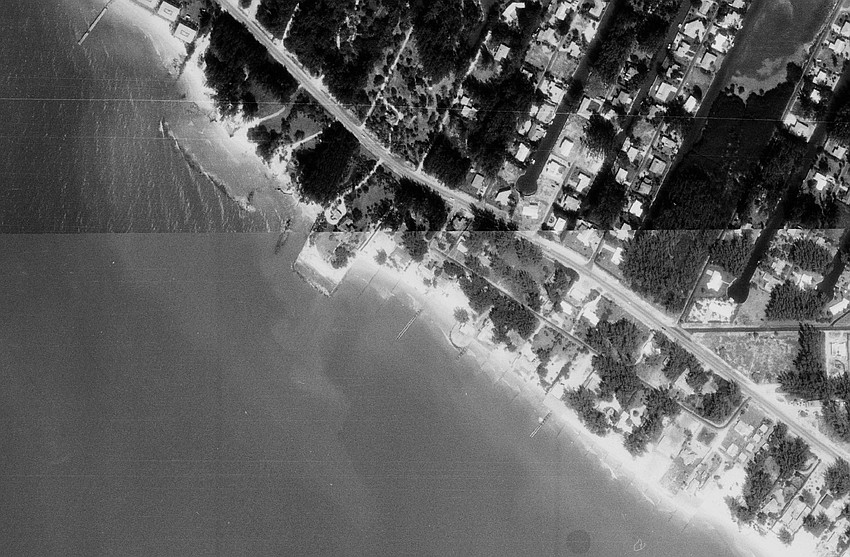
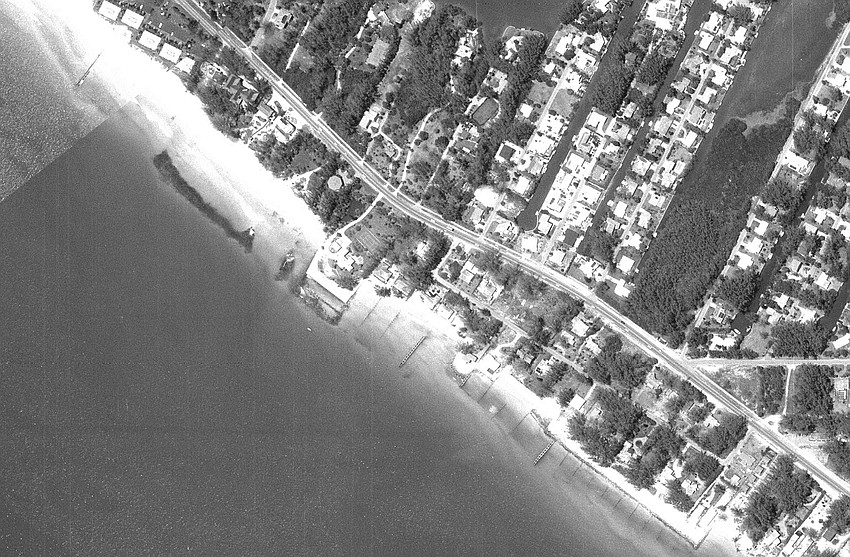
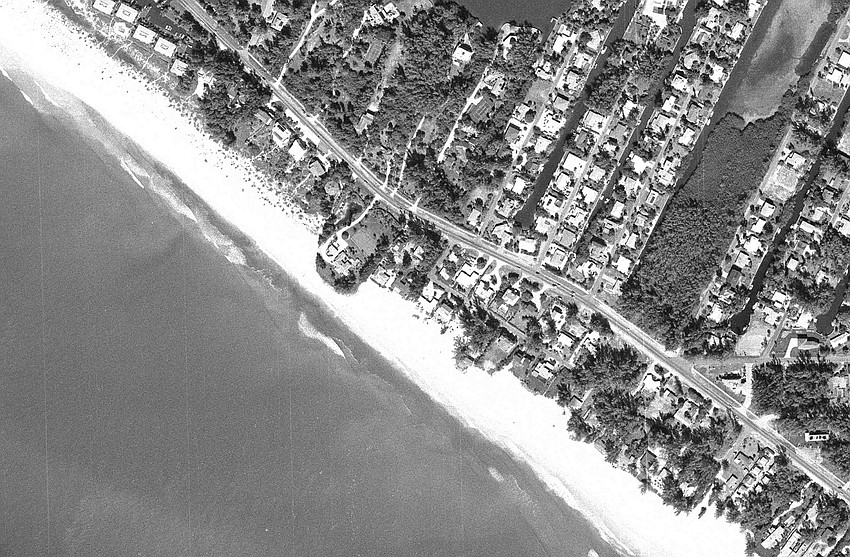
The latter of which is evident from satellite images through the years that show continued erosion north and south of the seawall.
But the erosion on the stretch of beach parallel to Gulfside Road on Longboat Key is not caused by the seawall alone.
The shape of the sea floor plays a part in the high erosion seen on the Gulfside Road portion of the beach.
Al Browder, coastal engineering consultant and principal and vice president of Olsen Associates, has worked with the town to study erosion habits and plan renourishment projects on Longboat Key for years.
Browder describes an “ebb tidal shoal” that exists on the sea floor.
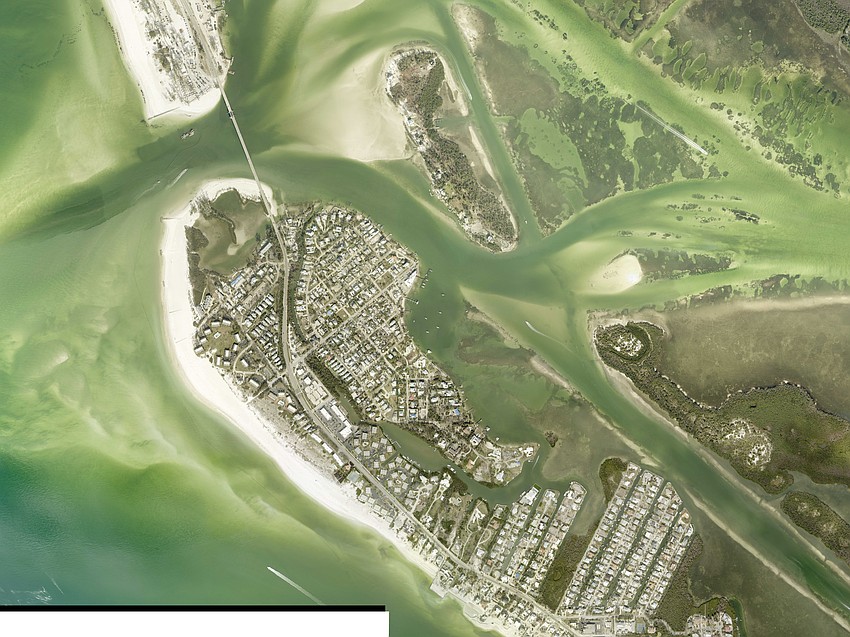
“It’s like a giant sandbar around the mouth of Longboat Pass. Almost every inlet in the state of Florida has an ebb tidal shoal and a flood tidal shoal. The ebb tidal shoal corresponds to sand that is carried out of the inlet on an outgoing, or ebb, tide,” Browder said. “It’s a big pile of sand. It’s a couple-hundred-acre giant complex of sand. It’s a natural feature.”
That natural feature guides incoming waves to the beach parallel to Gulfside Road.
“The ebb shoal has a big effect on the wave climate, and it essentially casts a shadow down the beach for a certain distance,” Browder said. “You can see this when you run numerical models and you do analyses, you can kind of tell how far down the beach does the effect of the inlet ebb shoal extend. In our case it extends, and this is no coincidence, down to about Gulfside Road. Now Gulfside Road wasn’t there 150 years ago, but the ebb shoal effects were certainly there.”
Just 500 feet south of the Ohana seawall is another unique seawall, a semi-circular one that gives the house on stilts its “Half Moon House” nickname.
Five lots to the south of that is another seawall and rock groin protecting the rest of the houses that sit off Gulfside Road to the south.
The fight against erosion using man-made structures has been ongoing for decades. Historic satellite imagery shows past attempts In the '70s and '80s when more than a dozen makeshift groins can be seen poking into the Gulf on that stretch of beach.
“You can see a progression of aerial photos that they quickly recognized that they had an erosion problem because the beach was retreating, and pretty soon it became an every property-owner-for-themself proposition of building a groin or building a breakwater or building a bulkhead, a seawall, whatever. All these individual coastal structures started to pop up,” Browder said. “The problem of the ebb shoal being there, storm impacts, all that stuff. People started defending their property on an individual basis.”
Any solid structure that extends into the sea from a beach will have downstream impacts, Browder said.
“Seawalls have a tendency to exacerbate erosion on the wall and then adjacent to the wall just because of the additional scour that you get when longshore currents and wave impacts hit the structure,” Browder said. “It tends to gouge out the sand around the structure for a certain distance updrift and downdrift of each one.”
The erosional impacts seawalls have on surrounding beaches are well documented. The U.S. Army Corps of Engineers writes in an engineering manual that seawalls protect erosion behind the structure, but “the contribution of littoral material to the system will be diminished along the affected shoreline.” The National Park Service explains it in a more common tongue.
“Although they hold soils in place behind the structure, seawalls usually accelerate erosion on adjacent beaches,” NPS writes in an article on its website. “In many areas, beaches have completely eroded and disappeared on account of seawalls.”
The erosion of the beach that runs parallel to Gulfside Drive is not caused by the seawalls, but they do accentuate the issue. The Ohana seawall in particular.
“The big seawall at the north end is the biggest one. It’s obviously kind of the poster child of the problem,” Browder said. “Structures are great at protecting the upland property for which they are built. You can build a seawall and it works great to defend the landward property. It’s pretty detrimental to the beach seaward of the structure and adjacent to the structure up and down the beach because it exacerbates erosion.”
The town of Longboat Key has a plan to combat erosion by constructing a groin field ahead of or during its next renourishment project in 2028.
The groin field project, estimated to cost anywhere from $6 million to $10 million, would begin on the northern end with a permeable groin that juts from the seaward corner of the Ohana seawall.
The groin field is similar to a field of structures the town completed in phases on the northern end of the island. Longboat Key Public Works Director Charlie Mopps and Browder look at the north-end groin field project as a success. Now, the town is pointing its periscope just a bit south to Gulfside Road for its next project.
“Gulfside Road has now been promoted, so to speak, unfortunately, as an area of highest need on the island,” Mopps said. “It’s a chronic erosion need.”
The if, and when, the groin field is built depends on permitting.
“If you can't permit it, don't chase it,” Mopps said. “Right now we’re doing modeling that shows what are the impacts to the downdrift beaches, because the state won’t permit structures that are going to have a negative impact to a neighboring beach. You have to prove that through numeric modeling.”