- July 27, 2026

-
-
Loading
Loading
Forming the town’s budget takes months of planning, hours of discussion and more than a few punches into the calculator.
The process is even more complicated this year due to conversations far removed from the tranquil barrier island of Longboat Key.
About 300 miles northwest in the Florida panhandle, a campaign to revamp or even abolish property taxes has kept town, city and county leaders across the state up at night. Property taxes are by far the highest revenue source for municipalities, making up more than 75% of Longboat Key’s general fund, which pays for police, fire and other departments in the town.
Town Manager Howard Tipton and Assistant Town Manager Isaac Brownman told town commissioners at their strategic planning retreat meeting April 20 that despite potentially transformative changes to revenue sources, the 2027 budget is being formed with the phrase “steady as we go” in mind.
The 2027 fiscal year would be safe from any possible property tax changes because the issue would need to be approved by voters in November if it were to move through a state Legislature special session. Even then, it wouldn’t take effect until the following year.
“That’s all to be determined, and that would only hit in 2028 if it were to pass. So we’re not concerned about that this year,” Tipton said. “But we’re looking to the future because anything new that we take on that’s funded through the general fund we’re going to have to figure out how to do that. When we say steady as we go, one of the things is we aren’t taking on any new projects. We’re not trying to add positions because those could be costs that we just can’t sustain in the future until we have a better idea of what that future looks like.”
With an uncertain future, rebuilding fund balances is a priority now. Hurricanes, rising costs and federal government gridlock are all contributors to Longboat Key’s stressed fund balances. Finance Manager Sue Smith said the goal for the town’s general fund reserve balance is to have enough funds to cover 120 to 180 days of general fund operating expenses. At the moment, that fund sits at $9.4 million.
“We had 159 operating days, so we are in compliance with our policy, but we have not refilled our bucket for emergency and natural disasters yet,” Smith said. “Once we get our FEMA money in, we would be more than OK.”
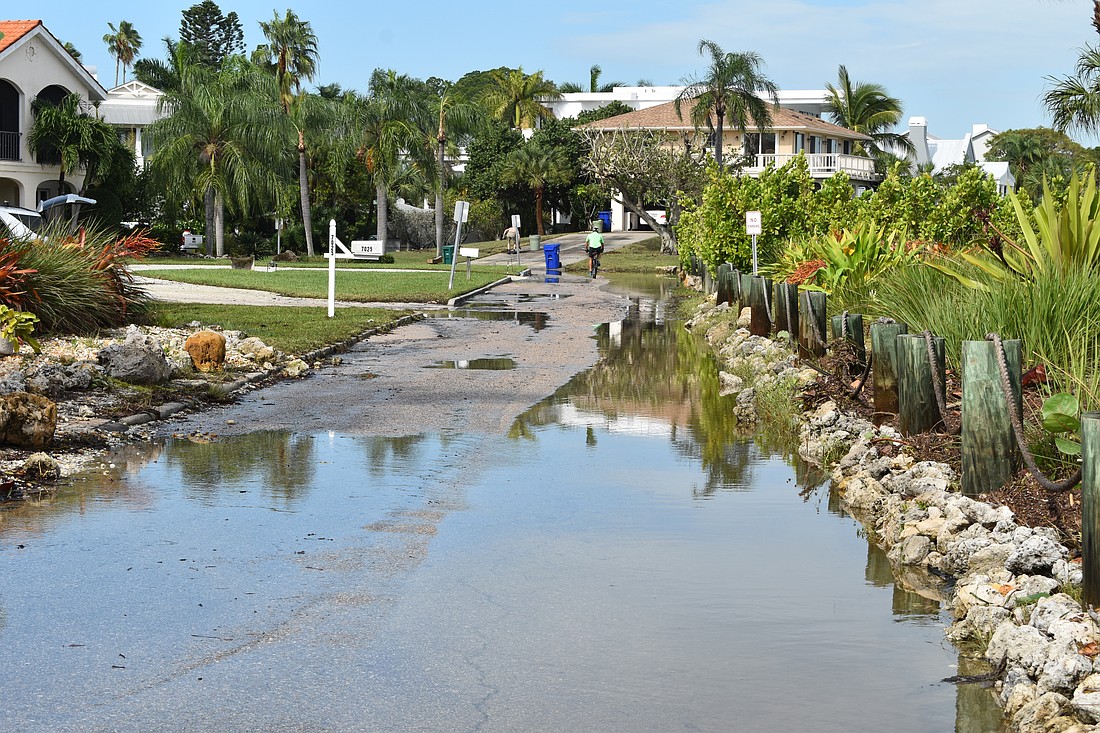
One fund balance the town is looking to beef up is the street capital projects fund. With $6.5 million remaining after projects like the Broadway roundabout and Country Club Shores turn lane improvements were funded, how to pay for road-raising projects in several neighborhoods is becoming a more difficult problem to solve now that a price tag has been estimated at $30 million. And that $6.5 million balance is set to be reduced more “because we have a lot of projects budgeted (“earmarked”) but not yet spent,” Smith wrote.
“The street projects fund is usually funded by road and bridge, gas taxes, and FEMA money,” Smith said. “We did put some money from the general fund in there because a couple of years ago we had some extra fund balance reserves built up, so we moved it over there to help with these projects. But now that the projects are exceeding, there’s not enough in there for all these projects.”