- August 4, 2026

-
-
Loading
Loading
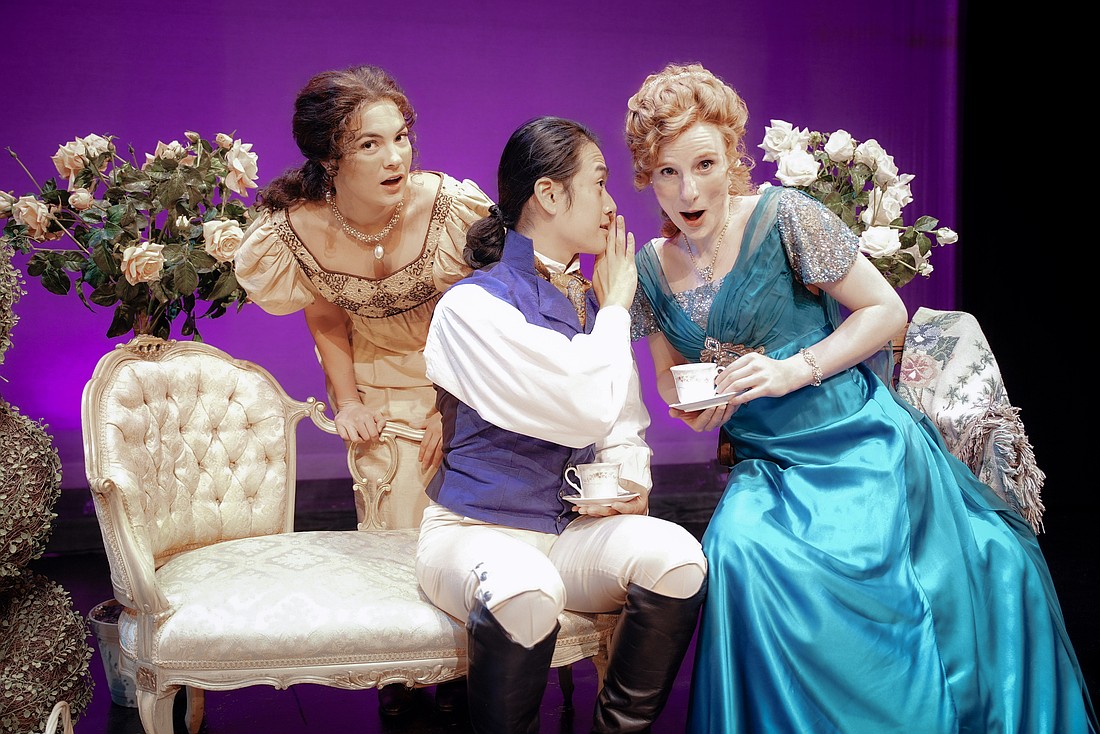
The FSU/Asolo Conservatory for Actor Training is a proving ground for young actors. “Emma,” Kate Hamill’s brisk, witty stage adaptation of Jane Austen’s beloved novel, is its latest challenge. For the conservatory’s faculty, it’s more than a classic story. It's a teaching tool for second-year student actors. Who’ve already learned a lot in the classroom.
The conservatory’s first-year training provided them with an actor’s toolbox. It’s packed with a range of theatrical techniques. But whatever the means, character-based storytelling is always the goal. The students have learned how their characters move, how they talk and how they think. They’ve also refined their ensemble work and know how to empower a director’s storytelling vision. Theoretically.
This year, no more theory. They’re going on stage. And putting their skills to work in four productions before a live audience.
What happens when acting gets real? To find out, we spoke with Marcus Denard Johnson, the conservatory’s director, and Ariel Bock, the play’s director.

A 2008 graduate of FSU/Asolo Conservatory, Johnson became director in September after serving as interim director while his predecessor Andrei Malaev-Babel was on sabbatical.
As Johnson and Bock see it, their second-year students are in for a wild ride. It’s going to be life-changing. And they won’t be the same when it’s over.
Conservatory training is learning by doing. In their second year, students will still be learning in the classroom. But they're also doing — on stage. Their rehearsals and performances for the four conservatory plays in the 2025-26 season are all part of the curriculum. “Emma” is their first big lesson. And it’s not abstract.
“The conservatory program is absolutely hands-on,” Bock says. “Our students work closely with voice, movement and acting faculty. I’ll share rehearsal notes, and they’ll adjust their exercises accordingly. That’s how professional companies operate.”
Faculty instructors offer one-on-one feedback throughout rehearsals. Patricia Delorey fine-tunes speech and dialect; Jason Paul Tate refines movement; Jonathan Epstein offers insights into acting and characterization; other specialists give their input. “The classroom feeds the stage, and the stage feeds back into the classroom,” Johnson says. “It’s a rotating ecosystem.”
Second-year students have already learned a lot. They’ll now put their dialect, voice and movement skills to work bringing Austen’s story to the stage. And they’ll learn a lot more.
The play “Emma” keeps the novel’s heart while picking up the pace. Its heroine Emma Woodhouse is a clever but self-satisfied young woman in early 19th-century England who fancies herself a skilled matchmaker. Overly confident in her social insight, she meddles in the romantic lives of her friends and neighbors with disastrous results.
Austen’s characters aren’t lost in Hamill’s theatrical translation. A river of subtext runs through her play. The characters are all individuals. But they don’t always speak their minds. They’re posing. They’re hiding. And that’s tough to play.
“Austen’s work is full of irony and subtlety,” Bock admits. “Our students have to dig below the surface to find out who they are.”
Johnson agrees. “Every character has an inner life — even in silence. Acting is about impulse and listening. Your character’s inner life isn’t something you think up — it happens when you’re fully engaged with your partner. That’s how we achieve authenticity.”
That authenticity colors outside the lines of period costume dramas — and overturns the prissy clichés of Regency adaptations. (The uptight, phony-baloney conventions that "Saturday Night Live" loved to mock.)
“People in the past weren’t always repressed,” Bock says. “Their emotional lives were as messy and complicated as ours.” How will 21st-century acting students convey that — and make it seem natural?
“Trusting that you’re enough,” she says. “That’s key.”
Adapations from the Regency era (1811-37) tend to be stiff. But there’s none of that here. “Students learn Regency formality,” Johnson notes, “But they also find their own modern expressions. Women are still told how to move through society. Emma’s refusal to conform feels as relevant now as it did 200 years ago.”
What about Austen’s language?
“Much of the play’s dialogue comes directly from Jane Austen,” Bock says. “It’s not Shakespeare or Molière, but it has that same richness of speech — it’s classic and contemporary all at once.”
This fusion of past and present defines both “Emma” and the Asolo Conservatory program itself. The training is rooted in centuries of acting tradition — and devoted to the story being told right now on stage.
For Bock, self-discovery is the play’s central theme. “The play’s about learning to see others clearly — and finding yourself in the process," she says. "Emma’s journey mirrors their journey.”
As Johnson sees it, finding yourself and finding your character are two sides of the same coin. It doesn’t matter if the characters in "Emma" lived more than 200 years ago. On stage, you make them live right now.
According to L. P. Hartley, “The past is a foreign country.” Johnson disagrees. He wants the past to feel like home.
“I love it when stylized period pieces are given contemporary treatments,” he says. “That challenges actors to interpret the modern meaning and physicalize it through their training.”
Students learn their roles in rehearsals, but stage performance is their acid test. How will emerging actors make that work?
“It’s all about presence,” Bock says. “Being in the moment, being on stage. You balance awareness of your partner with awareness of the audience — their energy feeds you.”