- July 21, 2026

-
-
Loading
Loading
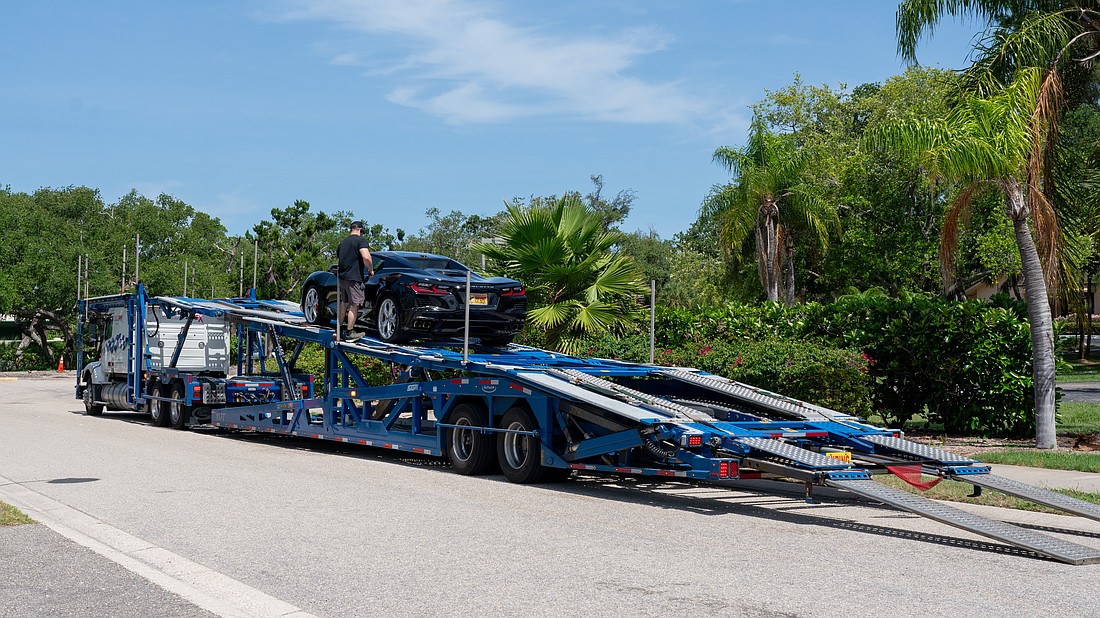
Car carriers dropping off and picking up vehicles on Gulf of Mexico Drive has prompted discussion at Longboat Key Town Hall once again.
Months ago, Commissioner Steve Branham got the conversation going by mentioning during a workshop that he saw a car carrier unloading a vehicle on the town’s main thoroughfare, a safety concern that became tragically obvious after a fatal crash involving a car carrier in 2019.
Town Manager Howard Tipton said Gulf of Mexico Drive is simply too busy of a street to accommodate vehicles being unloaded from car carriers.
“It’s not like you’re dropping off a passenger in an Uber. It takes time to load and unload a car. It impacts other traffic, cyclists. It’s a danger,” Tipton said. “It’s just not the right roadway for that type of activity.”
Instead, the town has set up a designated drop-off location for car carriers to load and unload vehicles on Bay Isles Road, but compliance has been spotty.
Because the practice has continued, what to do about it has sparked much discussion from the dais. Recently, Town Attorney Maggie Mooney was asked by members of the commission several questions, including whether penalties for unloading vehicles could be increased and whether the fine could be issued to the owner of the vehicle being unloaded instead of the operator of the truck.
“I think they’re (car owners) are the source of the challenge,” Tipton said. “They potentially know that they should be loading on Bay Isles Road, but they want it more convenient for them.”
Right now, unloading a vehicle from a car carrier on Gulf of Mexico Drive is considered a non-moving traffic violation. The fine is $116, and Mooney wrote in a memo to Commissioners that the state pre-empts local governments from “imposing other additional fees or fines in excess of those uniform state-wide penalties.”
Mooney also wrote that precedent set in the Peninsula Logistics, Inc v. Erb case suggests that only the car carrier operator could be held liable for improper unloading.
“The rationale behind the court’s decision was due to the fact that the cargo owner was an independent contractor and not the “employer” of the driver,” Mooney wrote. “Without an employer-employee relationship, vicarious liability would not apply. In our opinion, due to the independent nature of the car carriers who provide limited services to the car owners, the Town would not be able to cite both the vehicle owner and the car carrier driver, as there is likely no threshold employer-employee relationship to legally sustain such liability.”
So, with increasing fines not possible and fining the owner of the vehicles also not possible, Tipton said the town will need to find other ways to compel compliance.
“We’ve got to really push out the education side of things both to the car carriers but also the individual residents,” Tipton said. “It’s got to be more of an educational effort than a fining effort.”