- July 21, 2026

-
-
Loading
Loading
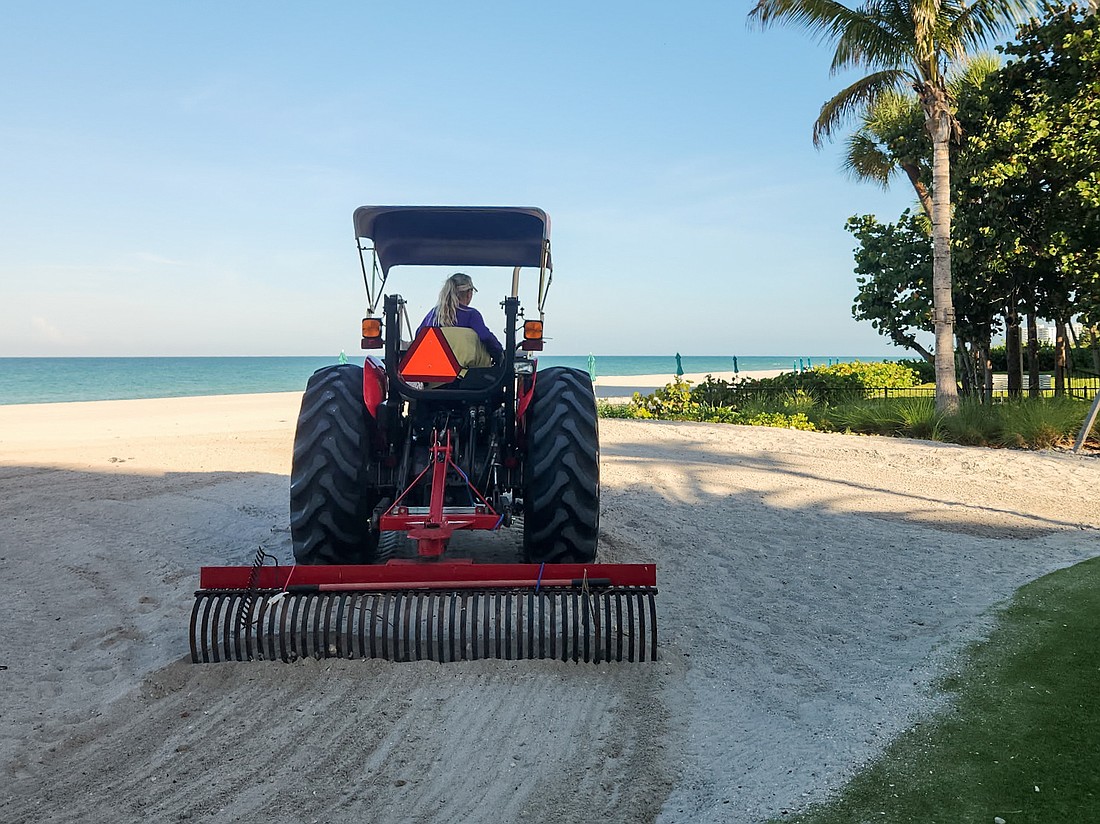
Early in the morning, Angie Cupp can be seen driving her red Massey Ferguson tractor up and down the beach, towing a 7-foot-wide rake.
Cupp is contracted by resorts and condos including the Longboat Key Club, St. Regis Longboat Key Resort, the Sea Gate Club and several other properties on the barrier island. Taking over the business from her mother, Cupp has been raking the beach for almost 20 years. Her rake has scooped up a variety of goodies.
“It catches any trash. I get baby diapers, I get cups, I get clothes, dishes, silverware,” Cupp said. “You’d be surprised what I pull off the beach.”
There are limitations to the practice, though. Beach raking, referred to as mechanical beach cleaning by the state of Florida, is permitted by the Florida Department of Environmental Protection. FDEP provides many conditions in its permit. Beach rakers must avoid native vegetation with a 10-foot buffer, avoid dunes, may not rake seaward of the erosion control line, and tire pressure must be below 10 psi, to name a few conditions. Cupp says she also takes care to avoid raking up any seaweed because “it’s good for the shorebirds, and it holds your beach together.”
FDEP and the Florida Fish and Wildlife Conservation work together to ensure beach raking does not interfere with sea turtle and shorebird nests. Permit guidelines state that during sea turtle nesting season, beach raking may not be performed until after the marine turtle permit holder has performed its daily monitoring.
Longboat Key Club Director of Resort Operations Diane Lopez said the resort loves working with Cupp because of her “dedication to the beach and ensuring her equipment is above board” in regards to the town’s sound ordinance as well.
“There’s a lot of rules out there,” Cupp said.
Although it's legal when done in accordance with those rules, town leaders have expressed opposition to beach raking, saying it may increase erosion. Public Works Director Charlie Mopps said that compacted sand is more resistant to coastal processes, and fluffing it with a rake increases the amount pulled out to sea.
“Sand is one of the more expensive assets that we have, and it never stays where it’s supposed to. When you do the beach raking, it allows it to move more than in a natural environment,” said Town Manager Howard Tipton. “We understand the look and feel of the soft sand, but it’s actually a detriment to the long-term maintenance of the beach itself.”
Some studies suggest there could be a connection between beach raking and erosion rates.
Cupp, in her years raking firsthand, hasn’t noticed that connection and said areas next where she works are often more eroded than where she is raking.
“I’m not sure that it actually makes a difference because we’re not digging up the sand. I’m not removing shell. A lot of shell and stuff holds your sand together,” Cupp said. “If you remove that, then you’re going to have a problem. But I don’t go deep enough to make a difference on that.”
For resorts on the Gulf, providing guests with a beautiful, trash and debris-free beach is the top priority.
“They want to make their beach look pretty and they also want all the trash humans leave behind removed because eventually it’ll end up in the water,” Cupp said.