- March 4, 2026

-
-
Loading
Loading
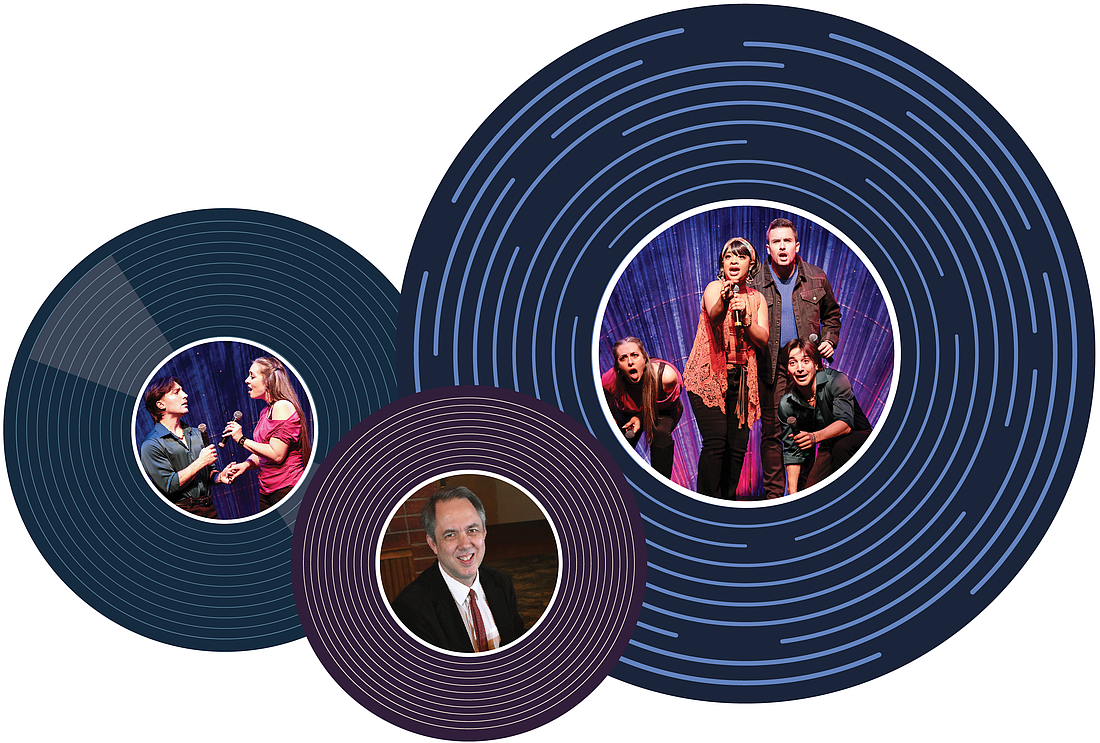
Andy Warhol said, “In the future, everyone will be famous for 15 minutes.” At Florida Studio Theatre, Richard and Rebecca Hopkins’ “One Hit Wonders” profiles artists who got 15 minutes of Top 40 fame. They’re the most famous singers you’ve never heard of — with a few surprising exceptions.
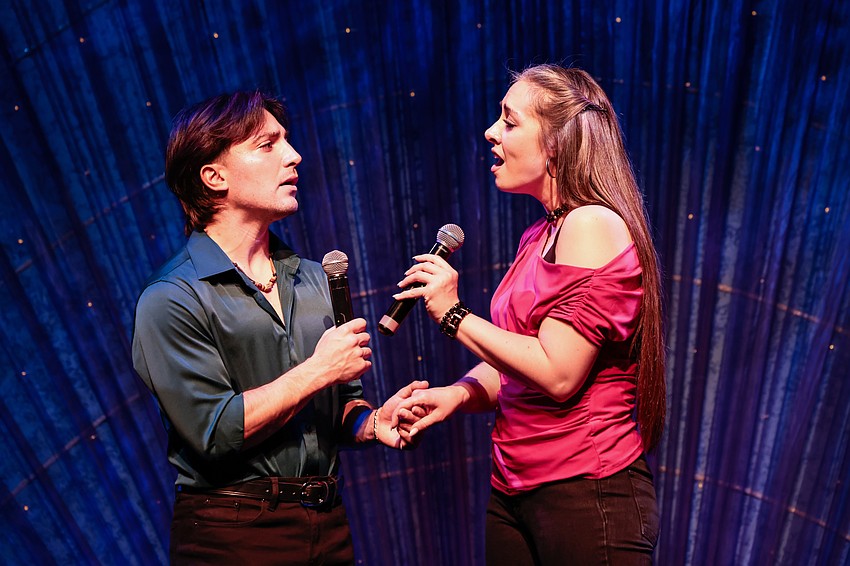
Catherine Randazzo directs this one-hit revue. The ensemble is a mix of familiar FST talent and new blood. Veteran performers include Michael James Byrne and Katelyn Bowman. Jessie Carina Lanza and Lorenzo Pugliese are making their company debuts.
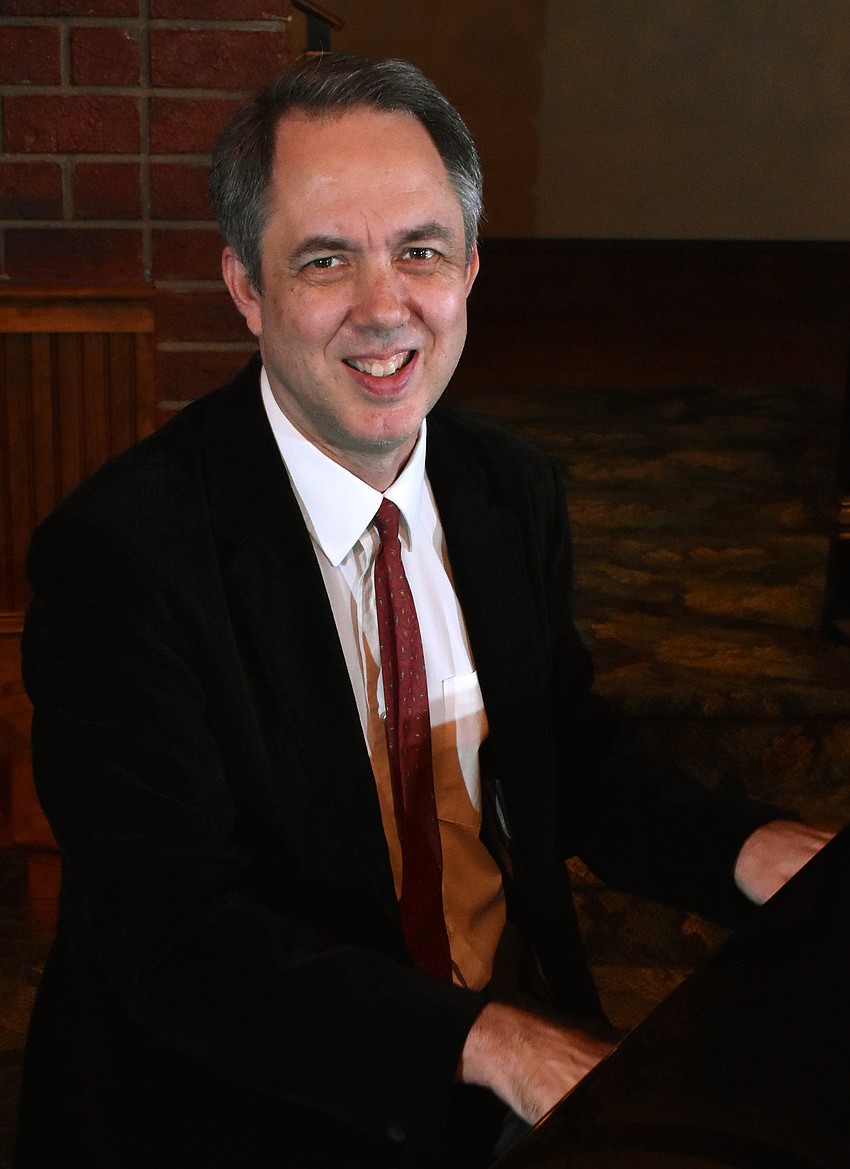
Choreographer Ben Liebert keeps everyone moving and grooving. Jim Prosser is the keyboard wizard. “Jim’s our resident Paul Shaffer,” Randazzo says. “He’s an amazing natural resource.”
This revue’s last incarnation was in 2004. But this reincarnation is very different. “You may think you’ve seen this show before, but you haven’t,” Randazzo says.
She notes that Don McLean’s “American Pie” was the spine of the previous version. (Snippets from his lyrics set up each one-hit wonder.) This year’s songs are arranged thematically, not in chronological order.
The first act kicks off with an upbeat vibe. Mike Post and Stephen Geyer’s “Believe It Or Not” (sung by Joey Scarbury in 1981) was the theme song for “The Greatest American Hero” — a charmingly goofy 1980s sitcom about a high school teacher who’d lost the instruction manual to his superhero suit.
Katrina and the Waves’ “Walking on Sunshine” (1983) is equally luminous — a rare exception to the band’s edgy new wave vibe. (Fun fact: Some of the edgy musicians took exception to that fact.)
Dark clouds rain on this sunshiny parade. Gerry Goffin and Carole King’s plaintive “Will You Love Me Tomorrow” (1960) was one of the couple’s many hits, but the first big hit for The Shirelles. Skeeter Davis’ “The End of the World” (1962) sounds apocalyptic. But it’s just her boo-hoo lament for a teenager’s lost love.
Jimmy Webb’s “MacArthur Park” (1968) takes the cake for purple-prose lyrics. “Someone left the cake out in the rain. All the sweet green icing flowing down.” Really?
Richard Harris’ speech-song version is the one we all remember and try to forget. The Irish actor was hoisted on barbs through his pectorals in “A Man Called Horse.” Many feel the same way about this song. Still, Donna Summer’s cover was a disco favorite, and most recently it "MacArthur Park" was the soundtrack for Olympian ice skater Alysa Liu stunning comeback.
The lyrics get better as “One Hit Wonders” moves along.
Procul Harum’s “A Whiter Shade of Pale” (1967) was the band’s signature American hit. The lyrics are a psychedelic fever dream of loss and regret. Janis Joplin’s “Me and Bobby McGee” (1969) had damn good lyrics — including “Freedom’s just another word for nothin’ left to lose.”
Kris Kristofferson wrote it — but he gives Joplin full credit for its success. Unfortunately, she didn’t live long enough to see its chart-topping success.
Norman Greenbaum’s “Spirit in the Sky” (1969) is a gospel song written by a Jewish folk-rocker, powered by one of the dirtiest fuzz-guitar tones ever to hit AM radio. It’ a joyously gnarly contradiction.
The second act of “One Hit Wonders” serves up a single slice of McLean’s “American Pie” (1971). His 8 minute, 42 second masterpiece is a crash course in rock ’n’ roll history — neatly compressed into a sweeping symbolic narrative.
Next comes some novelty songs that “Doctor Demento” would love. Napoleon XIV’s “They’re Coming to Take Me Away” (1966) is a march of madness set to a relentless beat.

Bobby Pickett & the Crypt-Kickers’ “The Monster Mash” (1962) was a new dance craze for the Wolfman, the Mummy, Dracula and friends. The horror hop goes down in Frankenstein’s lab. Pickett himself did the spot-on Boris Karloff imitation in the lyrics.
“Ben Liebert’s choreography is hysterical in this selection,” says Randazzo. “You forget you’re watching one-hit wonders — you’re just being entertained.”
Psy’s “Gangnam Style” (2012) is a satirical K-Pop anthem combining an absurdly catchy beat with ridiculously swaggering lyrics about style, status and aspiration in Seoul’s upscale Gangnam district. It’s style without substance — or class. The internet made it a sensation, until the next thing came along 15 minutes later.
The New Seekers’ “I’d Like to Teach the World to Sing (In Perfect Harmony)” was a unforgettable ear-worm jingle in a 1970s Coca-Cola commercial (allegedly Don Draper’s idea in the fictional universe of “Mad Men”).
Bobby McFerrin’s “Don’t Worry, Be Happy” (1988) is an a capella illustration of Meher Baba’s philosophy. This mindset won’t make a solid gold meteorite land in your backyard. But it could get you through hard times.
The closing tunes of “One Hit Wonders” look at the bright side of life. From the perspective of someone just waking up in bed.
The radiance includes Merrilee Rush & the Turnabouts’ “Angel of the Morning” (1968); Mike Reno’s “Almost Paradise” (1984); and Debby Boone’s “You Light Up My Life” (1984). Pat Boone’s daughter said dedicated her ditty to Jesus, not a real-life lover.
That brings us to the sunniest song of all — “(I’ve Had) The Time of My Life” (1987) — the squeaky-clean theme song for “Dirty Dancing.” Franke Previte, John DeNicola and Donald Markowitz wrote it; Bill Medley and Jennifer Warnes performed it. The song got legs as Patrick Swayze taught Jennifer Grey steamy moves on and off the dance floor.
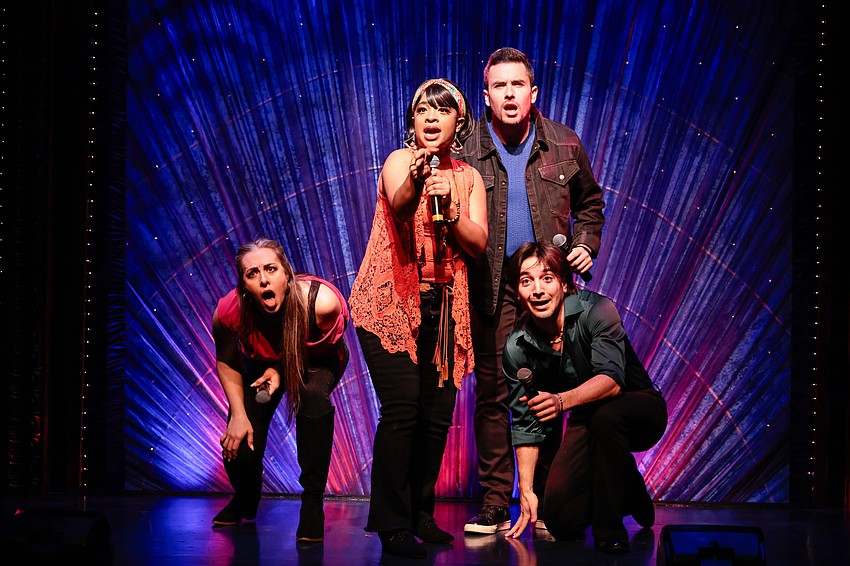
That’s just a sample of the cabaret experience. According to Randazzo, experience is what it’s all about.
“In a cabaret show, your attention is focused,” Randazzo says. “It isn’t Alexa or Spotify. You can’t say ‘pause’ or ‘skip.’ You’re a captive audience! You’ve got to listen to each song from beginning to end. In a live performance, you really hear the words. When that happens ... ”
She pauses to think. “There’s an ‘ah-ha’ moment. When people listen — really listen — they hear things in familiar tunes they’ve never heard before. That happened to me with ‘You Light Up My Life.’”
Randazzo’s direction avoids distraction. Each song comes with historical or personal context. But the liner notes never get talky. And never get in the way of the one-hit wonders. Speaking of which: What is a one-hit wonder, anyway?
The term began as a music critic’s sneer. It referred to a band or musician who had a flash of Top 40 fame — once. Creative lightning didn’t strike again after that. Bad luck was to blame. Or limited artistic range.
In this revue, the term refers to the hits themselves. (From a purist’s perspective, they’re not all one-hit wonders. McLean had a second hit with “Starry, Starry Night.” Joplin had several posthumous hits.) But let’s not get sidetracked ...
What makes a hit a one-hit wonder? Why are there rarely second, third or fourth hits?
Here’s my theory: One-hit wonders are amazing songs. They typically follow a genre. But they’re wildly original. “They’re Coming to Take Me Away” is so original it’s crazy. Napoleon XIV (aka Jerry Samuels) also created one of the first music videos for it.
Many of these tunes, like “Don’t Worry, Be Happy” or “Walking on Sunshine,” don’t exemplify the band or artist’s typical style.
One-hit wonders are one of a kind — they break formula. Reducing them to repeatable formulas is next to impossible. But they’re miraculous the first time.
In “Alien Resurrection,” Sigourney Weaver’s reborn Ripley sinks an impossible basketball shot — standing clear across the court and facing the wrong direction.
A one-hit wonder is the recording industry’s answer to that miraculous movie moment. And you gotta admit, one hit is better than no hit at all.