- March 3, 2026

-
-
Loading
Loading
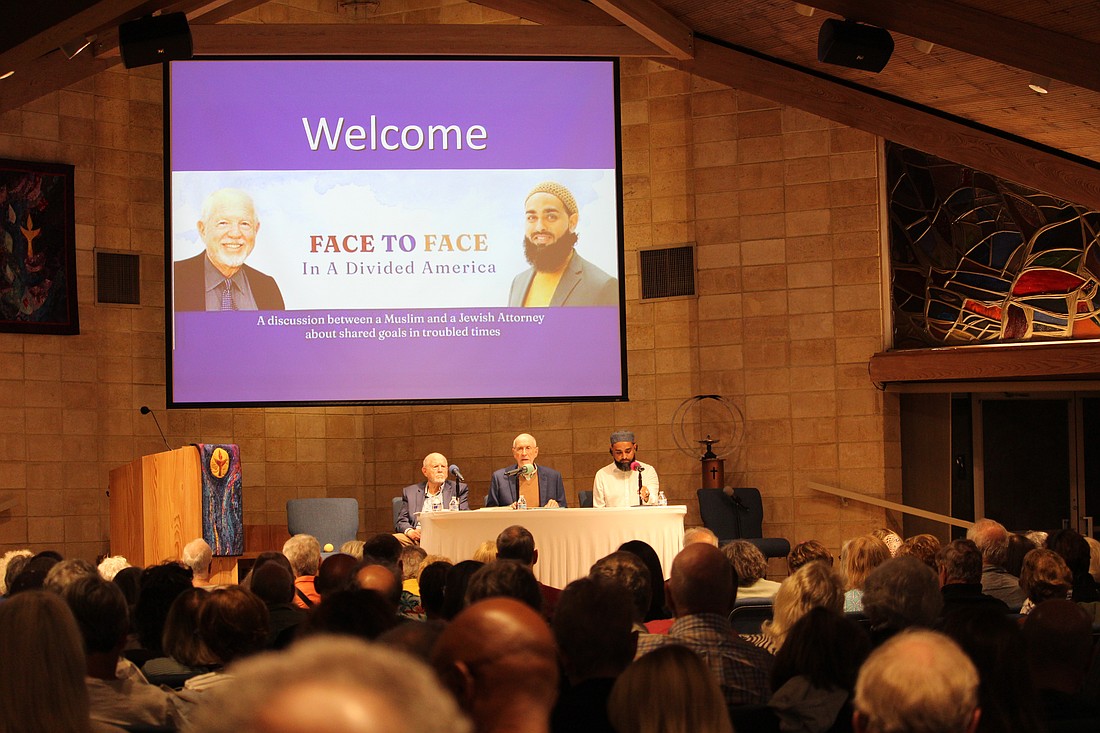
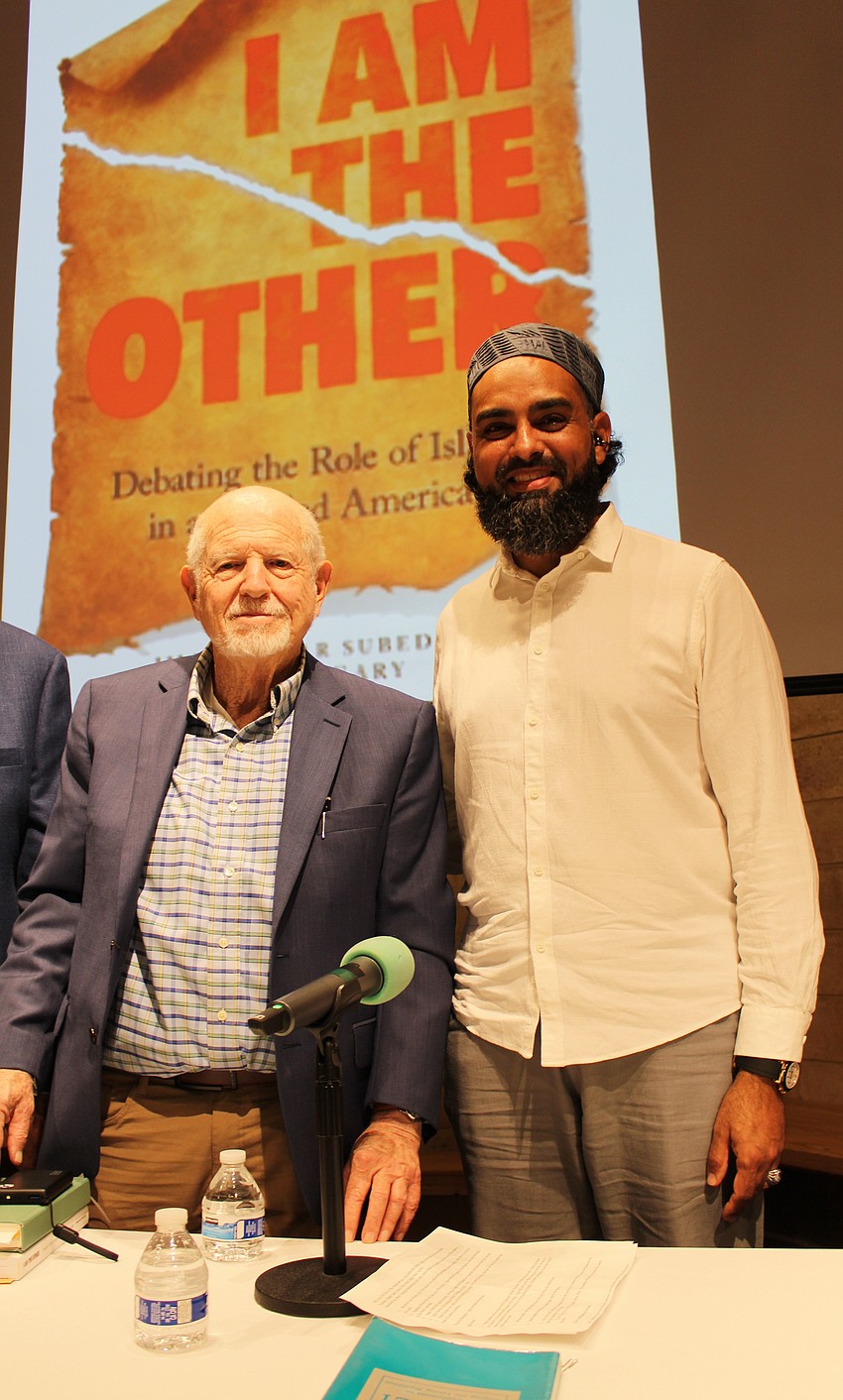
What does it take for people divided by beliefs to find common ground? That's the question central to the book Robert Gary, a member of Temple Beth Israel of Longboat Key, co-authored with Imam Azhar Subedar.
The pair published the book, titled "I Am the Other: Debating the Role of Islam in a Divided America," in August. Since then, they have been seeking to engage community members in the discussion.
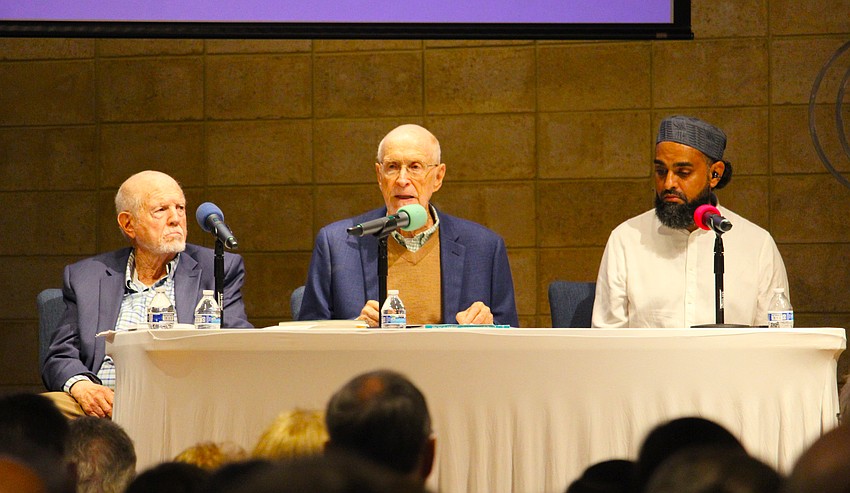
One of their recent forums took place Feb. 15 at the Unitarian Universalists of Sarasota. Rabbi Peter Kasdan moderated, with Rev. Jay Wolin, Yolanda Muhammed and Rabbi Jessica Spitalnic Mates also facilitating a panel discussion and audience question-and-answer segment.
"In the divided society in which we are living today, it's often rare to take the necessary time out in our daily lives to listen to others who may appear different than we do, who are, in fact, exactly like us," Kasdan said by way of introduction.
"All too often, we separate ourselves from those with whom we share this planet Earth. But, tonight, we gather as one, as a group of human beings who seek to understand the others, not to judge —though, in truth, we have our own biases — but rather to listen, and to react through our questions."
Gary and Subedar brought their own perspectives to what started as a discussion between two people about Muslim faith and evolved into a book they used to seek some degree of common ground.
Gary comes from a carer as a prosecutor in the Organized Crime Section of the United States Justice Department, acting chief of the Cleveland Organized Crime Strike Force, special assistant to the United States Attorney, director of the Ohio Organized Crime Council, and a special assistant to the Governor of Ohio. As a private attorney, he was appointed by the US District Court Judge to represent Muslims in federal prisons.
Subedar was born and raised in Ontario, Canada. He completed a decade of Islamic studies in the United Kingdom and is a prominent scholar of Islamic texts. Since 2002, he has served as an imam and educator in various mosques and Islamic centers across the country. This includes Southwest Florida, where he has also worked as a religious advisor to the Florida Department of Education.
The two met at a church on Longboat Key when Gary posed a challenging question to Subedar following a lecture.
"It was a curveball," he said. "At that time, I had a choice. The choice was to answer Bob's question or to shun him because of his question. I not only answered his question to the best of my understanding from the teachings I acquired over 10 years of studying Islam. But, I chose to then engage with Bob, to get to know him, to sit with him over a coffee and a meal."
They concurred that what they learned from working to understand one another could benefit others, and 10 years later, they published their book.
As a starting point for the Feb. 15 discussion, Gary urged listeners to treasure their individuality rather than cling to the idea of everyone needing to have the exact same perspective and beliefs to coexist.
"You can't accept another person if you don't, truly, know who they are," he said. "We all have our biases and prejudices. But they are often rooted in misinformation and scapegoating."
"To no small degree, how a society treats its minorities is a measure of that society's health," he said.
Gary said he and Subedar sought to give readers a more in-depth understanding of Islamic beliefs from their differing perspectives. He added that, regardless of the specific faith, not every follower should be judged by and blamed for "a few rogue actors."
"They should be recognized as individuals with hopes, fears, families and their own unique understanding of their faith," he said.
Subedar echoed those sentiments.
"In a world today, where fear sells, and where peace is not deemed profitable, we must ask ourselves what role are we going to play in ensuring that we do our part to navigate history to the right course?"
![Brian Taylor, who works as executive vice president for Perform[cb], has been working from CoworkLWR since 2021 in order to have a separation between work and home life. He enjoys the opportunities to network with fellow remote workers at the new location.](https://media.yourobserver.com/img/photos/2026/02/27/IMG_1642_r452x360.jpeg?0dd7e9171d3bd5845bc057d4569a0a31ba6981d7)