- June 30, 2026

-
-
Loading
Loading
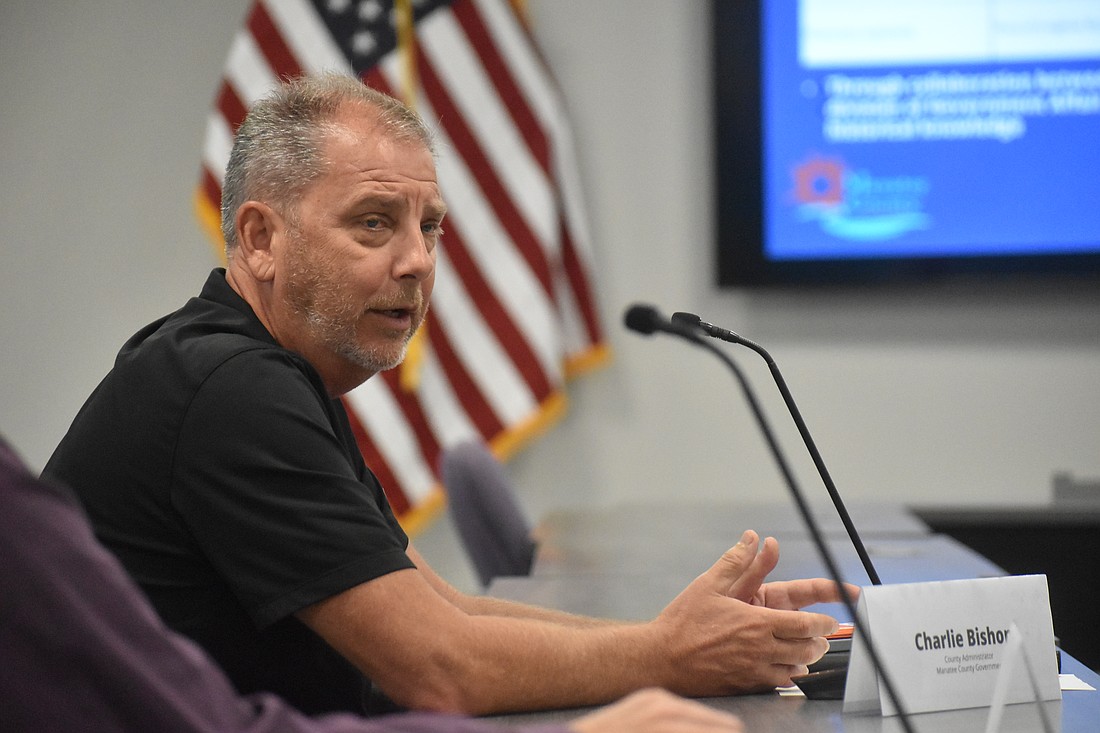
Some Manatee County expenditures cited as overspending by the state Department of Government Efficiency were called money “well spent” by the Manatee County Government Efficiency Liaison Committee.
The committee met June 23 to discuss its final recommendations with County Administrator Charlie Bishop before presenting those recommendations to commissioners July 28.
Committee member John Settineri kicked off the meeting by going through the three Manatee County capital expenditures that DOGE cited as “wasteful spending” in its statewide report issued in January.
The second administrative building in Lakewood Ranch landed at the top of the list with an overall expense of $34,832,903.
The committee disagreed with the DOGE report, stating that the county doesn’t have enough excess space to call the purchase wasteful.
Bishop noted that the 12th Circuit Court is growing. The state attorney’s office has already taken over the fifth floor of the downtown administration building, and the county is in discussions with the public defender’s office to take over the fourth floor.
The city of Bradenton could “potentially” take over the third floor and eighth floor. If so, the lease would be in excess of $200,000 a year for up to five years until Bradenton's new city hall is built.
Additionally, other county-owned buildings are being repurposed or sold as staff is centralized into the two administration buildings.
Bishop called the purchase a “win-win-win” and noted that he’s never been given proof of Florida CFO Blaise Ingoglia’s claim that Manatee County overspent $112.4 million of tax dollars.
The other two capital expenditures cited in the DOGE report as wasteful were the trail system and the water taxi.
The committee found that the county is spending state and federal funds on the trail system, so it had no impact on the county’s budget. And since the water taxi’s ridership increased by over 85%, the committee had no concerns of waste.
The committee noted three areas where commissioners are not receiving sufficient information: Capital projects, the Tourist Development Tax and reserves.
The committee suggested more timely updates for commissioners on capital projects and a more creative approach to spending TDT funds.
Bishop said commissioners are already being briefed monthly on capital projects and called the TDT a "very restrictive fund," so the conversation quickly shifted to Manatee County's over $1 billion in reserves, which Settineri called "a bit of a PR issue."
"People are looking at this billion dollar reserve and saying, 'Wow, that's money that's just sitting in a CD account," he said. "We couldn't drill into it. We didn't have enough time, but the thought is that (commissioners) should get more information on these reserves to see if they can be released into the general fund."
Commissioner George Kruse raised major concerns over the dwindling general fund during a budget work session June 8.
Capital projects play into reserves because that's where funds for those projects wait to be spent. But if the board deemed some of those projects "dead," that money could be released.
The suggestion is that the board be given a line-by-line accounting of all the money being held in reserve.
With only 12 two-hour sessions in a year, Settineri said the committee couldn’t look at everything, so the approach was to conduct interviews with key staff members.
Where the state DOGE report focused on specific expenditures, the committee’s report is focused on processes.
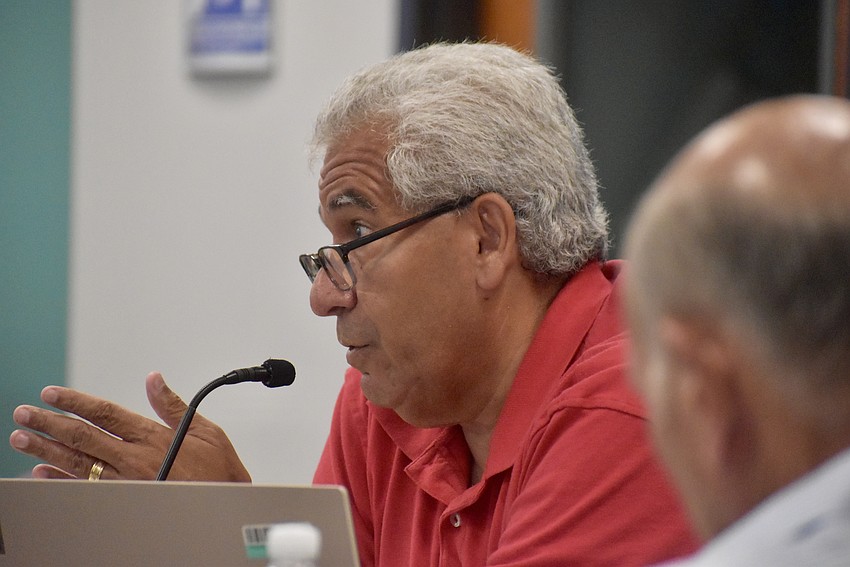
Committee member David Otterness suggested standardizing interlocal agreement reports and compiling a database to include how each ILA was funded, the cost share and a brief background.
“I think the ILA is a really good tool that government entities have for purchasing power and negotiations,” Otterness said. “You have a long history of ILAs (some dating back 30 years), and you have a short duration of boards.”
When a transportation project arises for the town of Longboat Key, for example, a database would allow commissioners to quickly and easily reference all past negotiations with the town.
Committee member Don Berg recommended centralizing purchasing across the county, cities, school board and constitutional officers, such as the sheriff and the supervisor of elections.
“There’s an opportunity to create an ILA where you could consolidate purchasing activities across all those various entities and get the obvious benefits of economies of scale and greater negotiating powers,” Berg said.
Bishop noted that cleaning contracts, fleet facilities and human resources could be looked at for consolidation, as well.
When the final recommendations are given to commissioners July 28, commissioners will also receive results from an AI pilot program that analyzed the data submitted by the county to the state during its DOGE review.
The analysis focused on identifying anomalies and detecting areas of potential waste, abuse or cost overruns.