- July 27, 2026

-
-
Loading
Loading
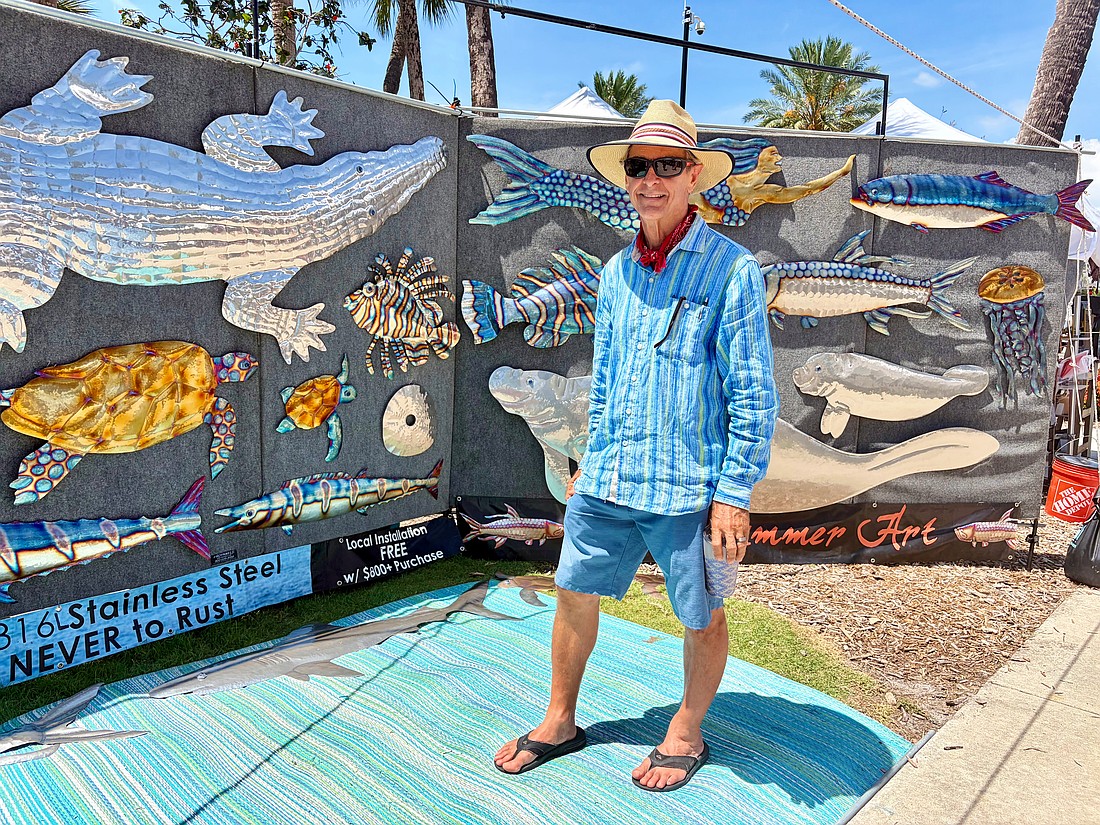
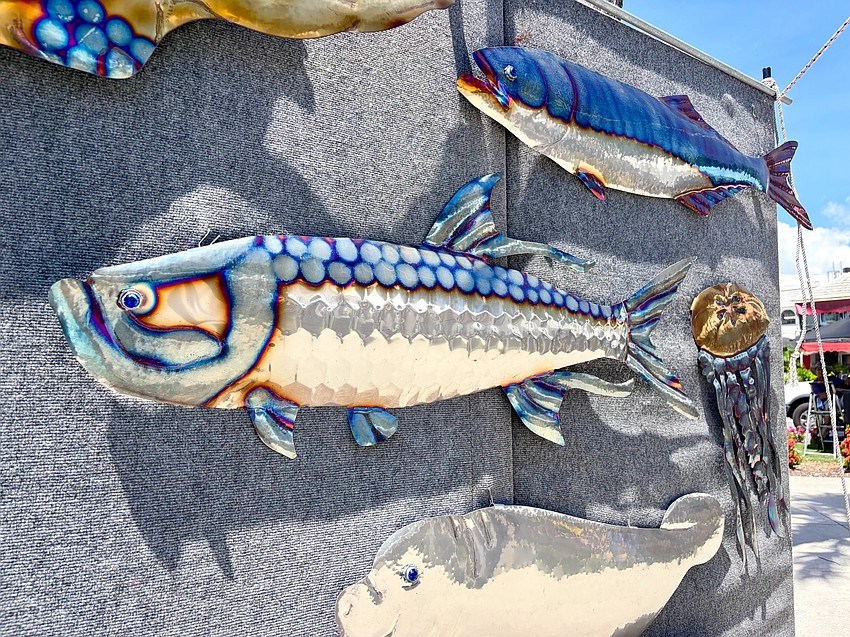
At one corner of the St. Armands Circle Craft Festival over the weekend, a school of tropical fish, manatees, whales and even mermaids looked ready to swim off its display stand. The steel wall hangings glittered in the afternoon sunshine just as brightly as any real fish scales, and artist John Grammer said 30 years of honing his craft has enabled him to share some of his best pieces yet.
Grammer was one of the artisans displaying their works at the Circle on June 6 and 7. He is based on the southern edge of Sarasota, and he had been looking forward to bringing new designs and refined techniques to the St. Armands fair.
The artist started his own brand, John Grammer Art, in early 2016. But his experience in metalwork began long before the brand.
In 1990, he launched a construction company, where he familiarized himself with the tools of the trade. Those skills lent themselves to working on movie props.
"I've been an artist all my life, but I started making a living at it in L.A. about 30 years ago," he said. "I started with making movies in my hometown in the U.S. Virgin Islands."
The foray into movie-making helped him forge connections in the industry that led to working with studios, including Disney.
He said one of the largest films he did prop work for was "Stargate." He fashioned several elements, including miniature rings featured prominently on screen. He and five other crew members managed to make the entire set in just 24 hours.
"I made a good living at it, but the lifestyle wasn't for me, so I went back to the islands before moving here," he said.
About 10 years ago, Grammer dove deeper into the world of art while learning from fellow metalworkers. He started by working with fairly malleable copper sheets but later switched to his preferred medium, marine-grade stainless steel.
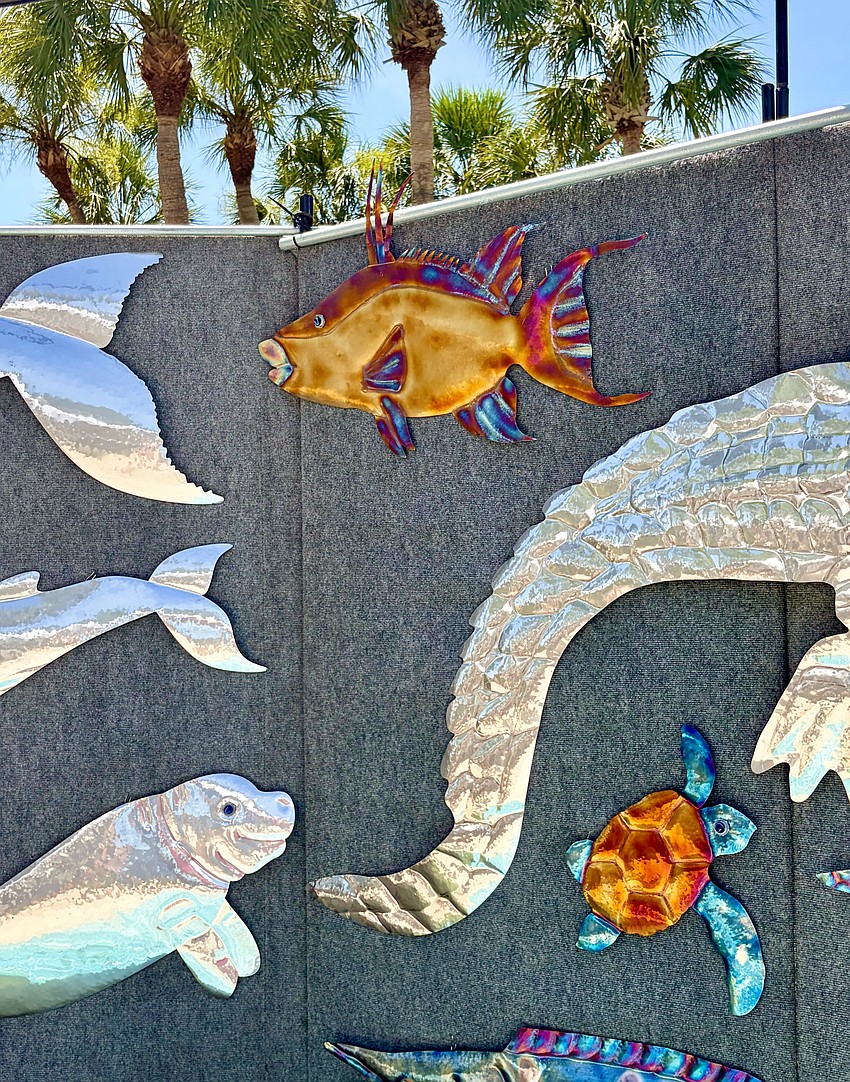
He said working with steel means it takes more time to fashion his marine creatures by hand. However, the steel is more resistant to degrading in outdoor elements, and the more neutral tones make the colors in his works pop. Shaping a single piece can take hours or even days for some of the larger pieces, like the life-sized alligator.
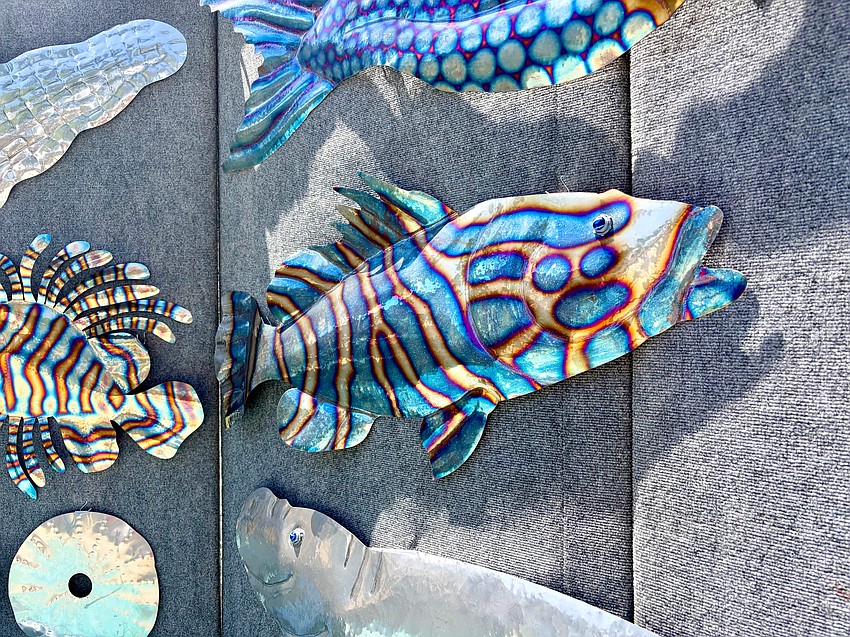
The pieces aren't coated in any sort of paint. Rather, Grammer uses a precisely calibrated torch to add the stripes of a lionfish or the scutes of a sea turtle shell to his art.
"It took me about five years to learn how to control it," he said, describing the technique as similar to airbrushing, but with flames.
His subjects center on ocean animals, which he attributes to inspiration from living on St. Thomas and St. John.
"I did also explore birds, but the sea life is what really started selling," he said. "I think it just looks better with the slick, wet look, especially with all the blues. Fish just pop."
While he has some favorite designs he has continued to fine tune, Grammer is also introducing new pieces, like the blue-tailed mermaid he had on show that weekend.
Grammer said it has been rewarding to pursue his sculpting full-time after retiring from the construction business 10 years ago, and he loves seeing viewers' reactions to the large-scale pieces.
One of the best compliments he appreciates hearing from visitors is how pieces like the jellyfish capture the organic movement of the animal in what could otherwise be a stiff medium.
"With the whale in particular, one lady said the shape was 'lyrical' to her, and I thought that was a nice description," he said.