- July 26, 2026

-
-
Loading
Loading
Estimates suggest Florida is about 18,000 to 20,000 physicians short of what it will need by the year 2030, according to Dr. Michael Schandorf-Lartey.
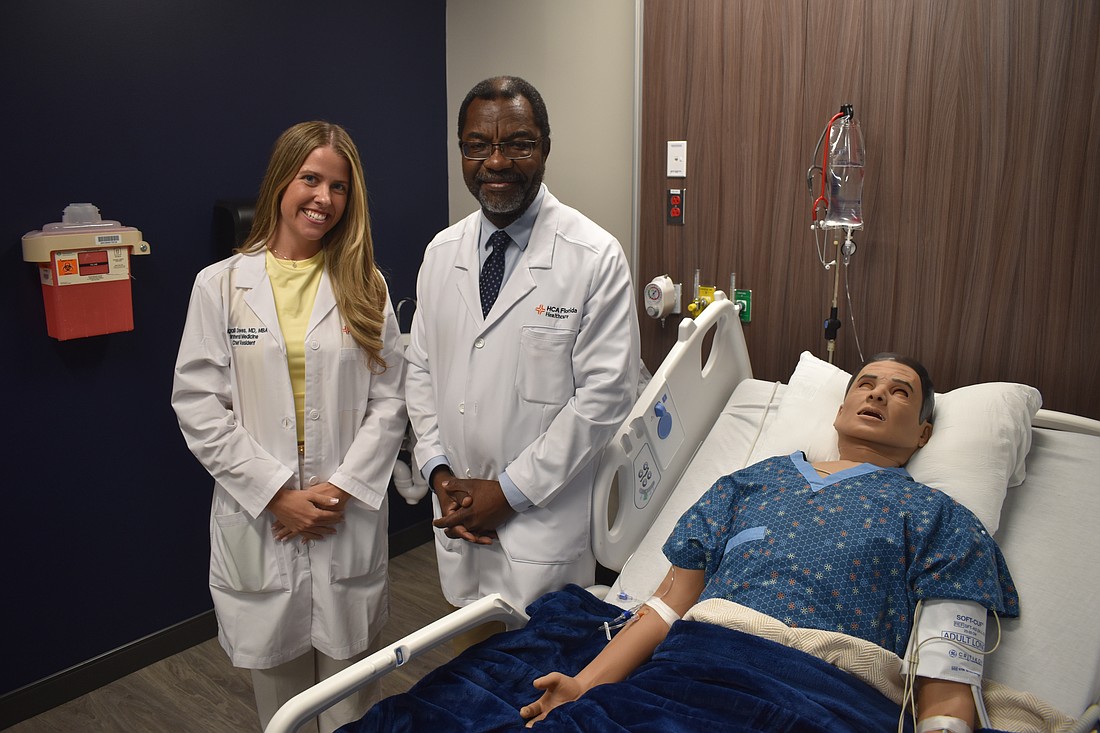
Schandorf-Lartey serves as program director of internal medicine at HCA Florida Sarasota Doctors Hospital, which recently expanded its Graduate Medical Education learning space.
The new space includes a simulation lab featuring an advanced mannequin and an expanded classroom for lectures. There are also amenities such as additional spaces for wellbeing, including a Zen room and an upstairs balcony recreation area.
The hospital isn’t the only local facility looking to expand its residency programs: Sarasota Memorial Health Care System has also been introducing new residency programs since 2017.
“Our population is getting older,” Schandorf-Lartey said. “When I say our, I'm talking about the U.S. and Florida, in particular. Our demographics are skewed towards older adults, and we have positive migration of people coming in who are generally older, in the baby boomer generation, practically. And these are the people with a lot of chronic medical problems, so you can foresee that we're going to need a lot of medical professionals to attend to these older baby boomer generation, who are, by the way, living longer and longer.”
In fact, Schandorf-Lartey said around two years ago or longer, the hospital had three or four people over 100 in its care simultaneously.
“That kind of tells you that the population is aging but living longer because of technological advances in medicine, and so you have to have the manpower to take care of them,” he said.
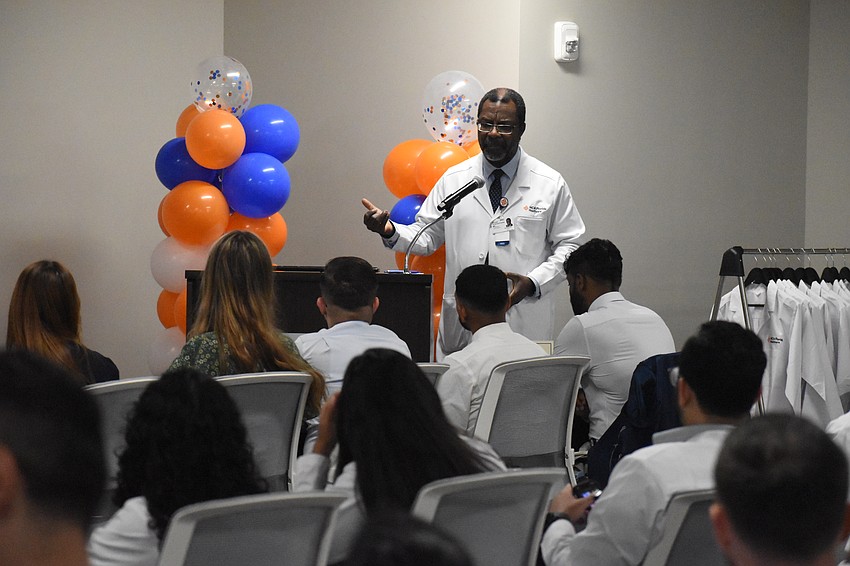
Physicians in residency are dependent-licensed physicians, always working under a faculty mentor or trainer until they receive an unrestricted license. They cannot make decisions by themselves and must refer to the guidance of the attending physician.
The hospital offers two residency programs. The first is its Internal Medicine Residency Program, which started three years ago. It has welcomed 12 residents per year for three years and is now hosting its fourth class.
The hospital is also starting a transitional year program this year with five residents. Physicians will spend one year in the hospital and then go on to other residency programs such as anesthesiology, radiology or dermatology.
Schandorf-Lartey says if there is a residency program in any locality, there is evidence to suggest that at least a third of physicians will stay in the area where they trained.
He said Florida is “a little bit behind” when it comes to residencies in hospitals, which has been driving the push for more such offerings.
“This is something that's been known for a long time. We just haven't taken it very seriously until maybe a few years ago,” he said.
Right now, Schandorf-Lartey says, the community is maintaining approximately 30% of residents.
He notes that, in June, they graduated 12 residents, three of whom are joining a local primary care practice and one of whom is in a cardiology fellowship locally.
“HCA’s objective actually is to go beyond the one third staying in the local area where they train to about half,” he said. “That's a very ambitious target. I don't think it's out of the question; I don't think it's an unrealistic target. I think it's a good target to aim at.”
Nationally, HCA Healthcare is among the largest sponsors of private medical education, with more than 5,758 residents and fellows enrolled in 365 programs.
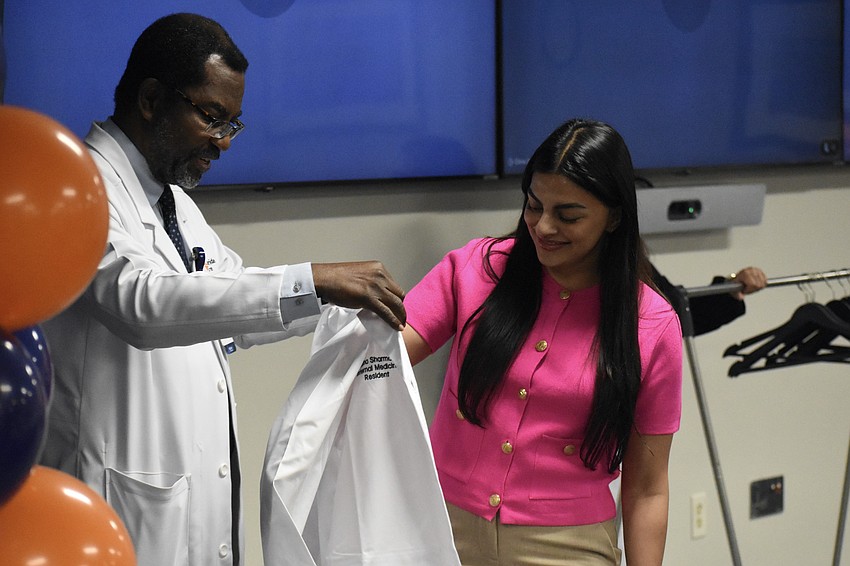
It is not the only organization that is seeing results in the community.
Dr. Wilhelmine Wiese-Rometsch, chief academic officer for Sarasota Memorial Health Care System, said the organization is proud of maintaining a retention rate of close to 40% of graduates locally.
“About a third of them go and pursue additional training that we may not offer here, but the great thing is that many of them come back, and when you look overall, we have about a 70% retention in the state of Florida,” she said.
The Sarasota Memorial Health Care System observed changes in the demand for services that prompted the addition of residency programs.
Wiese-Rometsch said when the first program, internal medicine, started in 2017, the region was already short by more than 50 primary care providers based on a needs assessment performed in 2015.
She said that when the organization opened Sarasota Memorial Hospital-Venice in 2021, it was immediately filled the next day.
“Even already back then there was a significant shortage,” she said. “As you know, our population has just continued to grow, at a pace that has been quite dramatic, and so that has led to additional programs and so forth.”
She says one of the most challenging areas to meet demand is primary care, but, looking at the whole state of Florida, and in the local region of Region 8, there are shortages in “almost every discipline.”
After the inaugural program in 2017, which was internal medicine, it subsequently added a hospice and palliative care fellowship, an emergency medicine program and an emergency medical services fellowship. A new program on complex gastrointestinal surgery and another on advanced head and neck surgery also begins in August.
All of its programs are operated through an academic partnership with Florida State University. The trainees among the programs currently total 73 and higher numbers are approved, she says.
“The original drive and mission of starting these programs, I believe we've been successful at meeting that, in that we have such a high retention rate, both within Sarasota and our healthcare system, and also in Florida itself,” she said.
The programs at both hospitals feature amenities for residents, as well as simulations and classrooms.
At Sarasota Memorial Hospital, the Kolschowsky Research and Education Institute features advanced training mannequins and a Da Vinci robot for complex GI surgery.
Schandorf-Lartey notes the advanced mannequin at HCA Florida Sarasota Doctors Hospital, which he says the hospital acquired before some other programs in West Florida.
“I’m kind of envious that I didn’t have this,” he said, noting it allows physicians to practice scenarios that, in the past, had to be learned on a real patient.
Dr. Abigail Dawes says she was drawn to the program at the hospital by its community feel. She is one of three chief residents, and one of the third-year residents in the internal medicine program.
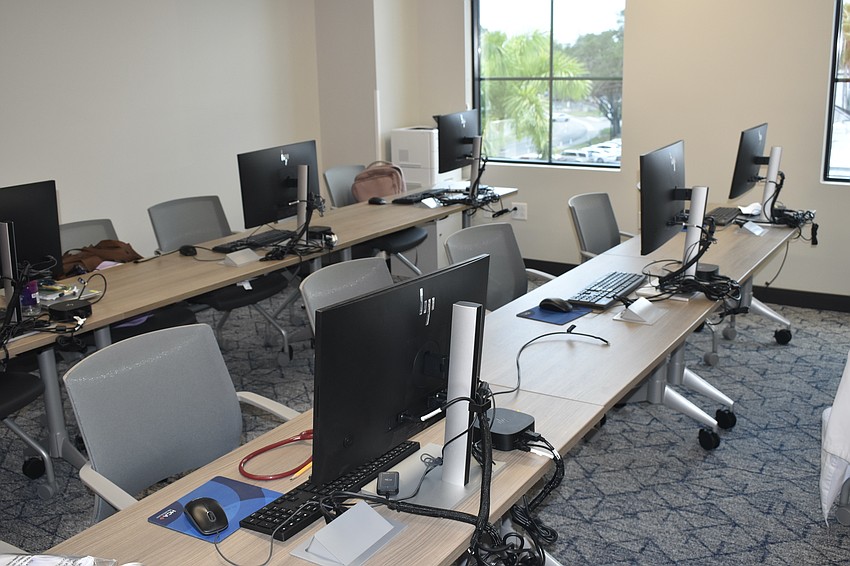
“For me, it was really important to be somewhere where there was a sense of community, and where I would feel comfortable going to others asking for help, and could have that family experience in residency, and that was absolutely what I got from Dr. Schandorf, from the other faculty who interviewed me, and also the other residents that I spoke with. That's absolutely been true since my time here,” she said.
Schandorf-Lartey says the program tries to pass on something more than the hard skills of being a physician.
“What is not so easy is to pass on the softer skills of compassion, listening,” he said. “To hear a patient's concerns and being empathetic to the point where they can tell that you care about them, and taking time to sit with them. Sometimes, when things are not going well, what patients or families are looking for is not the technical stuff; it's more the compassion, understanding, sitting with them, helping them go through these challenging times, sometimes even grieving when the patient has died.”
The future still holds more for such programs, staff say.
“We want, you know, to continue that growth, so obviously that's a decision that we make with a lot of support, right, but we’re always looking at potential for growth, and opportunities that allow us to grow,” Wiese-Rometsch said.