- July 6, 2026

-
-
Loading
Loading
When retrospectives for the Sarasota Art Colony were unveiled earlier this year at Ringling College of Art and Design and at Michael Saunders & Co.’s downtown offices, one prominent local artist wasn’t included.
Actually, lots of artists were left out. In post-World War II Sarasota, there were 1,000 artists in a town of roughly 15,000 people, according to Ringling College Chief Curator Tim Jaeger.
“With any historical exhibition, there are always difficult decisions to make,” Jaeger says. “Our goal was to tell a focused story within the available space and resources, and unfortunately it simply wasn’t possible to include every deserving artist.”
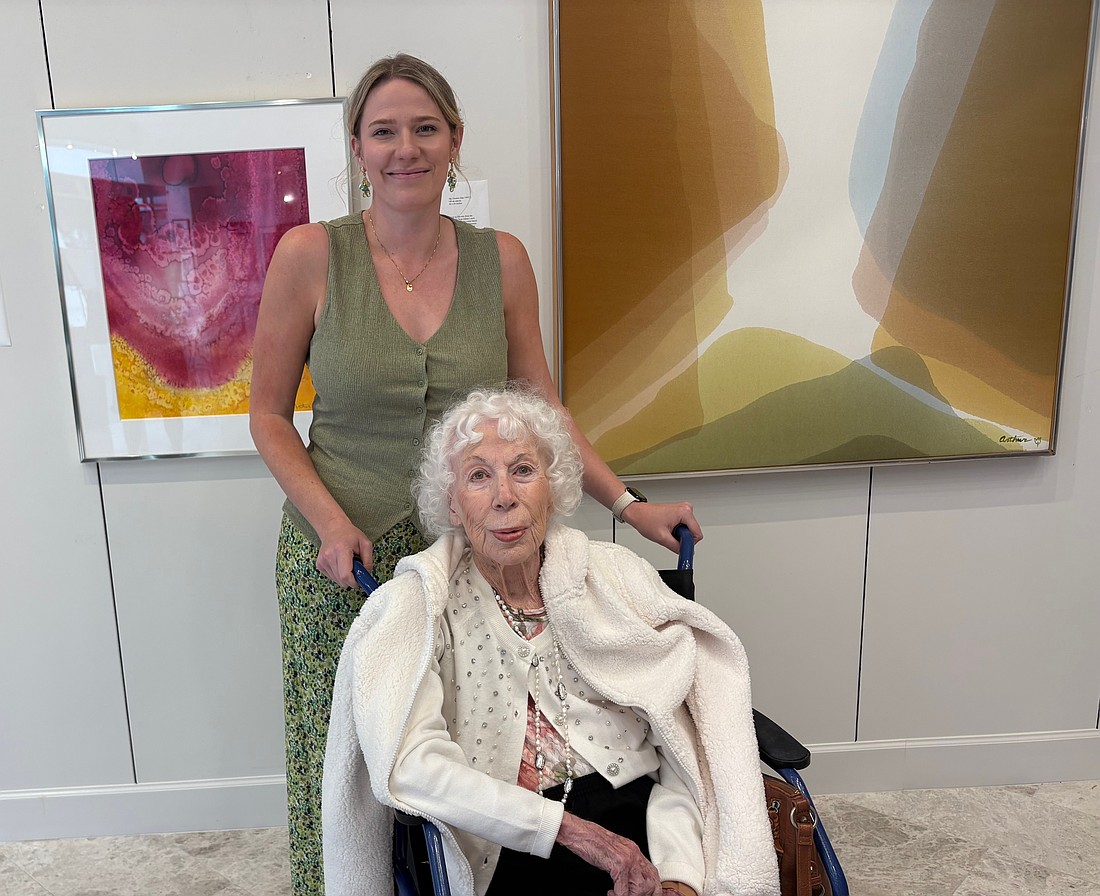
But one of those artists is still around and her family and friends rallied to make sure she wasn’t forgotten. Her name is Beth Arthur and she was born in Pittsburgh in 1926. In honor of her centenary, a solo show was held earlier this year at The Field Club.
In May when Arts Advocates unveiled two of her paintings that it acquired for its gallery in The Crossings at Siesta Key mall, Arthur was there, surrounded by dozens of well-wishers.
Founded more than 50 years ago, Arts Advocates is dedicated to preserving the legacy of the Sarasota Art Colony.
Arts Advocates acquired Arthur’s paintings “Bryce Canyon” and “Sky Dreams” at the recommendation of its curator Mark Ormond. He included her work in the Sarasota 2000 Biennial exhibition that he curated when he was senior curator at The Ringling Museum of Art.
At age 100, Arthur lets others do the talking for her these days, including her daughter, Robin Draper and granddaughter, Sandy Arthur.
They’ll tell you how Beth Arthur arrived in Sarasota in the 1950s after earning a degree from the University of Pittsburgh with little more than a Martin guitar, some paintbrushes and an invite to study with Hilton Leech.
After teaching at the Ringling School of Art, Leech founded an eponymous art school in 1946 on Hillview Street together with his wife, Dorothy.
“Mom always thought herself fortunate to work alongside Hilton, considering him her most influential teacher,” Draper says. “Hilton was not only a legend in the local art scene, he personally helped Mom to refine her painting technique, while also introducing her to fellow Sarasota artists as she defined her career as a contemporary artist.”
Arthur became part of the Sarasota Art Colony’s social whirl. The scene revolved around Syd Solomon and his wife, Annie, as well as the Ringling School of Art and the Sarasota Art Association, now known as Art Center Sarasota.
Over the next six decades, Arthur would create mosiac, collage and mixed media paintings and move from oil to watercolor and then to stain color painting. The latter involves pouring, brushing and spraying paint to achieve luminous effects. She continued to paint until her eyesight began to deteriorate when she was in her eighties.
Arthur always signed her work with her last name only, so no one would know she was a woman.
During the 1960s, Arthur studied at the New College Arts Institute with such renowned contemporary artists as Solomon, Philip Guston, James Brooks, Larry Rivers and Conrad Marca-Relii. Arthur’s late husband, Furman “Brud” Arthur, was one of New College’s first employees and was head of public relations for 25 years.
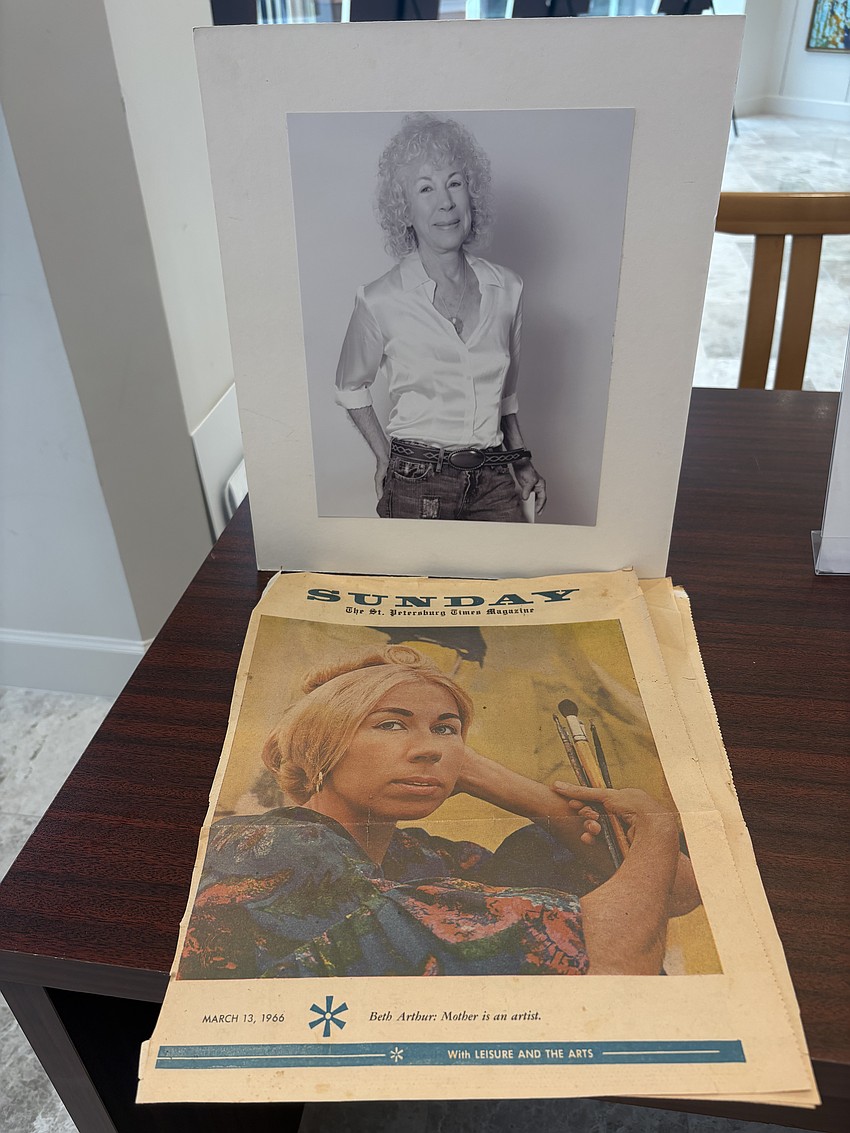
Like other members of the Sarasota Art Colony, Arthur was inspired by the Ringling Bros. and Barnum & Bailey Circus, based in Sarasota from 1927 to 1960. She worked as a staff artist for the circus from 1953-7.
Arthur began doing portraits and landscapes. But she became a maverick with abstract painting, considered the province of men.
“Beth’s work does remind me of some other universe,” Ormond says. “She takes us there, maybe because she practiced yoga. I always found her to be a very meditative individual.”
Adds Jaeger: “I think Beth’s work absolutely deserves recognition. She has had a long and meaningful career, and her paintings reflect a deep commitment to observation, craftsmanship and the unique character of Florida.”
Draper calls her mom “a Renaissance woman. “ In addition to creating and teaching art, Arthur taught yoga, did facials and collected Native American jewelry.
After her marriage ended, Arthur traveled in the Southwest, where she was fascinated by rock formations and petroglyphs. These trips fueled an interest in archaeology that began when she took art classes as a child at the Carnegie Museum of Art and wandered around afterward at the adjacent Museum of Natural History.
The artistic tradition continues in Arthur’s family. Her granddaughter, Sandy Arthur, is a chiropractic doctor who pursues her love of art by painting murals of the human spine.
“If you’re wondering where all the artistic talent in the family went, it went to Sandy,” Draper says. Sandy Arthur is also a pilot and a tennis player, yet another Renaissance woman in the family.