- August 11, 2026

-
-
Loading
Loading
When many people hear the word “conservatory,” they don’t know what to think. It has a formal, even forbidding connotation. Those who grew up playing the game “Clue” or who have seen the touring Broadway show might be inclined to free associate: “Colonel Mustard with the revolver in the conservatory" when they hear the word.
In the U.S., the standard definition of conservatory is a “greenhouse for growing or displaying plants” (Merriam-Webster). But in Europe, it has another meaning altogether: “a school for the teaching of music or sometimes acting or art,” according to the Cambridge English Dictionary.
The latter definition is what prompted aerialists Dolly Jacobs and Pedro Reis to name their academy the Circus Arts Conservatory when they founded it in 1997. But though the CAC is indubitably the most famous conservatory in Sarasota, it isn’t the only one.
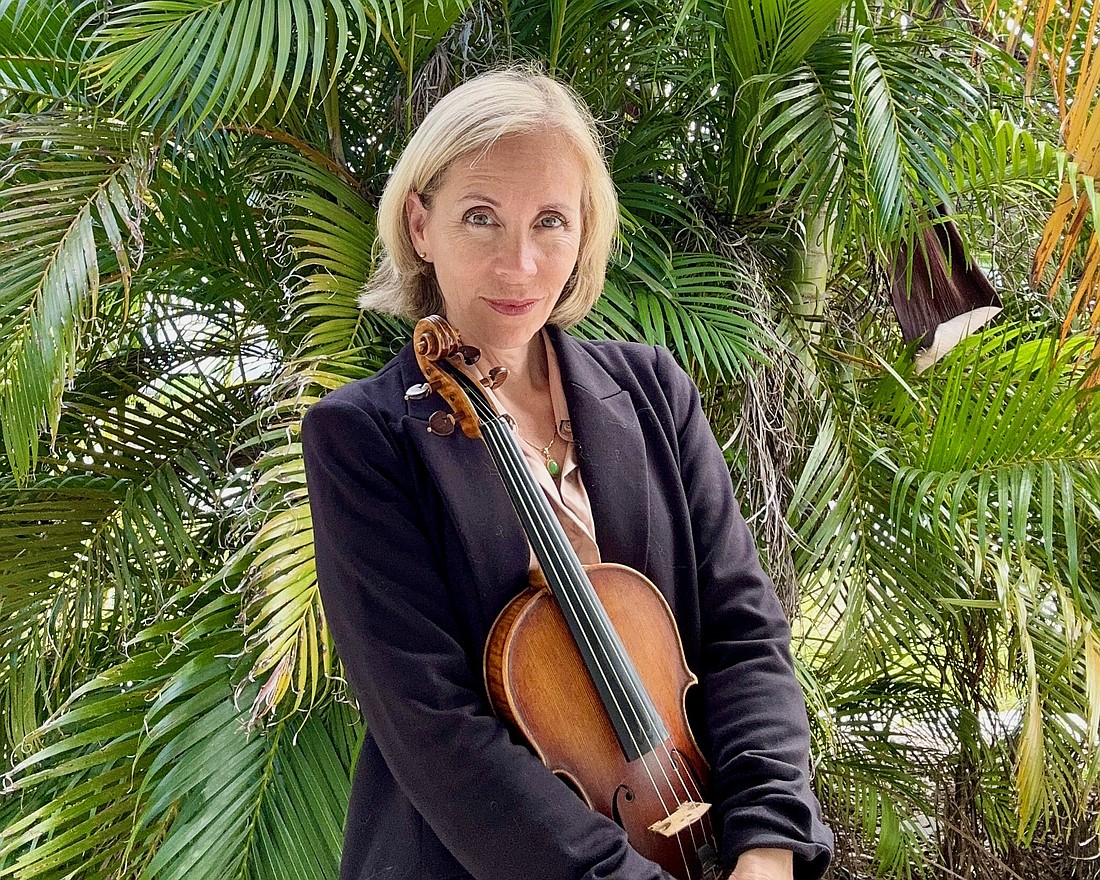
Back in 2008, Sarasota Orchestra musicians Lena Cambis and Sean O’Neil founded the Sarasota Music Conservatory with just themselves as teachers and a handful of students. Cambis wanted to create a local version of the music conservatory where she studied when she was growing up in Montpelier, France.
“In Europe, high-end conservatories are subsidized by the government and I was fortunate enough to grow up in a place, Montpelier, that had one,” Cambis says. “From the age of six, I took many hours of weekly music instruction. I not only had violin lessons, I had orchestra, chamber music, choir, music theory, ear training, all these classes. That’s what we’re offering here.”
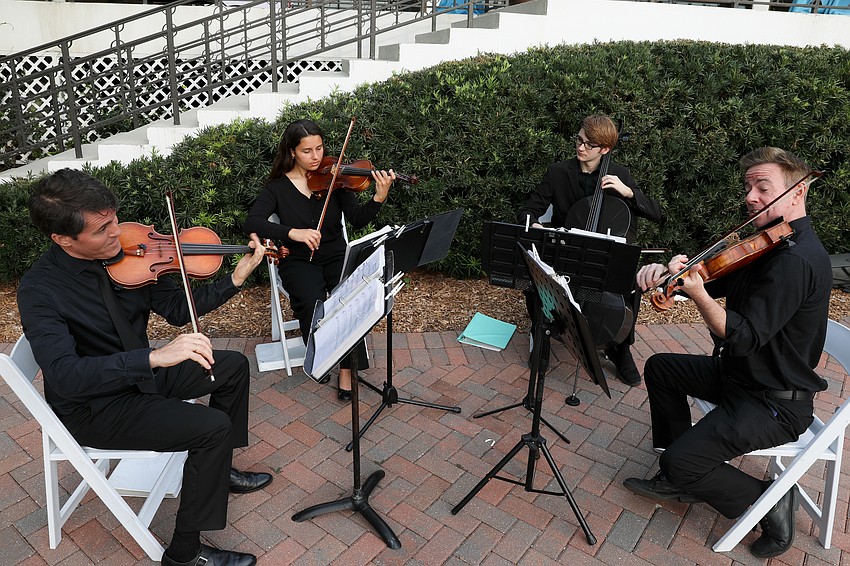
Even though many young musicians obtain training from other institutions, this instruction is primarily group classes. Cambis says there is no substitution for private lessons, especially for students who need to learn a repertoire that can get them admitted to a school of music on the collegiate level.
Even though Cambis is a member of the Sarasota Orchestra and runs a conservatory, music isn’t what brought her to Florida’s Cultural Coast. When she was in her early 20s, she traveled here to achieve her dream of studying tennis with Nick Bollettieri at his tennis academy, now known as IMG Academy. (Bollettieri died in 2022 at the age of 91.)
“Tennis is my other passion, after music,” Cambis says. “When I was studying tennis, a group of us went down to The Bay and I noticed the (Beatrice Friedman) Symphony Center. I thought, ‘Wow, they have an orchestra here.’”
When Cambis got back to France, she called what was then known as the Florida West Coast Symphony and learned that it would be holding auditions in just a couple of weeks. It was a fast turnaround, but Cambis was able to make the necessary arrangements to return to Sarasota, where she was offered a violinist position with the orchestra in 2000.
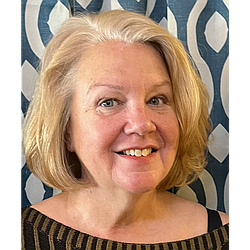
Today, the conservatory Cambis and her husband founded is housed in a 10-room facility in the Rosemary District. It serves between 200 and 250 students, including adults such as its board president, Diane Howard. She returned to playing the violin after retiring from a career as an executive in the defense industry. After four years of private lessons at SMC, she decided to join its board in 2024.
Like the businesswoman she was, Howard speaks about SMC’s “value proposition.” What exactly does that mean? She explains that SMC is the only nonprofit music conservatory in Southwest Florida and that its “ecosystem” provides aspiring musicians and lifelong learners the opportunity for instruction, performance and master classes with professional artists. It also exposes them to music theory.
Access is an important part of SMC’s mission, Howard notes. Talented students are not excluded from SMC because their families don’t have the means to pay, Howard says.
But make no mistake: Participating in activities at SMC is a serious commitment, not just a way for students to pass the time between school and home. “This isn’t summer school or babysitting,” Howard says. “There’s a level of expertise that Lena and Sean demand. I see a nurturing environment but for serious students.”
That doesn’t mean fun isn’t part of the equation. There’s room for that in a conservatory, which provides the opportunity for students to discover their talents and dreams.
Most of SMC’s students are young musicians entertaining thoughts of a professional career. They need private lessons in addition to group classes they may be taking in public or private school or through the Sarasota Orchestra's Youth Orchestras.
Sommer Altier, who plays in a classical music group called Trillium String Quartet, credits the conservatory with introducing her to chamber music and her future career path. She was introduced to SMC by Ken Bowermeister, a longtime member of Sarasota County’s music community. Now the maestro of Strings Con Brio, Bowermeister is the former music director and conductor of The Venice Symphony and was director of orchestras at Pine View School for 30 years.
“I needed to switch violin teachers when I was in the eighth grade and Mr. Bowermeister suggested the Sarasota Music Conservatory,” Altier says.
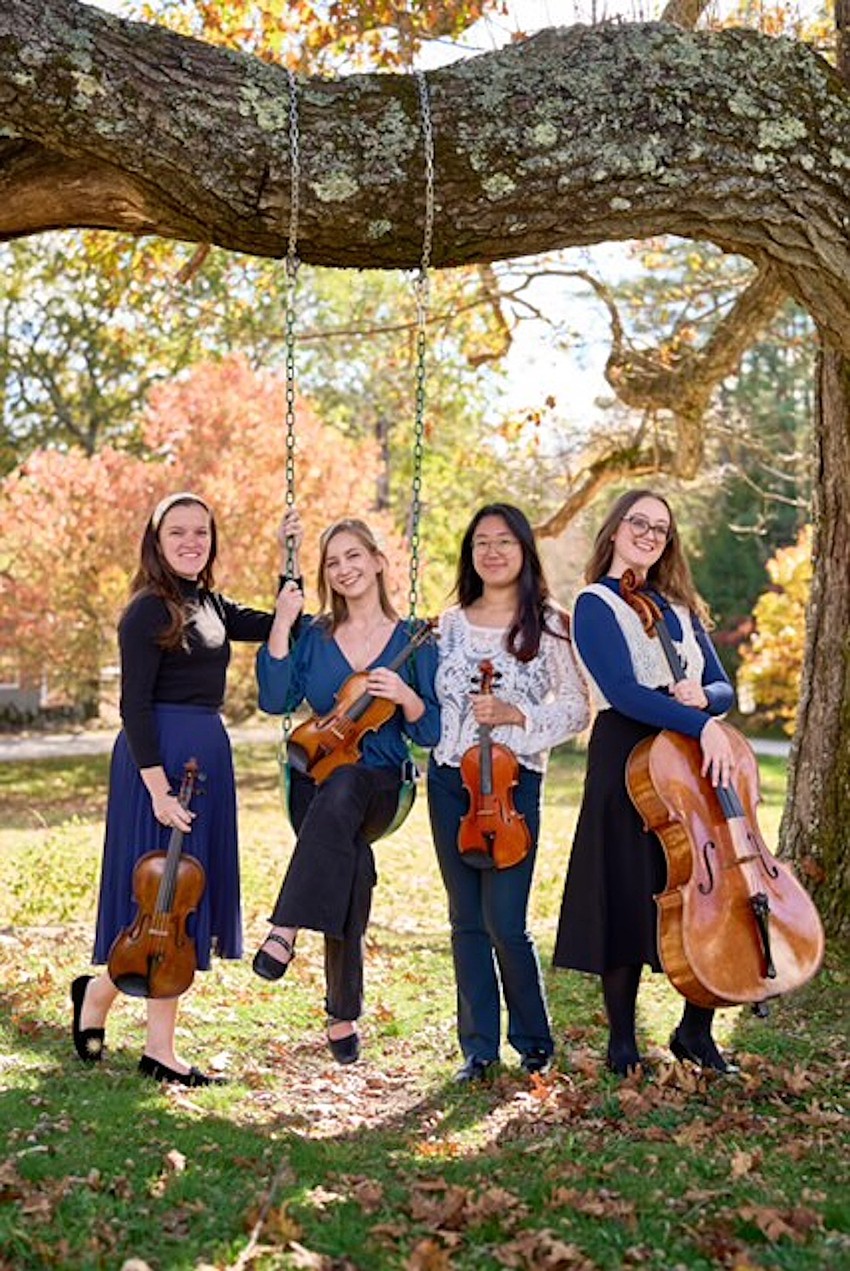
The skills and confidence Altier acquired at SMC helped her gain admission to Florida State University, where she studied with Corinne Stillwell. After completing her undergrad degree at FSU in Tallahassee, Altier earned a master’s degree at Mannes School of Music in New York City.
She and three other female musicians decided to form a professional quartet named after New York’s state flower, because that’s where they met. In addition to touring nationally, Trillium String Quartet will serve as the quartet in residence this fall at Kin Haven, a music camp in Vermont that is starting a boarding school.
Plans are in the works for Trillium to visit Sarasota next February, but the date and venue hasn’t been finalized. If there’s enough time, no doubt Altier will teach a master class at SMC, contributing to that valuable ecosystem Howard speaks about.
Both Cambis and Howard agreed that one of the biggest challenges facing their music nonprofit is making people aware of its existence and its niche in Sarasota’s vibrant cultural scene.
“There are just so many hours in the day,” Cambis says. She invites those who want to learn more about SMC to attend an open house later this month.
And if there are any retired development types out there who want to lend the conservatory a hand on the fund-raising front, Cambis is all ears.