- July 29, 2026

-
-
Loading
Loading
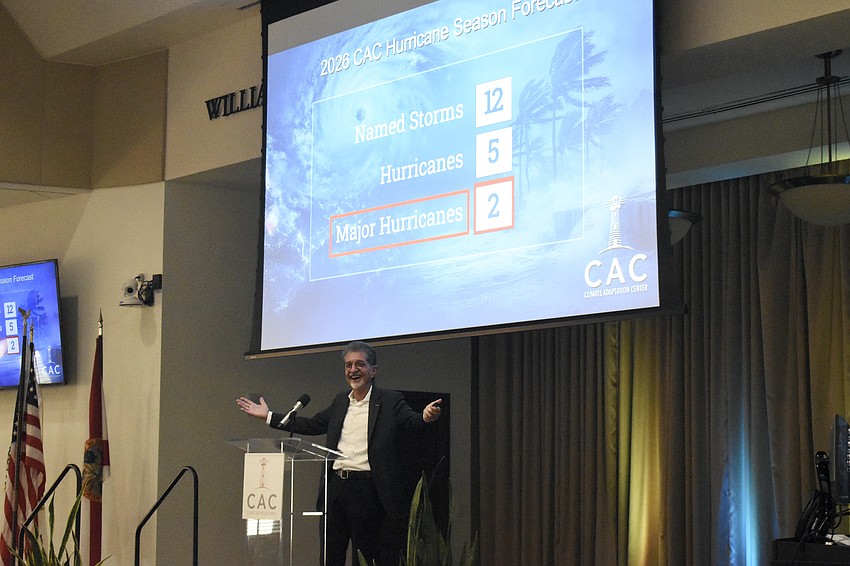
As the Climate Adaptation Center unveiled its annual hurricane forecast, an audience member called out from the crowd: "We'll take it."
The organization revealed the prediction of 12 named storms, five hurricanes and two major hurricanes during the Hurricane Season Forecast Day hosted at the University of South Florida Sarasota-Manatee Campus.
The local nonprofit has repeatedly claimed its forecast is the most accurate in the nation.
Last year's forecast predicted 17 named storms, 10 hurricanes and five major hurricanes, compared with the actual 13 named storms, five hurricanes, and four major hurricanes.
The 2024 forecast predicted 24 named storms, 12 hurricanes and six major hurricanes, with an actual 18 named storms, 11 hurricanes and five major hurricanes.
Bob Bunting, CEO and chairman of the Climate Adaptation Center, emphasized that while the numbers of storm may have dipped, resilience against storms remains important.
He noted a record 23 cases of rapid storm intensification last year because of rising sea surface temperatures.
"It's waiting to happen. The right ingredients have to come together. And if you look at this year, it's not that much different,” he said.
Bunting, who is also a scientist, reviewed the range of factors that determine the forecast, and said warm sea surface temperatures topped the list.
He said warm temperatures are expected to continue in the Atlantic, including the Gulf of Mexico and Caribbean, making rapid intensification more likely.
However, Bunting also noted that there is currently an El Niño climate pattern forming in the Pacific, which is usually associated with a milder hurricane season in the Gulf.
In fact, he said the models forecast an El Niño with no likelihood of the opposite phase, La Niña, with a "Super El Niño” even being a possibility.
"When we have a La Niña, we have more hurricanes. When we have an El Niño, we really have a lot less, but the key thing is, it's not zero, and in the age of rapidly developing storms because of the warm water, we can have major hurricanes, even if there aren't many,” he said.
Bunting said that as hurricane season goes on, El Niño becomes stronger, which means the early season will be most conducive to storms.
Bunting also noted that this year, the Bermuda-Azores High, a major steering mechanism for Atlantic hurricanes, has two different locations, one in the area of Bermuda, and another in the area of the Azores.
“That's supportive of whatever does form moving closer to the United States,” he said.
While Sahara dust helps prevent the formation of storms, he noted predictions of excessive rainfall in Africa this year, which would indicate the amount of dust in the Atlantic will be reduced.
He said this would be a concern especially for June, which might be a month with a named storm in the Gulf.
He said in July, the south Texas coast, the coast of Mexico and the north Atlantic could be favored areas for development.
September would involve the storm-reducing wind shear of El Niño arriving "in a big way," Bunting said, but also a warm loop current in the Gulf, which could still produce storms.
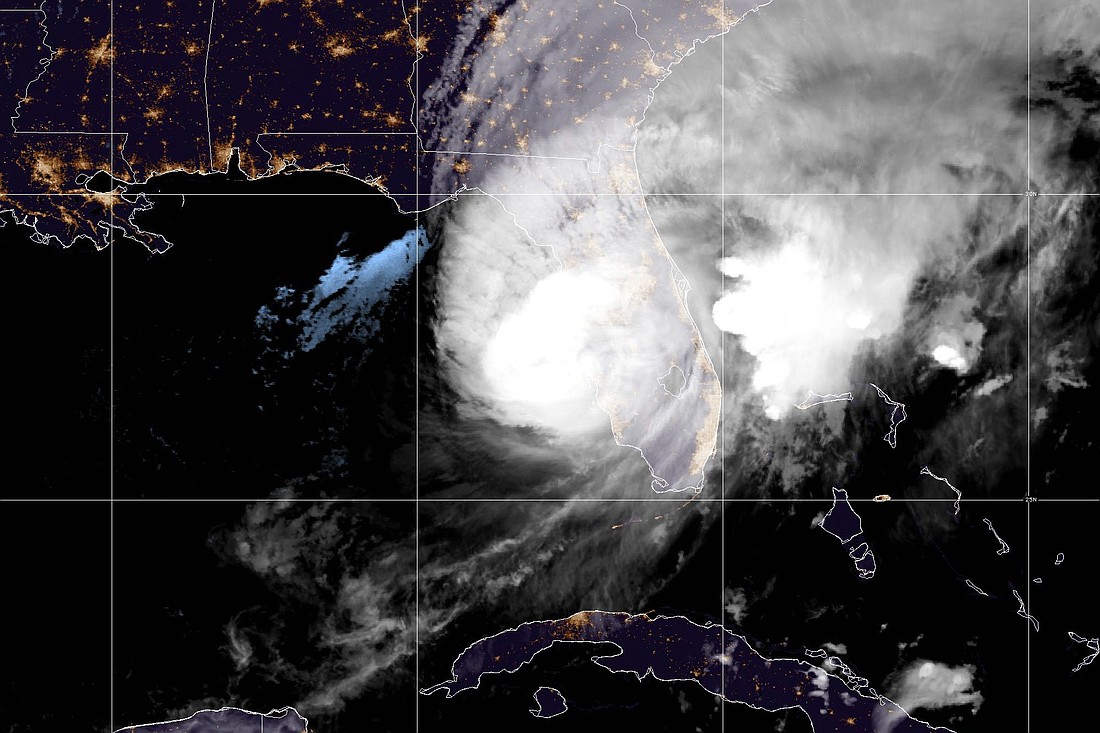
“I am a bit worried about late August and early September as being sort of an opportunity for a hurricane in the Gulf, and these are the kinds that can spin up very quickly, and it sort of reminds me a little bit of what Milton really looked like because we had a lot of sheer north of the hurricane,” he said.
Bunting emphasized that even if storms do not directly impact Sarasota, there is still the potential for major damage.
He noted 3.5 to 5.5 feet of storm surge from Hurricane Idalia in 2023, as well as 6.7 feet of storm surge from Hurricane Helene.
"We don't need a direct hit by a hurricane to have major impacts here. That is the takeaway,” he said.