
- July 22, 2026

-
-
Loading
Loading
A proposal to shut down the USF Sarasota-Manatee campus and transfer its buildings and grounds to New College of Florida is sold as “strategic alignment.” The central question is simple: Does the math work? If not, taxpayers are being asked to underwrite a bad deal.
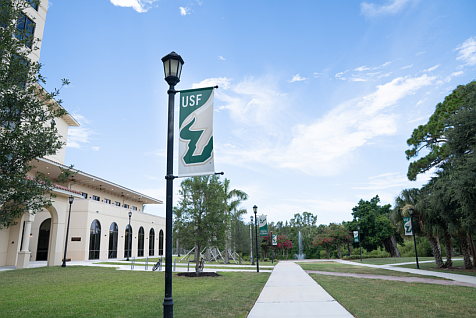
USFSM is a thriving institution. It serves roughly 2,000 students, many of them working adults, transfer students and future nurses and teachers who rely on access close to home. It has built programs aligned with workforce needs and operates on a sound financial foundation.
Consider USFSM’s student housing and student center building, often cited in discussions of NCF’s future. It was financed through bonds backed by strong fundamentals: a high credit rating, dedicated student fee contributions and reliable revenue to support repayment. USF’s AA bond rating secured favorable interest rates, while students provided approximately $11 million upfront and contribute roughly $200,000 in annual debt service through fees.
NCF cannot replicate that model. It has a smaller student population, fewer fee-based revenue streams and a weaker financial profile. Any attempt to assume or refinance similar debt would come at higher interest rates, higher costs and risk, and would require bondholder approval. That leaves two options: demonstrate revenue it does not have or rely on additional state subsidies.
NCF is already one of the most heavily subsidized institutions in Florida’s university system. Recent analyses show it costs roughly $85,000 per student per year to operate — compared to the state average of $22,000 — and close to $500,000 per degree, compared to about $72,000 at the University of South Florida. Tuition revenue covers only a small share of those costs. The institution relies heavily on state funding and on widespread use of state-supported scholarships and incentives to attract students.
Despite that level of investment, outcomes lag. Retention rates have fallen to roughly 65%, among the lowest in the state system, with graduation outcomes similarly trailing. Taxpayers are already paying more — and getting less. Shutting down a functioning campus to expand that model does not solve a problem; it compounds it.
New College has lost its place in the Fiske Guide to Colleges — one of the nation’s most respected — and dropped 59 spots in national rankings.
Supporters argue that NCF needs room to grow. But growth is not an end in itself, especially when the underlying model is high-cost and underperforming.
Last year, New College sought expansion by attempting to absorb another high-performing institution, the 66-acre campus of The Ringling Museum of Art and now again, USF Sarasota-Manatee rather than demonstrating it can succeed within its own footprint.
If NCF cannot independently support USFSM’s facilities, that alone is not a reason to proceed — it is a reason to pause.
Public higher education works best when investments are grounded in both mission and math. USF Sarasota-Manatee meets that standard. It serves a clear regional purpose delivering workforce-ready graduates for local employers, and it operates within a sustainable structure. Shutting it down to expand a smaller, less secure institution is not strategic. It is less efficient and more costly, and taxpayers will bear that risk.
At a time when Florida leaders are calling for DOGE-style scrutiny of spending, this proposal asks taxpayers to support a move that is less efficient, more costly and financially uncertain. If this is what “efficiency” looks like, public officials owe taxpayers an explanation.
This debate should be about accountability: Do the numbers add up? Can the acquiring institution support the debt without state subsidy? Will this strengthen — or weaken — higher education in our region? The answers raise more concerns than confidence.
Florida has long prided itself on responsible fiscal management. Public higher education depends on taxpayer support, but this level of subsidy — to expand an already high-cost, low-performing model — is neither justified nor responsible.
Florida taxpayers should not be asked to spend more to get less.
Nancy Parrish is the former chair of The Ringling Museum of Art and founder of the Citizens to Protect The Ringling.