- April 8, 2026

-
-
Loading
Loading
There was a lot of dirt being moved around at Sarasota’s arts venues in 2025. The Van Wezel reopened on Jan. 1 after being closed for nearly three months by flooding from Hurricane Milton.
Electrical systems were replaced and interiors were refurbished in time for the new year. However, damage to the Van Wezel’s grounds couldn’t be fixed quite as quickly, leading to the cancellation of the summer Friday Fest concert series.
Repairs and renovations also continued at The Ringling’s Ca’ d’Zan, the Italianate mansion that circus magnate John Ringling built for himself on Sarasota Bay in 1926. Storm surge also damaged electrical systems there. As of yearend, public tours were restricted to the first floor of the mansion.
As the Trump administration cut federal funding for the arts, the state of Florida restored state arts grants for fiscal 2026 that had been vetoed by Gov. Ron DeSantis the previous year in an unprecedented move.
Some arts advocates felt the Florida Department of Transportation’s directive to municipalities to remove colorful paint from sidewalks and crosswalks was motivated more by politics than concerns about public safety.
Dozens of murals on a stretch of Pineapple Avenue in Historic Burns Court dubbed “Avenue of Art” disappeared virtually overnight in late August. The change called into question the future of the annual Sarasota Chalk Festival.
Efforts to build a new Sarasota Performing Arts Center to replace the aging Van Wezel got bogged down by concerns about what share of costs will be borne by taxpayers. But the plan isn’t dead by any means.
Farther away from the water, Florida Studio Theatre broke ground on its new McGillicuddy Arts Plaza, a $57 million complex that will include a modern mainstage theater, two new cabarets, three floors of parking and on-site artist housing.
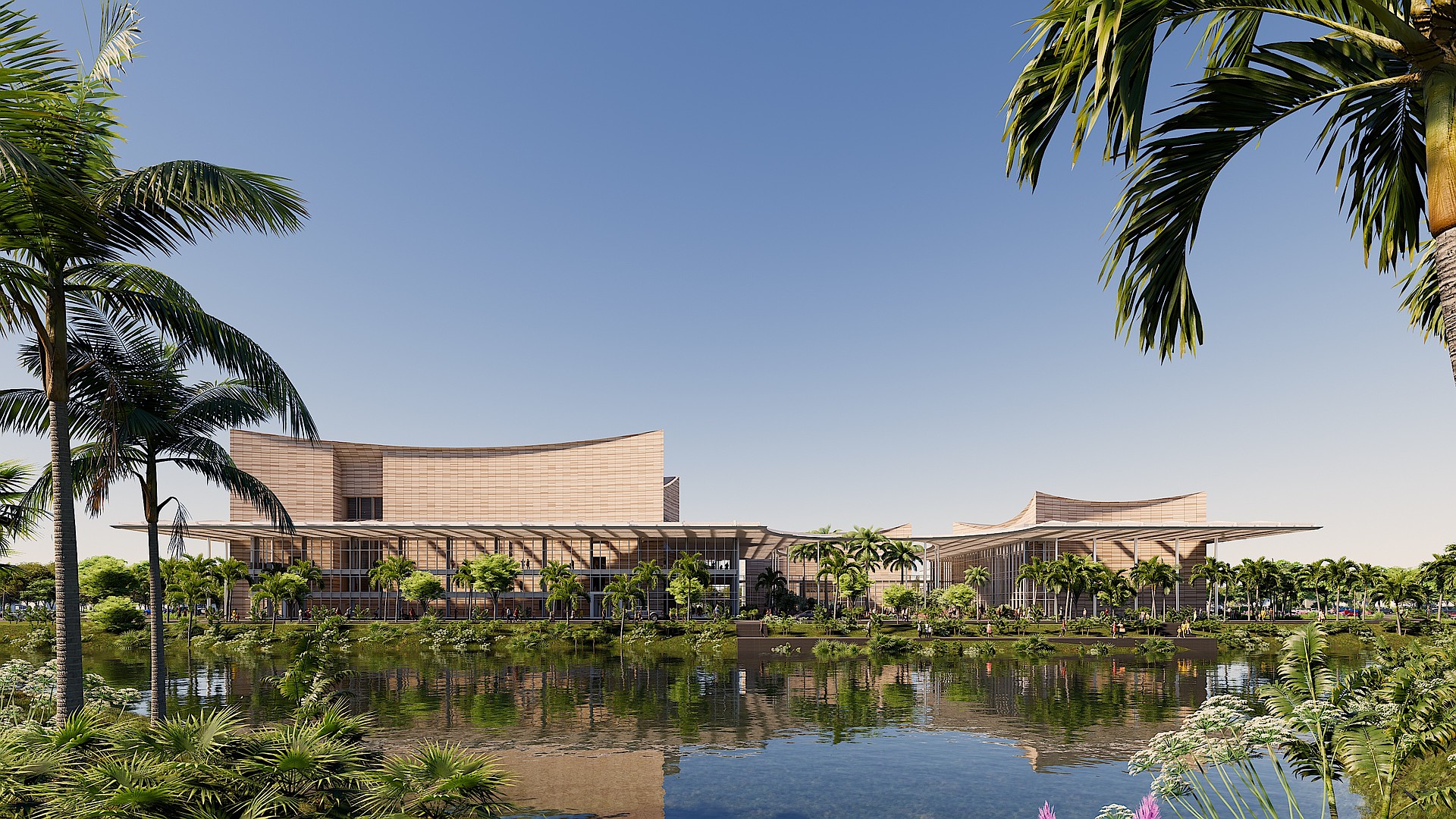
The Sarasota Orchestra unveiled schematics in November for the new Music Center that it’s building near the intersection of Fruitville Road and Interstate 75. The state-of-the-art complex will cost more than $400 million, of which donors have already pledged $75 million.
As the sands shifted both literally and figuratively, the circle of life continued to turn as arts leaders died or retired and others arrived on the scene. On Valentine’s Day, theater maven Howard Millman died at age 93.
Sarasota Opera Maestro Victor DeRenzi announced he will be stepping down in May after 44 years as artistic director.
Sarasota Jewish Theatre Artistic Director Carole Kleinberg is also leaving at the end of the season.
Giancarlo Guerrero, the new music director of the Sarasota Orchestra, officially took up the baton in October, with the promise of leading the orchestra into a new era as plans for a new Music Center move ahead.
It’s often said that “no news is good news.” That was certainly true in a hurricane-free year. Maybe the gods are still smiling on Sarasota after all.
When the Van Wezel Performing Arts Hall reopened for business on Jan. 1 after a closure of nearly three months due to hurricane damages, everything looked ship-shape inside. Most of the $10 million damage from flooding occurred in the hall's electrical systems, kitchen and orchestra pit.
What was new was a polished concrete floor in a shade described as "amethyst" that replaced carpeting in the lobby. To the casual theatergoer, it wasn't a noticeable change.
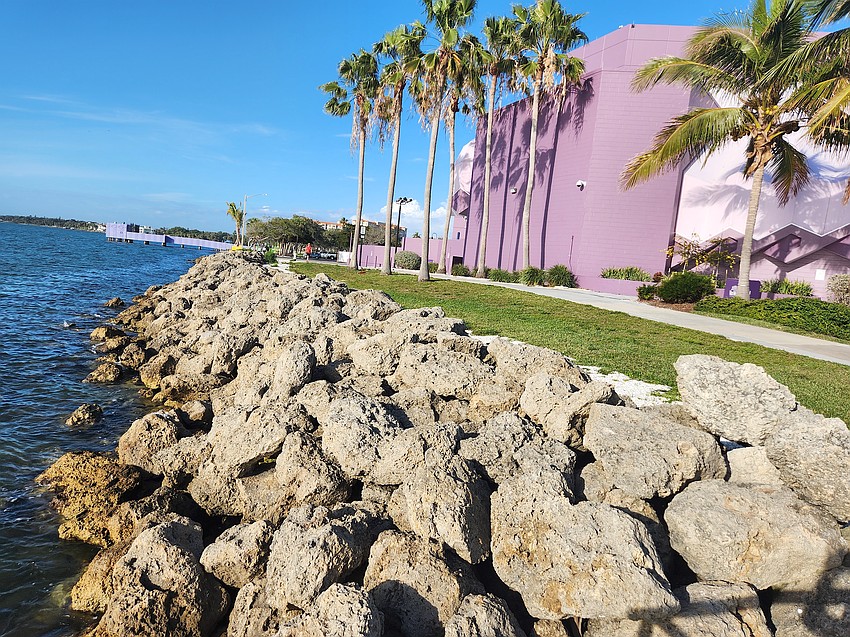
The speedy cleanup of the city-owned Van Wezel took place under the supervision of Van Wezel Executive Director Mary Bensel, who has been in her job since December 2007. It wouldn't have been possible without the tireless efforts of both city employees and contractors who literally worked 24/7 between Oct. 10 and Dec. 31.
During the summer, the Van Wezel Purple Ribbon Committee completed a two-year study on the hall's future and submitted it to the city commission. The report's bottom line: To keep the Van Wezel operating at peak levels until a new performing arts center is completed. How that plays out depends on politics and the weather.
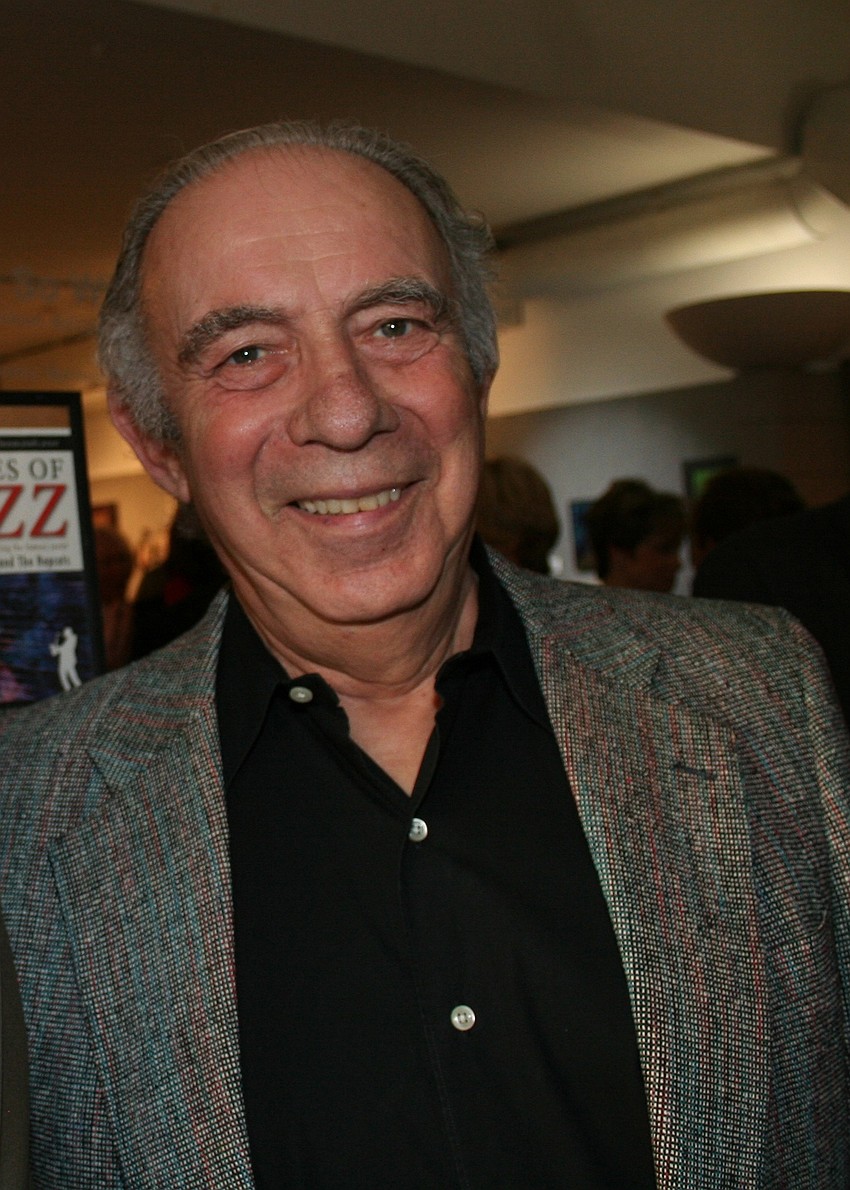
It may sound corny, but to those who loved Howard Millman, it seemed fitting that Sarasota's theater mover-and-shaker left Earth on Feb. 14, Valentine's Day. Millman, who is credited with rescuing the Asolo Repertory Theatre from the brink of bankruptcy, found late-in-life love with his leading lady Carolyn Michel, whom he married and spent more than 25 years with.
A native of Brooklyn, New York, Millman attended Hartwick College in Oneonta, New York, and served in the U.S. Army as both a soldier and a civilian. He first came to Sarasota's Asolo Rep in 1968 as managing director and stayed until 1980.
Millman returned to Asolo Rep as producing artistic director in 1995, when it was facing financial ruin. He won the support of key donors in the community and left the regional theater company with a surplus of $800,000 and a healthy subscription base when he retired in 2006.
In addition to saving Asolo Rep, Millman is credited with inspiring Nate Jacobs to start Westcoast Black Theatre Troupe, an African-American theater company that celebrated its 25th year in 2024, and former Asolo Rep Education Director Carole Kleinberg to revive the Sarasota Jewish Theatre in 2021.
It took the Sarasota Ballet five years to stage Sir Frederick Ashton’s version of “Romeo and Juliet,” but don’t blame the ballet; COVID-19 led to the cancellation of the ballet in 2020.
Five years later, the epic production was staged with great fanfare and at the Van Wezel Performing Arts Hall. One of the stars was Sarasota Ballet principal dancer Luke Schaufuss, whose father, Danish dancer and choreographer Pete Schaufuss, inherited the rights to Ashton's production of "Romeo and Juliet."
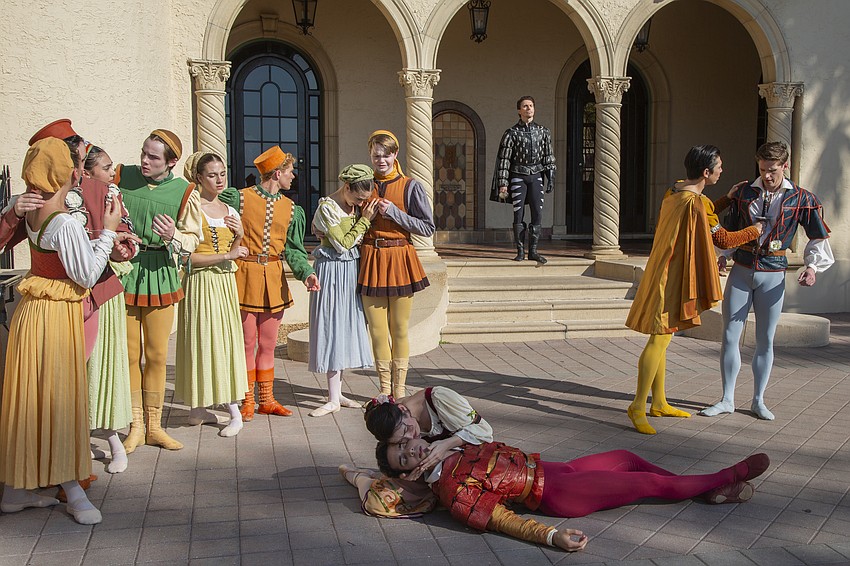
Schaufuss is a third-generation ballet dancer; his grandparents Mona Vangsaae and Frank Schaufuss, were both principal dancers at the Royal Danish Ballet. The sets and costumes for the Sarasota Ballet premiere came from the Royal Danish Ballet’s revival of “Romeo and Juliet” in the 1990s.
Audiences didn’t know it at the time, but “Romeo and Juliet” would be a swan song for Sarasota Ballet dancers Macarena and Maximiliano Gimenez, who left the company at the end of the season, and Daniel Pratt, who retired. “Maca” Gimenez left to join the Miami City Ballet and was followed by her husband.
The departure of the “Romeo and Juliet” stars, as well as Sarasota Ballet principal dancer Jennifer Hackbarth, who returned to her hometown of Milwaukee, is a reminder the dancers are like athletes. They leave, retire or get injured.
No dream team lasts forever. But the memory of Sarasota Ballet’s “Romeo and Juliet” will last a lifetime for those lucky enough to have seen it.
When you live in “Florida’s Cultural Coast” (the trademarked name for Sarasota), it’s easy to exist in a bubble and tune out bad news from the rest of the world. Occasionally, hurricanes and politics can impinge on our Gulf Coast “LaLa Land,” but most of the time you can stay chill in our arts oasis.
That zen attitude got a little harder to maintain in 2025 with all the sturm und drang emanating from 1400 Pennsylvania Ave. and its environs.
Immediately after being sworn in office for his second term, President Donald Trump began remaking the White House, the Kennedy Center for the Performing Arts and other buildings, institutions and agencies.
While some arts patrons may agree that government-mandated DEI initiatives had strayed too far from merit-based best practices, few public TV viewers and public radio listeners were sorry to see the assault on federal government funding for arts and public media.
Lest there was any doubt about what was happening in Washington, all one had to do was listen to Debra Rutter, the veteran arts administrator who was fired as head of the Kennedy Center (since renamed the Trump-Kennedy Center) in February.
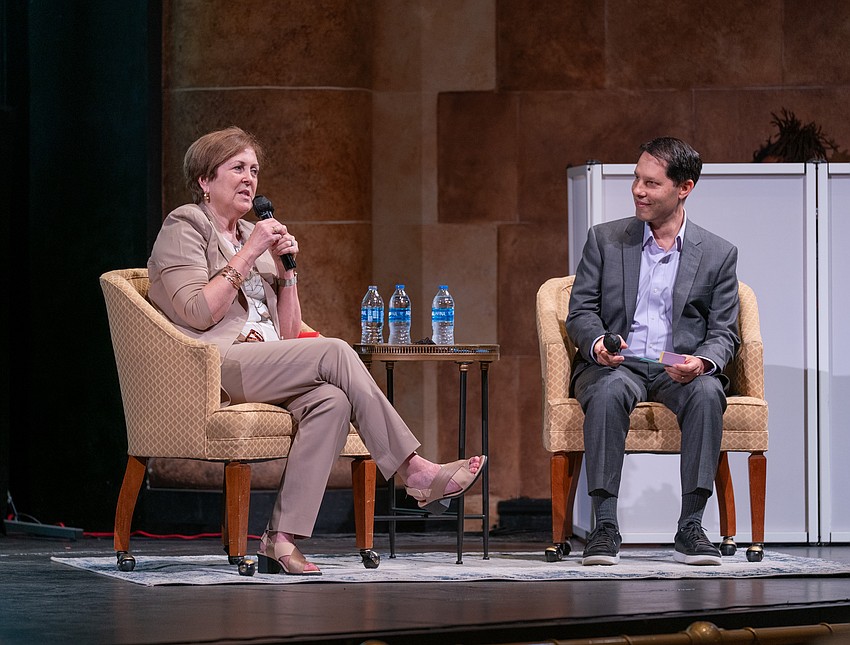
Rutter came to Sarasota to participate in an arts summit held May 21 by the Arts and Cultural Alliance of Sarasota County that also included presentations by local arts leaders.
In her speech and afterward in a chat with Arts and Cultural Alliance CEO Brian Hersh, Rutter praised Sarasota’s cultural scene and reminded the audience that “resilience is what’s needed in the land of Ringling.”
She ended her talk with a quote from President John F. Kennedy: “We must never forget that art is not a form of propaganda; it is a form of truth.”
People can get dazed by the heat during a Florida summer. Maybe that’s why there was scant local opposition when the city of Sarasota covered up colorful crosswalks and sidewalk art in late August after receiving a directive from the Florida Department of Transportation.
City officials defended their decision to remove dozens of murals in Historic Burns Court, the home of the annual Sarasota Chalk Festival, by saying Sarasota could risk losing $67 million if it didn't comply with the state's order to remove nonstandard roadway and sidewalk markings.
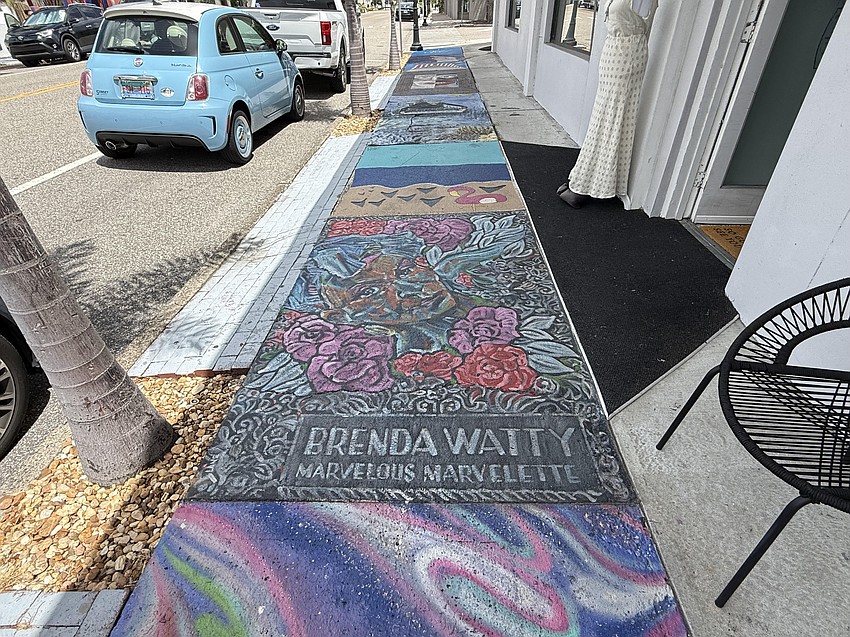
By the time community activists rallied to protect the colorful sidewalk paintings along sections of Pineapple Avenue dubbed “Avenue of Art,” it was too late. They were gone.
There are posts circulating on social media soliciting support for lawsuits seeking financial redress for artists whose murals were destroyed. However, such court cases are a financial risk in Florida, where parties who sue the government can be liable for all court costs if they lose.
Some Florida cities resisted the FDOT order by filing administrative appeals or simply not removing art and rainbow-colored sidewalks right away. Among them were Fort Lauderdale, Miami Beach, Orlando, Key West, St. Petersburg and Tampa. By yearend, most efforts had failed or petered out. St. Pete has touted its workaround — installing bike racks in hues of the rainbow.
In the meantime, the future of the Sarasota Chalk Festival is in doubt.
Each year as Yom Kippur ends, Jewish arts leaders and patrons gather at a "break-fast" party in Sarasota at longtime theater critic Jay Handelman's house. This year, Carole Kleinberg had the flu and couldn't attend.
But when Observer contributor Emily Leinfuss reached out to see how Kleinberg was doing, she learned that Kleinberg was planning to announce her retirement as artistic director of the Sarasota Jewish Theatre at the end of the 2025-26 season.
"I'm 88 years old. I'm tired," Kleinberg told Leinfuss in an exclusive story for the Observer.
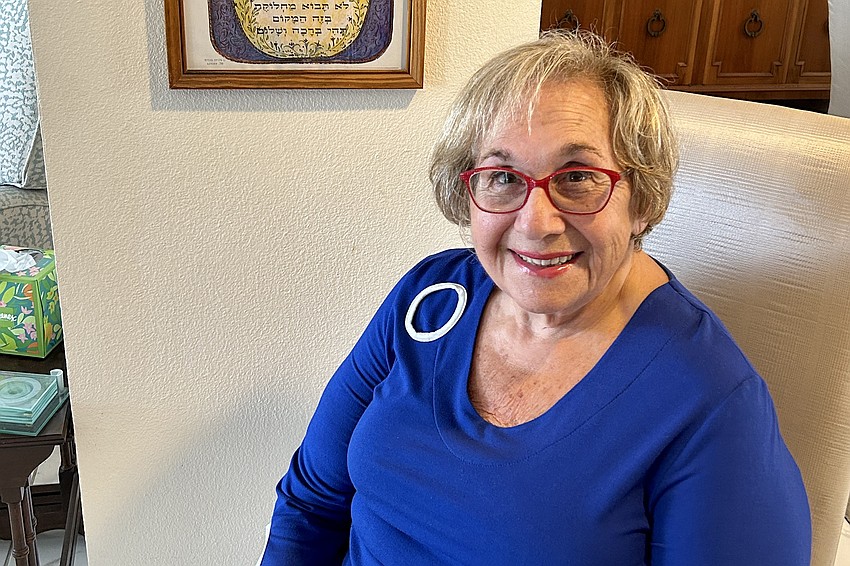
A former theater director and educator from the Chicago area, Kleinberg moved to Sarasota and served as director of education and outreach at Asolo Repertory Theatre from 1999-2006.
She was prompted to revive the Sarasota Jewish Theatre after watching the deadly white supremacist rally in Charlottesville, Virginia, in 2017. It took some time but with the support of former Asolo Rep Artistic Director Howard Millman, Kleinberg's dream became a reality.
After an initial hiccup due to COVID-19, SJT has packed the house each season at The Sarasota Players' space in The Crossings at Siesta Key mall for its hard-hitting, Jewish-themed productions.
No successor to Kleinberg has been named, but the board of directors is on the hunt.
A new music director needs a new music center, right? That seemed to be the thinking of some major donors in Sarasota, who have contributed $75 million toward the Sarasota Orchestra's new Music Center.
The Music Center at the intersection of Fruitville Road and Interstate 75 was in the works long before the Sarasota Orchestra hired Grammy Award-wining Nashville Symphony Music Director Giancarlo Guerrero.
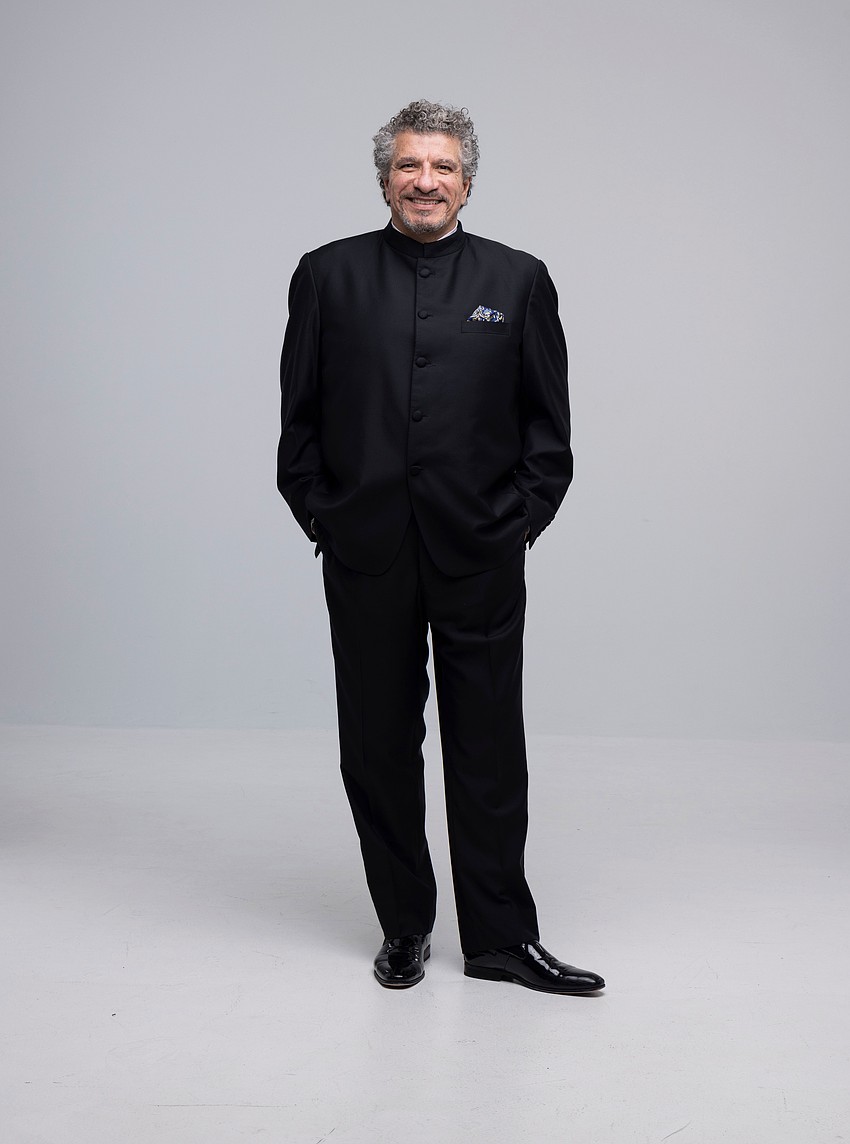
But his official arrival as music director at the start of the 2025-26 season coincided with a flurry of funding and architectural announcements. (Guerrero was music director designate during the 2024-25 season.)
Although a formal capital campaign has yet to start, the Sarasota Orchestra has raised $60 million from one anonymous donor, $10 million from Jack and Priscilla Schlegel and $5 million from Tom and Sherry Koski, or a total of $75 million toward the new Music Center.
Currently estimated to cost more than $400 million, the Music Center will be the Gulf Coast's first venue designed specifically for acoustic performances.
Situated on a 32-acre campus, the Music Center will consist of a concert hall with 1,800 seats, a recital hall with 700 seats and an Education Center to house the youth orchestras. The orchestra released schematics for the complex in early November.
In an interview with the Observer around the same time, Guerrero said, “Everything has to do with new Music Center. Everyone is preparing for the moment when the orchestra moves into its new home. Overnight the orchestra will become a new institution and it will change Sarasota.”
Enough said.
In Sarasota's vibrant cultural scene, the arts leader with the longest tenure is Florida Studio Theatre CEO Richard Hopkins, who joined FST as artistic director in 1980. Beginning with the conversion of the historic former home of the Sarasota Women's Club into the Keating Theatre, Hopkins has transformed downtown and build a bona fide entertainment complex.
Today, FST has five performance spaces — the Keating and Gompertz theaters, the Goldstein and Court cabarets and the experimental Bowne's Lab — which house performances of mainstage plays, cabarets, children's theater, improv and edgy, Stage III works.
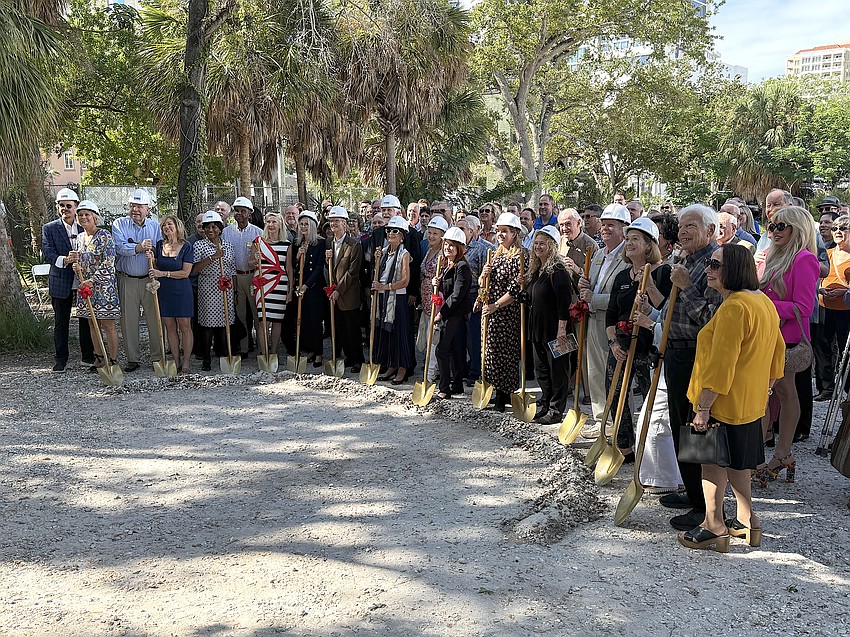
But Hopkins' ambitions, audiences and staff have outgrown FST's current facilities. Luckily for him and his wife, FST Managing Director Rebecca Hopkins, as well as Sarasota arts patrons, his expansionary impulses are being supported by generous donors.
On Oct. 29, FST broke ground on the new McGillicuddy Arts Plaza, an eight-story mixed-use project currently estimated to cost $57 million. The complex will house another mainstage theater, two more cabaret venues and a 125-space parking facility beneath affordable apartments to house touring performers and performing arts organization employees.
The McGillicuddy Arts Plaza is named in honor of Dennis and Graci McGillicuddy, who for four decades have been involved in guiding FST’s growth.
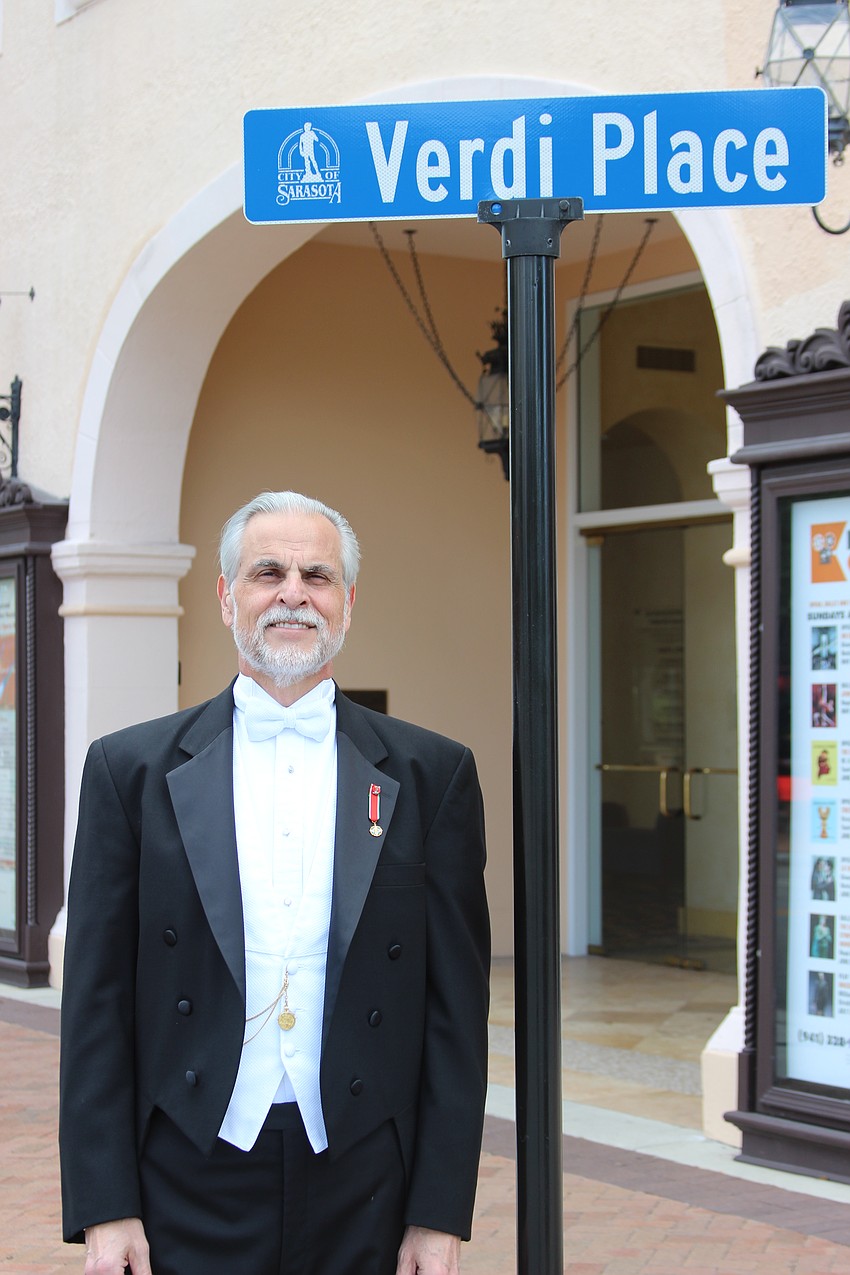
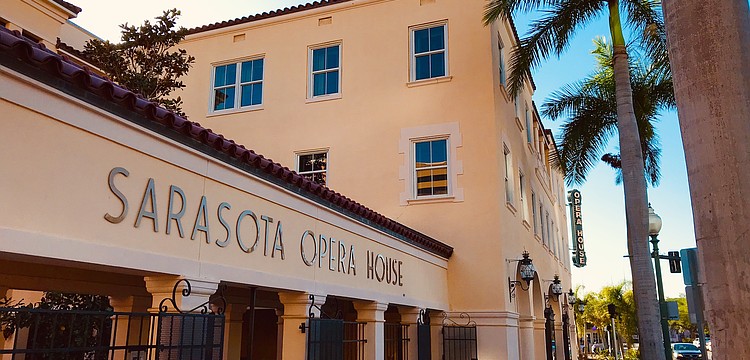
It was a thunderbolt that came from out of the blue in early December when the Sarasota Opera sent out a news release announcing that Victor DeRenzi, an artistic director and conductor both loved and feared, would be stepping down after 44 years at the end of the 2025-26 season.
Those who assumed that maestro DeRenzi, who built Sarasota Opera into a powerhouse by becoming the only opera company in the world to perform all of Verdi's 27 operas, was retiring were mistaken. The maestro hasn't disclosed his plans, but we got the word: "Don't call it retirement."
Even though he is leaving, the good news for opera fans is that DeRenzi will conduct all four operas in the Sarasota Opera Winter Festival — "La bohème," "The Merry Widow," "Il trovatore" and "Susannah" — and will be on hand for the 100th anniversary celebration of the Sarasota Opera House on April 11.
Continuity in the leadership of the Opera was ensured by adding artistic director to the role of Richard Russell, who has served as general director since 2021 and who was executive director from 2012-21. It is not known who will take DeRenzi's place on the podium since Russell is not a conductor.