- July 8, 2026

-
-
Loading
Loading
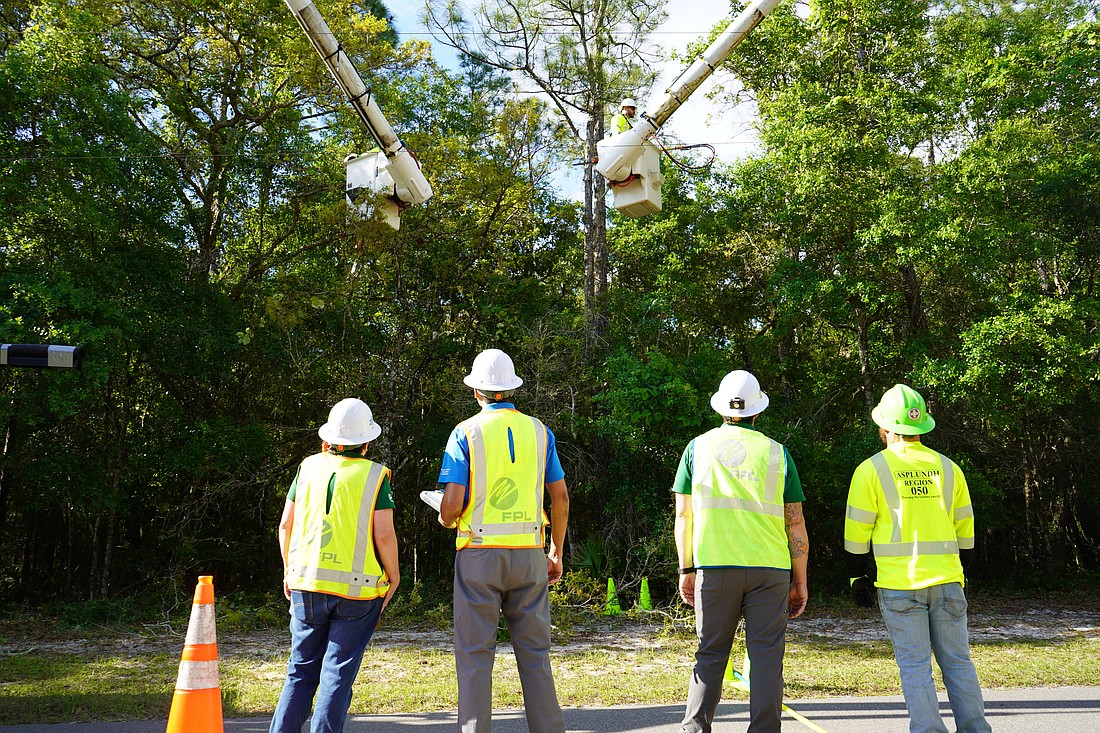
Miles from the gulf, Lakewood Ranch can still be threatened by a hurricane or tropical storm.
There’s the hours and inches of driving rain that can pile up where you would least expect it.
There’s the wind that can destroy pool screens, trailer homes, roof shingles and years of meticulous landscaping. Not to mention the angst-inducing sound of it when it exceeds interstate-highway speeds.
Then, there’s electricity.
Or lack of it, and the no-longer-connected lights, air conditioning, refrigeration, hot water, microwave ovens, TV, phone chargers . . . you name it. There are not a lot of alternatives.
Florida’s housing sector consumes more than half of the electricity in the state, with nine in 10 homes using it for heat and virtually everyone using it for air conditioning – the highest ratio in the country, according to the Federal Energy Information Administration. Nearly 90% of the state relies on electricity for water heating, again, the highest percentage in the country.
Florida is also second to California in the number of registered electric cars and trucks, so add “getting around” to the no-go list if there's a Tesla, Mustang Mach-E or similar in your garage (even if you could get the garage door open).
There’s not a lot the folks at Juno Beach-based Florida Power and Light can do about wind and rain, but spokesman Kamrel Eppinger said his company spends 12 months a year trying to head off power outages.
Losing power in Florida is a big deal for business, too. The Energy Information Administration says the state’s commercial sector accounts for almost 40% of state consumption, and the industrial sector uses most of the rest, which can mean lost revenue and wages when power is out. Florida imports about 3% of its electricity from other states, but where it’s generated doesn’t matter if it can't be delivered.
While hurricane season, June 1 to Nov. 30, puts preparation front and center, the effort by FPL engineers and technicians is ongoing.
"This is a year-round focus for us, so we don't just wait until hurricane season starts to start preparing. It's been like this at least for the past two decades,’’ Eppinger said.
That preparation is on display annually in a nearly-all-hands, weeklong emergency drill in May, testing procedures, brushing up on skills and shifting people from “blue-sky jobs” into critical emergency-response roles.
“This is an opportunity for thousands of employees to essentially test their skills and their response to a simulated hurricane,’’ Eppinger said.
Add to that, technology that didn’t exist even a few years ago alongside hard-hat basics such as utility poles, wires and chain saws and you have a pretty good picture of the breath of the effort to literally keep the lights on.
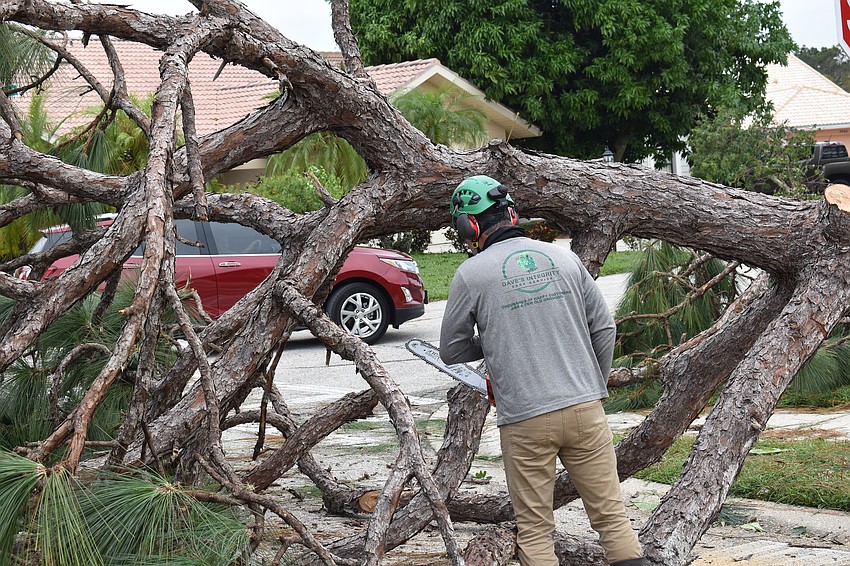
Trees and other vegetation are the top reason for power failures during windy weather, including hurricanes. Snapped-off overhanging branches can take down wires, damage transmission equipment or worse, so nearly 600 miles of power lines were recently cleared of potential hazards in Manatee County. Along with that work, power lines that connect to such critical sites as hospitals, emergency call centers, Manatee County Sheriff’s Office locations, fire stations, and water plants have been beefed-up, part of an FPL initiative that thus far has upgraded or undergrounded 85% of such powerlines in its system.
More than 14,000 poles were inspected in Manatee County, according to a FPL news release. Though not all common wooden poles are up for upgrades to concrete, steel or a stronger form of wood, Eppinger said repair crews after a storm have a much easier time repairing downed lines if the poles themselves held up. The wooden poles can often be located in areas inaccessible to lift trucks, like in a back yard, so a lineman would have to climb them in old-school, pole-climbing boots that dig into the softer wood.
Undergrounding is a successful, though expensive, alternative that FPL has used across 2,000 miles of electrical lines in 43 counties.
“During the 2024 hurricane season, with hurricanes Debby, Milton, and Helene combined, we saw that underground lines performed up to 15 times better than their overhead counterparts,’’ he said, adding that the company looks at data regularly to inform the best places to retrofit underground cables.
New technology, too, is part of that year-round preparation.
Devices can detect outages and either report the existence of a problem or “self-heal’’ by rerouting electricity. More of those have been added to the grid in Manatee County, FPL says.
“Decades ago there was a point in time where we didn't know our customers were out unless they called us, but now thanks to smart-grid technology, we know when our customers are without power, so now there's no need to call us,’’ he said.
With such a focus on preparation across a wide swath of disciplines, Eppinger said, there’s always an X-factor. So, flexibility is part of the preparation plan, he said.
“When you're dealing with hurricanes, as you know, these are unpredictable forces of nature, and every storm is different, so there's essentially lessons to be learned from every storm.’'