- August 5, 2026

-
-
Loading
Loading
After Director of Financial Administration Kelly Strickland dropped the news on the Sarasota City Commission that the city’s financial picture going into next fiscal year is more bleak than expected, Vice Mayor Kathy Kelley Ohlrich asked her, “Why did you feel compelled to bring this information to us now?”
“We are going into the fiscal year 2027 budget process, and I feel that you need to know,” Strickland said. “You need to know where we ended up, how we're doing this, … so that you can see where we're at.”

Where they are at, Strickland said during the commission’s April 21 meeting, is $4.3 million less than expected in the general fund unassigned fund balance, essentially the city’s rainy day fund. At $13.7 million, that is far less than the Government Finance Officers Association recommendation of a fund balance between 17% and 35% of the city’s annual operating budget, and significantly less than the $35.5 million in fiscal year 2022. Going into the fiscal year 2027 budget cycle, the fund balance is at 10.8% of spending, far below best practices and the city’s own policy.
The fund balance is intended to supply at least three months’ operating revenue in the event of emergency.
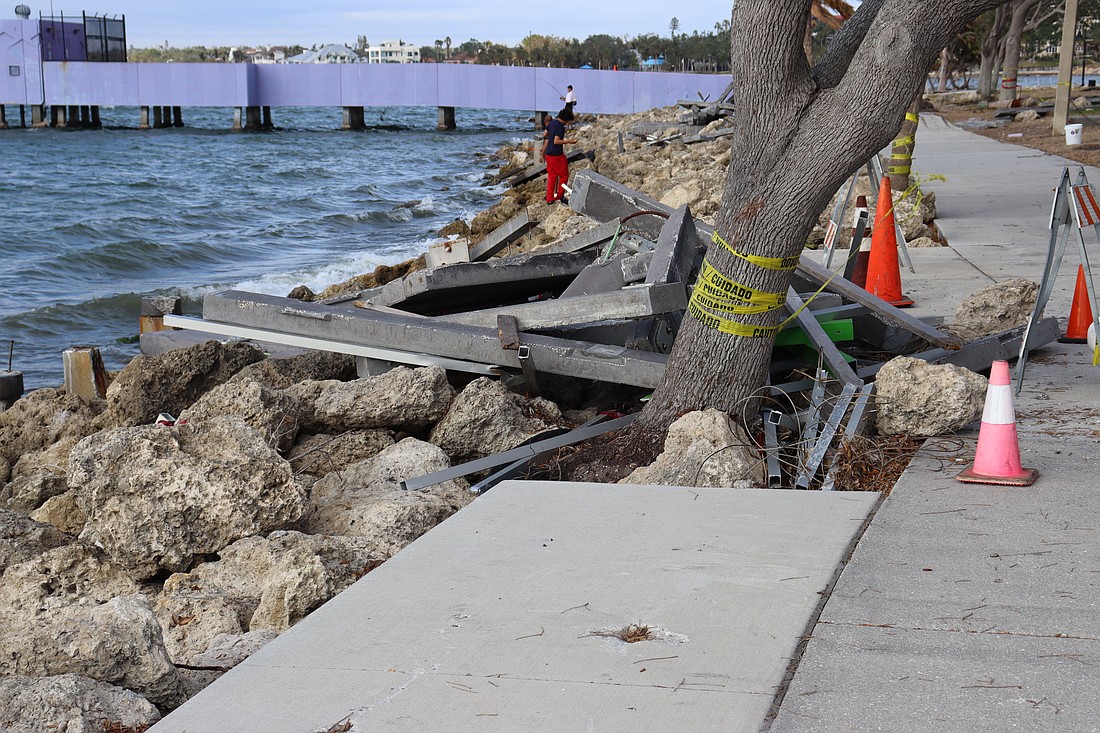
To blame are escalating hurricane recovery expenses on tens of millions — including cleanup and debris removal — with no guarantee of FEMA reimbursement. That prompted then-Interim City Manager Dave Bullock to recommend a property tax millage rate increase from 3.0000 to 3.2730 mills as part of a three-year plan to replenish the fund balance.
Problem is, Strickland told commissioners, last fiscal year's final numbers revealed the unassigned fund balance at $4.4 million less than expected. Not including the $7 million advance from FEMA for cleanup, the city has spent $14,913,308 to date with some $17.4 million waterfront park and other infrastructure repair and reslience projects remaining.
“That does create additional pressure on the reserve restoration plan,” she said.
The 0.2730 millage increase for the current fiscal year was intended kickstart a plan to restore the unassigned fund balance to 20% of the total annual expenditures within three years. The actual numbers, barring another millage rate increase next year, will delay that restoration.
It also means city departments that are not self-sustaining — enterprise funds such as water, sanitation, Van Wezel, Bobby Jones Golf Club and others — may be instructed to further tighten their belts this budget season, as the city still considers cost-of-living-allowance (COLA) increases in salary.
“Departments were instructed to maintain current service levels and reduce operating budget line items excluding personnel to help create capacity for potential COLA increases,” Strickland told commissioners. “The departments were also directed to postpone capital purchases where possible and make use of available equipment replacement funds before requesting new capital dollars.
“Finally, the departments were advised not to increase staffing as fiscal year 2027 is not a year in which the city plans to expand services.”
To accomplish that, Strickland said department heads were provided with a worksheet and their operating budgets minus personnel costs along with a directive to shave 2% to 3% to offset salary increases.
“I would say that the departments tried their best,” Strickland said. “With the cost of every product increasing, it was very difficult, but every department did very well in trying to cut their budgets in order to accommodate a potential increase.”
For next fiscal year, the city expects a 4% escalation in property tax value assessments, which would generate an additional $2.2 million in general fund revenue over the current budget year.