- March 10, 2026

-
-
Loading
Loading
Nearly everyone of a certain age knows Martin Luther King Jr.’s historic “I Have a Dream” speech, which he delivered in front of more than 200,000 people in August 1963 on the Mall in Washington, D.C. But how about gospel singer Mahalia Jackson’s stirring rendition of “How I Got Over,” which preceded Dr. King’s speech? Not so much.
Anyone in search of a rollicking history of gospel that raises the rafters need look no further than Westcoast Black Theatre Troupe. Its latest musical revue gets its name from the song Jackson performed during the March on Washington for Jobs and Freedom.
Written by Clara Ward in 1951, “How I Got Over” looks back in wonder at how the singer managed to overcome a heap of obstacles. All praise goes to God.
I’m gonna thank Him ‘cause He never left me (oh yes)
And I wanna thank Him for ol’ time religion (oh yes)
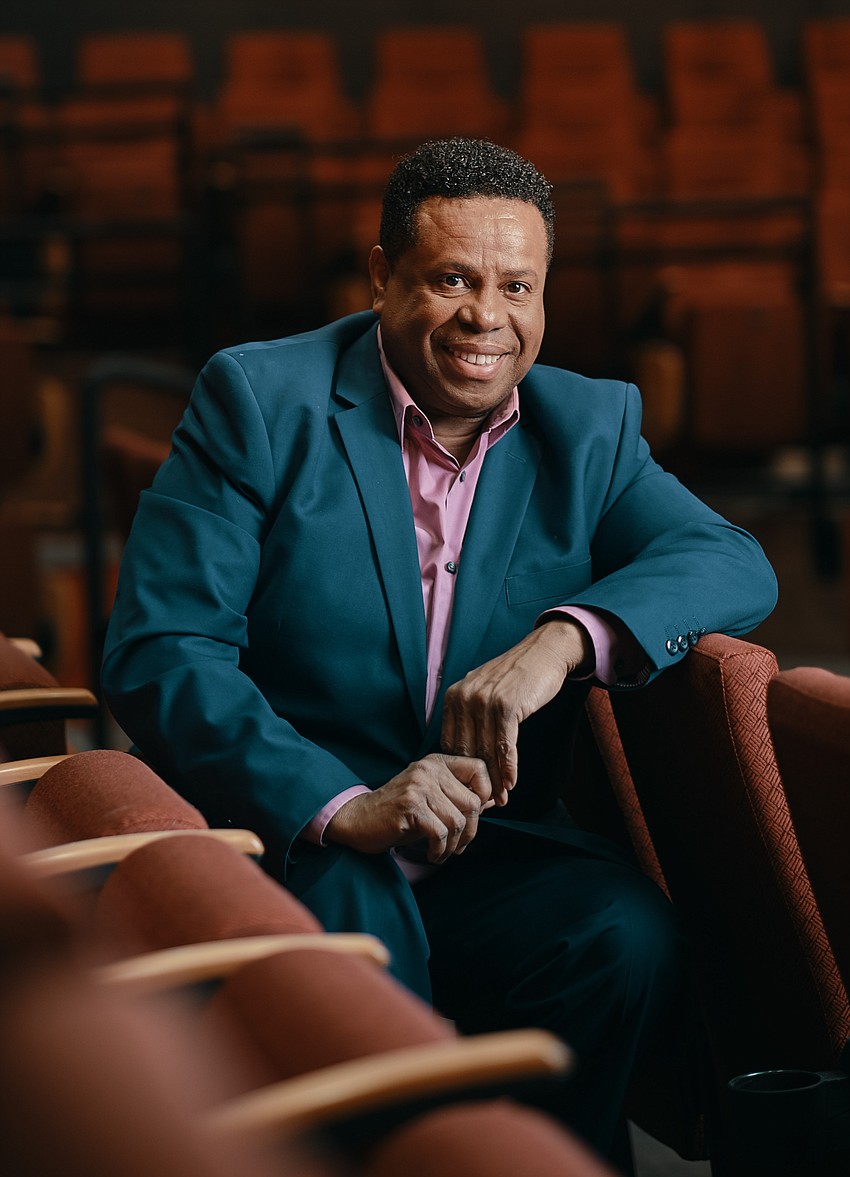
There’s plenty of ol’ time religion running through the more than 40 songs of WBTT’s gospel revue,“How I Got Over.” Before he was a performer, director and founder of a theater devoted to the African-American experience, Jacobs was a teacher. He still’s trying to educate in “How I Got Over,” which he created and directs.
As narrator Brian L. Boyd tells the 400-year-old story of gospel music, with its call-and-response chants and tribal rhythms carried from Africa, one is aware that she’s getting a history lesson. But it’s an exhilarating one.
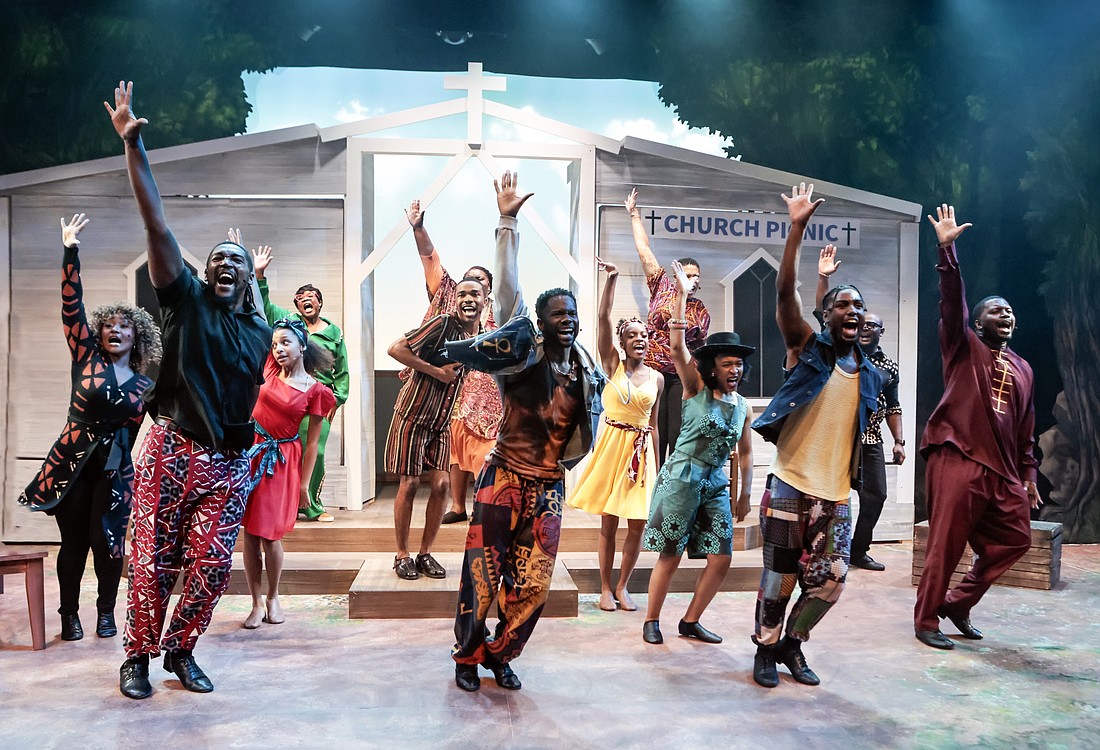
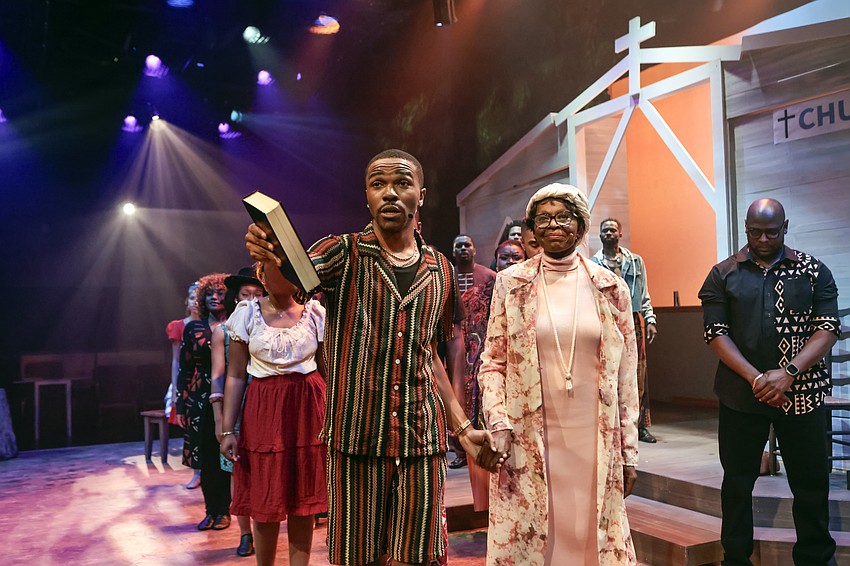
“How I Got Over” pays tribute to the men and women who wrote and first performed the songs in the show with short bios and photographs projected on the white wood walls of the church that forms the backdrop.
“How I Got Over” includes several gospel standards that are deeply woven into the fabric of American culture (“Amazing Grace,” “Swing Low Sweet Chariot,” “Down by the Riverside” and “When the Saints Go Marching In”).
As many outsiders who visit a Black church for the first time soon discover, gospel is about praise and gratitude. “How I Got Over” is full of infectious song and movement. This is the spiritual ancestor of Elvis Presley’s pelvis-swinging rock ‘n’ roll.
The gospel tradition of call and response encourages followers to clap, raise their hands in testimony, vigorously nod and even shout “Amen!” Why? To show their solidarity with the singer and their shared faith in God to set things right.
As one hears references to Biblical tales like the Great Flood and Jesus raising Lazarus from the dead, it’s impossible not to get carried along on a wave of emotion.
Nearly every one of the cast of roughly 20 members gets a solo, with strong performances by WBTT company members Raleigh Moseley II, Sheldon Rhoden, Stephanie Zandra and Maicy Powell.
Singling anyone out as special in this show feels like a crime because everyone in the cast is a star in their own right. Even when a performer is reacting to a another cast member’s solo, we see them. That’s right, Jada Carson, Jaya German and Michael Mejia-Mendez.
This cast is a community, raising each other up and supporting one another other if they fall. After Riley Aparicio-Jerro nearly slipped off a bench during one performance, the whispers, hugs and pats of encouragement she received after her near-miss were seamless and organic.
“How I Got Over” starts out in a church, where Benjamin Roberts plays a affable preacher and acts as a peacemaker between two bickering church ladies (Sieglinda Fox and Deidra Grace). Their competition to be the closest to God injects both humor and reality into what could be pious proceedings.
The backbone of “How I Got Over” is the Church Mother, played by Mzuri Moyo Aimbaye. She opens the show with “I’ve Been ‘Buked and I’ve Been Scorned” and commands the respect of the “congregation” and the audience whenever she opens her mouth. “Didn’t It Rain Children” and “Surely God Is Able” are just two of her many standouts that bring the house down.
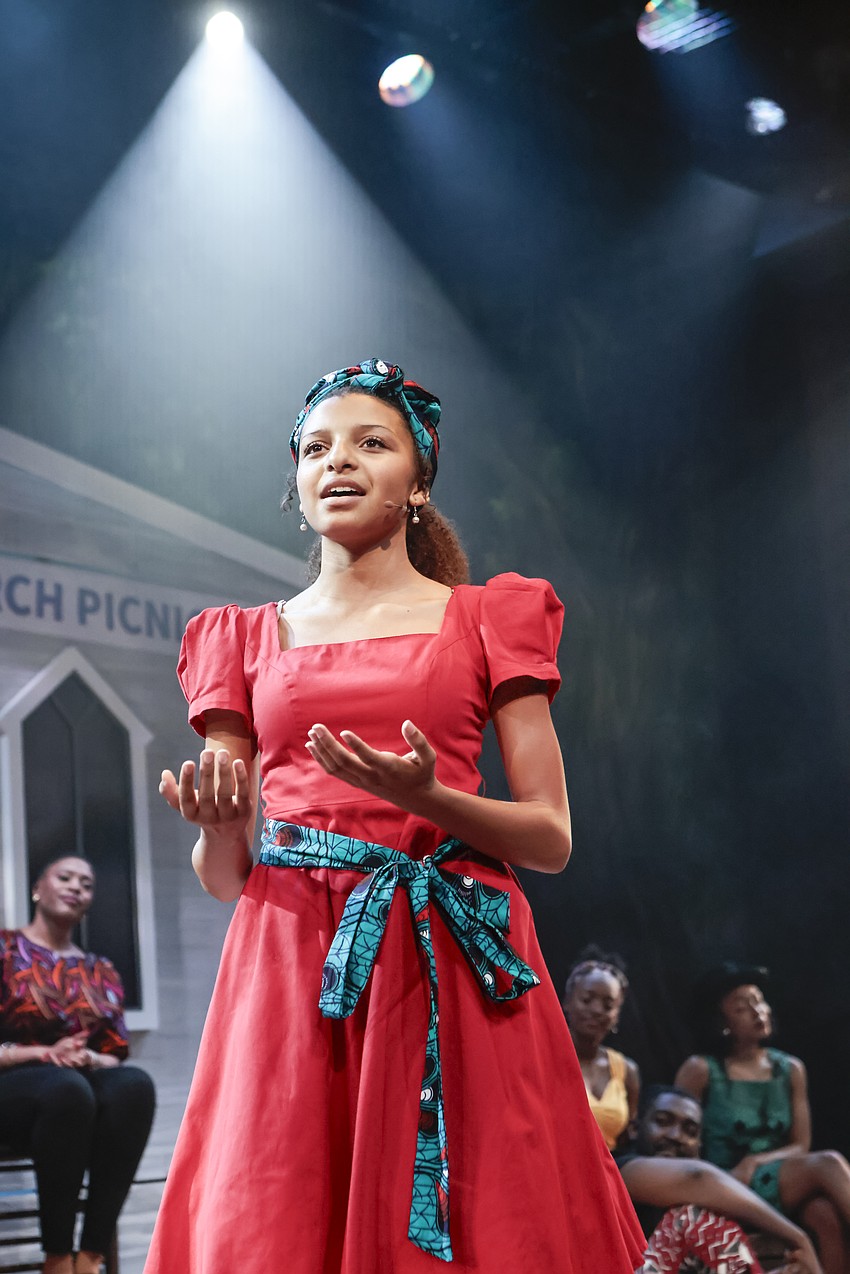
Next to the preacher, Aimbaye holds the highest position of authority within the church’s ranks. Just starting out on her spiritual and musical journey is Aparicio-Jerro, the youngest member of the troupe.
In the second act of “How I Got Over,” the cast trades their Sunday best finery for casual, funky attire. The church remains, but the action moves outside to a church picnic. The mood is convivial as fried chicken, potato salad, pies and a watermelon are brought in by cast members for the potluck affair.
In a recording introducing the show and thanking donors, Jacobs reveals that his father and uncles had a gospel group in Tampa when he was growing up called The Jacobs Brothers. It’s the only recording you’ll hear during the show, backed by a live offstage band led by music director Matthew McKinnon.
In an interview, Jacobs said after his parents divorced, he spent summers with his father in Tampa and the school year with his grandmother and mother in Daytona Beach. Both sides of his family contributed to his musical education.
In Tampa, he was immersed in gospel as the Jacobs Brothers helped bring performers such as Shirley Caesar and Dorothy Love Coates to the now-defunct Curtis Hixon Hall, not far from where the Straz Center for the Performing Arts stands today.
His mother’s tastes ran more to popular music. “My mom wasn’t around a lot during the week because she worked as a domestic for rich people, but she taught me and my brothers about Sam Cooke and Gladys Knight,” Jacobs says.
Indeed, “Wonderful,” one of the songs featured in “How I Got Over,” was recorded in 1956 by Cooke when he was a member of the gospel group The Soul Stirrers.
As a solo artist, Cooke crossed over into the mainstream and became a major star with songs “Chain Gang,” “Twistin’ the Night Away” and the posthumous hit, “A Change Is Gonna Come.” The latter is still a call to action in the Black community today.
During the1960s, traditional gospel hymns became the soundtrack of the civil rights movement and part of mainstream folk music concerts.
In 1969 “Oh Happy Day” by the Edwin Hawkins Singers made music history when it became the first gospel song to crack Billboard’s Top 40. The upbeat ditty rose to No. 4 in the U.S. and hit No. 1 in several European countries. In “How I Got Over,” Fox’s rousing rendition gets everyone clapping their hands.
Jacobs is known for creating a production around the talents of one performer. He did it for Rhoden in “Marvin Gaye: The Prince of Soul,” which has been produced four times during WBTT’s 26-year history.
Such was the case with “How I Got Over,” which premiered in 2016 at WBTT and traveled the next year to the National (now International) Black Theatre Festival in Winston-Salem, North Carolina, to critical and popular acclaim.
Jacobs is a storyteller par excellence so we’ll let him tell the tale. “I was working in our offices, which at that time were on Main Street,” he recalls. “The Arts Council had set up pianos around downtown to engage people. Anyone could play them.”
Jacobs continues: “Someone told me that I had to go outside and hear this woman. Her name was (Gloria) Elaine Mayo. She was phenomenal. She was an incredible gospel singer along with her mother and sisters.”
At the time, Mayo had been singing exclusively in churches, but Jacobs decided it was time for her to become a professional theater performer. “Elaine was my muse for ‘How I Got Over,’” he says.
In the new version of “How I Got Over,” Aimbaye plays the Church Mother role originated by Mayo, who died in 2023. Aimbaye, who Jacobs says is not “as frail as she pretends to be” as Church Mother in “How I Got Over,” is a native of Paterson, New Jersey. She came to Jacobs’ attention for her one-woman play, “The Fannie Lou Hamer Story.”
Sitting in WBTT’s comfortable Donelly Theatre, one is struck by the simplicity of the wonders celebrated by “How I Got Over.” Life itself is a miracle and the beauty of nature is never taken for granted, as Aimbaye and German touchingly remind us in “God Put a Rainbow in the Sky.”
Even the most cynical of souls can’t help but be touched by the rocking hymn “Be Grateful,” led by Charle (“CJ”) Melton, the sweet faith of Aparicio-Jerro’s “He’s Got the Whole World in His Hands” and Amillia Lorraine’s stirring tribute to redemption, “Changed.”
Times move on, and so has gospel. It’s embraced hip-hop but with clean lyrics and uplifting vibes. “How I Got Over” gets into the spirit with Kirk Franklin’s “Stomp,” led by Derric Gobourne Jr. and Todd Bellamy II.
“Stomp” begins, “For those of you who think gospel music has gone too far, you think we’ve gotten too radical with our message, well I’ve got news for you. You ain’t heard nothin’ yet.”
The same could be said for Westcoast Black Theatre Troupe. Do I hear an “Amen”?